.308 Versus .270 for Whitetails
Choosing the right rifle caliber for whitetails here in Michigan can feel like a never-ending debate around the deer camp bonfire. Every hunter has their favorite, and the arguments between proponents of the .308 Winchester and the .270 Winchester are some of the most classic. If you're wrestling with which of these tried-and-true calibers is best for your Michigan deer hunting adventures, this guide is here to break down the nuances, helping you understand the real-world implications of each for our unique woods and fields.
Understanding the .308 Winchester for Michigan Whitetails
The .308 Winchester is a cartridge with a military heritage, renowned for its accuracy, manageable recoil, and compact size. It’s been a staple in hunting camps for decades, and for good reason. Many Michigan hunters swear by it, especially in our often-thick cover.
Ballistics and Performance in Timber
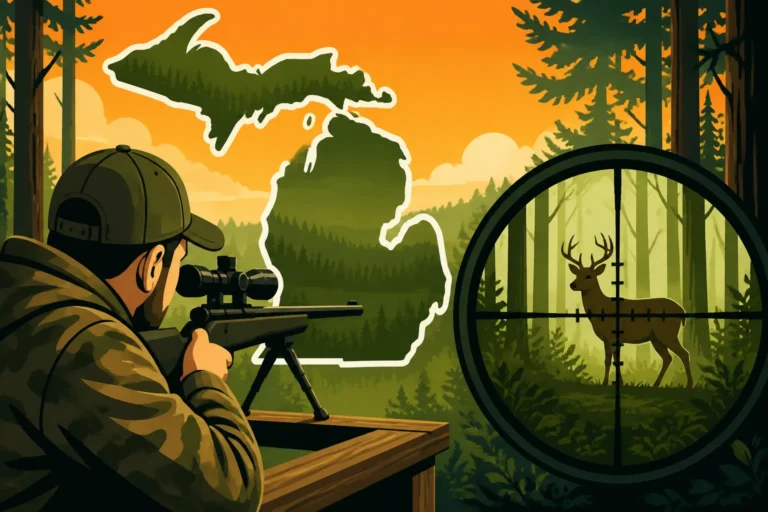
When you're slipping through dense Michigan hardwoods or still-hunting a cedar swamp, shot distances tend to be on the shorter side – often under 100 yards, sometimes much less. In these scenarios, the .308 shines. It typically uses heavier bullets, ranging from 150 to 180 grains, which, while not as fast as a .270, carry excellent kinetic energy at typical woods ranges. The slightly heavier bullet, combined with good construction, means it holds its course well even if it encounters a twig or light brush, which can be a real concern when hunting our tight timber.
Imagine you're set up on a deer trail near a dense swamp edge, where the visibility is only 60 yards. A buck slips through the brush, and you get a clear shot at 50 yards. The .308, with its robust bullet and solid energy transfer, is perfectly suited for this kind of quick, close-range engagement. Its trajectory is relatively flat out to 200-250 yards, which covers the vast majority of shots you'll take in Michigan's forested areas. You don't need a super-flat shooter when the next tree line is always in view.
Recoil and Shooter Comfort
One of the most appealing aspects of the .308 Winchester, especially for a rifle that packs such a punch, is its manageable recoil. Compared to many other popular deer cartridges, the .308's recoil impulse is often described as a firm push rather than a sharp jab. This makes it a very comfortable rifle to shoot, which is a huge advantage for a few reasons.
First, less recoil means you're more likely to flinch less, leading to better accuracy. If you're flinching on the range, you'll certainly flinch in the moment of truth. Second, it allows for faster follow-up shots if needed, as you stay on target more easily. For newer hunters, youth hunters, or those who are sensitive to recoil, the .308 makes for a much more enjoyable shooting experience, encouraging more practice, which is key to becoming a proficient hunter. If you're introducing someone to deer hunting, a well-fitted .308 can build confidence without beating them up.
Ammunition Availability and Versatility
Walk into any sporting goods store, even here in Michigan, and you're almost guaranteed to find a wide array of .308 Winchester ammunition. Its popularity, both for hunting and target shooting, means manufacturers produce a vast selection of bullet types and weights. This versatility allows you to fine-tune your load for specific situations. Want a deeper penetrating bullet for a potential bear hunt, or a softer, rapidly expanding bullet for quick deer kills? The .308 has options.
This widespread availability also translates to competitive pricing and a greater chance of finding your preferred load, even when supplies might be tight. For Michigan hunters, knowing you can reliably source ammunition for your rifle before Opening Day Crowds on Michigan State Land is a significant peace of mind. Many hunters also appreciate that the .308 is used in a variety of rifle types, from lightweight bolt-actions perfect for Still-Hunting Michigan Cedar Swamps to semi-automatic platforms, offering flexibility in rifle choice.
Exploring the .270 Winchester for Michigan Whitetails
The .270 Winchester, introduced nearly a century ago, has earned its legendary status as a quintessential deer and antelope cartridge. It's often praised for its flat trajectory and effectiveness on medium-sized game, making it another fantastic choice for Michigan's diverse hunting landscapes.
Ballistics and Long-Range Potential
Where the .270 truly shines is in its ability to deliver a flat trajectory and excellent downrange energy, particularly with lighter-for-caliber bullets. Typically firing 130 to 150-grain bullets at higher velocities than the .308, the .270 shoots very flat, reducing the need for significant holdover at longer distances. This characteristic makes it a favorite for hunters who find themselves in more open terrain, such as sprawling agricultural fields in southern Michigan, along power lines in the northern Lower Peninsula, or across larger clearcuts in the Upper Peninsula.
Imagine you're hunting the edge of a vast cut cornfield in the Thumb region, and a nice buck steps out at 250 yards. With a .270, and proper zeroing, you can often aim directly at the vitals without much concern for bullet drop, which simplifies the shot under pressure. The higher velocity of the .270 also means that the bullet reaches the target faster, reducing the amount of lead needed on a moving animal. For those times when you're hunting areas that offer longer sightlines, the .270 provides an edge in confidence and precision. This can be especially useful when Hunting a Standing Cornfield in the Thumb.
Recoil Characteristics
While the .270 Winchester is by no means an unbearable kicker, it generally has a sharper, snappier recoil impulse than the .308. This is primarily due to its higher velocity and often lighter bullet weights, which, coupled with similar rifle weights, results in a more pronounced shove back into the shoulder. For experienced shooters, this difference might be negligible, but for others, it can be a factor.
The perception of recoil is highly subjective. Some hunters find the .270's recoil perfectly acceptable, while others might feel it leads to anticipating the shot, which can negatively impact accuracy. If you're prone to flinching or prefer a softer shooting rifle, the .270 might require a bit more practice to master or benefit from a rifle equipped with a good recoil pad or muzzle brake. Consistent practice, regardless of caliber, is always the answer to overcoming any perceived recoil issues.
Ammunition Selection and Use
Like the .308, the .270 Winchester has been around for ages, ensuring excellent ammunition availability. You'll find a wide range of factory loads, predominantly with bullet weights from 130 to 150 grains, though 100-grain and 160-grain options exist. Most of these loads are designed specifically for deer and other medium game, offering excellent terminal performance.
The .270 has built a reputation as a reliable, go-to deer cartridge that provides both speed and adequate bullet weight for quick, humane kills. While perhaps not as diverse in bullet weight offerings as the .308, the available loads are incredibly effective for Michigan whitetails. Many hunters appreciate its straightforward approach: pick a good 130-grain or 150-grain soft point or bonded bullet, and you're good to go for virtually any deer hunting situation you'll encounter.
Direct Comparison: .308 vs. .270 for the Michigan Hunter
When it comes down to it, both the .308 and the .270 are superb choices for hunting whitetails in Michigan. The "best" one really depends on your hunting style, the terrain you frequent, and your personal preferences.
Optimal Scenarios for Each Caliber
Let's break down where each caliber truly shines in our Michigan landscape:
The .308 Winchester often excels in:
- Dense Woods and Swamps: Areas like the thick cedar swamps of the Upper Peninsula or the heavy timber of the northern Lower Peninsula, where shots are typically under 150 yards. The .308's slightly heavier, slower bullets are less susceptible to minor brush deflection and deliver significant energy at closer ranges. If you find yourself mostly Hunting Michigan Swamp Edges for Deer, the .308 is right at home.
- Stand Hunting in Medium Cover: For hunters who primarily use treestands or ground blinds in areas with mixed woods and small clearings, where typical shot distances are moderate.
- Recoil-Sensitive Shooters: A better choice for youth hunters, smaller-framed individuals, or anyone who simply prefers a softer shooting rifle, which can lead to better accuracy and more enjoyment.
The .270 Winchester typically has an advantage in:
- Open Fields and Longer Sightlines: Southern Michigan farm country, power line cuts, large clearcuts, or agricultural fields where shots might stretch beyond 200 yards. Its flatter trajectory means less holdover guesswork. Consider it for Hunting a Standing Cornfield in the Thumb.
- Mixed Terrain with Potential for Longer Shots: If your hunting grounds feature a mix of woods and fields, and you anticipate the possibility of a longer shot opportunity, the .270 offers that extra ballistic confidence.
- Hunters Accustomed to Sharper Recoil: Experienced shooters who are comfortable with the .270's recoil and appreciate its flatter shooting characteristics.
Ethical Kill Power and Bullet Placement
Both the .308 and the .270 are more than capable of cleanly and ethically dispatching a whitetail deer. The energy they deliver, when coupled with a well-constructed bullet, is sufficient to cause rapid incapacitation. The key, however, lies not in the caliber alone, but in bullet placement. A perfectly placed shot with either caliber will be far more effective than a poorly placed shot with a larger, more powerful rifle.
Modern hunting bullets for both calibers are designed to perform exceptionally well on deer. Whether it's a rapidly expanding soft point, a controlled expansion bonded bullet, or a solid copper projectile, selecting a bullet that matches the intended game and your expected shot distances is crucial. Focus on choosing a bullet that retains weight and expands reliably within the deer, creating a large wound channel and ensuring a clean harvest. Regularly practicing at the range to ensure you can consistently place your shots accurately is more important than any marginal ballistic advantage one caliber might have over the other.
Personal Preference and Skill Level
Ultimately, the choice between .308 and .270 often comes down to personal preference and what feels right in your hands. A rifle you shoot confidently and accurately is always the better choice, regardless of its numbers on paper.
If you can consistently hit a dinner plate-sized target at your maximum ethical hunting range with either rifle, then that's the one for you. Confidence in your equipment translates to confidence in the field, which can make all the difference when a Michigan buck steps out. Don't let ballistic charts override how a rifle feels when you shoulder it, aim it, and pull the trigger. Spend time at the range with both, if possible, and see which one you naturally shoot better.
Practical Considerations Beyond Caliber
While the .308 vs. .270 debate is compelling, there are other practical factors that often have a greater impact on your success in the Michigan deer woods.
Rifle Ergonomics and Fit
The rifle itself plays a huge role in how well you shoot. A well-fitting rifle, regardless of its caliber, will be more comfortable to shoulder, quicker to acquire a sight picture, and easier to hold steady. Consider the length of pull, the comb height, and the overall balance of the rifle. A rifle that's too long or too short will cause discomfort and make accurate shooting more challenging.
A lightweight rifle might be wonderful for covering ground on a still-hunt, but it can also make recoil feel more pronounced. A slightly heavier rifle, on the other hand, might absorb recoil better but become a burden on long treks through Michigan's public lands. Many hunters like to use tools like GoHunt or similar mapping applications to scout their desired hunting areas, and sometimes those long walks across vast tracts of state land mean every ounce counts. Finding that sweet spot between portability and shootability is key.
Optics and Sighting Systems
The best rifle and caliber in the world won't do you much good if you can't see your target clearly. High-quality optics are arguably more important than a few feet per second of bullet velocity. In Michigan, where deer often move at dawn and dusk, or through dark timber and swamps, good low-light performance in your scope is critical.
Look for a scope with good light transmission and clear glass, even if it means spending a bit more. Variable power scopes, like a 3-9×40 or 4-12×40, offer versatility for both close and longer shots. Make sure your scope is properly mounted and zeroed. Zeroing a Rifle for Woods Distances is crucial, ensuring that your bullet impacts precisely where you aim at common hunting ranges. An illuminated reticle can also be a game-changer in those fleeting low-light moments.
The Michigan Hunting Environment
Michigan offers an incredibly diverse hunting environment, from the sprawling, thick forests of the Upper Peninsula to the rolling agricultural lands of the southern Lower Peninsula. Your choice of hunting location often dictates the typical shot distance and visibility you'll encounter.
If you primarily hunt vast state forests or deep wilderness areas in the U.P., where shots are often up close and personal, the .308's strengths in dense cover are very appealing. Conversely, if your deer hunting is focused on private farm fields and woodlots in the Lower Peninsula, where longer shots across open spaces are more common, the .270's flat trajectory might give you an edge. It’s important to remember that Michigan has diverse rules regarding firearms, including Where Michigan Restricts Rifles for Deer, which could influence your overall firearm choice for different regions, though both .308 and .270 are legal rifle calibers throughout the state where rifles are allowed. Understanding your specific hunting grounds is perhaps the most important factor in making your gear choices.
Here’s a quick comparison of the two calibers for Michigan whitetails:
| Feature | .308 Winchester | .270 Winchester |
|---|---|---|
| Typical Bullet Weight | 150-180 grains | 130-150 grains |
| Velocity | Moderate (approx. 2600-2800 fps) | Higher (approx. 2900-3100 fps) |
| Trajectory | Good for woods ranges; manageable drop at distance | Flatter; less drop at longer ranges |
| Recoil | Moderate, often described as a push | Moderate to firm, can feel snappier |
| Best for | Dense timber, thick cover, shorter ranges | Open fields, clearcuts, longer range potential |
| Ammunition | Excellent availability, wide bullet selection | Excellent availability, great deer-specific loads |
| Overall Feel | Very shootable, comfortable for many | Highly capable, rewarding for practiced shooters |
Ultimately, both the .308 and the .270 are exceptional deer cartridges that have stood the test of time for a reason. Whichever you choose, invest in quality ammunition, practice regularly, and focus on ethical shot placement. The Michigan whitetails deserve nothing less.
Disclaimer
This article is for general informational purposes only and does not constitute professional advice. Laws, prices and regulations vary by location and change over time. Consult a qualified professional for guidance on your specific situation.