How Big the Huron-Manistee Forest Is
It's a common feeling, isn't it? You stare at a map of Michigan, seeing all that green state land, and wonder just how much space you really have to roam, to get away from the crowds, and to find that undisturbed pocket of wilderness. For many hunters, the sheer scale of Michigan's public land is both a blessing and a bit overwhelming. This guide is all about one of the crown jewels of that public estate: the Huron-Manistee National Forest. We’ll dive deep into its size, what that means for your hunting adventures, and how to conquer its vastness.
The Immense Scale of the Huron-Manistee National Forest
When you're dreaming of hunting Michigan's northern Lower Peninsula, the Huron-Manistee National Forest often comes to mind. It's an iconic name that conjures images of towering pines, winding rivers, and seemingly endless woods. But understanding its true scale is crucial for any hunter planning to venture into its depths. It’s not just "big"; it's a massive, sprawling landscape that offers an incredible amount of opportunity for those willing to learn its rhythms.
Understanding the Acreage and Scope
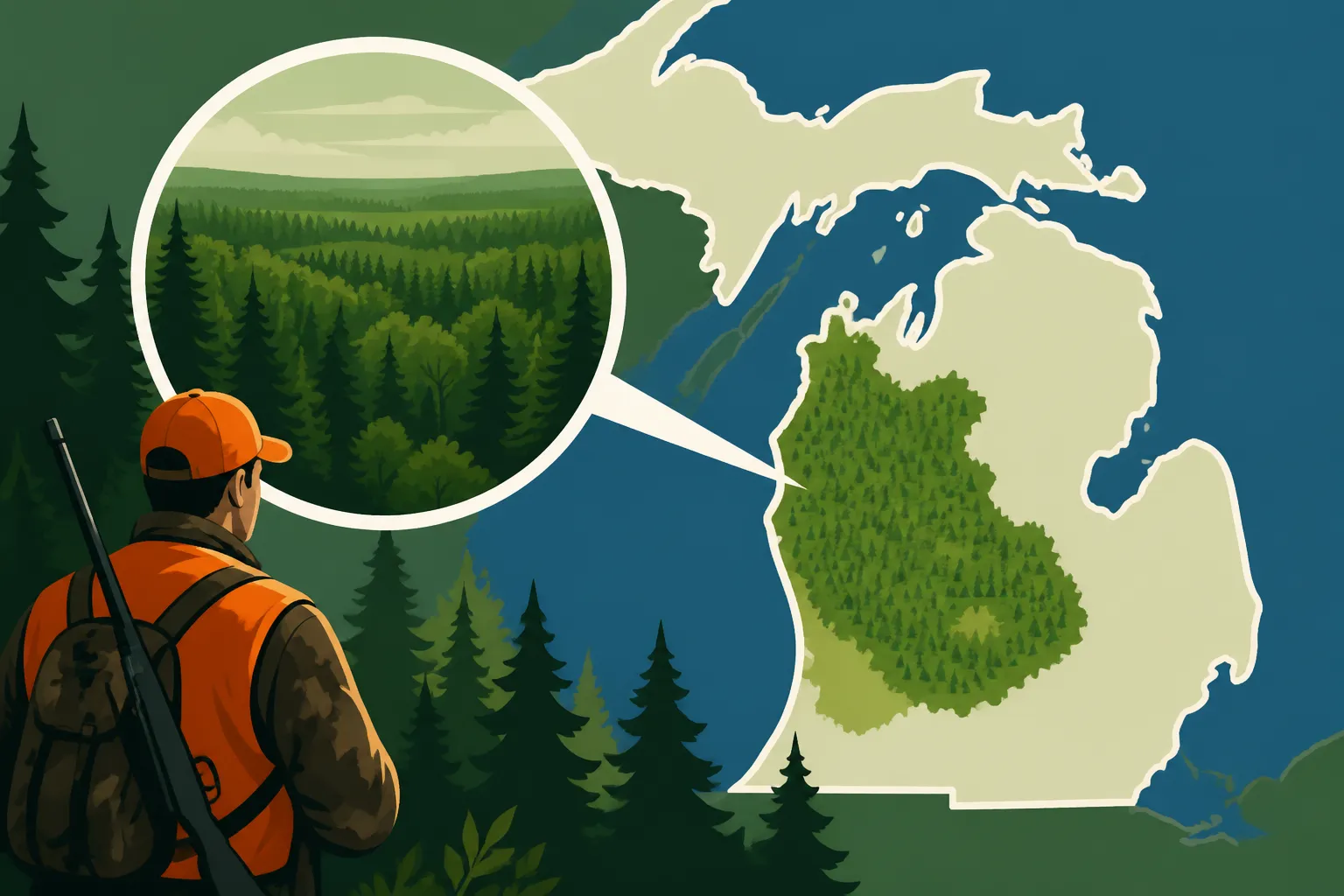
Let's get right to the heart of the matter: the Huron-Manistee National Forest encompasses nearly a million acres of public land. Yes, you read that right – almost one million acres! To put that in perspective, that's more than half the size of the entire state of Delaware. This vast expanse stretches across 17 counties in Michigan's northern Lower Peninsula, offering an incredible variety of habitats, from dense coniferous swamps to open oak ridges and rolling plains. It’s not a single contiguous block, but rather a complex mosaic of federal ownership interspersed with private parcels and state land. This interlocking ownership creates a unique challenge and opportunity for hunters. You'll find yourself driving through private property to access federal land, and vice-versa, making good mapping tools absolutely essential.
Imagine trying to explore all that ground in a lifetime; it’s an impossible task. This immense size means you can genuinely get away from other hunters, if you're willing to walk a bit, to really earn your access. It provides countless opportunities for solitude and the feeling of true wilderness that can be hard to find in more populated areas. This isn't just a place to hunt; it's a place to immerse yourself in the natural world.
The sheer volume of acreage means that specific sections of the forest can feel like completely different ecosystems. One area might be dominated by mature hardwoods, perfect for squirrel hunting or tracking deer sign in the snow, while just a few miles away, you might find vast clear-cuts teeming with grouse. This diversity of habitat is a direct result of the forest's immense size and its complex management history, which aims to support a wide range of wildlife and recreational activities.
A Patchwork Quilt of Public Access
While the "million acres" figure is impressive, it's important to understand that the Huron-Manistee isn't one giant, uninterrupted block. Instead, it's more like a massive patchwork quilt. You'll encounter areas where National Forest land is contiguous for miles, and then suddenly, you'll see signs for private property or state land. This intermingled ownership is a defining characteristic of much of Michigan's public hunting ground, but it's particularly pronounced in an area as vast as the Huron-Manistee.
For hunters, this means that while the overall acreage is enormous, navigating it effectively requires careful planning. You can't just assume every wooded parcel is federal land. This is where tools like onX Hunt truly shine. They allow you to overlay property boundaries with satellite imagery, showing you exactly where you stand and what land you're looking at. This information is critical for avoiding trespass and for confidently exploring the more remote corners of the forest. Without such a tool, you might find yourself constantly second-guessing your location, which really takes away from the enjoyment of the hunt.
The varying land ownership also creates unique habitat edges and transition zones that can be incredibly productive for hunting. Deer, for example, often use the cover of federal forest land for bedding and then move onto adjacent private agricultural fields for feeding, creating excellent pinch points and travel corridors. Understanding these transitions, even between different types of public land like National Forest and nearby Michigan State Forest Hunting, can give you a significant edge. It's all about connecting the dots on the map to understand how deer and other game animals are using the landscape.
Historical Context of a Recovered Landscape
The Huron-Manistee National Forest we know today is largely a testament to conservation efforts. Much of this land was heavily logged in the late 19th and early 20th centuries, leaving behind vast tracts of cutover, often burned-over, land. What began as two separate national forests—the Huron National Forest to the east and the Manistee National Forest to the west—were established in the early 1900s primarily for reforestation, fire protection, and watershed management. These lands were purchased by the federal government, often from timber companies that had stripped them bare.
Over decades, through dedicated efforts of tree planting, fire suppression, and scientific forest management, these lands slowly recovered. The vast pine plantations you see today, alongside regenerating hardwoods and aspen stands, are a direct result of this long-term commitment. This history of regeneration has profoundly shaped the hunting opportunities available. The diverse age classes of timber provide everything from dense bedding cover for deer and ideal habitat for grouse to mature mast-producing oaks.
Understanding this history also helps you appreciate the resilience of Michigan's wild places. It’s a reminder that even after significant disturbance, nature can recover, especially with thoughtful human intervention. Today, the Huron-Manistee supports not only a robust deer herd but also Michigan's Black Bear Population, healthy populations of wild turkeys, and an abundance of small game. It’s a living monument to conservation and a profound resource for hunters and outdoor enthusiasts.
| Feature | Huron-Manistee National Forest | Typical Michigan State Game Area |
|---|---|---|
| Approximate Acreage | ~1 Million Acres (interspersed) | ~1,000 – 20,000+ Acres |
| Land Ownership Pattern | Large, contiguous blocks mixed with private and state lands | Usually more consolidated, but can have private inholdings |
| Primary Habitat Types | Mixed hardwood, pine forest, coniferous swamps, oak plains, river corridors | Diverse, often includes wetlands, fields, younger timber |
| Typical Hunting Experience | Remote, expansive, less crowded (further from roads), big woods feel | Often accessible, can be higher pressure, diverse species density |
| Key Game Species | Deer, bear, grouse, woodcock, turkey, squirrel, coyote | Deer, turkey, rabbit, pheasant (released), waterfowl, furbearers |
Diverse Hunting Opportunities Across Vast Lands
The sheer size of the Huron-Manistee National Forest isn't just a number; it translates directly into a wide array of hunting opportunities. This isn't a one-trick pony; whether you're after a trophy whitetail, the flush of a grouse, or a wary spring gobbler, there's a place for you within its sprawling boundaries. The diversity of the landscape ensures that different seasons bring different possibilities and require varied tactics.
Deer Hunting: The Main Draw for Many
For the vast majority of Michigan hunters, deer are the primary target, and the Huron-Manistee National Forest offers some incredible deer hunting experiences. Its massive size means you can find everything from dense thermal cover in cedar swamps to sprawling oak ridges where acorns rain down in the fall. This variety of habitat provides deer with ample food, water, and crucially, security cover, especially in areas far from roads. These are the places where mature bucks can truly grow old and wise.
However, hunting the big woods of the Huron-Manistee isn't like hunting the small, fragmented woodlots of southern Michigan farm country. Deer densities can be lower in some areas, and patterns can be harder to discern over such a large landscape. Success often comes down to scouting diligently, understanding deer movement through vast timber, and being willing to put in the miles. You might be still-hunting for hours, picking apart terrain features, or setting up a treestand on a subtle funnel deep in the woods. Checking out resources like Hunting the Northern Lower Peninsula can give you an edge in understanding the specific challenges and rewards of this region.
Many hunters find success focusing on transition zones – where different timber types meet, or along the edges of swamps and ridges. The key is finding areas with fresh sign, understanding the wind and thermals, and playing the percentages. This is true big woods hunting, where patience and perseverance often pay off with a truly hard-earned deer. The forest's size means you can genuinely feel like you're matching wits with truly wild animals on their terms.
Beyond Whitetails: Small Game and Predators
While deer hunting often takes center stage, the Huron-Manistee National Forest is also a fantastic destination for small game and predator hunting. The diverse habitats that support deer also support a thriving population of rabbits and squirrels. You'll find cottontails in brushy clearings and along the edges of wetlands, while grey and fox squirrels abound in the oak and beech stands, especially during acorn years. Hunting small game can be a great way to introduce new hunters to the sport or to simply enjoy a more relaxed day in the woods when deer season is closed.
Beyond the dinner table, predator hunting for coyotes is another popular pursuit. The vast, often remote nature of the forest provides excellent opportunities for calling coyotes, especially during the winter months when snow cover makes tracking easier and hides fewer. Learning how to read the landscape for potential coyote travel routes or denning areas can lead to exciting encounters. This provides a year-round hunting opportunity, helping to manage predator populations and offering a different kind of challenge.
The beauty of having so much land is that these opportunities often overlap. You might be scouting for deer sign in late summer and stumble upon a thriving squirrel population, or be still-hunting for a late-season whitetail and have an opportunity to call in a coyote. The interconnectedness of the ecosystem within the Huron-Manistee National Forest means there's always something to keep an observant hunter engaged.
Upland Bird Havens
For those who love the explosive flush of a bird dog or the challenge of stalking wary game birds, the Huron-Manistee National Forest is a top-tier destination. It’s particularly renowned for its ruffed grouse and American woodcock populations. The forest's active timber management practices, which create varying age classes of aspen and young hardwoods, are critical for these species. These regenerating cuts provide the dense cover and food sources that grouse thrive in.
Woodcock, often found in wetter, alder-choked areas along stream bottoms and lowland fringes, also benefit from the diverse forest structure. Their migration through Michigan, particularly in the fall, can offer incredible hunting opportunities for those who know where to look. When heading out for these birds, check out Grouse and Woodcock Hunting in Michigan for more detailed tactics and habitat information. The sheer amount of suitable habitat means that even if one spot is quiet, there are countless others to explore.
While not as widespread, pockets of wild turkeys can also be found throughout the forest. Spring turkey hunting can be a challenging but rewarding endeavor, requiring patience and good calling skills to draw in wary gobblers. The vastness of the Huron-Manistee allows for plenty of room to roam and pursue these majestic birds, offering a truly immersive experience in a landscape that feels wild and untamed.
Navigating and Making the Most of This Public Treasure
The Huron-Manistee's immense size, while its greatest asset, can also be its greatest challenge. Many hunters feel overwhelmed by the sheer amount of ground and aren't sure where to start. But with the right tools and strategies, you can unlock its potential and find your own secret spots. It's all about diligent preparation and smart navigation.
Essential Mapping and Scouting Tools
To effectively hunt the Huron-Manistee, reliable mapping tools are non-negotiable. Forget relying solely on paper maps, which, while useful for an overview, lack the detail needed for precise navigation on the ground. Digital mapping apps, like onX Hunt, are absolutely essential. These apps allow you to see property boundaries, topographic lines, aerial imagery, and even layers showing different habitat types. This means you can identify potential bedding areas, travel corridors, and feeding grounds from the comfort of your home, then navigate directly to them in the field. GoHunt also provides valuable mapping and scouting intel that can help you cross-reference and refine your plan.
Beyond digital maps, physical scouting is still paramount. There's no substitute for boots on the ground to confirm what you see on a map. Look for fresh deer tracks, rubs, scrapes, and feeding sign. Identify natural funnels, pinch points, and cover changes that might concentrate game. During the off-season, pay attention to potential bedding areas, especially on south-facing slopes for warmth in late season, or dense cedar swamps for winter thermal cover. Scouting Michigan Public Land Before Season is a great resource to help you hone these skills. The time you invest in scouting will pay dividends when the season opens, making you much more confident in your chosen hunting locations.
When you're dealing with hundreds of thousands of acres, efficiency in scouting is key. Use your mapping apps to mark points of interest—a promising looking oak flat, a dense conifer thicket, a subtle terrain feature that might funnel deer. This allows you to build a comprehensive picture of an area over time, piece by piece, rather than trying to take it all in at once.
Access Points and Strategizing Entry
With such a vast forest, finding good access points and planning your entry and exit routes becomes critical. Many roads and two-tracks penetrate the Huron-Manistee, but relying solely on easily accessible spots can lead to encountering more hunting pressure. Often, the best hunting lies a mile or more from the nearest road, where fewer hunters are willing to venture. Identifying these remote pockets on a map is the first step.
When planning your approach, always consider the wind. This seems obvious, but in dense timber or rolling terrain, wind currents can be unpredictable. Use terrain features to mask your entry and exit, and try to move quietly and slowly. Think about how you'll get to your stand or blind without alerting every deer in the area. This might mean skirting a low swampy area, using a ridge top for concealment, or walking along an old logging trail that offers quieter footing. These strategies are paramount in Hunting Pressure on Michigan State Land scenarios.
Another important aspect is having a solid plan for retrieving game. Dragging a deer a mile or two out of a remote area can be incredibly challenging, especially in uneven terrain or through thick brush. Consider using game carts or deer sleds, particularly if you're hunting in snowy conditions. Understanding the effort required for extraction can influence where you decide to hunt, especially when hunting alone. Having a clear idea of your egress route is just as important as your ingress.
Embracing the Challenge of Big Woods Hunting
Hunting the Huron-Manistee National Forest is truly an experience in big woods hunting, and it demands a certain mindset. It's not always about seeing dozens of deer; it's about the quality of the experience, the solitude, and the satisfaction of outsmarting a truly wild animal in expansive terrain. This kind of hunting requires patience, persistence, and a willingness to adapt. The woods can be quiet for hours, then suddenly come alive with activity.
You might find yourself still-hunting through miles of timber, moving slowly, glassing ahead, and trying to spot a flicker of an ear or the horizontal line of a deer's back in a sea of vertical trees. Or you might commit to an all-day sit in a treestand, trusting your scouting and waiting for the right moment. The key is to enjoy the process, to appreciate the wilderness, and to learn something new with every outing.
This environment fosters self-reliance. You need to be prepared for changes in weather, navigate confidently, and handle game care on your own. It's a place where you can truly test your hunting skills and deepen your connection with the outdoors. It pushes you to become a better hunter by forcing you to pay attention to subtle details and to think like the game you're pursuing.
Practical Considerations for Huron-Manistee Hunters
Hunting the vastness of the Huron-Manistee National Forest comes with unique practical considerations. Beyond knowing the size and what game you can find, you need to understand the rules, how to handle other hunters, and crucial safety measures that ensure a successful and enjoyable trip. Being prepared for anything is the best approach when you're deep in such expansive territory.
Understanding Regulations and Seasonal Nuances
Navigating Michigan's hunting regulations is important everywhere, but especially in a large, multi-use area like a National Forest. While the core Michigan deer seasons and tags apply, you need to be aware of any specific rules that might pertain to federal lands or the particular Deer Management Unit (DMU) you are in. Always consult the current Michigan Hunting Digest before your hunt. It's your bible.
For example, understand the rules around Treestand Rules on Michigan Public Land, the legal methods of take for different seasons, and any special antler point restrictions that might be in place for your specific DMU. The Huron-Manistee spans multiple counties, and thus multiple DMUs, so what's legal in one area might be different just a few miles down the road. This is another instance where a good mapping app showing DMU boundaries can be invaluable.
Also, be mindful of other forest users. The Huron-Manistee is not just for hunters; it's also used by hikers, campers, mushroom foragers, and ORV riders. While legal shooting hours and safety zones are always in effect, exercising extra caution and courtesy is paramount to ensuring a safe and positive experience for everyone. Be visible, especially during firearm seasons, and always identify your target and what is beyond it.
Managing Hunting Pressure
With its accessible nature and well-known reputation, the Huron-Manistee National Forest can see significant hunting pressure, particularly on opening days or during the peak rut. This is especially true near main roads, popular campgrounds, and easy-access two-tracks. However, the forest's sheer size is your greatest ally in escaping these crowds. The further you're willing to walk, paddle, or even bike into the woods, the less pressure you'll encounter.
Many seasoned Huron-Manistee hunters develop strategies to find Finding Ground Others Walk Past. This often involves identifying overlooked pockets of habitat, using non-traditional access points, or focusing on areas that require more effort to reach. Maybe it's a small island of high ground in a vast swamp, a steep ridge that deters most hunters, or a dense thicket that offers excellent cover but is hard to penetrate. These are the places where mature deer, having learned to avoid human activity, are more likely to be found.
Consider hunting during weekdays, or later in the season after the initial rush has subsided. The "second week slump" of firearm season, for instance, often sees a significant drop in hunter numbers, which can provide excellent opportunities for those who persist. Learning to adapt your tactics to the level of pressure you're experiencing is a hallmark of a successful Michigan hunter.
Safety First in Expansive Wildlands
Hunting in such a large, remote environment requires a heightened awareness of safety. It's easy to get disoriented in dense timber, especially when focused on tracking an animal. Always carry a compass and a reliable GPS device or a fully charged phone with a mapping app like onX Hunt, and know how to use them. Share your hunting plans with someone, including your exact location and expected return time. This is critical for your safety.
Dress appropriately for the weather, which can change rapidly in Michigan's northern Lower Peninsula. Layering is key, as you might start the day in freezing temperatures and warm up significantly while walking. Always carry enough water, snacks, a first-aid kit, and a headlamp, even if you plan to be back before dark. A small fire-starting kit and a whistle are also good additions to your pack.
Finally, remember that you are in bear country. While black bear encounters are relatively rare and usually involve the bear quickly retreating, it's wise to be aware. Make noise while walking, especially in dense cover, and store food properly if camping. This immense forest offers incredible opportunities, but it demands respect and preparedness. Enjoy the vastness, embrace the challenge, and stay safe out there!
Disclaimer
This article is for general informational purposes only and does not constitute professional advice. Laws, prices and regulations vary by location and change over time. Consult a qualified professional for guidance on your specific situation.