Snow and Two-Track Access in the U.P.
The Upper Peninsula of Michigan, with its vast tracts of public land and wild beauty, calls to many a deer hunter. But the romantic idea of chasing whitetails through silent, snow-covered woods can quickly turn into a frustrating, even dangerous, reality when you encounter impassable two-tracks and deep drifts. This guide is all about helping you understand and prepare for the unique challenges of accessing U.P. hunting grounds when the snow flies, ensuring you can reach your spots safely and effectively.
Understanding U.P. Snow Conditions and Their Impact
Anyone who's spent a winter in Michigan's Upper Peninsula knows that "snow" isn't a single condition, it's a way of life, and it profoundly impacts hunting access and deer behavior. It's not just a dusting like you might see downstate; we're talking about serious, persistent snowfall that can transform the landscape overnight.
The Sheer Volume of Snow and Its Persistence
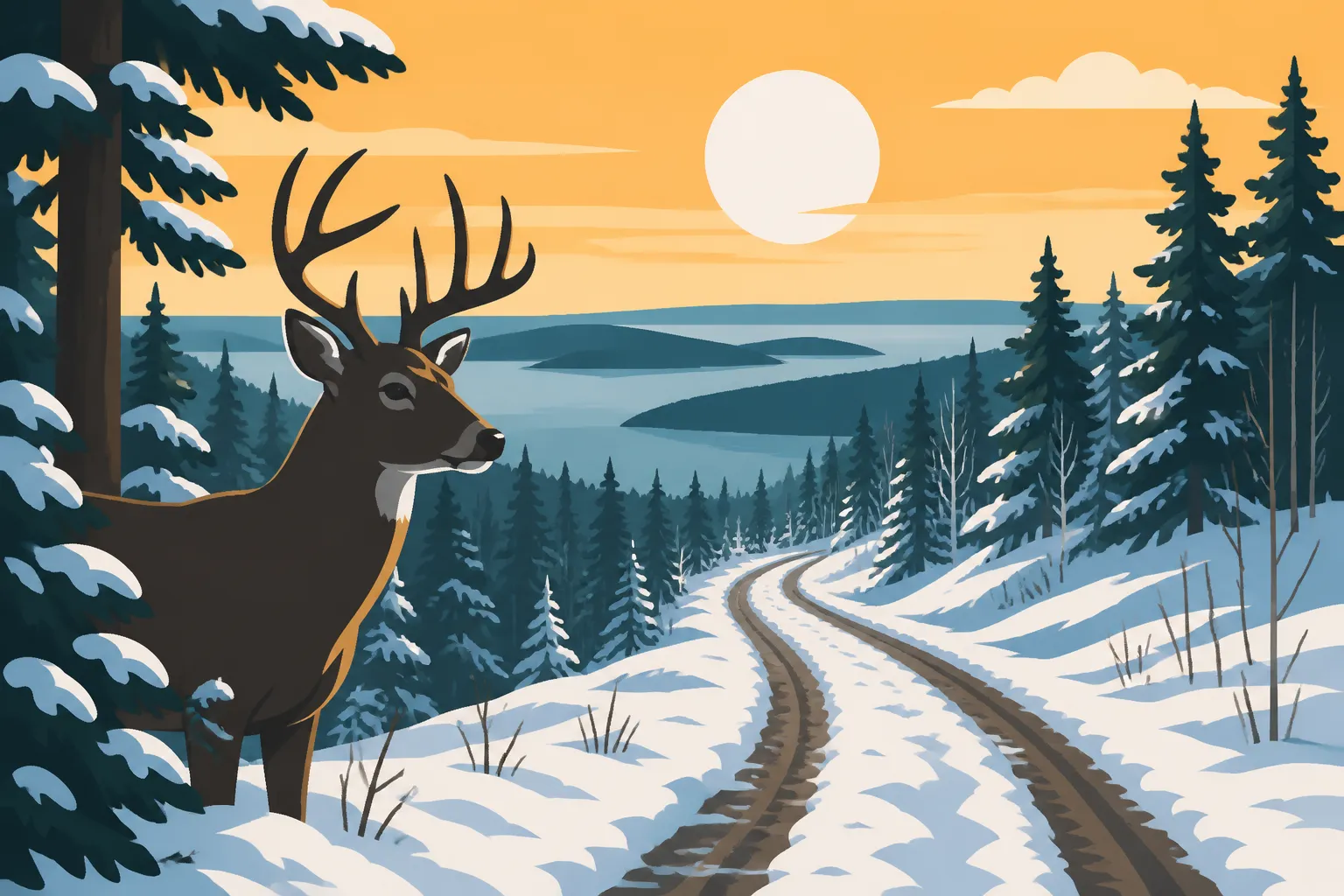
The U.P. gets hammered with snow, especially in the western and central regions. Lake effect snow off Lake Superior can drop feet of snow in a single storm, and it often sticks around for months. We're not talking about snow that melts a few days later; this is snow that builds and builds, creating drifts that can swallow a full-size pickup. What might be a passable two-track in October can become an indistinguishable, snow-choked canyon by December. This relentless snow makes travel on unimproved roads incredibly difficult, often isolating prime hunting areas for those unprepared. Trying to push through several feet of unplowed snow, even with a capable 4×4, is a recipe for getting stuck miles from anywhere, which is a serious safety concern in remote areas.
Impact on Deer Movement and Habitat
Deep snow isn't just a headache for hunters; it's a life-or-death situation for the deer themselves. Once the snow gets past a certain depth, typically around 18-24 inches, deer struggle to move through it efficiently. This is why you hear so much about "deer yards" in the U.P. These are areas, often dense cedar swamps or thick conifer stands, where deer congregate to escape the deepest snow and find what little thermal cover and browse they can. The snow funnels them into these specific areas, changing their patterns dramatically from the early season. Understanding this natural migration into yards is key to finding deer when the snow is deep, as they simply won't be dispersed across the landscape like they are in milder conditions. For more on this, you might want to read Upper Peninsula Deer Yarding and Winter Movement.
Navigating Two-Tracks and Seasonal Road Closures
Michigan's U.P. boasts an incredible network of two-tracks and unimproved roads, providing access to vast public lands. However, many of these are not maintained or plowed once winter sets in, creating significant access challenges for hunters. Knowing how to approach these roads is paramount.
Identifying Open vs. Closed or Impassable Roads
The biggest challenge is knowing which roads are truly open and which are effectively closed by snow. Unlike paved county roads that get plowed, most forest roads, logging trails, and designated two-tracks are simply left to the elements. What looks like a clear path on a map can be a wall of snow. Some larger, more regularly used forest roads might see some plowing, especially if there's active logging, but these are the exception. It’s crucial not to assume a road is open just because it appears on a map. Always factor in the latest snowfall and the likelihood of the road being used by others who might have broken a path, or more likely, not used, leaving you to be the trailblazer – or the one who gets stuck.
This is where digital mapping tools become absolutely invaluable. Services like onX Hunt or GoHunt allow you to layer public and private land boundaries, but more importantly for winter access, they can sometimes show you different road classifications. While they won't tell you "this road is plowed today," they can help you differentiate between primary forest roads and smaller, less-traveled two-tracks. You can also often spot signs of previous travel or lack thereof by looking at satellite imagery for recent tracks if the imagery is updated enough, though this is less reliable with fresh snow. Before you even leave home, zoom in and try to identify alternative routes or potential turn-around points. onX Layers for Michigan Land Status can be a huge help here.
Vehicle Requirements for Winter Two-Tracks
Forget your two-wheel-drive sedan if you're planning to venture off the main roads in the U.P. during hunting season. A capable 4×4 truck or SUV with good ground clearance is the absolute minimum, and even then, you need to be realistic about its limits. All-terrain or mud-terrain tires with aggressive tread are a must, aired down slightly for better traction in deep snow if you know how to do it safely and re-inflate later.
It's not just about getting to your spot; it's about getting back. Many U.P. two-tracks are sandy or rocky underneath the snow, and once you break through a crust, you can sink quickly. Carrying recovery gear is non-negotiable. A sturdy shovel, a heavy-duty tow strap or kinetic rope, and ideally, a winch (either mounted on your vehicle or a portable one) can be the difference between a minor delay and spending a very cold night stuck in the woods. Tire chains can also be a lifesaver in particularly icy or deep snow conditions, providing traction where even 4×4 struggles. Always go with at least one other vehicle if you're exploring unknown or very deep snowy two-tracks. Losing cell service is common, so relying on roadside assistance is often not an option.
Essential Gear and Preparation for Winter Access
Heading into the U.P. backcountry in winter without proper preparation is not just inconvenient, it can be life-threatening. The remoteness and harsh conditions demand a comprehensive approach to both vehicle and personal gear.
Vehicle Preparation and Recovery Gear
Your vehicle is your lifeline to and from your hunting grounds. Beyond a reliable 4×4, focus on these critical items:
- Tires: As mentioned, good quality all-terrain or mud-terrain tires are crucial. Check your tire pressure regularly; proper inflation improves traction and prevents flats.
- Fuel: Always start with a full tank, and consider carrying an extra few gallons in an approved container. You might idle for extended periods, or have to backtrack significant distances.
- Shovel: A heavy-duty, sturdy shovel (not a flimsy camping spade) for digging out snow or even clearing small downed trees.
- Recovery Kit: At a minimum, a strong tow strap or kinetic rope, D-rings or shackles, and a high-lift jack or similar recovery device. A winch is ideal. Learn how to use this gear before you need it.
- Emergency Supplies: Jumper cables, tire repair kit, basic tool kit, flashlight, flares, and a bright orange safety vest (even if you're just stuck, high visibility is smart).
- Warmth: Extra blankets, sleeping bags, and hand warmers in your vehicle. If you get stuck, you'll be glad to have them.
- Communication: A fully charged cell phone (know that service will be spotty or non-existent), but also consider a satellite messenger device like a Garmin inReach or a SPOT device for emergency communication outside of cell service.
- Food and Water: Enough for at least 24-48 hours, in case you're stranded.
Remember, the goal isn't just to get there, but to get home safely. Planning for worst-case scenarios is just part of hunting the U.P. in winter.
Personal Gear for Deep Snow Conditions
Once you park the truck, your personal gear becomes paramount. Walking in deep snow, especially off-trail, is incredibly taxing and can quickly lead to exhaustion and hypothermia if you're not properly outfitted.
- Layered Clothing: Forget heavy, bulky coats. Think layers: a moisture-wicking base layer, insulating mid-layers (fleece or down), and a waterproof, windproof outer shell. This allows you to regulate your temperature as you exert yourself walking and then cool down on stand. Cold Weather Sitting Strategy offers more insight into staying warm.
- Footwear: Insulated, waterproof boots are essential. Make sure they're rated for extreme cold and are comfortable enough for extensive walking. Gaiters are highly recommended to keep snow out of your boots and off your pants.
- Snowshoes or Skis: If you're planning to venture far off a packed trail, snowshoes or backcountry skis are game-changers. Trying to walk through hip-deep snow without them is a monumental task that will sap your energy quickly. They allow for quieter movement and significantly reduce fatigue.
- Navigation: A reliable GPS unit (or a smartphone with mapping apps like onX Hunt, downloaded for offline use) is critical. A compass and paper map, protected in a waterproof case, serve as an indispensable backup. Knowing how to use them together is paramount, as dense U.P. timber can scramble GPS signals.
- Emergency Kit: Beyond what's in your vehicle, carry a smaller, personal emergency kit with a fire starter, signaling mirror, whistle, space blanket, first-aid supplies, and high-energy snacks. First Aid Kits for Remote Upper Peninsula Ground might be a good read.
- Water: Even in cold weather, hydration is key. Insulated water bottles or a hydration bladder with an insulating sleeve will prevent water from freezing.
Finding Deer in Snow-Covered U.P. Terrain
Hunting in deep snow is a different ballgame than early season. The snow, while posing challenges, also offers unique advantages to the prepared hunter, primarily by revealing deer activity and concentrating deer in specific areas.
Locating Deer Yards and Winter Concentration Areas
As mentioned earlier, once snow depths become significant (typically 18-24 inches or more), deer will seek out thermal cover and food in "deer yards." These are often lowland cedar swamps, dense spruce-fir thickets, or areas with thick conifers that provide shelter from the wind and heavy snow. Southern-facing slopes with mixed conifers can also hold deer.
Your scouting, even if it's just looking at aerial photos on onX Hunt, should focus on identifying these areas. Look for patches of dense evergreen cover, especially adjacent to potential food sources like young aspen or tag alder that deer can still reach. Once you find a yard, look for tracks. The deer will create a network of trails within the yard, making travel easier for them and revealing their patterns. These yards can become quite active, and understanding where the deer are entering and exiting these areas is crucial for setting up effectively. Hunting Deer in Deep Upper Peninsula Snow explores this in more detail.
Still-Hunting and Tracking in the Snow
Deep snow, while challenging to walk through, offers two distinct advantages for the still-hunter: quiet movement and visible tracks. When the snow is fresh and fluffy, it can cushion your footsteps, making it easier to move silently through the woods. This is especially true after a light, fresh snowfall that covers any crunchier crust. Take advantage of this. Move slowly, deliberately, stopping often to scan ahead.
The most obvious advantage, however, is tracking. Fresh snow lays out a clear roadmap of deer activity. You can see not just where deer have walked, but often how recently. Look for fresh tracks, especially those leading into or out of bedding areas or feeding zones. A good, steady track to follow can lead you directly to deer. When tracking, pay attention to the size of the tracks, the length of the stride, and any signs of rubbing or digging for browse. If you find multiple fresh tracks converging, you're likely near a winter concentration area. It's a skill that takes practice, but the U.P. winter provides ample opportunity. For a deeper dive into this, check out Tracking a Deer in Michigan Snow or Still-Hunting Michigan Cedar Swamps.
Table: Winter Access Considerations for U.P. Hunting
| Aspect | Primary Challenge | Strategic Approach | Key Gear/Tool |
|---|---|---|---|
| Snow Depth | Impassable roads, difficult foot travel | Focus on deer yards, use snowshoes | Snowshoes/Skis, high-clearance 4×4, shovel |
| Road Access | Unplowed two-tracks, seasonal closures | Verify status, scout alternatives, use mapping apps | onX Hunt/GoHunt, Winch, tow strap, tire chains |
| Vehicle Recovery | Getting stuck miles from help, no cell service | Carry full recovery kit, travel with a buddy | Shovel, tow strap, D-rings, winch, satellite messenger |
| Navigation | Disorienting landscape, lost trails | Redundant navigation (GPS + map/compass) | GPS with offline maps (onX Hunt), physical compass & map |
| Personal Safety | Hypothermia, injury, isolation | Layered clothing, emergency kit, communication | Insulated boots, warm layers, first-aid, satellite messenger |
| Finding Deer | Deer concentrated in specific areas | Locate winter yards, track fresh sign | Binoculars, knowledge of deer behavior, tracking skills |
When you head to the U.P. for winter hunting, you're not just going for a walk in the woods; you're embarking on a true wilderness experience. The challenges are real, but the rewards—a unique hunt in a stunning, silent landscape—are truly unforgettable. Just make sure you're ready for everything Mother Nature throws at you.
Disclaimer
This article is for general informational purposes only and does not constitute professional advice. Laws, prices and regulations vary by location and change over time. Consult a qualified professional for guidance on your specific situation.