Getting Stuck on a Michigan Sand Road
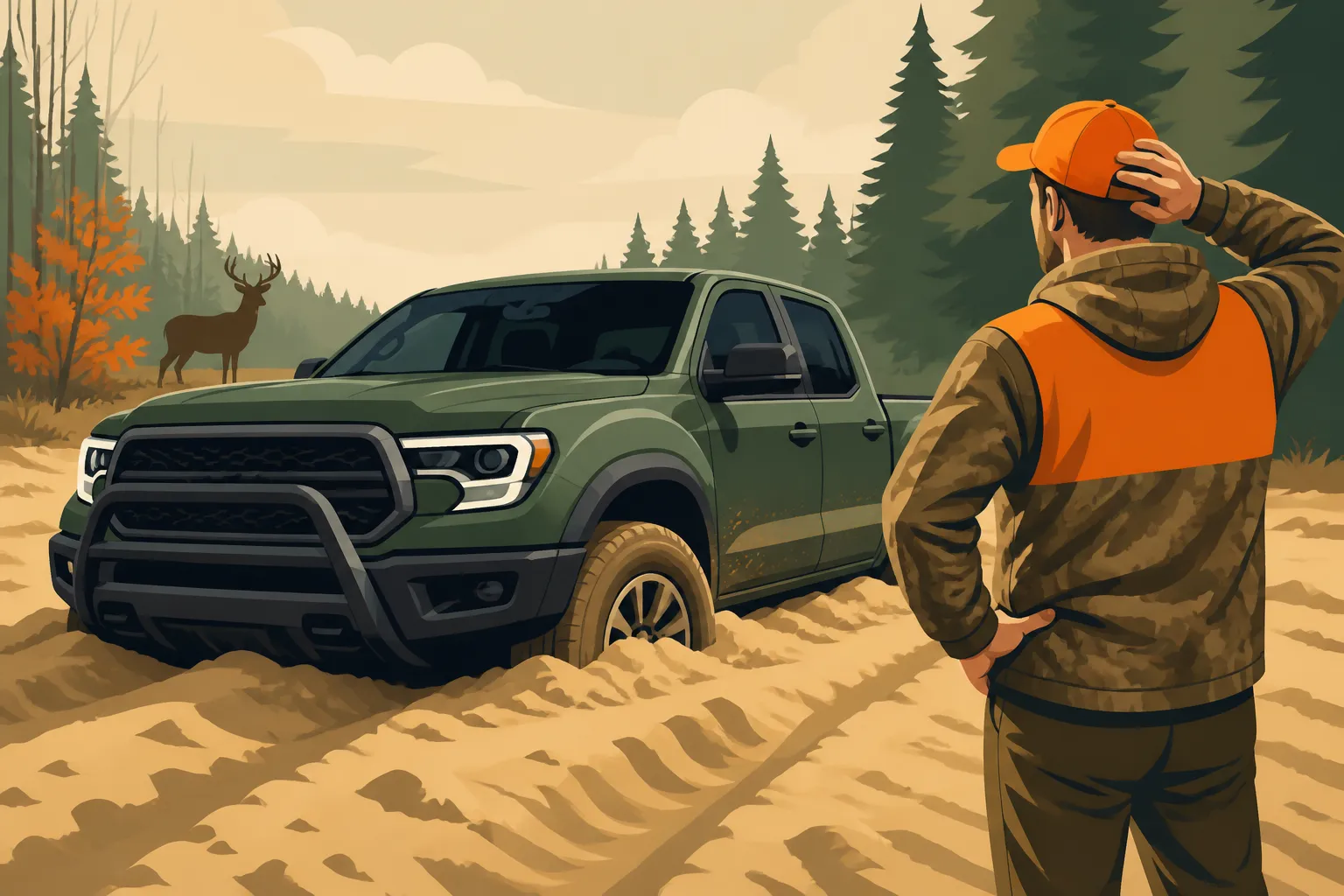
There’s almost a rite of passage for Michigan hunters, isn't there? You're out there, maybe on a brisk October morning or a snowy November afternoon, deep in the state forest, and you turn down what looks like a perfectly innocent two-track. Suddenly, your tires are spinning, the vehicle lurches, and a growing sense of dread creeps in. You're stuck. On a Michigan sand road. It’s a frustrating, often solitary experience that can ruin a hunt and even put you in a tough spot. This guide is here to walk you through how to avoid those dreaded moments, prepare for the worst, and get yourself unstuck when Michigan's unpredictable terrain decides to swallow your vehicle.
The Deceptive Nature of Michigan Sand Roads
Michigan is blessed with an incredible amount of public land, much of it crisscrossed by a network of seasonal, unpaved roads and two-tracks. These are the arteries that lead us to our favorite hunting spots, but they're also notorious for trapping unsuspecting drivers. The problem isn't always obvious; a dry, sandy road can turn into a tire-eating monster after just a small patch of rain, or even just from repeated traffic over the season.
Why Sand Roads Are Such a Problem
The fundamental issue with sand roads is their lack of stability. Unlike a gravel or dirt road that has some cohesion, sand particles offer very little resistance when a heavy vehicle starts to sink. This is compounded by several factors. The first is weather. A dry, loose sand road might offer minimal traction, but a wet sand road can become like quicksand, sucking tires down deeper with every spin. Conversely, deep, dry sugar sand can act like a fluid, washing away from under your tires.
Your vehicle type and tire choice are also huge players. A two-wheel-drive pickup with highway tires stands little chance on a truly soft sand road, while a four-wheel-drive vehicle with aggressive all-terrain tires will fare much better. But even the most capable rig isn't immune. Many of us drive SUVs or smaller trucks that might not have the ground clearance or the robust 4×4 systems of dedicated off-road vehicles, making us more susceptible. The constant freezing and thawing, rain, and heavy vehicle traffic throughout hunting season means these roads are constantly changing, sometimes from one day to the next.
Common Traps: Potholes, Loose Sand, and Water Crossings
Michigan's sand roads present a buffet of ways to get stuck.
- Deep, Loose Sugar Sand: This is the classic culprit. Often found in areas where logging has occurred, or just naturally in drier, pine-dominated regions. It looks benign from a distance, but once your tires hit it, they can sink quickly, especially if you lose momentum. Think of those long, straight stretches leading into a distant clearcut, where the middle of the road is just a soft, powdery beige ribbon.
- Potholes and Washes: Rain and snowmelt carve out significant depressions. While some are just bumpy, others can be deep enough to completely high-center a vehicle. If one side of your vehicle drops into a deep pothole while the other stays on higher ground, you lose traction and can often get stuck with wheels spinning freely in the air.
- Water-Filled Ruts and Mud Holes: These are especially prevalent in the spring and fall. What looks like a shallow puddle can hide a bottomless pit of mud. If you don't know the depth, you risk submerging your drivetrain or, worse, losing all traction as your tires churn through thick, gooey mud beneath the water. I've seen countless hunters assume a water crossing was shallow, only to find their exhaust gurgling underwater and their tires hopelessly spinning.
- Off-Camber Sections: Sometimes, a road will run along a slight slope, making one side of your vehicle lower than the other. If one side hits loose sand or a soft spot, the weight shifts, and you can lose traction surprisingly quickly.
It's these subtle variations that make Michigan's unpaved roads so challenging. One mile might be perfectly fine, and the next mile might be a trap designed specifically for your vehicle.
Prevention is Key: Before You Go
The absolute best way to deal with getting stuck is to never get stuck in the first place. A little preparation and foresight can save you hours of frustration, potential damage to your vehicle, and even a long walk in the dark.
Vehicle Prep and Essential Equipment
Before you even leave your driveway for that remote hunting spot, consider these crucial steps:
- Tire Choice and Pressure: If you frequently hunt public land accessed by rough roads, good all-terrain (A/T) tires are a game changer. They offer better traction in loose dirt, mud, and sand than highway tires. While not strictly necessary for every hunting trip, if you're exploring new, questionable two-tracks, they're a wise investment. Furthermore, consider tire pressure. For driving on very soft sand, temporarily lowering your tire pressure (often down to 15-20 PSI, but know your tire's safe limits!) can increase the tire's footprint, distributing the vehicle's weight over a larger area and providing more flotation. Just remember to reinflate them once you're back on solid ground to prevent damage.
- Ground Clearance: While you can't magically lift your vehicle, being aware of your vehicle's ground clearance is vital. If you know you'll be on deeply rutted roads, a low-slung sedan or even some smaller crossovers are probably not suitable.
- Recovery Gear – Your Lifeline: This is non-negotiable for anyone venturing off pavement.
- Shovel: A sturdy, compact shovel is your most basic tool. You'll need it to dig sand away from around your tires and undercarriage.
- Traction Boards (e.g., Maxtrax, TRED): These are perhaps the single most effective self-recovery tool for sand and mud. They are rigid boards with aggressive cleats that you wedge under your drive wheels. When the tire spins, it grabs the cleats, and the vehicle drives itself out. They are surprisingly effective and easy to use.
- Tow Strap/Recovery Rope: If you have another vehicle or can get one to you, a heavy-duty tow strap or kinetic recovery rope is essential. Make sure it's rated for your vehicle's weight and that you know where your vehicle's factory tow points are. Never use a chain or wrap a strap around a bumper or axle unless specifically designed for it, as these can fail catastrophically.
- Gloves and Old Clothes: You will get dirty. Trust me.
- Air Compressor and Gauge: If you plan on airing down your tires, you absolutely need a way to air them back up. A portable 12V air compressor that plugs into your vehicle's power outlet is a must.
- Hi-Lift Jack (optional but useful): For serious high-centering situations, a Hi-Lift jack can be invaluable, but they require proper training to use safely.
Scouting and Route Planning
Gone are the days of just blindly following a dirt road hoping for the best. With modern technology, there's no excuse not to do your homework.
- Mapping Apps: Tools like onX Hunt are an absolute lifesaver. Before you even head out, you can use them to study satellite imagery of potential access roads. Look for areas where the road widens, showing signs of heavy use, or conversely, areas where it seems to disappear into dense cover, indicating less maintenance. You can identify potential turnaround points, alternative routes, and even scout for obvious water crossings or deep ruts. Saving offline maps is critical, as cell service will likely be nonexistent in the deep woods. Another great resource for public land details is GoHunt, though it may cater to different types of hunting, the mapping functionality is valuable.
- Michigan Mi-HUNT Map: The Michigan DNR's Mi-HUNT map is another fantastic, free resource for identifying public land, two-tracks, and even specific habitat types. Cross-referencing this with satellite imagery can give you a very clear picture of what to expect. Scouting With Michigan's Mi-HUNT Map is a great resource.
- Physical Scouting: If possible, consider scouting tricky access roads on foot during the offseason or even a day or two before your hunt. This gives you a clear, unobstructed view of the terrain and allows you to identify specific problem areas before you’re in a vehicle. Pay attention to how the road changes, where water might pool, and where deep ruts have formed.
- Know the Rules: Be aware of Vehicle Rules on Michigan State Land and ORV Rules on Michigan State Forest Roads. Not all two-tracks are open to full-size vehicles, and some are seasonal. Don't add a citation for illegal vehicle use to your troubles.
Driving Techniques for Sand
Even with the right gear, proper driving technique is paramount.
- Maintain Momentum: This is perhaps the most important rule for sand. Once you commit to a sandy section, try to maintain a consistent speed that's fast enough to keep your vehicle "floating" on top of the sand but not so fast that you lose control. Sudden braking or accelerating can cause your tires to dig in.
- Avoid Sudden Movements: Smooth steering, gentle acceleration, and gradual braking are key. Jerky movements can destabilize your vehicle or cause your tires to lose traction and dig down.
- Follow Existing Ruts (Carefully): Sometimes, following the existing ruts can be helpful as they might be firmer. However, if the ruts are excessively deep or filled with water, they can also high-center your vehicle. Use your judgment.
- Shift to 4WD Early: Don't wait until you're already spinning to engage four-wheel drive. If you anticipate a soft section, engage 4WD (and 4-Low if your vehicle has it and conditions warrant) before you enter the challenging terrain. This gives you maximum traction from the start.
When You Get Stuck: Recovery Tactics
Despite your best efforts, it happens. The tires start to spin, the engine revs, and the vehicle slowly but surely settles down into the soft earth. Panic is your enemy. Take a deep breath and assess the situation calmly.
Initial Steps and Assessment
The moment you realize you're stuck, the first thing to do is stop spinning your tires. This is crucial. Spinning just digs you deeper, compacts the sand around your tires, and makes recovery much harder. It can also damage your tires and drivetrain.
- Stop: Take your foot off the gas.
- Engage Parking Brake: Secure the vehicle.
- Get Out and Look: Walk around your vehicle. Where are the tires stuck? Is the frame high-centered? Are rocks or stumps preventing movement? How deep is the sand/mud? Is there any traction just a few feet ahead or behind?
- Evaluate: Can you self-recover with minimal effort, or do you need serious help? Is there a nearby tree or solid anchor point if you have a winch (though most hunting vehicles don't)?
Self-Recovery Methods
With your recovery gear ready, you can often get yourself out of a minor jam.
- Shovel and Clear: Your shovel is your first line of defense. Dig out sand from in front of and behind your drive wheels. If your vehicle is high-centered, dig under the frame or differentials. The goal is to get the tires to touch solid ground, or at least have a clear path to move.
- Traction Boards to the Rescue: This is where traction boards shine. Place them firmly under your drive wheels, ideally wedging the leading edge under the tire as much as possible, pointed in the direction you want to go. Get back in the vehicle, engage 4WD, and apply gentle, steady throttle. The tires should grip the boards and pull the vehicle forward or backward. Once you're out, retrieve your boards.
- Rocking the Vehicle (Carefully): If you're only slightly stuck and don't have traction boards, you might try rocking the vehicle. Shift into reverse, give it a little gas, then quickly shift to drive and give it gas, trying to build momentum in a small oscillation. This can sometimes pack the sand enough to gain a few inches of movement with each rock, eventually getting you free. Be very gentle and do not over-rev, as this can damage your transmission. This method is generally for very minor stucks.
- Lowering Tire Pressure: As mentioned, if you haven't already, lowering tire pressure can sometimes provide just enough flotation and traction. Remember your portable air compressor!
Getting Help
Sometimes, despite your best efforts, you're truly stuck. This is where pre-planning for help becomes vital.
- Cell Service: Don't count on it. Many of Michigan's prime hunting areas are cell phone dead zones. Always assume you won't have service.
- Communicate Your Plans: Always tell someone where you are going and when you expect to return. If you don't check in, they know to start looking.
- Satellite Communicator (e.g., Garmin InReach, Spot Messenger): If you regularly venture into truly remote areas, a satellite communicator is an invaluable safety device. It allows you to send and receive text messages and, crucially, send an SOS signal with your exact location to emergency services, even with no cell service. This could literally be a lifesaver, not just for getting unstuck, but for any emergency.
- Call a Friend: If you do have service, or if you get yourself to a spot with service, call a friend or fellow hunter with a capable vehicle and a tow strap. Remember, never tow from a ball hitch, and ensure both vehicles have appropriate tow points.
- Professional Towing: As a last resort, you might need to call a professional towing service. Be prepared for a potentially long wait and a hefty bill, especially if they have to come deep into the woods. Some tow truck operators are equipped for off-road recovery, but many are not. It's worth asking when you call.
Seasonal Considerations and Unique Challenges
The type of "stuck" you experience on a Michigan sand road can vary greatly with the season, presenting its own set of unique challenges.
Dry Season Dust and Deep Ruts
During the drier months of late summer and early fall, Michigan's sand roads turn into powdery dust bowls. This dust, however, hides a lurking danger: deep ruts. As vehicles drive on these roads during wet periods, they carve out significant depressions. When the road dries, these ruts remain, often disguised by a layer of loose, fluffy sand. If your tires drop into these deep, dry ruts, you can easily high-center your vehicle or find one side of your drivetrain hanging precariously in the air, losing all traction.
Moreover, the "sugar sand" mentioned earlier is at its most problematic in dry conditions. Without any moisture to bind it, the sand behaves like a fluid, flowing away from your tires with every spin. This is when maintaining momentum is most critical, and when traction boards become truly invaluable. Many hunters trying to access a new area on Hunting the Pre-Rut in Late October can fall victim to these dry-season traps.
Wet Season Mud and Water Crossings
When the autumn rains arrive, or during spring thaws, Michigan's sand roads transform into muddy, slippery nightmares. What was a dry rut now becomes a water-filled trench, often hiding rocks or stumps beneath its opaque surface.
- Deceptive Puddles: Never assume a puddle is shallow. It could be a foot deep, or it could be three feet deep. If you can't see the bottom, it's best to either walk it, find an alternate route, or at least proceed with extreme caution. Driving through deep water can flood your engine, damage electrical components, or create a hydraulic lock if water enters the air intake.
- Heavy, Sticky Mud: Some sand roads have a higher clay content, and when wet, this creates a thick, sticky mud that can quickly clog tire treads, turning them into slicks. This mud can also pack into your wheel wells, making steering difficult and adding significant weight.
- Washed-Out Culverts: Heavy rains can wash out culverts, creating sudden, deep drops across the road that are nearly impossible to see until you're right on top of them. Always be vigilant after significant rainfall. This is particularly relevant when navigating roads in Hunting Michigan Swamp Edges for Deer where water management is frequent.
Snow and Ice: A Different Kind of Stuck
As Michigan transitions into winter, the sand roads present yet another set of challenges. While snow can sometimes provide better traction than dry, loose sand, it also brings new risks.
- Hidden Obstacles: Snow can expertly conceal potholes, ruts, logs, and rocks. What looks like a smooth, snow-covered path could hide a vehicle-damaging obstacle.
- Snow Drifts: Wind can quickly create deep snow drifts, especially on open stretches of road or through clearcuts. Driving into a deep drift can quickly high-center your vehicle.
- Ice Under Snow: The most insidious condition is often a layer of ice hidden under fresh snow. This creates a completely slick surface that offers zero traction, making it incredibly easy to slide off the road or get stuck on even a slight incline.
- Cold-Weather Recovery: Getting stuck in cold weather is far more dangerous. Exposure to the elements can quickly lead to hypothermia. Always have emergency supplies: warm clothing, blankets, food, water, and a way to signal for help. Cold Weather Sitting Strategy and Keeping a Muzzleloader Dry in Wet Snow are articles that highlight the importance of cold weather preparedness.
- Getting a Deer Out: If you're successful on your hunt, getting a deer out of a stuck vehicle situation can be doubly challenging. Carrying Deer Sleds for Snow Country can make that task a bit easier once you get unstuck.
| Recovery Tool | Primary Use Case | Key Advantage | Consideration |
|---|---|---|---|
| Shovel | Digging out tires, clearing undercarriage | Basic, essential, versatile | Requires physical effort, can be slow |
| Traction Boards | Loose sand, mud, snow (self-recovery) | Rapid, effective, easy to use | Can be costly, requires space to store |
| Tow Strap/Rope | Vehicle-to-vehicle recovery | Powerful, quick (with assistance) | Requires another vehicle, proper tow points, safety training |
| Air Compressor | Re-inflating tires after airing down | Essential for tire pressure management | Requires power source, can be slow for large tires |
| Satellite Communicator | Emergency communication in dead zones | Critical safety device, SOS functionality | Subscription required, initial cost |
Michigan's sand roads are an inherent part of hunting the state's vast public lands. While they offer access to some incredible places, they also demand respect and preparedness. By understanding their deceptive nature, preparing your vehicle and gear, planning your routes, and knowing how to safely recover, you can minimize the chances of a miserable experience and maximize your time enjoying the hunt. Good luck out there, and stay safe on those two-tracks!
Disclaimer
This article is for general informational purposes only and does not constitute professional advice. Laws, prices and regulations vary by location and change over time. Consult a qualified professional for guidance on your specific situation.