What Commercial Forest Land Allows
The search for good hunting land in Michigan can be a real headache. Every year, it feels like more "No Trespassing" signs pop up, pushing us hunters onto the same crowded state lands. It's easy to get frustrated when you feel like prime territory is constantly out of reach. But there's a valuable, often overlooked resource right under our noses: Michigan's Commercial Forest Act (CFA) land. This guide will clarify exactly what Commercial Forest Land allows hunters, how you can actually find these properties, and the essential details you need to know to hunt them responsibly and successfully.
Understanding Michigan's Commercial Forest Act (CFA)
Michigan's Commercial Forest Act (CFA) is a special program that offers a unique blend of private ownership and public access. It's not state land, and it's not simply private land; it's something in between that every Michigan hunter should understand. Many hunters are aware of general Public Hunting Land in Michigan, but CFA land operates under its own distinct set of rules and benefits.
What is CFA Land, Really?
At its core, the Commercial Forest Act is an incentive program designed to encourage landowners to manage their timber resources for commercial purposes. Imagine a large private landowner, perhaps a timber company or a family with vast acreage, whose primary goal is to grow and harvest trees. If they enroll their land in the CFA program, they receive a significant property tax reduction. This tax break is a huge financial benefit, especially for properties that are large and heavily forested, where regular property taxes could become prohibitive.
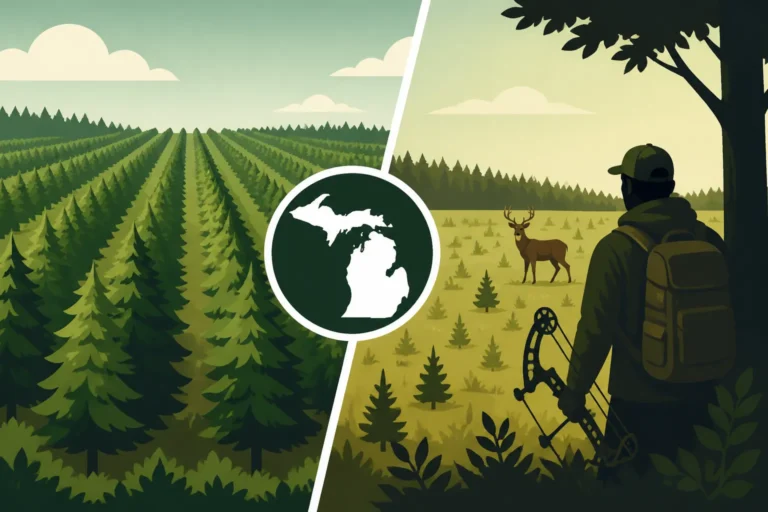
In exchange for this tax reduction, the landowner agrees to open their land to the public for hunting and fishing. This is the critical component for us hunters. It means that while the land remains privately owned and managed, the public gains a legal right to access it for specific recreational activities. It’s a win-win: landowners get a tax break for doing what they already want to do (grow trees), and the public gets more hunting access. This program specifically targets timberland, which is often fantastic wildlife habitat, especially with ongoing forestry practices that create diverse age classes of trees and thick cover.
The Hunter's Right to Access
So, what does "allows" truly mean when it comes to CFA land? It means you have the legal right to enter and utilize these properties for hunting and fishing, provided your activities are non-motorized. You can walk, hike, and hunt on these lands without seeking specific permission from the landowner, much like you would on many forms of Michigan State Forest Hunting Rules. This right is enshrined in the Act and is a significant boon for hunters looking for more elbow room.
However, this isn't a free-for-all. It's a conditional right of access. You are a guest, albeit a legally protected one. You are allowed to pursue game, set up temporary treestands or ground blinds (which must be removed at the end of the season or hunt, just like on state land), and retrieve downed animals. You are not allowed to use motorized vehicles unless specific, signed access roads are explicitly open for such use by the landowner. You cannot cut firewood, clear shooting lanes, plant food plots, or make any permanent alterations to the property. Think of it as public access for hunting, but with the understanding that it's still someone's property and livelihood. Maintaining a respectful approach is key to ensuring this program continues to benefit hunters for generations to come. To truly capitalize on these opportunities, you first need to know how to locate these parcels, a skill that's becoming increasingly easy with modern mapping technologies.
Rules, Responsibilities, and Respect on CFA Land
Hunting on Commercial Forest Act land comes with a clear set of guidelines. It's not a free-for-all, and understanding the nuances between what's permitted and what's prohibited is crucial for maintaining a good reputation for hunters and ensuring continued access. This land is a privilege, not an inherent right, and treating it with respect is paramount.
Permitted Activities and Prohibited Actions
The core allowance on CFA land is non-motorized public access for hunting and fishing. This is the golden rule. You can walk in, set up a temporary blind or treestand (provided it leaves no permanent damage and is removed after your hunt or season), and pursue all legally harvestable game. Retrieving a downed animal is also permitted. Essentially, if it's an activity directly related to hunting or fishing and doesn't involve altering the landscape or using a motor, it's generally okay.
However, the list of prohibitions is equally important. Remember, this is private property, and it's often a working forest.
- No Motorized Vehicles: Unless explicitly marked and designated for public motorized use by the landowner, keep your ATV, truck, or even e-bike off CFA land. This includes driving on logging roads or two-tracks.
- No Permanent Structures: You cannot build permanent blinds, tree stands, or any other structures. Anything you bring in must be removed.
- No Cutting or Altering Vegetation: Do not cut down trees, trim branches, or clear shooting lanes. This is the landowner's timber resource.
- No Fires or Camping: Open fires and overnight camping are strictly prohibited.
- No Littering: Pack out everything you pack in. Leave no trace. This should be standard practice everywhere, but especially on CFA land where public access is a conditional agreement.
- No Target Shooting: CFA land is for hunting and fishing, not for setting up a shooting range.
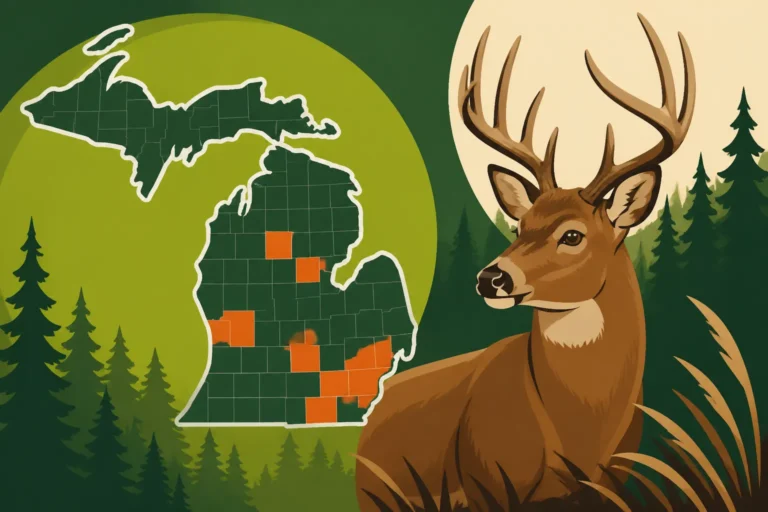
- Baiting and Feeding: This is a tricky one. While the CFA program itself doesn't explicitly prohibit baiting, state-wide and county-specific baiting bans still apply. For example, many counties in Michigan have bans on baiting for deer due to concerns about Chronic Wasting Disease (CWD). Always check the latest Michigan Baiting and Feeding Rules for your specific county before placing any feed or bait.
- No Interfering with Operations: If there's active logging, road building, or other forestry operations, stay clear and do not interfere with the landowner's work.
Understanding these distinctions is vital. When in doubt, err on the side of caution.
Hunter Etiquette and Landowner Relations
The future of public hunting access on CFA land largely rests on the shoulders of hunters demonstrating exemplary etiquette. These landowners are providing a valuable resource in exchange for a tax break, and a few irresponsible individuals can jeopardize the entire program.
- Respect the Property: Treat CFA land as if it were your own private property, or even better, a treasured hunting spot you hope to keep. This means being incredibly clean, quiet, and mindful of your impact.
- Minimize Your Footprint: Stick to existing trails, logging roads, or simply navigate the woods. Avoid trampling sensitive areas or disturbing timber operations.
- Leave No Trace: We cannot stress this enough. Pack out every shell casing, every piece of food wrapper, every drop of litter. The sight of trash can quickly sour a landowner's willingness to keep their land open.
- Be Aware of Boundaries: Even if a parcel is CFA, surrounding parcels might be traditional private land with no public access. Always know exactly where you are and respect those boundaries. Referencing Michigan Trespass and Permission Law is always a good idea to understand your rights and limitations. Digital mapping tools, which we'll discuss next, are invaluable for this.
- If You See Something, Say Something (Responsibly): If you witness abuse of CFA land, report it to the proper authorities (DNR) rather than confronting individuals directly. This protects you and ensures proper enforcement.
- Appreciation (Even if Indirect): While you don't necessarily interact with the landowner, your respectful conduct is a form of appreciation. The continued existence of the CFA program relies on positive experiences and minimal negative impacts.
By being responsible and respectful, hunters play a crucial role in safeguarding this unique public access opportunity.
Finding and Navigating Commercial Forest Land
One of the biggest hurdles for hunters eager to utilize CFA land is simply knowing where it is. Unlike state forests or state game areas, which are generally well-marked and widely known, CFA parcels can be a bit more elusive. Thankfully, modern technology has made finding these properties significantly easier.
Utilizing Digital Tools for Discovery
In today's hunting world, digital mapping applications are absolutely essential, and they are game-changers for locating CFA land. The days of poring over paper plats in county offices are largely behind us. Apps like onX Hunt and GoHunt provide detailed land ownership maps that often clearly delineate CFA parcels.
Here's how these tools help:
- Layered Maps: Most sophisticated hunting apps offer various map layers. Within these, you'll typically find a "private land" or "ownership" layer. When activated, this layer color-codes or labels different types of land. CFA parcels often have their own distinct color or label (e.g., "Commercial Forest Reserve," "CFA," or simply showing the landowner as "Commercial Forest Act").
- Property Line Identification: These apps show precise property lines, so you know exactly where the CFA land begins and ends. This is vital to avoid inadvertently trespassing on adjacent traditional private land. onX Layers for Michigan Land Status is particularly robust in this regard, offering comprehensive details on land type and ownership.
- Offline Access: Many apps allow you to download maps for offline use, which is critical in remote areas of Michigan where cell service can be spotty or non-existent. Always download your maps before you head out!
- Filtering and Searching: Some apps allow you to filter land types or search for specific landowners, making it easier to pinpoint larger CFA holdings.
While these apps are incredibly useful, it's always a good idea to cross-reference with official state resources. The Michigan Department of Natural Resources (DNR) maintains lists and maps of CFA lands. While perhaps not as user-friendly as a hunting app, the DNR's Using the Michigan Mi-HUNT Map tool can also provide valuable insights and verify information found elsewhere.
On-the-Ground Identification and Access Points
Once you've identified CFA parcels on your map, the next step is actually getting to them and confirming you're in the right place. On-the-ground identification can sometimes be tricky because CFA land isn't always as clearly marked as state land.
- Look for Signs (But Don't Rely Solely on Them): Some CFA landowners do post signs indicating public access under the Commercial Forest Act, but many do not. Never assume a lack of signs means it's not CFA, and conversely, don't assume a general "No Trespassing" sign negates CFA access if your map shows otherwise. Always trust your updated digital map and the official DNR lists first.
- Boundary Confirmation: Use your GPS-enabled hunting app to verify your location against the property lines shown on your map. This is essential, especially when public CFA land abuts private land where you don't have permission. Understanding Finding Michigan Property Lines is crucial for all hunters, but especially on CFA parcels.
- Access Points: CFA land is for non-motorized access. Look for places to legally park your vehicle along public roads adjacent to the parcel. From there, you'll be walking in. Existing logging roads, two-tracks, or even faint deer trails can serve as entry points. Remember, you cannot drive on these roads unless specifically designated. Scouting beforehand, even just a drive-by, can reveal these crucial access points.
- Visual Cues: CFA land is often actively managed for timber. This means you might see signs of recent logging, tree plantings, or areas of dense young forest growth. These are good indicators that you're on a working forest property.
Thorough scouting and careful attention to your mapping tools will prevent confusion and ensure you're hunting legally and responsibly.
Maximizing Your Hunt on CFA Parcels
Commercial Forest Act land can be incredibly productive hunting ground, but it often requires a slightly different approach than typical state land. Understanding how these lands are managed and adapting your strategies can lead to greater success.
Scouting Strategies for CFA Property
Because CFA land is primarily managed for timber production, the landscape is often in flux. This constant change, however, creates dynamic and often superior habitat for a variety of game species, particularly white-tailed deer and ruffed grouse.
- Focus on Timber Operations: Recent clearcuts or areas of selective logging are goldmines. Deer are drawn to the browse that sprouts up in these disturbed areas, and thick regenerating growth provides excellent bedding cover. Grouse thrive in young aspen stands. Look for cuts that are 3-15 years old for optimal grouse habitat. These areas will be thick, dense, and difficult to navigate, but that's precisely why game animals love them.
- Identify Edge Habitat: The edges of these timber cuts, where young growth meets mature timber, create fantastic transition zones. These are natural travel corridors for deer. Look for funnels, pinch points, and natural saddles created by topography or changes in vegetation type.
- Utilize Historical Aerial Imagery: Many digital mapping apps allow you to view historical aerial photos. This can be invaluable for identifying past logging activity and understanding how the forest has changed over time. A clearcut from 5-10 years ago might now be a dense thicket, perfect for hunting.
- Look for Water Sources: Even on working timberland, water is a critical resource. Small creeks, low-lying wet spots, or beaver ponds within CFA parcels can concentrate game, especially during dry periods.
- Scout Beyond the Obvious: Just like on Scouting Michigan Public Land Before Season, don't just walk the logging roads. Get off the beaten path and delve into the thickest cover. That's often where the biggest bucks or coveys of grouse will be holding, away from easy access points.
CFA land can be dynamic, so ongoing scouting, even during the season, can reveal new patterns as timber operations progress or food sources change.
Adapting to Unique Challenges
While CFA land offers expanded access, it also presents unique challenges that hunters need to be prepared for.
- Hunting Pressure: Easily accessible CFA parcels, especially those near population centers, can experience hunting pressure similar to or even greater than popular state game areas. Everyone with a mapping app can find these spots. Don't be surprised to encounter other hunters. To counter this, consider walking deeper, seeking out less obvious access points, or hunting during weekdays. Sometimes, simply going another half-mile past where most hunters stop can put you in undisturbed territory. Hunting Pressure on Michigan State Land is a real issue across Michigan, and CFA land isn't immune.
- Active Logging: Remember, this is commercial forest land. Active logging operations can occur during hunting seasons. Always be aware of your surroundings, listen for heavy equipment, and yield to forestry operations. Safety is paramount. If you encounter active logging, it's best to find another spot for the day. While this can be inconvenient, these operations ultimately create the prime habitat you're looking for.
- Navigating Thick Cover: The dense regeneration that makes CFA land so attractive to wildlife also makes it tough to move through silently and spot game. Consider still-hunting techniques or setting up ambush points overlooking trails through the thickets. Your clothing choices become critical here; durable, quiet fabrics are a must.
- Variable Habitat: Not all CFA land is created equal. Some parcels might be recently cut and prime, while others could be mature timber that's decades from harvest and offers less cover or browse. Use your digital mapping tools to pre-scout the type of timber present and prioritize areas with varied, younger growth.
- Rules and Regulations: Always double-check county-specific rules, especially regarding baiting or specific antler point restrictions, as these still apply to CFA land. If you're hunting in a CWD-affected county, the Hunting Deer Without Bait in Michigan rules will be in full effect, even on private CFA lands.
By understanding the nature of CFA land and adapting your scouting and hunting strategies, you can unlock some fantastic opportunities that might otherwise remain undiscovered by other hunters.
| Feature | Commercial Forest Act (CFA) Land | Typical Private Land | State Forest/Game Area Land |
|---|---|---|---|
| Ownership | Private | Private | Public (State of Michigan) |
| Tax Status | Reduced tax rate (enrollment dependent) | Full property taxes | Tax-exempt |
| Public Access for Hunting/Fishing | REQUIRED (non-motorized) | Requires landowner permission | Generally open (with specific rules) |
| Motorized Vehicle Access | Prohibited (unless designated by signs) | Requires landowner permission | Designated trails/roads only |
| Camping | Prohibited | Requires landowner permission | Designated areas or dispersed (rules vary) |
| Permanent Structures | Prohibited | Requires landowner permission | Prohibited (temporary stands allowed) |
| Baiting/Feeding | Follows county/state rules | Follows county/state rules | Follows county/state rules (often banned) |
| Timber Operations | Active logging likely | At landowner's discretion | Active management may occur |
| Primary Purpose | Timber production with public access | Private use, recreation, residence | Conservation, recreation, public use |
Disclaimer
This article is for general informational purposes only and does not constitute professional advice. Laws, prices and regulations vary by location and change over time. Consult a qualified professional for guidance on your specific situation.