Opening Day Crowds on Michigan Public Land
The crisp air of opening day, the lingering scent of woodsmoke, and the hopeful trek into the Michigan woods—it's a tradition etched into the hearts of many of us. But let's be honest, that picture-perfect solitude often clashes with the reality of dozens of other trucks at the trailhead and the constant pressure of knowing fellow hunters are just beyond the next ridge. This guide is all about acknowledging that very real frustration and arming you with strategies to find those elusive pockets of quiet on Michigan public land, even when it feels like everyone else has the same idea.
The Reality of Michigan's Opening Days
There's a reason opening day feels less like a wilderness experience and more like a busy park sometimes. It's a confluence of tradition, passion, and the sheer number of people who love chasing whitetails in our beautiful state. Understanding why it gets crowded is the first step to figuring out how to navigate it.
Why Opening Day is Such a Magnet
For many, opening day isn't just about hunting; it's a sacred annual ritual. It's the culmination of months of anticipation, scouting, and dreaming. Families have traditions built around it, friends plan entire weekends (or weeks!) around it, and the sheer excitement is palpable. For a lot of folks, especially those working demanding jobs or with limited vacation time, that first day, or the first weekend, is their primary opportunity to get out. They've been waiting all year, and they're going to seize it.
Michigan also boasts a healthy deer population across much of the state, particularly in the northern Lower Peninsula and some southern farm areas, which naturally draws a large number of hunters. While the Michigan Deer Population Estimate might vary year to year, the consistent presence of deer ensures that the desire to hunt them remains strong. People flock to areas known for good deer numbers, which can lead to concentrated hunting pressure. This isn't a bad thing in itself—it shows the strength of our hunting heritage—but it does mean we need to adapt our strategies.
What 'Crowded' Really Means on Public Land
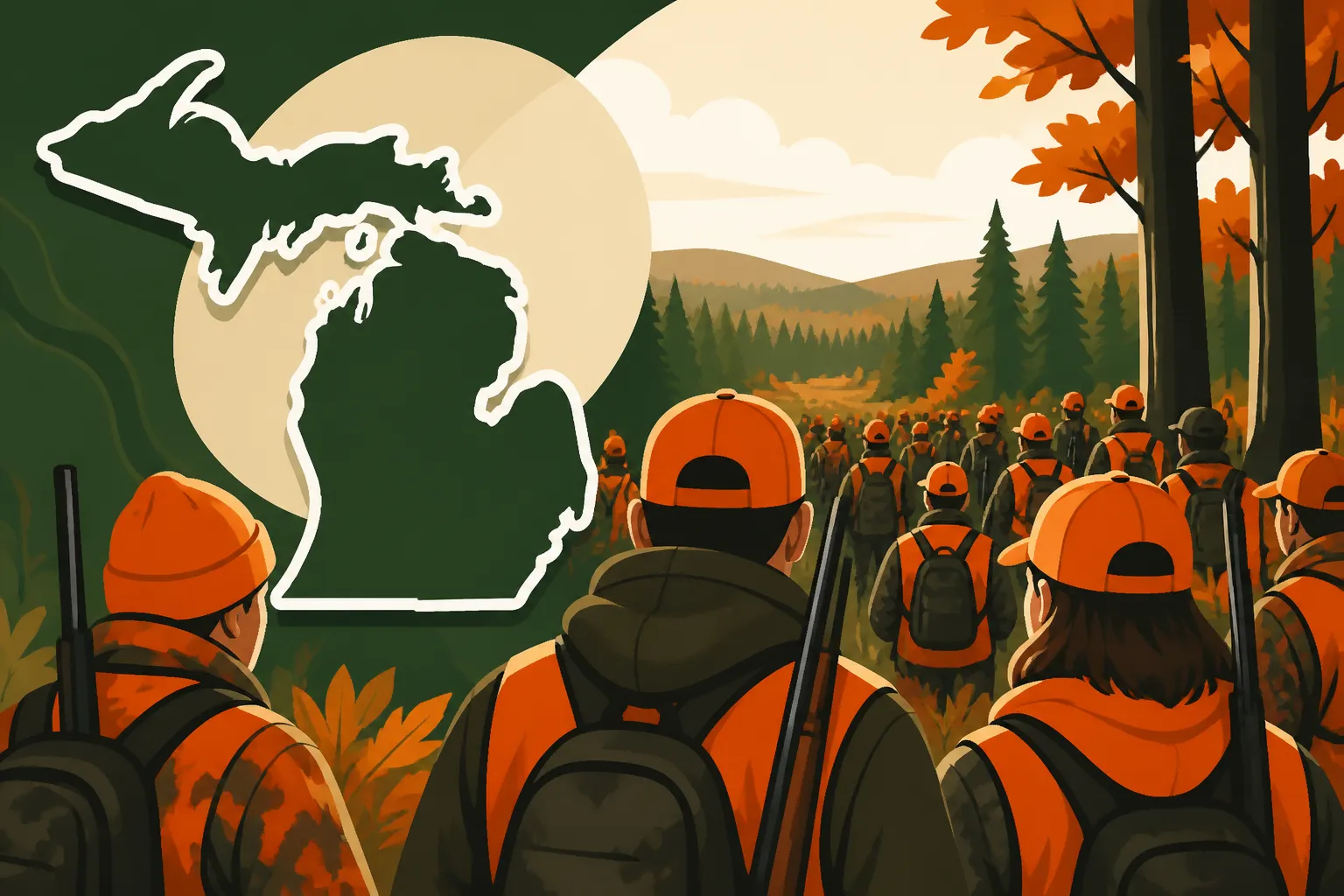
When we talk about opening day crowds, it's not always about literally bumping into another hunter every 50 yards. Sometimes, it's subtler, but just as impactful on your hunt. You might pull into a state game area parking lot before dawn and find it already packed with trucks, their owners having slipped into the darkness hours ago. Or you might walk into a promising area only to find boot tracks already pressed into the dew-covered leaves, indicating someone else had the same idea.
"Crowded" can mean hearing distant gunshots much more frequently than you'd prefer, or seeing other hunters' headlamps bobbing in the pre-dawn woods from your carefully chosen stand. It's about the increased Hunting Pressure on Michigan State Land that deer undoubtedly feel, making them move more cautiously, often retreating to the thickest cover. It's the psychological impact of knowing you're not alone, which can sometimes push you to make decisions you wouldn't otherwise, like moving too early or not waiting long enough. This pressure, even when you don't directly see another hunter, changes deer behavior and, by extension, demands a change in our own approach.
Strategic Planning to Avoid the Rush
Dealing with opening day crowds isn't about avoiding public land altogether; it's about being smarter than the average hunter. It requires more than just showing up and hoping for the best. Strategic planning, often done weeks or months in advance, is your secret weapon.
Pre-Season Scouting Beyond the Obvious
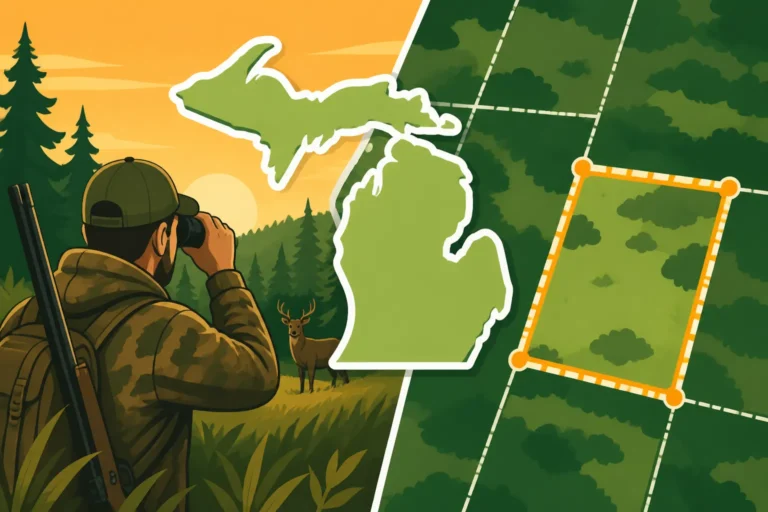
The most effective way to avoid crowds is to go where others aren't willing to go, and that starts with thorough, intelligent scouting. Don't just drive down the two-track and walk the first hundred yards you see. Instead, pull out your maps, whether they're paper or digital. Tools like onX Hunt are invaluable here, allowing you to pour over satellite imagery and topographic maps from the comfort of your home. Look for the less obvious entry points, the small slivers of public land that might be surrounded by private property but offer a walk-in access point that most overlook.
Focus on identifying terrain features that naturally deter people. This could be a large, impenetrable cedar swamp, a dense clearcut that's a struggle to walk through, or a series of steep, broken ridges that look daunting on a map. These are the places deer will retreat to when pressure mounts. Learn how to identify and interpret these areas by Reading Aerial Photos for Swamp Deer or finding hidden funnels between thick cover. Pinpoint specific bedding areas far from roads and obvious trails, and then work backward to find a discreet entry and exit route. This often means walking an extra half-mile or more just to get to your starting point, but that investment in effort almost always pays dividends in solitude and deer sightings.
Timing Your Hunt Differently
While opening day is a magnetic draw, the reality is that the hunting pressure often dissipates significantly after the first few days. If your schedule allows, consider shifting your primary hunting efforts to later in the season. The deer, having been pushed and pressured, will often settle back into more predictable patterns once the initial human surge subsides.
Hunting mid-week, even during the peak firearm season, can yield a much quieter experience than a Saturday or Sunday. Many hunters can't take extensive time off, so Monday through Friday often sees a significant drop in activity. You might find parking lots with only a few vehicles, allowing you to access areas that were shoulder-to-shoulder just days before. Similarly, don't feel obligated to be in your stand before legal shooting light every single day. While morning hunts are classic, deer behavior often changes under pressure. Sometimes, an afternoon hunt, especially later in the Hunting the Second Week of Firearm Season or during Hunting Michigan's Late Archery Season, can be incredibly productive, as deer move between bedding and feeding areas once the morning rush has died down. Being flexible with your timing can make a huge difference in the quality of your hunt.
Tactical Approaches in Crowded Areas
Even with the best planning, sometimes you find yourself in an area with more hunters than you'd like. This is where adapting your tactics becomes crucial. You can't control what others do, but you can control your own approach and maximize your chances.
Go Deeper or Go Smarter
The simplest advice for avoiding crowds is often the hardest to execute: go deeper. Most hunters don't venture more than a quarter to a half-mile from a road or established trail. By being willing to hike a mile, two miles, or even further into remote sections of public land, you dramatically increase your odds of finding undisturbed deer and the solitude you crave. This requires physical fitness, a good understanding of navigation (again, onX Hunt is a lifesaver here for tracking your route), and a commitment to carrying all your gear in and out. Think about areas that demand more effort, like those requiring a lengthy slog through a swamp or a climb up a steep incline. These natural barriers often act as filters, thinning out the competition.
Another smart approach is to find those "overlooked pockets" right near heavily trafficked areas. While most hunters blow past these spots on their way to some distant destination, deer often tuck into small, thick cover patches that hunters overlook simply because they're too close to a road or a main trail. This might be a small, dense thicket on the back side of a parking lot or a narrow strip of dense brush along a creek that's difficult to traverse. These are often excellent spots for Finding Ground Others Walk Past. A deer might bed down 100 yards off a main trail, knowing most humans will walk right by it looking for "better" ground. Be prepared to sit tight and be patient in these spots, as deer might move through them only briefly when pushed.
Adjusting Your Hunting Style
When you know there's pressure around, your hunting style needs to evolve. Aggressive rattling or loud grunt calling might work wonders in truly unpressured areas, but in crowded woods, it can often just alert other hunters to your presence or send wary deer deeper into cover. Instead, consider a more subtle, stealthy approach. Still-hunting, where you move incredibly slowly, taking a few steps then stopping for minutes to observe and listen, can be highly effective. This allows you to slip through the woods quietly, picking apart cover and looking for deer that are likely also moving slowly and cautiously. It's an art form, especially when Still-Hunting Michigan Cedar Swamps where visibility is limited, but it's incredibly rewarding.
You also need to be acutely aware of wind direction and thermals. Deer in pressured environments are hyper-sensitive to human scent. Always play the wind, even if it means taking a circuitous route to your stand or changing locations entirely. Consider employing ground blinds, especially in areas where treestand setups are difficult or obvious. A well-brushed-in ground blind can offer excellent concealment and allows you to hunt from spots that might otherwise be impossible to access quietly, making it ideal for Using a Ground Blind on Michigan State Land. Being flexible and adapting to the deer's likely behavior under pressure is key. While platforms like GoHunt primarily focus on drawing odds and unit data in western states, the underlying principle they advocate—using data and strategic thinking to make informed hunting decisions—is universally applicable. By understanding how deer react to pressure, you can apply these strategic principles to your Michigan hunts, even without specific pressure data at your fingertips.
Where to Look for Less Pressure
Michigan offers a wealth of public land, but not all of it sees the same level of hunter traffic. Knowing where to focus your efforts can be the difference between a frustrating opening day and a memorable one.
Exploring Remote State Forest & National Forest Lands
Michigan is blessed with an immense amount of state and national forest land, especially as you head north. These vast tracts of timber, often interspersed with swamps and remote lakes, are where you'll find the most opportunity for solitude. The Hunting the Michigan Upper Peninsula is famous for its wild, big-woods hunting, where simply getting to a remote corner can be a multi-hour hike or a challenge for even the most determined hunters. Similarly, large portions of the Hunting the Northern Lower Peninsula offer expansive state forest lands like the Huron-Manistee National Forest or the Au Sable State Forest.
These areas, characterized by fewer roads, more rugged terrain, and denser cover, inherently act as crowd control. Most hunters stick close to easy access points, so venturing deep into these wilder spaces almost guarantees you'll see fewer people. You might have to work harder, walk further, and navigate more challenging terrain, but the reward is often a truly wild hunting experience, with deer that haven't been constantly bumped and pressured by human presence. Learn how to use mapping tools to identify blocks of public land that are furthest from paved roads or have limited two-track access.
Lesser-Known State Game Areas and Commercial Forest Act Lands
While many State Game Areas (SGAs) in southern Michigan can be heavily pressured, especially early in the season, some larger or more rugged SGAs, or those with significant swamp acreage, can still offer pockets of solitude. Don't write off SGAs entirely; instead, focus on those parts that are hardest to access, require a longer walk, or feature terrain that most hunters avoid.
A fantastic, often overlooked option is Michigan Commercial Forest Act Land. This is privately owned timberland that is enrolled in a state program, and in exchange for a tax break, the landowners must allow public access for hunting and fishing. These parcels are often tucked away, poorly marked, and can be challenging to locate without proper mapping. However, because they're not explicitly "state land" or "national forest," many hunters simply aren't aware of them or don't know how to find them. They can be goldmines for finding less pressured deer, offering extensive acreage that sees minimal traffic simply due to lack of awareness or perceived difficulty of access. Always respect the private landowner's property, know the boundaries, and treat these lands as if they were your own.
Hunting on Michigan public land on opening day can be a challenge, but it's far from impossible to find success and solitude. By applying strategic thinking, being willing to work harder than the next hunter, and utilizing the wealth of mapping tools and information available, you can absolutely carve out your own piece of Michigan's wild on those busiest days.
| Strategy Type | High-Pressure Scenario (Opening Day) | Low-Pressure Scenario (Mid-Week, Late Season) |
|---|---|---|
| Location | Deep in dense cover, hard-to-access pockets, Commercial Forest Act land, remote state/national forests. | Near food sources, transition zones, funnels, close to roads (if undisturbed). |
| Movement | Still-hunting, slow-stalking, minimal movement in stand/blind. | Can be more mobile, rattling/calling more effective. |
| Timing | Mid-day movement, late afternoon (deer moving after morning rush), mid-week. | Early morning, late afternoon, any time deer are active. |
| Calls | Subtle grunts, doe bleats, quiet curiosity calls. | Aggressive rattling, loud grunts, social calls. |
| Concealment | Maximize all available cover, well-brushed ground blinds, natural blinds. | Treestands with good vantage, less critical for deep concealment. |
| Scouting | Focus on overlooked cover, remote bedding, subtle terrain breaks away from traffic. | Identify feeding areas, primary travel corridors, rub/scrape lines. |
Disclaimer
This article is for general informational purposes only and does not constitute professional advice. Laws, prices and regulations vary by location and change over time. Consult a qualified professional for guidance on your specific situation.