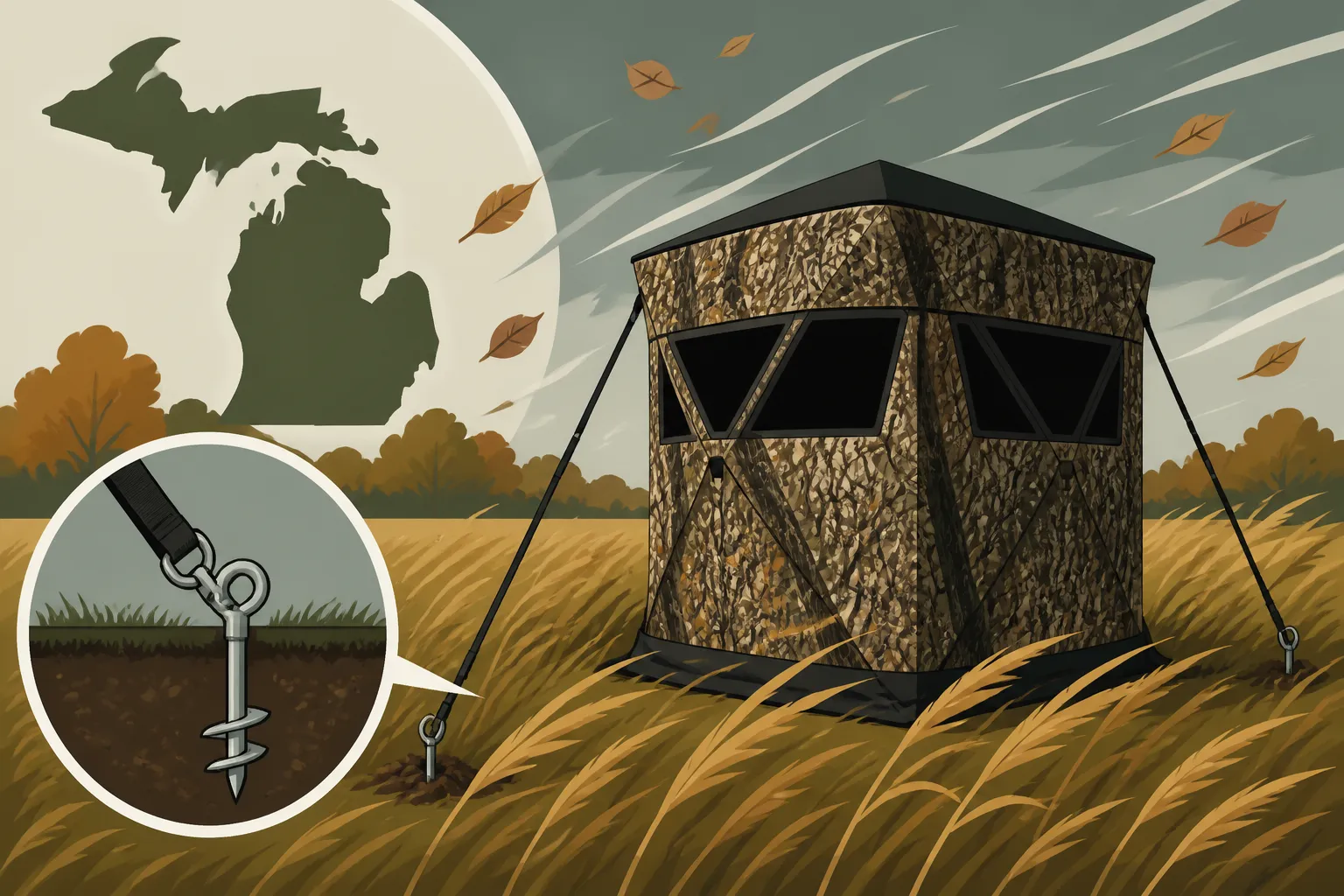
Ground Blind Anchoring in Wind
There's nothing quite as frustrating as waking up on a blustery Michigan morning, heading to your carefully placed ground blind, and finding it either flattened, mangled, or blown halfway across a field. The wind here, whether it's whipping across a wide-open cornfield in the Thumb or funneling through a thick cedar swamp up north, can be relentless, and if your blind isn't secured properly, it's not just an inconvenience – it's a wasted hunt and potentially damaged gear. This guide is all about giving you the battle-tested strategies and gear recommendations to keep your ground blind firmly planted, no matter how hard Michigan's winds decide to blow.
Understanding Michigan's Wind Challenges for Ground Blinds
Michigan weather is notoriously unpredictable, and that's especially true when it comes to wind. One day you might have a gentle breeze, and the next, a full-blown gale that feels like it's trying to rip the bark off the trees. This variability is precisely why anchoring your ground blind isn't just a suggestion; it's a critical part of your setup, whether you're hunting deer, turkeys, or predators.
The Unpredictability of Michigan Winds
We've all been there: you check the forecast, see "light winds," and think you're good to go. Then, a cold front rolls in faster than anticipated, or a localized weather pattern develops, and suddenly your blind is a giant sail. Southern Michigan farm country often experiences wide-open stretches where wind can gain serious momentum, while even in the thickest woods, a strong gust can find its way through a break in the canopy. This isn't just about comfort; a flapping blind is a noisy blind, and noise is the enemy of stealth. You can't expect to call in a wary gobbler or have a deer walk within bow range if your blind sounds like a canvas tent in a hurricane. This constant movement and noise can spook game long before they even get close.
Moreover, Michigan's varied terrain means different wind dynamics. In the flat, open expanses typical when Hunting a Standing Cornfield in the Thumb, wind can sweep unobstructed, creating powerful sustained gusts. Conversely, in the undulating hills and valleys of the northern Lower Peninsula or the Upper Peninsula, wind can swirl and create unpredictable eddies, hitting your blind from multiple directions. Even along Hunting Michigan Swamp Edges for Deer, where you might expect some protection, a strong westerly can funnel right down a cattail channel or across an open marsh, making your blind a prime target for a beat-down.
The Consequences of Improper Anchoring
The most obvious consequence of not properly anchoring your blind is, of course, it blowing away or collapsing. Imagine spending hours Brushing In a Blind on a Field Edge to perfection, only to find it in a crumpled heap when you arrive before first light. It's soul-crushing. Beyond the immediate damage, a poorly secured blind can also create dangerous situations. Stakes that pull out can become projectiles, and a collapsing blind can be disorienting and even cause minor injuries if you're inside when it happens.
But the issues go deeper than just physical damage or safety. A flimsy blind that's constantly moving and making noise undermines your hunt. The slight flutter of fabric, the creak of poles, the shifting of ground where stakes have worked loose – these are all subtle disturbances that whitetails and turkeys are incredibly attuned to. A deer might not bolt at the sound, but it might pause, stare, and then choose a different path, keeping it just out of range. Turkeys, notoriously skittish, will often spot the movement and vanish. So, while it might seem like a minor detail, proper blind anchoring is foundational to successful hunting in Michigan's often blustery conditions.
Essential Anchoring Techniques for Ground Blinds
Securing your ground blind effectively requires a combination of common sense, the right gear, and an understanding of the forces you're trying to counteract. You want your blind to feel like it's grown out of the earth, not just resting on it.
Beyond Basic Tent Stakes: Advanced Methods
Most ground blinds come with a few flimsy tent stakes. These are, frankly, often inadequate for anything more than a gentle breeze. Think of them as placeholders, not anchors. For true stability, especially in Michigan's variable weather, you need to upgrade.
One of the most effective methods is using rebar stakes or heavy-duty screw-in anchors. Rebar, cut to 12-18 inch lengths with one end sharpened, can be driven deep into most Michigan soils with a small sledgehammer. Screw-in anchors, often resembling large augers, twist into the ground and provide incredible holding power. Some hunters even use these for tying off small boats, so you know they mean business. Position your stakes at each corner of the blind, and if your blind has extra loops along the base or mid-panels, utilize those too. The more anchor points, the better. Don't just stake the bottom; if your blind has guy-out ropes at the top, use them, pulling the blind taut and securing them to trees, larger stakes, or even logs. This tension helps prevent the fabric from flapping excessively, which is a major noise factor.
When using stakes, drive them in at an angle, away from the blind. This angle increases their resistance to pulling straight up, making them much more secure. For really soft or sandy soils, you can use "deadman" anchors, where you bury a small log or rock horizontally in a shallow trench, tie your rope to it, and then bury the rope, leading it to your blind. This creates an incredibly strong anchor point that's nearly impossible to pull out.
Utilizing Natural Terrain and Features
Sometimes the best anchoring solution isn't store-bought gear; it's right there in nature. Michigan's diverse landscapes offer plenty of natural anchoring opportunities that can supplement or even replace traditional stakes.
If you're hunting in a wooded area, especially when Using a Ground Blind on Michigan State Land or in a state forest, use the trees! Run guy lines from the blind's top corners to nearby sturdy trees. You can tie off directly to the trunk or use a branch that offers a good angle. Just be mindful of how you tie them – use a non-damaging knot or a tree strap if you're concerned about marking the tree. Large rocks, fallen logs, or stumps can also be used as anchor points. Loop ropes around them and tighten them down. You can even pile heavy rocks or logs inside the blind along the base flaps to add weight and prevent uplift, especially on the windward side.
In open fields or areas with limited natural anchors, consider what's available. Sometimes, you can find a fence post (with permission, if on private land) or even a large clump of thick brush. The key is to think creatively and always prioritize security. When Scouting Michigan Public Land Before Season, make a mental note of potential blind locations and existing natural anchors. This foresight can save you a lot of headache on setup day. A platform like GoHunt, with its detailed mapping features, can sometimes help visualize terrain and potential anchor points even before you step foot on the ground.
Choosing the Right Anchoring Gear
Having the right tools for the job makes all the difference. Investing in quality anchoring gear is like buying good boots or a reliable rifle – it's an investment in your success and comfort.
Stake Types and Their Applications
Not all stakes are created equal, and what works in one Michigan habitat might be useless in another.
- Standard Tent Stakes (Flimsy Metal/Plastic): Included with most blinds. Good for very calm conditions or as temporary placeholders. Not recommended for anything more than a light breeze, especially in soft or frozen ground.
- Heavy-Duty Steel Stakes (Shepherd's Hook Style): A step up. Thicker steel, often longer. Better for moderately firm soil. Still prone to pulling out in strong winds or very soft ground.
- Screw-In Anchors: These are fantastic. They twist deep into the ground, creating a secure hold that resists pulling out much better than straight stakes. Excellent for sandy, loamy, or even slightly rocky soils. They come in various lengths; longer ones provide more holding power.
- Rebar Stakes: My personal favorite for difficult terrain. A 1/2-inch or 3/8-inch rebar, cut to 12-18 inches, with a sharpened end, can be driven into almost anything short of solid rock. They are heavy but provide unmatched holding power. Just remember to bring a small sledgehammer or a heavy rock to drive them in.
- Sand/Snow Stakes (T-stakes or large plastic sheets): While less common for ground blinds in general hunting, if you ever find yourself setting up on extremely loose sand (perhaps near a dunes area, with permission) or deep snow, these large surface-area stakes distribute the pull over a wider area.
| Stake Type | Ideal Soil Conditions | Wind Resistance | Ease of Installation | Portability |
|---|---|---|---|---|
| Standard Tent Stakes | Firm, loamy | Poor | Very Easy | Excellent |
| Heavy-Duty Steel | Firm to Moderate | Fair | Easy | Good |
| Screw-In Anchors | Loamy, sandy, soft | Good | Moderate (needs twisting) | Good |
| Rebar Stakes | Firm, rocky, frozen, clay | Excellent | Difficult (needs hammer) | Fair (heavy) |
| Sand/Snow Stakes | Very loose sand, deep snow | Good (in specific) | Moderate (burying) | Good (bulkier) |
Ropes, Cords, and Guy Lines
Stakes are only half the equation; the connection to your blind is just as important. Don't skimp on your ropes or cords. Paracord (550 cord) is a hunter's best friend – it's strong, lightweight, and versatile. Small ratchet straps are even better for securing corners to stakes or trees because they allow you to apply significant tension, really cinching the blind down. This tension is crucial for preventing fabric flap.
Always have extra lengths of rope or cord with you. You never know when you'll need to run a guy line to a distant tree or create an improvised anchor. Consider reflective cordage if you're setting up or tearing down in low light, as it can save you from tripping. The goal is to create a robust web of tension that pulls your blind down and out, making it resistant to wind from any direction. Remember, the stronger the connection between your blind, its stakes, and any natural anchors, the more secure it will be.
Field-Tested Tips for Maximizing Blind Stability
Beyond the basic gear and techniques, there are always those little tricks of the trade that come from years of trial and error in the field. These aren't just theoretical; they're lessons learned from countless windy Michigan days.
Strategic Blind Placement and Orientation
One of the best ways to combat wind is to be smart about where you put your blind. When you're thinking about Treestand Setups in Michigan Hardwoods or setting up a ground blind, wind direction is paramount. Try to position your blind with its strongest or smallest wall facing the prevailing wind. If you can tuck it into the lee side of a thick brush line, a stand of pines, or a slight rise in the terrain, you'll immediately reduce the wind's direct impact. Even a small natural break can make a huge difference in buffering your blind from the worst of the gusts.
Consider the layout of the land. Is there a ridge or a timber edge that typically blocks the westerly winds? Can you place it slightly into a depression? When you're placing your blind, step back and imagine the wind hitting it from different directions. Which side is most vulnerable? That's the side that needs extra anchoring. Think about how deer or turkeys will approach and adjust your orientation to maximize stealth and minimize wind interaction. This might mean sacrificing a perfect shooting lane from one specific angle to ensure the blind stays upright and quiet.
Adding Weight and Wind Buffering
Sometimes, stakes and ropes just aren't enough, especially if you're in an area with particularly soft soil or facing extreme winds. That's when adding weight and creating additional wind buffering comes into play.
- Internal Weight: Pile rocks, logs, or even sandbags inside the blind, especially along the bottom edges. This additional weight keeps the blind from lifting and shifting. Some hunters even bring a few small bags of sand or gravel specifically for this purpose. If you're planning a Cold Weather Sitting Strategy, the added insulation from a pile of leaves or straw packed around the base can also help keep you warmer and add a bit of weight.
- External Buffering: If you can, pile brush, snow, or hay (if on private farm land with permission) around the base of the blind, particularly on the windward side. This acts as a windbreak, deflecting the wind before it hits your blind's fabric. Not only does this reduce stress on your anchors, but it also helps deaden any flapping noises. For blinds with skirts that extend to the ground, pulling dirt or leaves over the skirt can also seal the blind and prevent wind from getting underneath and trying to lift it like a kite. This is especially helpful if you're in a location like a Michigan State Game Area where natural materials are abundant.
- Snow as an Anchor: If you're hunting late season with deep snow on the ground, snow itself can be a fantastic anchoring material. Pack snow around the base of your blind, and even use snow stakes (as mentioned earlier) or bury logs/rocks in the snow and let them freeze in place as deadman anchors. The weight and rigidity of frozen snow can make your blind incredibly stable. When it's time to pack up, a Deer Sleds for Snow Country can double as a way to haul out extra anchor weight you might have accumulated.
By combining smart placement, robust anchoring, and additional weight and buffering, you can dramatically increase your ground blind's stability and ensure it remains a reliable, quiet hunting position, even when Michigan's winds are at their most blustery. It’s all about being prepared for what the unpredictable weather throws your way, giving you the best chance at success in the field. GoHunt's detailed weather forecasts can be a helpful tool for anticipating these conditions and planning your anchoring strategy in advance.
Disclaimer
This article is for general informational purposes only and does not constitute professional advice. Laws, prices and regulations vary by location and change over time. Consult a qualified professional for guidance on your specific situation.