Treestand Rules on Michigan State Land
Hunting on Michigan's vast public lands is an incredible privilege, but it often comes with a unique set of rules that can feel overwhelming and sometimes downright confusing, especially when it comes to setting up a treestand. Many hunters worry about inadvertently breaking a regulation or having their hard-earned gear confiscated. This guide will clarify the ins and outs of treestand rules on Michigan state land, ensuring you can hunt ethically and legally, protecting both your investment and the resource we all cherish.
Understanding the Michigan DNR's Treestand Philosophy
The Michigan Department of Natural Resources (DNR) manages millions of acres of public land across the state, from the dense hardwoods of the Lower Peninsula to the sprawling big woods of the Upper Peninsula. Their rules regarding treestands are primarily designed to prevent damage to trees, protect the natural integrity of the forest, and ensure fair access for all users. It's not about making things difficult for hunters; it's about sustainable use and preventing permanent alterations to the landscape. When you look at the regulations through that lens, they start to make a lot more sense. They want you to leave no trace, or as close to it as possible.
The "Temporary" Nature of Public Land Stands
The core principle behind Michigan's treestand rules on state land is that any stand placed must be temporary. This isn't just a suggestion; it's a legal requirement. What constitutes "temporary" can sometimes feel a bit ambiguous, but generally, it means a stand that can be easily removed and doesn't cause lasting harm to the tree. The DNR explicitly prohibits any action that permanently alters or damages a tree. This includes things like screwing steps directly into a tree, using nails, or cutting branches unnecessarily to clear shooting lanes. While a small branch trim might seem harmless, repeated indiscriminate cutting can degrade habitat over time and impact the forest's health.
Think about it this way: if you took your stand down, would anyone know it was ever there? That's the ideal. Hunters using scouting tools like onX Layers for Michigan Land Status can quickly identify state land, but it's equally important to understand the specific regulations that apply once you're on it.
Why Permanent Stands are a No-Go
Permanent stands, often built from lumber or materials intended to last for seasons, are strictly forbidden on Michigan state land. This prohibition stems from several concerns. Firstly, these structures can pose a safety hazard to other forest users if they deteriorate or are improperly built. Imagine a hiker stumbling upon a rickety, abandoned stand high in a tree – it's a liability. Secondly, permanent stands can lead to a sense of exclusive use, where one hunter effectively "claims" a spot, which goes against the principle of equal access to public land. Finally, and perhaps most importantly, they typically involve significant tree damage, like large bolts, lag screws, or extensive limb removal, all of which are detrimental to the forest ecosystem. The DNR wants to ensure that the public land remains accessible and healthy for everyone, not just a select few with their long-term setups.
Approved Treestand Types and Attachment Methods
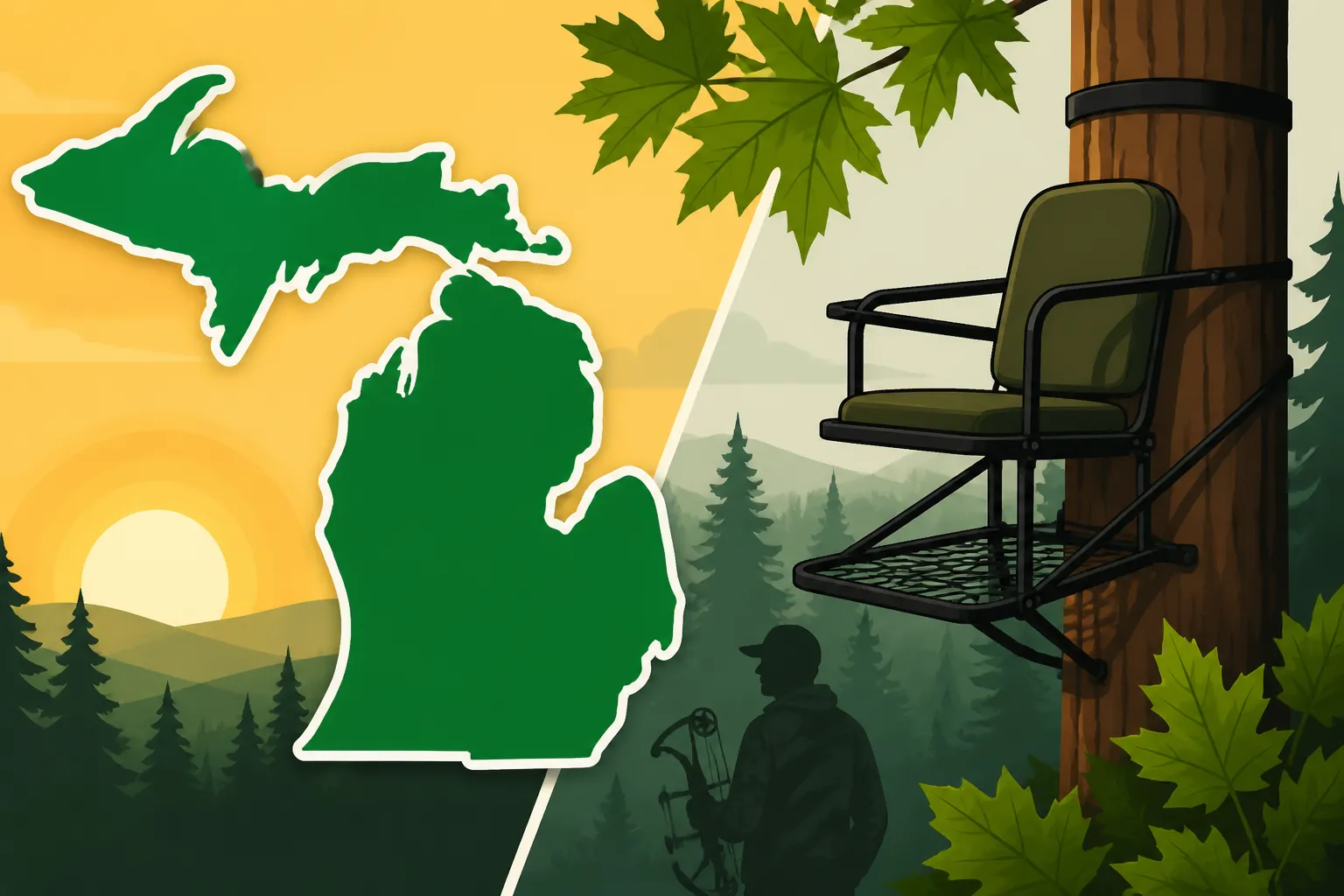
Michigan's rules favor portable, non-damaging treestands. This means equipment designed to be installed and removed without harming the tree. It’s a good idea to familiarize yourself with these types before heading out, especially if you're new to hunting public ground. The market is full of innovative solutions, so finding a compliant option isn't hard.
Climbing Stands and Hang-On Stands
Climbing stands are generally acceptable as long as they don't use permanent attachments or methods that damage the tree. They are designed to ascend a tree using a seated platform and a climbing section, gripping the tree trunk. The key is that they leave no lasting mark. Many hunters prefer these for their portability and ease of setup, allowing them to adapt to changing deer movement or Hunting After an Acorn Failure.
Hang-on stands are also widely used and accepted. These require separate climbing aids, such as strap-on steps, climbing sticks, or ladders. The crucial element here is the attachment method. Any steps or sticks must be secured with straps, chains, or ropes that do not penetrate the tree bark. Climbing Sticks for Rough Bark are a common choice, and it's imperative that they use non-damaging attachment points.
Tripods and Ground Blinds
While not technically "treestands," tripods and ground blinds are alternative elevated or concealed hunting positions that fall under similar usage guidelines for public land.
Tripods (or quadpods) are self-supporting structures that don't require attachment to a tree. They are an excellent option for areas with sparse, unsuitable trees, or where you want to maintain complete mobility. Since they don't touch trees, the primary rule is simply that they must be removed daily, or adhere to the overnight rules (which we'll cover next).
Ground blinds, whether commercially made pop-up blinds or natural blinds constructed from deadfall and brush, are also permissible. Again, the "temporary" and "no damage" rules apply. If you're building a natural blind, you cannot cut live vegetation. You must use only dead, downed materials. Pop-up blinds must also be removed daily unless they meet specific criteria for overnight placement. Remember, anything left behind is considered litter and is subject to removal by the DNR. If you're spending a full day sitting on state land, ensure your setup adheres to all relevant rules, including Using a Ground Blind on Michigan State Land.
Prohibited Attachment Methods and Materials
To be crystal clear, here's what you absolutely cannot do when attaching a treestand or climbing aid to a tree on Michigan state land:
- Screws or Nails: Inserting any metal object directly into the living tissue of a tree is prohibited. This includes screw-in steps, lag bolts, or nails. These cause permanent damage and can introduce diseases into the tree.
- Cutting Live Limbs: While you might be tempted to trim a small branch for a clearer shot, cutting live limbs, branches, or entire trees is not allowed. Clearing shooting lanes should be done by selecting a stand location where natural openings already exist or by using a small hand saw to remove dead branches that don't impact the living tree.
- Tree Spikes or Gaffs: Similar to screws, devices that spike into the tree trunk for climbing are also prohibited due to the damage they inflict.
- Permanent Blinds/Structures: Any structure built into the tree or fixed to the ground with the intent of leaving it year-round is not allowed. This includes wooden ladder stands, enclosed platforms, or anything that requires construction on-site with lumber or similar materials.
It's about leaving the woods as you found them, or even better, for the next hunter or outdoors enthusiast.
Installation, Placement, and Removal Requirements
Even with an approved treestand type, how you install, place, and remove it is critical. These details ensure safety and compliance, reflecting the DNR's commitment to public land stewardship.
The 24-Hour Rule: When Can You Leave Your Stand?
This is where many hunters get confused, and it's vital to get it right. Generally, any portable hunting stand, climbing device, or ground blind must be removed at the end of each hunting day. However, there's a significant exception: a portable stand or blind may be left overnight on public land, provided it is plainly marked with the owner's name and address or DNR Sportcard number.
This marking is not optional; it's a non-negotiable requirement if you intend to leave your stand out. The marking needs to be clearly visible, waterproof, and durable. Many hunters use engraved tags, permanent markers on plastic, or even metal tags affixed with wire. This rule allows for more flexible hunting strategies, especially during prime times like Hunting the Peak Rut Week in Michigan when early morning setups are crucial, but it does not mean "abandon your stand."
| Treestand/Blind Type | General Rule | Overnight Rule (if allowed) | Prohibited Attachment | Required Marking |
|---|---|---|---|---|
| Climbing Stand | Remove daily | Yes, with marking | Screws, nails, spikes | Owner's Name & Address OR DNR Sportcard # |
| Hang-On Stand | Remove daily | Yes, with marking | Screws, nails, spikes | Owner's Name & Address OR DNR Sportcard # |
| Ladder Stand | Remove daily | Yes, with marking | Screws, nails, spikes | Owner's Name & Address OR DNR Sportcard # |
| Tripod/Quadpod | Remove daily | Yes, with marking | None (self-supporting) | Owner's Name & Address OR DNR Sportcard # |
| Ground Blind (Man-made) | Remove daily | Yes, with marking | None | Owner's Name & Address OR DNR Sportcard # |
| Natural Blind (deadfall) | Can remain (no live cutting) | N/A (no owner) | Cutting live trees | N/A |
| Permanent/Homemade Wood Stands | PROHIBITED | PROHIBITED | Any damage to tree | N/A |
When to Remove Stands for the Season
Even if you mark your stand and leave it overnight, there's a hard deadline for annual removal. All portable hunting stands, ground blinds, and climbing devices left on state land must be removed by January 1st of the following calendar year. This date applies regardless of when you put the stand up. So, if you're hunting Michigan's Late Archery Season in December, make sure you have a plan to get your gear out before the New Year rings in.
Failure to remove your stand by this deadline can result in it being considered abandoned property. The DNR will remove and dispose of it, and you may face fines or citations. It's a harsh lesson to learn, but it’s easily avoidable with proper planning. Don't let your investment become public land litter. Using an app like GoHunt can help you keep track of dates and property boundaries to avoid these kinds of costly mistakes.
Safety First: Secure Installation and Use
While the rules focus on property and environmental protection, personal safety is paramount. Always ensure your stand is installed correctly according to the manufacturer's instructions. Use a safety harness (often called a Fall Arrest System or FAS) from the moment your feet leave the ground until they return. Trees can have hidden weaknesses, and stands can fail. Whether you're hanging a stand on a Hanging a Stand on a Swamp Edge or in a block of public hardwoods, your safety should be your number one priority. A good treestand is only as safe as its user.
Special Considerations and Common Issues
Beyond the basic rules, there are some nuanced situations and common pitfalls that Michigan hunters should be aware of when using treestands on state land.
Finding an Unmarked or Abandoned Stand
It's not uncommon to stumble upon an unmarked or seemingly abandoned stand on public land. This creates a moral and ethical dilemma for many hunters. While the stand might technically be considered abandoned property if it lacks proper identification, it's generally best practice to leave it alone. The DNR is the authority on enforcement. If you suspect a stand is in violation (e.g., permanently attached, left past the January 1st deadline, or unmarked), you can report it to the DNR. Do not take matters into your own hands by removing or claiming it. This could lead to an accusation of theft, regardless of the stand's compliance status.
Damage to Trees: A Persistent Problem
Despite clear rules, tree damage from treestands remains a persistent issue on public lands. This is why the DNR is so vigilant about prohibiting screws, nails, and gaffs. These methods wound the tree, creating entry points for disease and insects, and weakening its structure. Over time, extensive damage can kill a tree or make it unsafe. Even seemingly minor damage from improper strap use (e.g., leaving straps too tight for too long, causing girdling) can be detrimental. It's a small act, but collectively, it can impact entire forest health. When scouting new areas or Hunting a Funnel Between Two Swamps, always select a tree that won't be harmed by your setup.
The "First Come, First Served" Principle
Michigan's state land operates on a "first come, first served" principle. You don't own a spot because you placed a stand there, even if it's properly marked. If you arrive at your spot and someone else is hunting from or near your stand, you don't have an exclusive right to it, as long as they are also following the rules. This can be frustrating, especially during high-pressure seasons like Opening Day Crowds on Michigan State Land. Being respectful and understanding that public land is for everyone helps maintain positive relationships among hunters. This is another reason GoHunt can be invaluable, as it helps you scout multiple areas and identify potential backup spots far from existing pressure.
Checking Regulations Annually
Hunting regulations, including those for treestands, can change. The Michigan DNR reviews and updates its rules periodically. What was permissible last season might have subtle changes this year. It's incumbent upon every hunter to check the current Michigan Hunting and Trapping Digest annually or visit the DNR's official website before heading afield. A quick check of the regulations can save you a lot of headache and potentially a fine.
Following these rules isn't just about avoiding penalties; it's about being a responsible steward of Michigan's incredible public lands. By understanding and respecting the regulations, we ensure that these resources remain healthy and accessible for generations of hunters to come.
Disclaimer
This article is for general informational purposes only and does not constitute professional advice. Laws, prices and regulations vary by location and change over time. Consult a qualified professional for guidance on your specific situation.