Saddle Hunting in Michigan Oaks
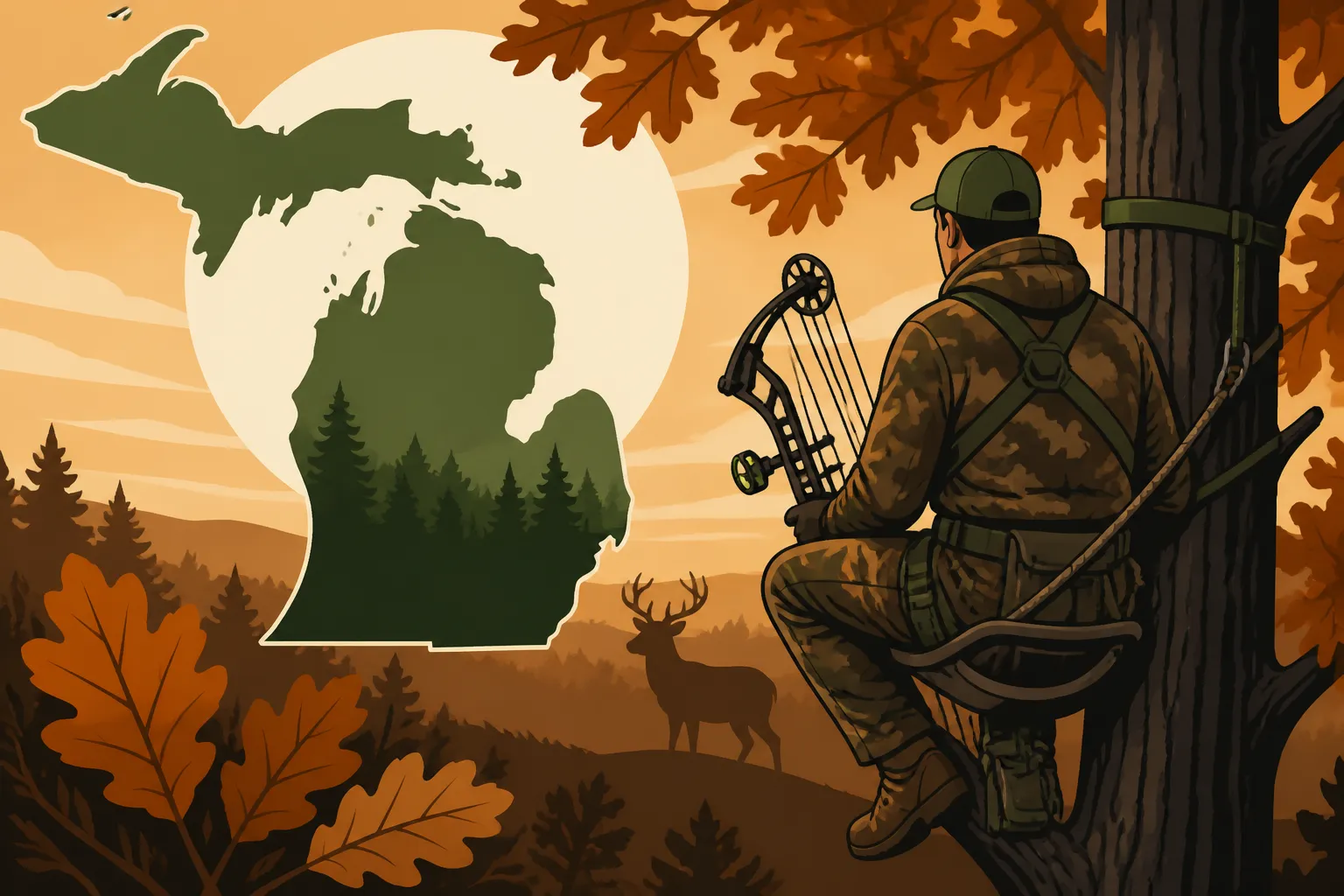
Michigan's oak forests can be phenomenal deer hunting grounds, but getting a traditional, bulky treestand deep into a promising spot, especially on public land or for mobile hunting, often feels like a wrestling match. The constant noise, the weight, and the limitations of fixed setups can make hunters feel tethered. This guide dives deep into saddle hunting, exploring how this agile method can revolutionize your approach to chasing whitetails in Michigan's oaks, offering unparalleled mobility, stealth, and adaptability.
The Transformative Advantages of Saddle Hunting in Michigan Oak Stands
Traditional ladder stands and hang-on stands have their place, especially if you're hunting a static, long-term setup on private land. But for the Michigan hunter who needs to stay nimble, adapt to changing deer movement, or penetrate deep into public forest, those bulky setups can be a significant handicap. Saddle hunting emerged from a need for ultimate mobility and efficiency, offering a unique set of advantages that are particularly well-suited to the diverse and often rugged terrain of Michigan's oak country.
Unmatched Portability and Packability
One of the most immediate and impactful benefits of saddle hunting is how incredibly light and compact your entire setup becomes. Picture yourself navigating through dense Michigan timber, crossing swamp edges, or hiking a mile or two back into a state forest. Carrying a full treestand, even a lightweight aluminum one, along with sticks, your bow, and your pack, is exhausting and noisy. It often leaves you sweaty, breathing hard, and needing a good 20 minutes to cool down and let the woods settle before you can even think about setting up.
With a hunting saddle, your "stand" is essentially a padded harness that you wear, or that folds up smaller than most textbooks. This drastically reduces the bulk and weight in your pack. Instead of a cumbersome platform, you're primarily carrying lightweight climbing sticks and a few small accessories. This isn't just about comfort; it's about being able to get deeper, faster, and quieter into areas that other hunters avoid due to the effort required. Imagine reaching that secluded oak flat loaded with acorns, a place where deer feel safe, all because your rig allowed you to move like a ghost, arriving at your spot feeling fresh and ready. This enhanced portability also means you can easily adjust your setup if the wind shifts, deer patterns change overnight, or if that coveted tree you scouted proves unsuitable, without leaving a heavy, tell-tale stand behind.
Enhanced Stealth and Adaptability
The beauty of saddle hunting lies in its inherent stealth. Because you're literally strapped to the tree, you can rotate 360 degrees around the trunk, using the tree itself as natural cover. This makes you incredibly difficult for deer to pick out. When a deer approaches from an unexpected angle, you don't have to make big, sweeping movements on a platform to get into position. Instead, you can subtly shift your body, keeping the tree between you and the deer, allowing you to draw your bow or shoulder your firearm with minimal detection. This is particularly effective when you're trying to get a shot on a wary buck that's picked up on subtle sounds or movements.
Michigan's oak forests are often quite open beneath the canopy, especially later in the season after leaf drop. This can make traditional stands feel exposed, leaving you silhouetted against the sky. With a saddle, you can use the tree trunk as a shield, effectively reducing your silhouette and breaking up your outline. This adaptability extends to tree selection too. You're not limited to trees that can accommodate a specific platform size or leveling system. Any tree that's strong enough and offers good cover can become your perch. This means you can hunt more precisely, keying in on specific trails, pinch points, or feeding oaks that might otherwise be inaccessible with a conventional stand. Hunting a Funnel Between Two Swamps or Hunting a Standing Cornfield in the Thumb can be optimized by this flexibility, allowing you to place yourself exactly where the deer are.
Superior Hunting Angles and Opportunities
Another powerful advantage, particularly in oak stands where deer might be feeding or traveling close to the ground, is the ability to achieve better shot angles. Unlike a fixed treestand where your platform dictates your position and limits your range of motion, a saddle allows you to subtly adjust your height and angle by simply shifting your weight and moving around the tree. This means you can more easily get a steep, ethical shot on an animal directly below you, or a broadside shot on a deer quartering away. You have a much wider arc of movement, meaning fewer "unshootable" situations.
Think about those frustrating situations where a deer might stop directly under your stand, or walk along a trail just out of reach of a perfect shot angle from a fixed platform. With a saddle, you can often pivot, lean, or even lower yourself slightly by manipulating your tether length to get that optimal shot. This flexibility drastically increases your effective shooting windows and can turn marginal opportunities into successful ones. It also means you're often hunting closer to the trunk, reducing your profile and making you less detectable, which is critical when Hunting the Peak Rut Week in Michigan or trying to get close to wary deer that have been pressured all season.
Essential Gear for Successful Saddle Hunting in Michigan's Oak Forests
Venturing into saddle hunting requires a specific set of gear, and while much of it is universal, there are certain considerations for the unique demands of Michigan's oak woods. From the saddle itself to your climbing method and accessories, each piece plays a vital role in your safety, comfort, and effectiveness. You don't need to break the bank, but investing in quality, reliable gear is paramount, as this equipment is literally holding you in the tree.
The Saddle and Harness System
At the heart of your setup is the hunting saddle itself. These are typically minimalist harnesses designed to be lightweight and comfortable for long sits, distributing your weight evenly and allowing you to lean back against the tree. Look for a saddle that offers good adjustability and ample padding, especially around the leg straps and waist belt. Brands like Tethrd, HSS (Hunter Safety System), and Trophyline are popular choices, each offering different features and fits tailored to various body types and hunting styles. Comfort is subjective, so if possible, try a few on or read reviews from other hunters with similar body types and experience. Remember, you'll be spending hours suspended in this rig, often in cold Michigan weather, so comfort and warmth are key.
Paired with the saddle is your safety tether and lineman's belt. The lineman's belt is crucial for safely ascending and descending the tree, keeping you securely attached while your hands are free to maneuver climbing sticks or steps. This means you're always connected to the tree from the moment you leave the ground until you're safely back down. The tether is what you attach to the tree at your hunting height, connecting to your saddle and allowing you to lean out from the tree and rotate. Ensure these ropes are robust, properly rated for fall arrest, and made from durable, weather-resistant materials. Always check for fraying, cuts, or any other signs of wear before each hunt, as these are life-saving components.
Climbing Methods: Sticks, Steps, and Platforms
How you get up the tree is as important as the saddle itself, and often where the most noise or effort is expended. For mobile saddle hunting in Michigan's oaks, climbing sticks are by far the most popular and efficient method. They are lightweight, stackable, and allow for quick, quiet ascent. Brands like Lone Wolf Custom Gear, Muddy, and Hawk make excellent climbing sticks that are designed for rugged use. Consider stick length and step spacing based on your stride and desired hunting height, as well as the average diameter of the oaks you'll be climbing. Some sticks are modular, allowing you to carry only what you need.
Beyond climbing sticks, some hunters prefer screw-in steps or strap-on steps, which can be lighter and even more compact but often take more time to install and remove, and can be harder on public land where you might not want to leave anything behind or damage the tree. Regardless of your choice, ensure your climbing method is stable, secure, and compatible with the typical bark textures of Michigan's oak species, which can range from smooth to deeply furrowed. You'll want to reach a height that offers good visibility while still allowing you to use the tree for cover. Many hunters find 15-20 feet to be a sweet spot, though it varies significantly with the terrain and canopy density. Climbing Sticks for Michigan Hardwoods covers some specific considerations for this crucial gear.
Platforms and Essential Accessories
While you could technically hunt without a separate platform by simply standing on a climbing stick or a single step, a dedicated platform significantly increases comfort and stability. These small, lightweight platforms attach to the tree and provide a sturdy base for your feet, allowing you to shift weight, turn, and achieve better shooting stances without putting undue strain on your ankles or legs. Many saddles are designed to integrate seamlessly with various platforms, and some even offer built-in mini-platforms.
Beyond the basics, a few accessories will make your saddle hunting experience in Michigan's oaks much better:
- Haul Rope: Absolutely essential for getting your bow or firearm, pack, and other gear up to your hunting height after you've climbed and secured yourself. Never climb with your weapon.
- Gear Hangers: Small hooks, daisy chains, or carabiners to attach to your saddle or tether, keeping calls, rangefinders, and other frequently used items within easy reach and silent access.
- Knee Pads: For comfortable kneeling or resting against the tree, especially during longer sits or when needing to get a lower profile.
- Warm Clothing Layers: Even though you're mobile, you'll be stationary for hours in potentially cold Michigan weather. Think about Wool for Wet Snow and Quiet Movement to stay warm and dry, as wool retains heat even when damp and is naturally quiet.
- Navigation Tools: A reliable GPS unit or a phone app like GoHunt, with offline map capabilities, is crucial for finding your way in and out, especially when scouting new oak ridges or deep public land. The detailed aerial imagery on GoHunt can help you identify prime oak stands and plan your routes. Understanding property lines with an app like GoHunt can save a lot of headaches too.
- Pack: A comfortable, minimalist pack designed for mobile hunting is ideal. You'll want something that carries your climbing sticks (if not carried separately) and other essentials without being overly bulky or noisy. Many saddle hunters prefer small day packs or fanny packs for their essential gear, integrating their sticks onto the pack itself or carrying them in hand. Packs for a Day on State Land discusses options for this.
| Gear Item | Purpose | Key Considerations for Michigan Oaks |
|---|---|---|
| Hunting Saddle | Primary suspension, replaces traditional stand | Comfort, adjustability, ample padding for long sits in cold |
| Lineman's Belt | Safety during ascent/descent, hands-free | Robust, properly rated, easy to adjust on the fly |
| Safety Tether | Main connection at hunting height | Strong, sufficient length for full 360-degree movement around tree |
| Climbing Sticks | Primary climbing method | Lightweight, stackable, quiet deployment, good grip on oak bark |
| Tree Platform | Foot base for comfort and stability | Lightweight, sturdy, easy to attach and level, silent underfoot |
| Haul Rope | Lifting gear to hunting height | Strong, long enough, tangle-free, quiet material |
| Gear Hangers | Organizing accessories | Quick access, silent operation, secure attachment to saddle |
| Navigation App (e.g., GoHunt) | Mapping, property lines, scouting | Offline capabilities, detailed aerials for tree selection, GPS tracking |
| Cold Weather Layers | Staying warm during sedentary periods | Wool or synthetics, moisture-wicking, quiet materials |
Tactical Approaches for Saddle Hunting Michigan Oak Stands
Michigan's oak forests, whether sprawling state land or smaller private woodlots, present unique challenges and opportunities for hunters. To truly leverage the advantages of saddle hunting, you need a tactical mindset, from scouting to your actual time in the tree. Adapting your approach to the specific nuances of oak ecosystems will dramatically increase your success rate, especially when hunting pressured whitetails.
Scouting for the Perfect Oak Setup
Successful saddle hunting starts long before you ever leave your truck. Scouting is paramount, especially when targeting acorns, which are a major food source. Oaks are cyclical, with heavy mast crops often occurring every few years, varying by species and location. Your Scouting Michigan Public Land Before Season should focus intensely on finding active oak stands with fresh mast. Look for clusters of white oaks, red oaks, and pin oaks, and crucially, identify which ones are currently dropping acorns. Deer will often prioritize white oaks first due to their lower tannin content (making them sweeter), but will readily shift to red oaks as the season progresses or white oak crops diminish. Look for disturbed leaves under trees, fresh deer droppings, and tracks concentrated in these areas.
Use mapping tools, like the excellent aerial imagery on GoHunt, to identify promising oak flats, ridges, and transitions. Look for subtle terrain features or cover changes that create natural travel corridors connecting these feeding areas to bedding cover. When on the ground, scout for fresh deer sign: disturbed leaves from feeding, fresh tracks, rubs, and scrapes. With saddle hunting, you're not looking for the "perfect stand tree" in the traditional sense of a specific platform setup, but rather a strong, straight tree that offers good cover and is positioned within a high-activity zone. This might be a lone oak on a field edge, a clump of oaks along a swamp, or a series of oaks on a ridge crest. Prioritize trees that break up your silhouette, offer a clear shot lane to the most likely deer approach, and provide a stealthy entry and exit route. Hunting After an Acorn Failure will require shifting focus away from oaks to other food sources, but when the acorns are dropping, they are king.
Strategic Tree Selection and Setup
Once you've identified a promising area through your scouting, your individual tree selection becomes critical. With a saddle, you have far more options than with a traditional hang-on or ladder stand, which might require a specific diameter or straight trunk. Look for an oak that is healthy, structurally sound, and free of dead limbs overhead that could compromise safety or make climbing noisy. Consider the prevailing wind direction for your hunt, as you'll want the wind in your favor for your entry, exit, and the duration of your sit. The tree itself should ideally offer some degree of cover, whether it's low branches, a cluster of other small trees nearby, or simply its own thick, gnarly trunk.
When setting up, aim to be efficient and quiet. Use your lineman's belt to stay safe and hands-free while installing your climbing sticks. Once at your desired hunting height, attach your safety tether. Spend a moment adjusting your saddle for comfort and ensuring your platform is stable and level. Pay careful attention to potential shot lanes in all directions; one of the biggest advantages of saddle hunting is the 360-degree shooting capability, so you want to capitalize on it. Clear any small branches that might impede your draw or shot, but don't over-trim, as that removes valuable cover. Remember that your goal is to become part of the tree, using its natural form to conceal your movements. Hanging a Stand on a Swamp Edge often benefits from the mobility of a saddle to find the right tree in tricky, dense terrain where traditional stands are difficult to place.
Mastering Movement and Shot Angles
The true art of saddle hunting in Michigan's oaks comes down to mastering movement in the tree. You're not sitting stationary; you're often standing, pivoting, and leaning. Practice these movements at home before hitting the woods. When a deer approaches, use the tree as your primary shield. If a deer is coming from your left, subtly shift your body around the left side of the tree, keeping the trunk between you and the animal. As it passes, you can pivot around the tree for a shot. This constant, controlled adjustment minimizes your visible movement and maximizes your cover.
With a saddle, you can lean out significantly, allowing for steeper downward angles on deer close to the tree, or to get around small obstructions like a low branch. This is particularly useful when deer are feeding directly under an oak, nose-to-the-ground. Practice drawing your bow or raising your firearm from various angles and lean positions. Understand your effective range and comfortable shooting positions from a saddle. The ability to smoothly transition from a seated rest to a standing shot, and to pivot around the tree, makes you a more versatile and deadly hunter in Michigan's often-dense oak habitats. Consider how Wind and Thermals on Michigan Ridges might affect deer movement and your ability to shift around the tree to stay undetected, using the wind to your advantage.
Safety First and Practical Tips for Michigan Saddle Hunters
Saddle hunting offers incredible advantages, but like any elevated hunting method, safety is absolutely paramount. It's not just about having the right gear; it's about understanding how to use it safely and developing good habits. For new saddle hunters in Michigan, taking the time to learn and practice will build confidence and ensure a safe and enjoyable experience in the woods, minimizing risks in remote oak forests.
Practice, Practice, Practice
The most critical safety advice for any new saddle hunter is to practice extensively at home, in your backyard or a safe area, before ever setting foot in the hunting woods. Get comfortable with your saddle, your lineman's belt, and your climbing method. Ascend and descend trees multiple times. Practice connecting and disconnecting your tether. Perform simulated draws and shots from various positions and lean angles, understanding your personal range of motion. This isn't just about safety; it's about building muscle memory so that your movements in the field are quiet, efficient, and natural, even under pressure.
Practice in different types of trees, if possible, to get a feel for how different bark textures affect your climbing sticks and how various trunk sizes impact your saddle comfort and tether length. Simulate cold weather conditions by wearing your hunting clothes during practice. You want to ensure that every aspect of your setup feels intuitive and safe before you're doing it in the pre-dawn darkness with an adrenaline rush, or in freezing temperatures. Treestands and Saddles on State Land emphasizes the importance of understanding all aspects of elevated hunting safety, and practice is the cornerstone.
Thorough Gear Inspection
Before every single hunt, meticulously inspect all your saddle hunting gear. This isn't a suggestion; it's a non-negotiable step. Check your saddle, tether, and lineman's belt for any signs of wear, fraying, cuts, or damaged stitching. Ensure all buckles, carabiners, and connection points are functioning correctly and free of debris. Examine your climbing sticks for loose bolts, cracks, or bent steps. Pay close attention to any ropes, webbing, or plastic components that might degrade over time.
Even small imperfections can lead to catastrophic failure when you're 15 feet up a tree. Exposure to UV light from sunlight, moisture, extreme temperature fluctuations, and general wear and tear from packing and deployment can all degrade materials over time. If you notice any damage, no matter how minor it seems, replace the component immediately. Your life literally depends on the integrity of your equipment. It's a small investment in time that pays off immensely in peace of mind and, more importantly, safety.
Situational Awareness and Environmental Considerations
Michigan weather can be unpredictable, especially during deer season. Always check the forecast before a hunt. Avoid saddle hunting in high winds, heavy rain, or icy conditions. These elements can make climbing dangerous, reduce your visibility, and compromise the stability of your setup and your grip. The slick bark of a rain-soaked oak tree, for instance, can make climbing sticks treacherous, and strong gusts can make being suspended in a saddle feel precarious.
Be mindful of your surroundings. Before climbing, scan for dead limbs overhead or any other hazards that could fall or interfere with your ascent. Always let someone know where you're hunting and when you expect to be back, providing a specific location. Carry a fully charged cell phone (in a waterproof case) and a comprehensive first-aid kit, especially if you're venturing How Far to Walk From a Two-Track into remote public land. Understanding Entry Routes on Flat Michigan Ground can also prevent you from disturbing game or running into other hunters unexpectedly. The GoHunt app can assist with this by helping you mark your entry and exit points, track your movements, and identify potential hazards on the map.
When you're up in the tree, remain aware of other hunters, especially on public land. Always wear hunter orange during firearm seasons, even when saddle hunting, and ensure you meet the minimum visibility requirements. How Much Hunter Orange Michigan Requires is an important regulation to follow for safety and visibility to others. By combining solid, well-maintained gear, consistent practice, and vigilant situational awareness, you can safely enjoy the unparalleled mobility and effectiveness that saddle hunting brings to the diverse oak forests of Michigan.
Disclaimer
This article is for general informational purposes only and does not constitute professional advice. Laws, prices and regulations vary by location and change over time. Consult a qualified professional for guidance on your specific situation.