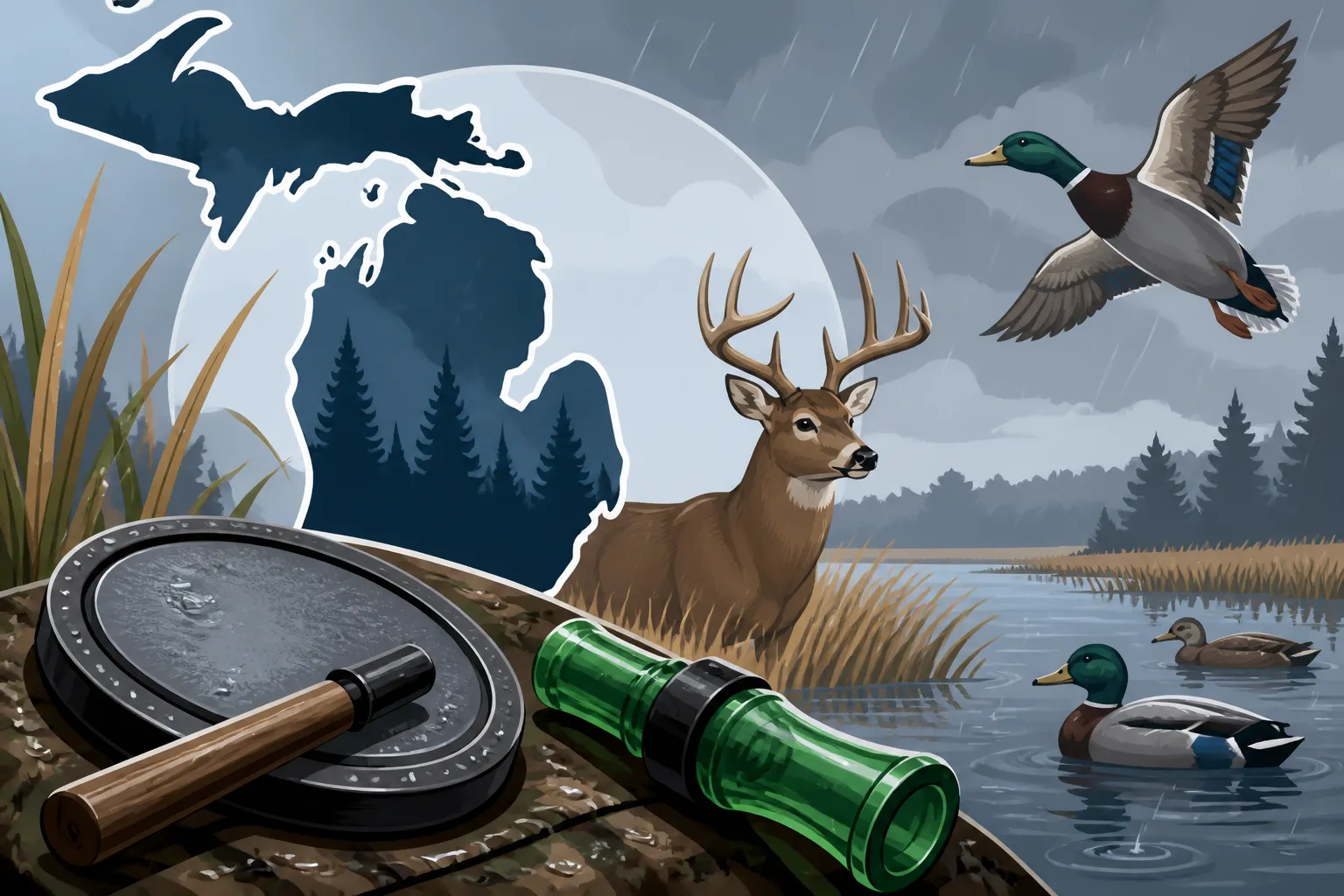
Slate and Glass Calls in Wet Weather
There's nothing quite as frustrating as waking up to a drizzly Michigan spring morning, full of anticipation for gobblers, only to find your trusty slate or glass call sounds more like a wet squawk than a seductive hen. Many of us have been there, watching a tom strut just out of range, unable to coax him closer because our primary call has gone mute thanks to the humidity or an unexpected shower. This guide is all about tackling that common problem, providing you with the practical tips and tricks to keep your friction calls working, even when Michigan's weather doesn't cooperate.
The Frustrating Reality of Wet Weather and Friction Calls
Michigan springs are beautiful, but they're also notoriously unpredictable. One minute it's crisp and sunny, the next you're dodging rain showers or slogging through foggy creek bottoms. This variability is a real headache for turkey hunters who rely on slate and glass calls, because moisture is the absolute arch-nemesis of friction calls. You spend hours practicing, getting that perfect cadence, that convincing yelp, only to have it disappear when the humidity rises or a light mist settles.
How Moisture Affects Your Call's Surface
The magic of a friction call lies in the finely tuned interaction between the striker and the call's surface. With slate, you have a natural, porous stone, and with glass, a smooth, often etched surface. When moisture gets introduced, whether it's from rain, dew, or even just high humidity, it creates a microscopic film on that surface. This film essentially acts as a lubricant, preventing the striker from grabbing and skipping correctly. Instead of the sharp, clear notes you're used to, you get a dull, muted sound, or worse, a complete absence of sound altogether. It's like trying to light a match on a damp surface – it just won't ignite properly.
Many hunters, myself included, have leaned a call against a tree on a dewy morning, only to pick it up moments later and find it unresponsive. Or perhaps you're hunting in a low-lying swamp edge, and the ambient moisture is enough to gradually degrade your call's performance over an hour or two. This isn't just an inconvenience; it can be the difference between calling in a wary tom and watching him walk away unaffected. The subtle nuances of a hen's purr or cluck, which are so crucial for realism, are the first to be lost.
The Impact on Your Striker
It's not just the call's surface that suffers; your striker takes a hit too. Most strikers are made from wood, often various hardwoods like hickory, carbon, or even synthetic materials. While these materials are generally durable, wood in particular can absorb moisture. A damp wooden striker becomes less effective, losing its ability to create crisp friction against the call surface. It can swell slightly, changing its profile, or simply become slick.
Imagine trying to rub two damp pieces of wood together to make a fire – it's incredibly difficult to generate enough heat and friction. The same principle applies here. If both your call surface and your striker are compromised by moisture, you're effectively dead in the water. Some hunters carry multiple strikers made of different materials, and for good reason. A composite or carbon striker might perform slightly better in damp conditions than a traditional wooden one, as they are less prone to absorbing water. But even then, if the call surface itself is wet, you're fighting an uphill battle. This is especially noticeable when trying to create soft, seductive purrs or subtle clucks, which require very precise control and optimal friction.
Pre-Hunt Prep: Protecting Your Calls from Michigan's Moisture
You can't control the weather, but you can certainly control how you prepare for it. Proactive steps before you even set foot in the Spring Turkey Hunting in Michigan woods can make a world of difference in keeping your calls operational. A little forethought and preparation can save you a lot of frustration when that longbeard starts gobbling from his roost in a misty river bottom.
Cleaning and Conditioning Your Call Surface
The first line of defense against moisture is a well-maintained call. Before every hunt, and especially if rain is in the forecast, take the time to properly condition your call's surface. For slate calls, this means using a fine-grit sandpaper (around 100-120 grit) or a specialized conditioning stone to rough up the surface. You're not trying to carve grooves, just create fresh, unglazed friction points. For glass calls, a Scotch-Brite pad or fine sandpaper works best to scuff up the playing surface. This removes any oils from your hands, dust, or other contaminants that might hinder performance, and most importantly, it creates a fresh texture for the striker to grab onto.
After conditioning, make sure to wipe away all dust with a clean, dry cloth. Some hunters use a small, soft brush. You want that surface pristine. If you can keep the call in a waterproof pouch or a zippered pocket until you're ready to use it, even better. The goal is to minimize its exposure to humidity and precipitation until it's absolutely necessary. Think of it as preparing a fresh canvas for your art – you want it clean and ready for optimal performance. I've seen too many hunters neglect this step, only to wonder why their call isn't performing like it did on the sunny range.
Waterproofing and Carrying Solutions
While you can't truly "waterproof" a friction call in the traditional sense, you can certainly protect it with smart carrying solutions. A dedicated call caddy or a small, waterproof case is invaluable. Many companies make specialized pouches with individual compartments for your calls and strikers. Look for ones made from water-resistant materials with tight-fitting lids or zippers. I’ve found that even a simple Ziploc bag tucked inside a main call pouch can provide an extra layer of defense against a sudden downpour.
Consider carrying multiple calls and strikers. Having a backup slate and a backup glass call, along with a few different strikers (e.g., a carbon and a hardwood), gives you options. If one call gets wet, you can switch to another while the first one dries out. When you're Calling a Michigan Gobbler Off the Roost in a damp morning, having a reliable call is paramount. Some hunters even keep their primary calls wrapped in a small piece of chamois cloth or felt inside their pouch, which can absorb some ambient moisture and prevent direct contact with condensation. The key is to keep them as dry as possible for as long as possible.
In-Field Adaptations: Making Your Calls Sing in the Rain
Even with the best preparation, you might find yourself in a situation where the weather turns, or your calls get damp. That's when you need to be able to adapt on the fly. Don't throw in the towel just because a little rain starts falling; there are still tricks you can use to squeeze some convincing yelps out of your setup.
Striker Choice and Usage
When conditions get damp, the type of striker you use can make a noticeable difference. As mentioned, wooden strikers can absorb moisture and become slick. This is where synthetic or carbon strikers often shine. Their non-porous nature makes them less susceptible to absorbing water, allowing them to maintain better friction on a damp call surface. It might not be the exact sound you're used to, but a slightly different sound is better than no sound at all.
If your primary wooden striker gets wet, try using a spare, or if you only have one, try drying it as best you can on your clothing or a piece of absorbent material. When operating on a damp call, you might need to apply a bit more pressure than usual with your striker, or adjust your angle slightly to find a "sweet spot" where it still grabs the surface. Experiment with different parts of the striker tip as well; sometimes the very edge or a slightly different angle can find enough friction to make a sound. Remember, the goal is to make any turkey sound, even if it's not perfect. A desperate hunter with a damp call is still a hunter with a chance.
Call Placement and Protection During the Hunt
Where and how you hold your call during the hunt is crucial. Avoid setting it directly on damp ground or against a wet tree trunk. A small piece of dry cloth, a call pouch, or even just keeping it tucked inside your vest pocket can offer significant protection. If you're using a ground blind, you have the advantage of keeping your calls protected from direct rain, but humidity can still be an issue. Even under a tree canopy, drips and splashes can find their way to your call.
When actively calling, if it's drizzling, try to shield the call with your body or hat. After each calling sequence, if possible, gently wipe the call surface and striker with a dry cloth before putting it away. For more persistent moisture, such as fog or heavy dew, you may need to recondition the call surface more frequently than usual. This means pulling out that conditioning pad or sandpaper and giving it a quick refresh every hour or so, as needed. It's a bit more work, but it ensures your call stays responsive when that tom finally decides to commit. I've often seen hunters keep a small rag or a piece of cloth solely for this purpose in their vest.
Troubleshooting and Alternative Calling Strategies
Despite all your best efforts, sometimes a friction call just won't cooperate in wet Michigan weather. It's not a failure on your part, just the reality of hunting in challenging conditions. When your primary calls let you down, it's time to dig into your bag of tricks and use alternative strategies.
Drying Methods in the Field
If your call gets thoroughly soaked, drying it out quickly becomes the priority. A quick wipe-down might not be enough. If the rain breaks, try to expose the call and striker to circulating air to dry naturally. Some hunters will place their calls in a sunny spot on the hood of their truck during a break, or even just leave them in an open, dry compartment of their vest. The goal is to evaporate the moisture from the surface and out of the material.
If you have a small, absorbent towel or chamois, gently blot the call surface and striker. Avoid rubbing vigorously, especially on slate, as you might embed debris. For wooden strikers, try to wipe them down and keep them separate from wet clothing. If you have a small amount of "speed chalk" (often used by pool players), a tiny bit rubbed onto a damp wooden striker can sometimes help, but be cautious not to get it on the call's playing surface itself. Remember, patience is key here. A wet call needs time to dry, so if conditions are consistently wet, you'll need to consider other options.
Backup Calls and Situational Choices
This is where carrying a diverse array of calls really pays off. When slate and glass calls fail, other types of calls often shine in wet weather.
Mouth Calls (Diaphragm Calls): These are arguably the most weather-proof calls available. Since they sit inside your mouth, they are completely protected from rain, wind, and humidity. They're also hands-free, which is a huge advantage when you need to hold your shotgun steady. Every Michigan turkey hunter should have at least two or three different mouth calls in their vest, ranging from a soft hen yelp to a loud, aggressive gobbler call. Turkey Calls Worth Carrying in Michigan often includes a good selection of mouth calls for this very reason.
Box Calls: While not entirely waterproof, box calls generally handle damp conditions better than friction calls. The friction is between the lid and the soundboards, and while the lid can get slick, it's often easier to wipe down and dry. Some box calls are made of synthetic materials that are even more weather-resistant. If a box call gets wet, wiping the top edge of the paddle and the lip of the box with a dry rag can often restore enough friction to get a few crucial yelps out.
Locator Calls: While not for attracting turkeys directly, locator calls (like an owl hooter, crow call, or coyote howler) are generally very durable and unaffected by moisture. They are perfect for getting a shock gobble in the rain, helping you pinpoint a tom's location even when your primary calls are struggling.
Here's a quick comparison of call types in wet weather:
| Call Type | Pros in Wet Weather | Cons in Wet Weather | Tips for Use |
|---|---|---|---|
| Slate | Can be reconditioned in field; good for soft calls. | Highly susceptible to moisture, becomes slick/mute. | Carry fine sandpaper/conditioner; use synthetic striker. |
| Glass | Can be reconditioned in field; often louder than slate. | Highly susceptible to moisture, becomes slick/mute. | Carry Scotch-Brite pad; use synthetic/carbon striker. |
| Box | Generally more resilient; easy to wipe dry. | Can still get slick; wood can swell/change tone. | Wipe paddle & box lip frequently; synthetic box calls excel. |
| Mouth | Completely weather-proof; hands-free. | Takes practice to master; can require multiple calls for variety. | Always carry backups; practice often, even indoors. |
| Locator | Fully weather-proof; great for finding birds. | Not for attracting turkeys directly. | Use to locate, then switch to a more weather-proof turkey call. |
Adapting Your Hunting Style
Sometimes, the best solution isn't about the call, but about your approach. In consistently wet or windy conditions, turkeys can be more vocal on the roost but go quiet once on the ground. They might be harder to hear, and therefore harder to locate. This is where Run-and-Gun Turkey Tactics on State Land can be effective, moving more frequently to cover ground and get closer to potential roost sites.
If a tom is hung up and your calls are failing, don't be afraid to try some aggressive calling tactics if you're close enough and think he needs a push. Sometimes a loud, commanding series of yelps, even if slightly imperfect, can trigger a response. Conversely, if he's wary, you might have to rely on silent movement, using natural terrain to get into closer range where even subtle, damp purrs might be enough. Remember, hunting isn't just about calling; it's about strategy, woodsmanship, and knowing when to push and when to back off. And sometimes, the best call in wet weather is no call at all, just a stealthy approach.
Disclaimer
This article is for general informational purposes only and does not constitute professional advice. Laws, prices and regulations vary by location and change over time. Consult a qualified professional for guidance on your specific situation.