Tender Boats and Safety on Big Water
Hunting Michigan's big water for waterfowl can be an absolutely incredible experience, offering opportunities for divers and big geese that just aren't found on smaller, inland marshes. But let's be real: that exhilaration comes with some serious risks. The vast, often unpredictable waters of the Great Lakes, and even many of our larger inland lakes, demand a whole different level of preparation and respect, especially when you're relying on a small tender boat to get you, your gear, and your best hunting buddy to where the birds are. This guide is here to walk you through the ins and outs of safely using tender boats, equipping you with essential gear, and establishing crucial safety protocols so you can enjoy those challenging big water hunts while staying as safe as possible.
The Indispensable Role of Tender Boats in Big Water Waterfowling
When you're chasing divers on the open water or setting up a formidable spread on a remote island in Michigan, a tender boat isn't just a convenience; it's the beating heart of your entire operation. It's the unsung hero that ferries everything and everyone to the hunt, and understanding its role is the first step toward a safe and successful outing.
What Exactly is a Tender Boat?
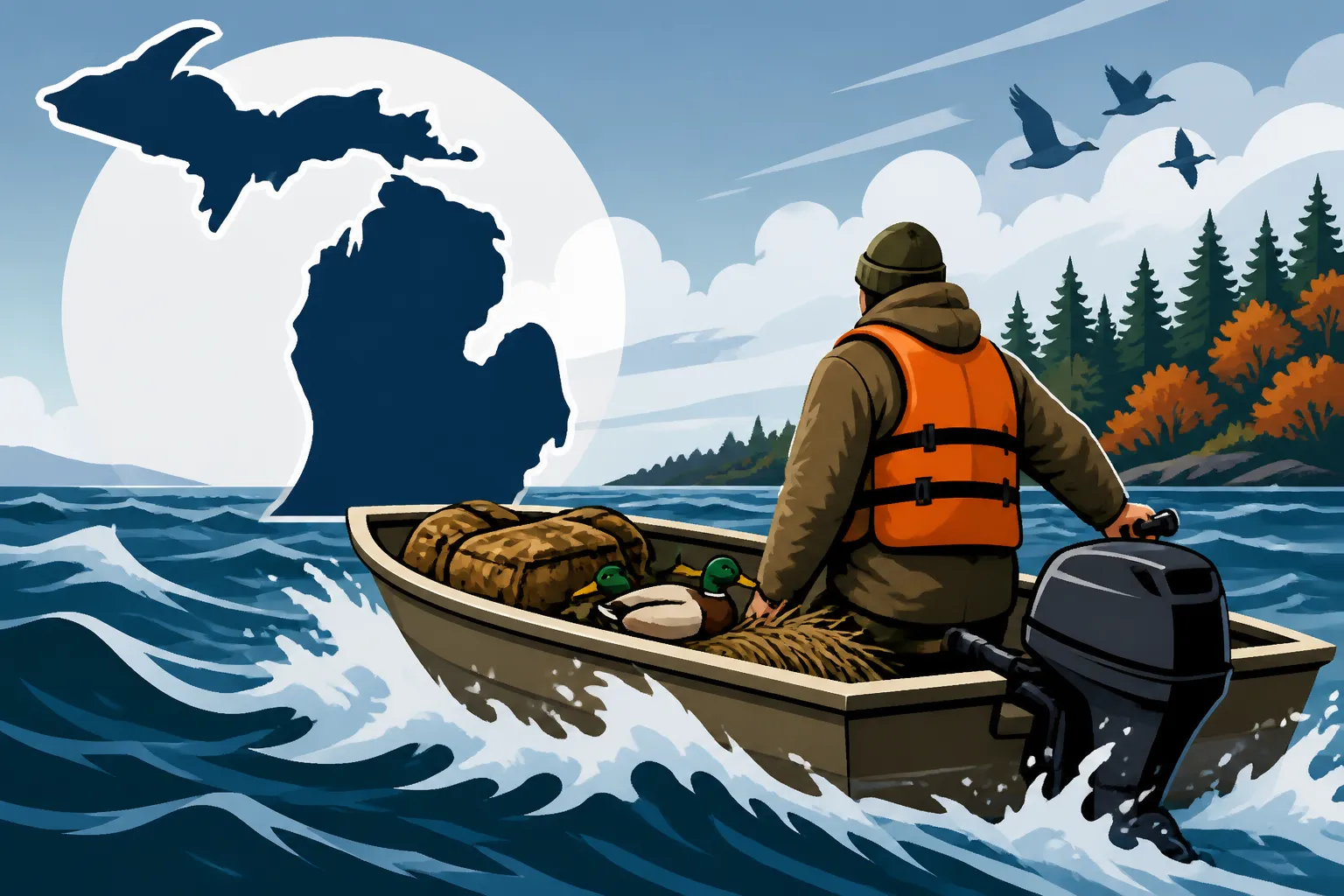
Think of a tender boat as your workhorse for the big water. It's typically a smaller, more maneuverable craft designed to shuttle hunters, dogs, decoy bags that seem to weigh a ton, and all your other gear from a launching point or a larger "mother ship" to your actual hunting location. This might be a layout blind anchored far offshore, a hidden shore blind on an isolated piece of public land, or a small, rocky island miles from any paved road. While a mother ship might be a larger, more comfortable vessel that stays a safe distance away, the tender is the one getting into the thick of it, often navigating shallower waters or tight spaces near shorelines.
These boats come in various forms, but you'll most often see aluminum jon boats, small fiberglass skiffs, or even sturdy inflatable boats being pressed into service. Their utility lies in their ability to handle significant loads while remaining nimble enough for precise decoy deployment and quick retrieves. Imagine you're out on Layout Hunting Saginaw Bay—your tender boat is what allows you to haul out those dozens, sometimes hundreds, of diver decoys and then position them exactly how you want them to lure in wary birds. Without a reliable tender, these kinds of hunts simply wouldn't be possible.
Choosing the Right Tender for Michigan's Diverse Waters
Selecting the perfect tender boat isn't a one-size-fits-all situation, especially given the sheer diversity of Michigan's waterfowl hunting grounds. What works perfectly for a calm, protected bay might be completely inadequate for the turbulent open waters of the big lakes. You need to consider a few key factors: stability, capacity, navigability, and storage.
For rougher, choppier waters, a V-hull design will generally offer a smoother, drier ride, cutting through waves rather than pounding over them. This is crucial if you're venturing out onto Lake Huron or Lake Michigan where swells can build quickly. Conversely, if your hunting primarily takes place in shallower marshes or calmer backwaters, a flat-bottomed jon boat might be more appropriate. These boats draft less water and are incredibly stable for standing and casting out decoys, but they will give you a much rougher ride in anything but glass-smooth conditions. You also need to consider capacity: how many hunters, dogs, and decoys will you typically be carrying? Overloading a small boat is a recipe for disaster. Finally, think about the engine. An appropriately sized outboard, with enough horsepower to get you to your spot and back safely, even against a stiff chop, is vital. Don't skimp on fuel capacity either; those long runs across Lake St. Clair Waterfowl Access or other large bodies of water can burn more gas than you anticipate.
Preparing Your Tender Boat for the Unpredictable
Even the best boat can become a liability if it's not properly maintained and prepared for each outing. Before every big water hunt, you need to conduct a thorough pre-trip check of your tender boat. This isn't just a suggestion; it's a non-negotiable step to ensure your safety. Start with the engine: check the oil, fuel lines, prop, and ensure you have a full tank of fresh fuel and, ideally, a spare. Test the battery and ensure all electrical components, particularly navigation lights, are functioning correctly. Visually inspect the hull for any cracks, leaks, or damage that could compromise its integrity.
Load distribution is another critical aspect that often gets overlooked in the rush of a pre-dawn launch. Unevenly distributed weight can severely impact a small boat's stability, making it prone to capsizing in choppy conditions. Place heavy items low and centered, and ensure that all gear is secured so it doesn't shift unexpectedly, especially if you hit a large wave. Finally, make sure you have the right anchoring setup. Big water often means strong currents and varying bottom compositions. You'll need substantial anchors and plenty of rode (rope or chain) to hold your position, whether you're setting up a decoy spread or just waiting for the retrieve. Imagine a sudden squall rolling in on Lake Michigan—a properly prepared and loaded tender with good anchors is your best defense against being swept away.
Essential Safety Gear: Your Lifeline on Michigan's Big Water
When you're out on Michigan's vast waters, things can go from calm to critical in a heartbeat. Having the right safety gear isn't just about compliance with regulations; it's about making sure you and your crew make it home. This gear is your absolute lifeline.
Personal Flotation Devices PFDs
This cannot be stressed enough: wear your PFD. It's not enough to have them stowed under a seat; they need to be on your body from the moment you step into the boat until you're safely back on shore. Michigan's waters, especially during prime waterfowl season, are notoriously cold. Even on a relatively warm November day, water temperatures can be lethally frigid, leading to cold water shock and rapid hypothermia if you fall in. A PFD gives you precious minutes, sometimes hours, to be rescued, preventing you from expending energy trying to stay afloat and allowing you to focus on staying warm.
There are different types of PFDs, from the bulky Type I offshore vests to the more comfortable Type III recreational vests. Many serious big water hunters opt for inflatable PFDs, which are less cumbersome and allow for greater mobility for shooting and handling decoys. They inflate automatically upon water immersion or can be manually activated. Regardless of the type, make sure it fits properly and is in good condition. Seriously, read up on Life Jackets for Layout Hunting because understanding why you need to wear one is crucial. Don't be that guy who thinks he's too tough or too good a swimmer; the water doesn't care.
Communication and Navigation Tools
In the expansive and often remote settings of Michigan's big water, communication and navigation are paramount. Your cell phone might work near shore, but its reliability diminishes rapidly once you're out a few miles. A dedicated VHF marine radio is a must-have for short-range communication with other boats or shore stations. Carry a fixed unit if your boat supports it, and always have a handheld, waterproof VHF as a backup. Ensure your cell phone is fully charged, stored in a waterproof bag or case, and considered a secondary communication device.
For navigation, a reliable GPS unit is essential. This can be a dedicated marine GPS or a robust phone app with downloaded maps. A traditional compass and up-to-date nautical charts (or digital equivalents) should also be on board as backups, because electronics can fail. Knowing your precise location is vital for emergency services to find you, and it also helps you find your way back to your launch point when fog rolls in or darkness falls. Before you even head out, I always recommend checking the weather and land access with tools like those found within a GoHunt membership, which can help verify public access points near your big water launch and help plan your route safely.
Emergency and Rescue Equipment
Beyond PFDs and communication, a comprehensive emergency kit can literally be the difference between a close call and a catastrophe. Even if you have an engine, always carry a sturdy paddle or a set of oars; a mechanical failure could leave you adrift miles from shore. A bailing bucket or a bilge pump (manual and/or electric) is non-negotiable for dealing with water intrusion, whether from waves or a leak.
A well-stocked first aid kit is essential for any outing, especially in remote locations. Don't forget a fire extinguisher, signaling devices like flares (visual), a whistle or air horn (audible), and possibly a strobe light for night emergencies. Thermal blankets and spare, dry warm clothing should be in a waterproof container, ready for immediate use if someone gets wet. A sharp knife, easily accessible, is invaluable for cutting tangled lines or freeing yourself from debris. All of this gear contributes to Big Water Safety in a Layout Boat, ensuring you're prepared for more than just fair weather.
Navigating the Challenges: Tactics for Safe Big Water Operations
Hunting big water is as much about seamanship as it is about hunting prowess. Knowing how to read the water, handle your boat, and react to changing conditions is critical for a safe return.
Weather Awareness and Trip Planning
Michigan's big water weather is famously fickle. A sunny, calm morning can quickly devolve into a treacherous afternoon. Monitoring marine forecasts rigorously before and during your trip is absolutely non-negotiable. Pay close attention to wind speed and direction, wave height predictions, air and water temperatures, and any precipitation forecasts. Understand how local geography, like long stretches of open water (fetch) or unique shoreline configurations, can amplify wind and wave action. It's not just about what the weather is but what it will be.
More importantly, develop the discipline to call off a hunt if conditions look questionable. No duck or goose is worth risking your life. This might mean postponing, finding a more sheltered area, or even just heading to a smaller, inland lake. Using mapping apps like GoHunt can be invaluable here, allowing you to scout alternative, more protected locations or identify potential safe harbors if conditions suddenly worsen. Understanding Michigan Waterfowl Migration Timing can also help you anticipate prime hunting windows when weather might be more favorable, but always prioritize safety over opportunity.
Safe Launching, Operating, and Retrieving
Launching and retrieving your tender boat requires care, especially at busy ramps or in adverse conditions. Always follow proper procedure, be aware of currents near the ramp, and don't rush. Once on the water, operating your boat safely means understanding how it handles in waves. Often, quartering into waves (taking them at an angle) provides the smoothest ride and minimizes the risk of swamping, rather than hitting them head-on. Maintain an appropriate speed that allows you to control the boat and react to unexpected conditions. Never overload the boat, and ensure everyone remains seated when underway.
The transition from your tender boat to a layout blind, shore blind, or even just wading into the marsh, is a critical moment for potential accidents. Do it slowly, deliberately, and ensure everyone involved is wearing a PFD. When retrieving decoys or downed birds, resist the urge to lean too far over the side or jump overboard without your PFD. If you're hunting with a retriever, make sure your dog is equipped with a Dog Vests for Cold Water Retrieves to aid in their own safety and buoyancy. Your tender boat is an extension of your hunting strategy, whether you are Layout Hunting Michigan Big Water or running into thick cover where Waders and Boats for Michigan Marshes are the primary tools.
Dealing with Emergencies on the Water
Despite all precautions, emergencies can happen. Knowing how to react can save lives. If someone falls overboard, immediate action is crucial. Designate a "man overboard" procedure before you leave shore: mark the spot with a GPS waypoint if possible, toss a throwable PFD, and initiate immediate retrieval. Practice different retrieval techniques (e.g., Lifesling, re-entry from the water) in calm conditions.
Engine failure is another common problem. First, try troubleshooting: check the fuel line, primer bulb, kill switch. If you can't get it started, deploy your secondary propulsion (paddles/oars) and use your communication devices to call for help. If your boat starts taking on too much water, swamping, or capsizing, the primary rule is usually to stay with the boat. It's easier for rescuers to spot a larger boat than a person in the water. Focus on self-rescue techniques and getting as much of your body out of the cold water as possible to prevent hypothermia. Always file a float plan with someone reliable on shore, detailing your destination, expected return time, and boat description. This can dramatically speed up rescue efforts if you don't check in. The more informed you are about the area, down to the Michigan Duck Zone Boundaries, the better prepared you'll be.
Beyond the Basics: Advanced Considerations for Michigan's Big Water
Michigan's big water hunting season often extends into the late fall and early winter, bringing with it unique and severe challenges that demand even greater preparation and respect.
Cold Water Immersion and Hypothermia
Michigan's big water in late October, November, and December is brutally cold, often in the 30s or 40s Fahrenheit. Falling into water this cold triggers "cold water shock," an involuntary gasp reflex that can cause you to inhale water, followed by a rapid loss of dexterity and strength. Hypothermia can set in within minutes. This isn't just uncomfortable; it's deadly.
Standard hunting gear, once wet, offers little to no thermal protection. For serious late-season big water hunters, investing in a wet suit or, even better, a dry suit, is a wise consideration. These specialized garments provide thermal insulation even when submerged, significantly increasing your survival time if you end up in the water. Understand the symptoms of hypothermia (shivering, confusion, slurred speech, loss of coordination) and know how to treat it. Having access to dry clothes, warm fluids, and a heat source is crucial once out of the water. Imagine the scenario of falling out of your boat in November on Lake Huron—your survival depends entirely on what you're wearing and what immediate actions you can take.
Visibility and Traffic on the Great Lakes
Big water often means big distances, and with that comes reduced visibility due to fog, heavy snow, driving rain, or simply low light conditions at dawn and dusk. Your boat needs to be equipped with proper navigation lights, and you should use them whenever visibility is reduced. Consider a radar reflector, especially if you're in an area with commercial shipping traffic or larger recreational vessels, as your small tender boat can be almost invisible on radar. A powerful air horn or whistle is also important for audible signals.
Beyond natural elements, be acutely aware of other traffic. The Great Lakes are busy waterways, and even smaller inland lakes can see significant activity from other hunters, anglers, or recreational boaters. Always maintain a proper lookout. When approaching shore or setting up in popular areas, remember the Michigan Hunter Orange Rules that apply on land, and consider wearing hunter orange on your tender if you might be mistaken for game or if other hunters are nearby.
Legalities and Regulations for Michigan Waterfowl Boats
Operating any vessel on Michigan waters comes with legal responsibilities. Ensure your tender boat is properly registered with the state and that you have all required safety equipment on board as mandated by law. This usually includes items like a horn or whistle, a fire extinguisher, proper navigation lights, and the correct number and type of PFDs for all occupants.
Beyond general boating laws, familiarize yourself with migratory bird hunting regulations specific to open water. These can sometimes differ from land-based regulations regarding shooting hours, zones, or methods. For example, some areas may have specific rules about how close you can hunt to established navigation channels. Always consult the most current Michigan DNR hunting guides and, again, a platform like GoHunt can sometimes provide links or access to these vital documents. Knowing and adhering to these rules, along with having your Michigan Waterfowl Licence and Stamps in order, ensures a legal and ethical hunt, helping to protect both yourself and the resource.
Disclaimer
This article is for general informational purposes only and does not constitute professional advice. Laws, prices and regulations vary by location and change over time. Consult a qualified professional for guidance on your specific situation.