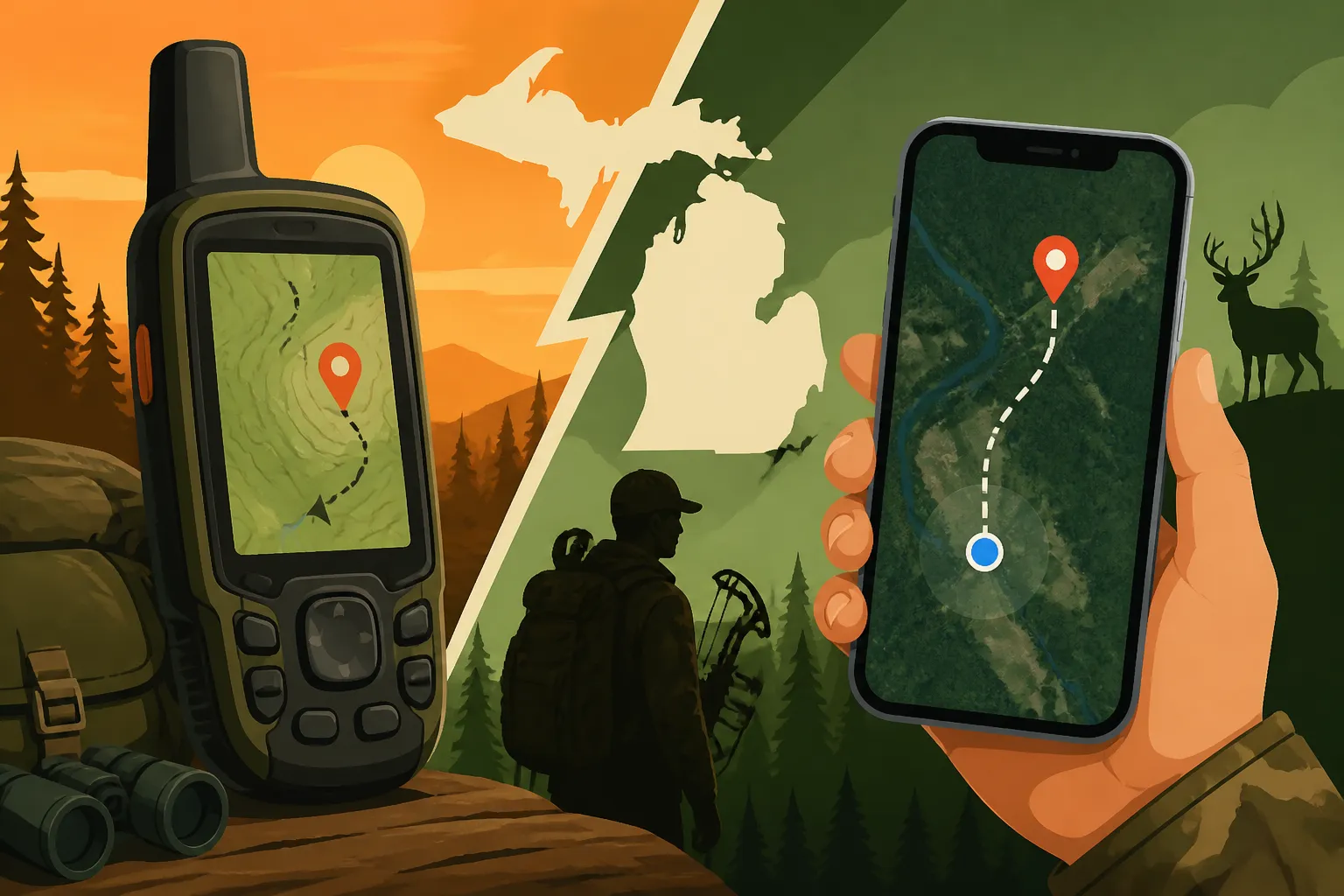
GPS Units Versus Phone Apps
Navigating Michigan's vast and varied hunting landscapes, from the dense cedar swamps of the Upper Peninsula to the sprawling farm fields of the southern Lower, can be a real challenge. You're trying to stay on public land, pinpoint that perfect buck sign, or simply find your way back to the truck after a long day. The tools we use to do this have evolved dramatically, leaving many hunters wrestling with a common question: should I stick with my trusted, dedicated GPS unit, or embrace the powerful mapping capabilities of a modern smartphone app? This guide will dive deep into both options, helping you understand their strengths and weaknesses so you can confidently choose the best navigation system for your Michigan hunts.
The Enduring Appeal of Dedicated GPS Units for Hunters
There's a reason many seasoned Michigan hunters still cling to their traditional GPS units with an almost religious fervor. While smartphones have certainly advanced, purpose-built GPS devices offer a level of reliability and ruggedness that can be hard to match when you're miles from the nearest paved road, battling the elements, and relying on your gear to get you home safely. It's about more than just showing a dot on a map; it's about peace of mind in challenging environments.
When Reliability Trumps All Else: Off-Grid Performance
Imagine you've still-hunted deep into a vast national forest, perhaps in the Huron-Manistee National Forest Hunting, tracking a hot sign. The sky is overcast, the timber is thick, and your cell phone icon shows "No Service." This is where a dedicated GPS unit truly shines. These devices rely on satellite signals, not cell towers, meaning they'll continue to function regardless of whether you have cellular reception. This is an absolute game-changer in many of Michigan's more remote hunting zones, especially if you venture into the Upper Peninsula Big Woods Counties. A dead phone battery or a lost cell signal won't leave you disoriented or guessing your way out of the woods.
Furthermore, traditional GPS units are designed for extreme battery longevity. Many models can run for days on a single set of AA or AAA batteries, which are easily swapped out in the field. This stands in stark contrast to the often rapid battery drain of a smartphone, particularly when running mapping applications or struggling to find a cell signal. When you're planning a multi-day scouting trip or a long sit in a stand, knowing your navigation tool won't unexpectedly die on you is invaluable. The constant drain of a phone's bright screen and processing power simply isn't engineered for sustained, off-grid use in the same way.
Purpose-Built Features and Ruggedness
Dedicated GPS units are crafted with the outdoorsman in mind. They often feature robust, rubberized casings that can withstand drops, bumps, and the inevitable Michigan rain or snow. They're typically waterproof or highly water-resistant, meaning an unexpected dunk in a swamp or a torrential downpour won't render them useless. Try that with most smartphones without specialized, bulky cases, and you might be in for a costly repair or replacement. The physical buttons on a GPS unit are also a huge advantage, especially when you're wearing gloves in freezing temperatures or trying to navigate with numb fingers. You don't have to take your gloves off or struggle with a unresponsive touchscreen just to zoom in or mark a waypoint.
Many GPS units come pre-loaded with detailed topographic maps, public land boundaries, and even specific hunting layers that highlight trails, food plots, and cover types. While some phone apps can replicate this, the core design of a GPS unit prioritizes navigation above all else. They are streamlined for quickly marking waypoints, tracking routes, and guiding you back to a starting point. This single-minded focus often translates to a simpler, more intuitive interface for pure navigation when you're focused on the hunt.
| Feature | Dedicated GPS Unit | Smartphone App (on phone) |
|---|---|---|
| Reliability | Excellent (satellite-based, no cell needed) | Variable (depends on cell signal or downloaded maps) |
| Battery Life | Long (days), replaceable batteries | Moderate (hours), significant drain with app use |
| Durability | Rugged, waterproof, shock-resistant | Fragile (requires protective case), usually not waterproof |
| User Interface | Tactile buttons, simple navigation | Touchscreen, can be difficult with gloves/wet hands |
| Maps | Pre-loaded topo, hunting layers often included | Requires app download/subscription, highly detailed |
| Cost | Higher initial investment | Lower initial (use existing phone), subscription for apps |
| Connectivity | GPS satellite only | GPS, cellular, Wi-Fi (multi-purpose) |
The Rise of Smartphone Hunting Apps: Convenience and Power
Just as traditional GPS units have their ardent supporters, modern smartphone hunting apps have rapidly gained popularity, and for good reason. They've revolutionized how many hunters scout, navigate, and even share their experiences in the field. The sheer computing power and versatility of a device most of us already carry make them incredibly compelling tools, offering a blend of detailed mapping, robust features, and constant evolution.
Mapping at Your Fingertips: Data and Accessibility
One of the most significant advantages of smartphone hunting apps is the incredible depth and accessibility of their mapping data. Apps like GoHunt, for instance, provide stunningly detailed satellite imagery, often far more current than what's available on many older dedicated GPS units. This allows you to scrutinize every contour, identify subtle terrain features, and even spot potential bedding areas or travel corridors from the comfort of your home. You can switch between different map layers with a tap, overlaying public and private land boundaries (Using Mi-HUNT on a Phone), timber cuts, topographical lines, and even road networks. This real-time access to multiple data sets on a large, high-resolution screen is a game-changer for detailed scouting and planning.
Beyond the visual, these apps integrate a wealth of practical information. Many will display current weather conditions, wind direction, and even moon phase data, helping you make informed decisions about your hunt. The ability to instantly pull up property ownership information can be crucial when trying to discern legal hunting areas or when you're considering Knocking on Doors in Michigan Farm Country for permission. For Michigan hunters, having all this data aggregated in one place, easily zoomable and customizable, makes scouting and in-field navigation incredibly efficient.
Beyond Navigation: Integrated Tools and Analytics
Smartphone hunting apps are more than just digital maps; they're comprehensive hunting companions. They allow you to track your routes, mark countless waypoints (like that rub line you just found, a fresh scrape, or a hidden food source), and even attach photos and notes directly to those waypoints. Imagine finding a prime funnel between two swamps; you can mark it, snap a picture, and jot down notes about wind direction and entry routes right there. This kind of robust journaling capability far surpasses what most traditional GPS units offer.
Many apps also include features for logging harvests, managing your gear, and even analyzing historical weather data for specific locations. The ability to easily share your marked waypoints or routes with hunting partners is also a huge benefit, fostering better communication and coordination, especially if you're planning Deer Drives With Three or Four Hunters. Some apps, including GoHunt, even boast advanced analytics that can predict animal movement based on factors like barometric pressure and time of year. This integration of navigation with powerful planning and post-hunt analysis tools makes them incredibly versatile.
The Cost-Effectiveness and Versatility
For most people, a smartphone is already an essential part of daily life. This means the initial hardware cost for using a hunting app is effectively zero – you're simply leveraging a device you already own. While many of the best hunting apps, like GoHunt, operate on a subscription model, this can often be more budget-friendly than purchasing a dedicated GPS unit that can run into several hundred dollars. The value proposition of turning an existing device into a powerful hunting tool is undeniable.
Furthermore, a smartphone's versatility in the field extends beyond just hunting. It's your communication device, your camera, your flashlight, your weather checker, and your entertainment system for down times at camp. Consolidating these functions into one device reduces the amount of gear you need to carry, streamlining your pack. While some hunters might see this as a potential distraction, for many, the multi-purpose nature of a smartphone makes it an indispensable tool, both inside and outside the hunting woods.
Key Considerations for Michigan Hunters
Deciding between a dedicated GPS unit and a smartphone app isn't a simple "either/or." Michigan's diverse terrain and weather demand careful thought about how each option performs under real-world hunting conditions. A tool that works perfectly on a crisp October morning in southern Michigan might fail spectacularly during a late-season muzzleloader hunt in the deep snow of the U.P.
Battery Life and Power Management
This is often the most critical differentiator. Dedicated GPS units, with their simpler processors and less demanding screens, are designed for extended battery life, often measured in days. They typically use standard AA or AAA batteries, which are lightweight and easy to carry extras of in your Packs for a Day on State Land. When you're out for a full day, or even a weekend, and don't have access to a power source, this is a huge advantage.
Smartphones, conversely, are power hogs, especially when running location services and bright screens. A mapping app can drain a fully charged phone in just a few hours, particularly in cold weather (Cold Weather Sitting Strategy), where battery performance plummets. To mitigate this, you'll absolutely need to carry a high-capacity portable power bank. These can be bulky and add weight, but they're essential for reliable phone navigation. Charging ports on phones are also more vulnerable to moisture and dirt compared to the sealed battery compartments of many GPS units. Always start with a full charge, close unnecessary apps, and keep your phone in an inside pocket to preserve battery life in the cold.
Signal Strength and Offline Capabilities
While dedicated GPS units use satellite signals that are almost universally available, smartphones rely on a combination of GPS, Wi-Fi, and cellular data. The cellular component is where many Michigan hunters run into trouble. Large swaths of Michigan's public lands, particularly in the northern Lower Peninsula and almost all of the Upper Peninsula, have spotty to non-existent cell service. If your hunting app relies on downloading map data on the fly via cellular, you'll be left with a blank screen.
This is why offline map capabilities are absolutely critical for any hunting app you choose. Apps like GoHunt allow you to download entire regions or specific map tiles to your phone before you leave for your hunt. This stores the detailed maps locally on your device, so your navigation will function perfectly even with no cell signal. However, remember that even with downloaded maps, features like real-time weather updates or sharing data with friends will still require a cellular connection. Always download your maps for your hunting area at home or wherever you have strong Wi-Fi before heading out.
Durability and User Interface in the Field
Imagine trying to pinpoint a blood trail in a driving rain, or mark a crucial waypoint while wearing thick gloves in single-digit temperatures. This is where the physical design of your navigation device really matters. Most smartphones, even in rugged cases, are not truly waterproof and their large touchscreens can be a nightmare to operate with wet fingers or gloves. Glare from bright sunlight can also make a smartphone screen nearly impossible to read.
Dedicated GPS units are built like tanks. Their screens are often designed for better visibility in direct sunlight, and their tactile buttons provide positive feedback, even through heavy gloves. They're designed to be used in adverse conditions without fuss. While a good waterproof and shockproof case can certainly help a smartphone, it adds bulk and can sometimes hinder touch sensitivity. Consider how you'll be using the device, the conditions you hunt in most often, and whether a device built specifically for those challenges makes more sense than trying to adapt a general-purpose gadget.
Making Your Choice: Which Option Fits Your Hunting Style?
Ultimately, the best navigation tool for you comes down to your individual hunting style, the areas you frequent, and your personal preferences for technology. There's no universal "right" answer, but by understanding the nuances, you can make a choice that enhances your time in Michigan's woods.
For the Backcountry Explorer
If your hunting adventures routinely take you deep into remote areas where cell service is a distant memory, a dedicated GPS unit is often your most reliable companion. Think multi-day excursions into the vast tracts of state or national forest in the U.P., or challenging hunts where you're Still-Hunting Michigan Cedar Swamps. Here, the superior battery life, ruggedness, and complete independence from cellular networks offer unparalleled peace of mind. You need a device that's going to work, every single time, without question, even when you're Getting a Deer Out of a Michigan Cedar Swamp miles from anywhere.
These are the hunters who prioritize bomb-proof reliability above all else. They might be spending days at a time without access to charging, or navigating terrain where a dropped device could be catastrophic. For these scenarios, the specialized engineering of a dedicated GPS unit is hard to beat, acting as your steadfast guide in truly wild places.
For the Tech-Savvy Day Hunter
If your hunts are typically shorter, you frequent areas with decent (though perhaps not perfect) cell coverage, or you simply appreciate the all-in-one convenience and advanced features of modern technology, a smartphone running a robust hunting app like GoHunt is likely a fantastic choice. The incredible detail of satellite imagery, the ease of marking waypoints, and the ability to combine navigation with scouting, journaling, and even weather analysis make it an incredibly powerful tool.
This option is perfect for hunters who love to Scouting Michigan Public Land Before Season from their couch, planning out entry routes, and then executing those plans with precision. The ability to quickly pull up public land lines, monitor real-time wind, and easily share locations with hunting buddies for tasks like Deer Drives With Three or Four Hunters makes the smartphone app a highly efficient system for day hunts or areas with good connectivity. Just remember to always download your maps offline!
The Hybrid Approach: Best of Both Worlds
For many Michigan hunters, the smartest solution isn't an "either/or" but a "both/and." Employing a hybrid approach, using a dedicated GPS unit as your primary navigation tool and a smartphone with an app like GoHunt as a powerful secondary or complementary device, offers the ultimate combination of reliability and advanced features.
You could use your dedicated GPS for core navigation, tracking your route, and marking critical waypoints, knowing it will always work. Then, you can use your smartphone with GoHunt to access detailed satellite imagery, explore different map layers, consult property boundaries, take photos of sign, and even record notes about your hunt. This allows you to leverage the strengths of each device while mitigating their weaknesses. For instance, the GoHunt app on your phone could be for detailed scouting and planning, while your handheld GPS is for pure, rugged navigation in the field. This way, if your phone battery dies or gets wet, you still have a reliable backup to get you back to the truck. It’s about being prepared for anything Michigan’s unpredictable woods can throw at you, and having multiple tools at your disposal to increase your chances of success and safety.
Disclaimer
This article is for general informational purposes only and does not constitute professional advice. Laws, prices and regulations vary by location and change over time. Consult a qualified professional for guidance on your specific situation.