Two-Way Radios on a Deer Drive
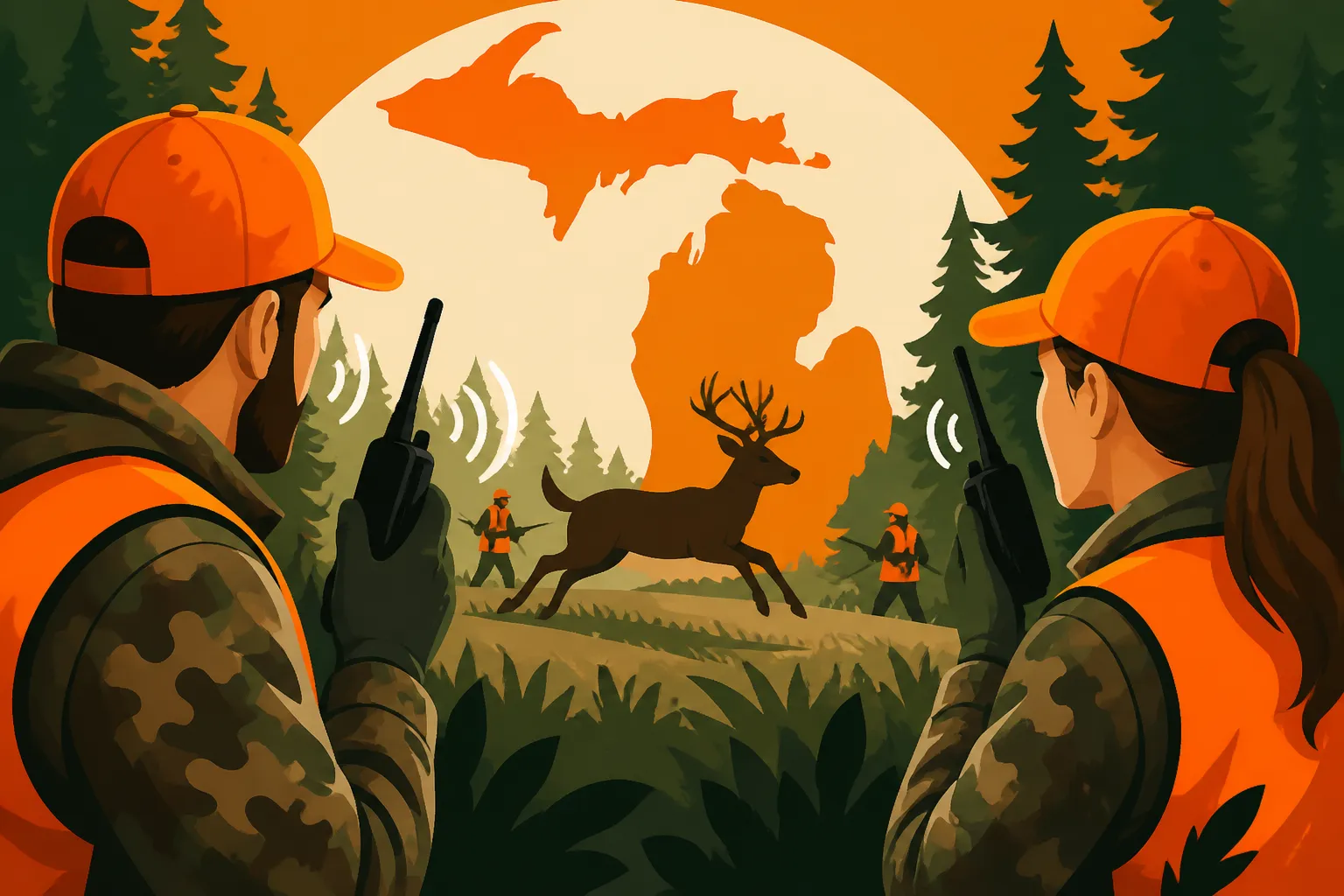
There’s nothing quite like the adrenaline and camaraderie of a well-executed deer drive in Michigan, but few things are more frustrating – or downright dangerous – than when communication breaks down. Trying to shout across a hundred acres of thick woods, waving your arms like a madman, or realizing your cell phone is a paperweight deep in a swamp can ruin a hunt and even compromise safety. This comprehensive guide will walk you through everything you need to know about using two-way radios to make your Michigan deer drives safer, more coordinated, and ultimately, more successful.
The Frustration of Communication on a Michigan Deer Drive
We've all been there. You're setting up a deer drive, painstakingly positioning standers and carefully lining up drivers, only to have the entire plan unravel because no one can talk to each other. It's a common struggle for Michigan hunters, especially when you’re trying to coordinate a group across vast tracts of state land or thick private timber. The inherent challenges of Michigan's diverse terrain and unpredictable weather often make traditional communication methods completely unreliable, leading to missed opportunities and, sometimes, unsettling safety concerns.
Why Cell Phones Just Don't Cut It in the Big Woods
When you're out chasing deer in Michigan, whether it's pushing through a swamp in the Upper Peninsula or working a woodlot in the Lower, relying on your cell phone for communication during a deer drive is often a recipe for disaster. The moment you step off a main road and into dense timber, deep river bottoms, or rolling hills, those precious bars of signal often vanish faster than a rutting buck. Imagine trying to tell your cousin, who’s supposed to be pushing the west end of a large block of cover, to slow down because the deer are circling back, only to hear nothing but static or, worse, a "no service" message. It's incredibly frustrating and leaves everyone feeling disconnected and unsure.
Beyond the infuriating dead zones, cell phones present other practical problems in a hunting scenario. Cold Michigan weather can drain phone batteries at an alarming rate, leaving you with a dead device just when you need it most. Fumbling with a touchscreen with cold, gloved hands is an exercise in futility, and the delicate nature of a smartphone isn't exactly suited for being dropped in a muddy ditch or taking a tumble out of your pocket as you scramble over a blowdown. These aren't minor inconveniences; they're critical failures when coordinating a Deer Drives With Three or Four Hunters where precise timing and clear instructions are paramount.
The Dangers of Miscommunication During a Drive
The stakes are much higher than just missing a deer when communication falters on a drive. Safety is always the absolute priority in any hunting scenario, and a lack of clear, instant communication can put everyone at risk. If drivers can't inform standers of their pace, or if a stander spots deer breaking out of position and can't relay that information, people might move into unsafe zones or shots could be taken unexpectedly. Imagine a driver pushing too fast, not realizing that a stander is still working their way to a designated spot on the far side of a thick cedar swamp. That kind of misstep, especially in thick Michigan cover, can be incredibly dangerous.
Deer, being the wily creatures they are, will exploit any perceived gap in your line. If a driver in the middle of the push can't communicate that deer are trying to sneak out a flank, those animals might escape untouched, frustrating everyone involved. Furthermore, if a driver gets disoriented, which can easily happen in dense woods or heavy snowfall, a two-way radio can be a lifeline. Without it, a simple misstep can turn into a serious concern. Effective communication ensures everyone knows where everyone else is, what the deer are doing, and how to adjust the drive for maximum safety and success.
Understanding Two-Way Radios for Hunting
Stepping into the world of two-way radios can feel a bit daunting with all the jargon, but for Michigan hunters, the choice really boils down to a couple of practical options: FRS and GMRS. These radios are designed to provide that reliable, instant communication your cell phone can't deliver in the backcountry. They cut through the noise, often literally, and allow your hunting party to stay connected, which is essential for coordinating pushes, sharing observations, and ensuring everyone's safety, especially when you're on public lands where other hunters might be around.
Types of Radios: FRS, GMRS, and What Michigan Hunters Need
When you’re looking at two-way radios, you'll primarily encounter two categories relevant to hunters: Family Radio Service (FRS) and General Mobile Radio Service (GMRS). The key differences come down to power, range, and whether you need a license.
- FRS Radios: These are the most common and user-friendly radios. They operate on a lower power output (typically 0.5 to 2 watts) and do not require a license to operate. This makes them incredibly convenient for casual use or small groups. Their range is usually limited, often a mile or less in real-world forested conditions, but they can be surprisingly effective for shorter distances in relatively open terrain or within a close-knit group doing a quick drive. Many consumer-grade "walkie-talkies" fall into this category.
- GMRS Radios: GMRS radios operate at higher power levels (up to 5 watts for handhelds) and can offer significantly greater range than FRS radios – often 2-5 miles or more in varied terrain. To operate a GMRS radio, you must obtain a license from the FCC. This is a single license for an individual and their immediate family, not for each device, and it's good for many years. While it adds a small step, the increased range and reliability are often well worth it for serious hunting groups, especially when coordinating drives over larger areas or in the dense cover you find when Hunting the Michigan Upper Peninsula for Deer or in the big woods of the northern Lower Peninsula.
For most Michigan deer drives, GMRS radios are generally the preferred choice due to their superior range and clarity. The ability to communicate effectively across a large block of land, especially when a stander is Posting a Drive on a Michigan Swamp and drivers are spread out, can make all the difference. However, FRS radios can certainly have a place for smaller drives or for communication between hunters in very close proximity. It all depends on the scale of your operation and the terrain you're tackling.
Here’s a quick comparison to help you weigh your options:
| Feature | FRS (Family Radio Service) | GMRS (General Mobile Radio Service) |
|---|---|---|
| Power Output | Lower (0.5 to 2 watts) | Higher (up to 5 watts for handheld) |
| Range (Typical) | ~0.5 – 1.5 miles in real-world conditions | ~2 – 5+ miles in real-world conditions |
| License Required | No | Yes (one license for individual/family) |
| Channels | All 22 channels (lower power on some shared) | All 22 channels (higher power on most shared) |
| Repeaters | No (not designed for repeater use) | Yes (some radios can use repeaters for extended range) |
| Cost | Generally lower | Generally higher, plus license fee |
| Best For Hunters | Small, close-range drives; casual communication | Larger, more spread-out drives; serious hunting groups |
Key Features to Look For in a Hunting Radio
Choosing the right two-way radio for your Michigan deer drives means looking beyond just FRS or GMRS. Several features can significantly enhance your experience and the effectiveness of your communication in the field.
First and foremost, range and clarity are paramount. While advertised ranges can be wildly optimistic (often based on line-of-sight in open country), check reviews for real-world performance in dense forests and varied terrain similar to Michigan's. Look for radios with higher wattage (if going GMRS) and good antenna design.
Battery life is another critical factor. A radio is useless if it dies halfway through your first drive. Look for radios with long-lasting rechargeable batteries (Li-Ion are great for cold) and the option to carry spare battery packs or even use standard AA/AAA batteries in a pinch. Cold weather can significantly impact battery performance, so options like a low-power mode or a battery-saving feature are a plus.
Durability is non-negotiable for hunting gear. Michigan weather can be brutal, from freezing rain to heavy snow, so choose radios that are weather-resistant (IPX-rated for water and dust) and rugged enough to withstand accidental drops, bumps, and general abuse in the woods. Buttons should be large and easy to operate even with heavy gloves on.
Privacy codes (CTCSS/DCS) are essential. These codes filter out chatter from other radio users on the same channel, ensuring you only hear your group. This is crucial when Hunting Pressure on Michigan State Land means you might be sharing frequencies with other hunting parties or hikers. Additionally, look for radios with VOX (Voice Operated Exchange) for hands-free operation, which can be useful when you're actively driving or managing your firearm. Finally, consider accessories like headsets or shoulder mics that allow you to communicate without removing the radio from your pack or jacket, keeping your hands free and minimizing movement. You can even plan your routes and potential radio dead zones using mapping tools like GoHunt to understand the terrain's impact on communication.
Tactical Use of Radios on Your Deer Drive
A two-way radio is only as good as the strategy behind its use. For successful and safe deer drives in Michigan, it's not enough just to have the radios; you need a plan for how you're going to use them. This involves assigning clear roles, establishing communication etiquette, and knowing how to adapt your calls to the fluid nature of a deer drive in varied Michigan cover, whether you're working a small woodlot or a sprawling tract of state land.
Assigning Roles and Maintaining Communication Discipline
Before anyone sets foot in the woods, the success of your deer drive hinges on clear roles and disciplined communication. Designate a "Drive Boss" or "Drive Coordinator" who will be the primary voice on the radio. This person is typically in charge of the overall strategy, assigning stander positions, directing drivers, and making real-time adjustments. All critical information should ideally flow through this individual to avoid confusion and ensure everyone is on the same page. Before you begin, gather everyone, ensure radios are on the correct channel and privacy codes, and clearly explain who is doing what.
Establish clear communication protocols. Short, concise messages are key. Instead of a long monologue, use direct language: "Driver One, hold your pace," or "Stander Two, deer pushing west." Avoid unnecessary chatter, which can tie up the channel and distract hunters. Everyone should understand that the radio is for essential communication only. Use identifying names or numbers (e.g., "Stander Three," "Driver Two") to ensure messages are directed to the right person. This disciplined approach is especially critical when running drives during Michigan's November Firearm Deer Season when conditions can be unpredictable and deer are on high alert.
Real-World Scenarios: Coordinating a Drive in Michigan Cover
Let's imagine a common scenario in Michigan: you're planning a drive through a medium-sized block of timber adjacent to an agricultural field, trying to push deer towards standers positioned along a swamp edge. Your Drive Boss uses a mapping app like GoHunt to mark driver paths and stander locations, identifying potential high ground for better radio reception.
As the drive begins, drivers spread out, maintaining a line. "Driver One, checking in, moving into the oak flat, pace is steady." The Drive Boss acknowledges. Suddenly, "Driver Three, I've got a doe and two yearlings breaking southeast, moving towards Stander Two's general area." This immediate update allows the Drive Boss to radio Stander Two: "Stander Two, be alert, doe and two fawns heading your way, approximately 100 yards out." This coordination means Stander Two is prepared, not surprised, and can make an ethical shot or let the deer pass if they're not what's being targeted.
Consider another situation, pushing a thick Aspen cut, a prime spot for deer in Michigan. Drivers are spaced out, moving through the dense saplings. Hunting Michigan Clearcuts and Aspen Cuts requires careful attention to sound and sight. "Driver Two, I'm hearing movement ahead, slowing my pace to match," radios one hunter. The Drive Boss then transmits to the entire line, "All drivers, hear movement ahead, maintain current spacing, slow to half pace until clear." This quick adjustment prevents deer from slipping through gaps in an uncoordinated push. Knowing the specific terrain features from scouting, perhaps using GoHunt to identify small ridges or draws, can help anticipate areas where communication might be tougher or where deer might try to sneak. When you’re Posting a Drive on a Michigan Swamp, the standers also need to be able to hear updates on the push, allowing them to adjust their focus or readiness as the deer approach their position, especially in areas where Wind and Thermals on Michigan Ridges might affect how sound carries.
Maximizing Your Radio's Performance in the Field
Having good radios is one thing, but making sure they perform optimally in the often-challenging Michigan hunting environment is another. From keeping batteries alive in freezing temperatures to understanding how the landscape impacts your signal, a little preparation and knowledge can make a huge difference in the reliability of your communication. After all, a radio that's dead or can't reach its intended recipient is no better than yelling into the wind.
Battery Management and Cold Weather Considerations
Michigan winters and even late fall can be brutally cold, and cold is the enemy of battery life. Lithium-ion batteries, common in many modern radios, perform better in cold than older NiCad or NiMH batteries, but all batteries will drain faster when temperatures plummet. To combat this, always start your hunting day with fully charged batteries. Carrying spare, fully charged battery packs is not just a good idea, it's essential. Keep these spares in an inside pocket, close to your body, to keep them warm and ready.
When your radio isn't actively being used for communication, consider switching it to a lower power setting if available, or even turning it off during long periods of inactivity, like when you're waiting on stand. For standers, especially during a Cold Weather Sitting Strategy, keeping the radio inside your jacket or a chest rig, close to your body heat, can help preserve its battery life and maintain optimal performance. Only pull it out when you need to transmit or actively listen for an incoming call. Some hunters even use small, insulated pouches specifically designed for electronics to shield their radios from the biting Michigan cold.
Effective Range and Obstructions
The advertised "range" of a two-way radio is almost always an optimistic best-case scenario under ideal conditions (like line-of-sight across open water). In the real world of Michigan hunting, with dense forests, rolling hills, and thick swamps, your effective range will be significantly reduced. Think of it more as "effective line of sight" rather than miles on a spec sheet.
Terrain is your biggest enemy. Hills, ridges, deep valleys, and even very dense stands of timber (like thick cedar swamps or mature hardwoods) will block or severely attenuate radio signals. A thick stand of pines or a large ridge can effectively turn a mile-long signal into just a few hundred yards. This is where pre-hunt scouting and planning using topographical maps or satellite imagery on GoHunt can be invaluable. Identify potential communication "dead zones" based on terrain features.
To extend your effective range:
- Seek high ground: Even a small rise can significantly improve your signal by getting your antenna above immediate obstructions.
- Maintain line of sight: If possible, try to keep a line of sight between communicators. This isn't always feasible in a deer drive, but knowing where standers are positioned relative to natural breaks in the canopy or higher elevations can help.
- Use repeaters (GMRS only): Some GMRS radios can utilize repeaters, which are essentially signal boosters set up on high points. While often fixed installations, some advanced groups might set up portable repeaters for large operations. This is less common for typical deer drives but demonstrates the potential of GMRS.
Remember, clear, crisp communication is what you're after. A faint, broken signal is nearly useless. Understanding these limitations and planning your drive routes accordingly, perhaps by placing your Drive Boss on a slight elevation or having them move to a better vantage point, can dramatically improve your radio's performance. Having a First Aid Kits for Remote Upper Peninsula Ground nearby is also a good general safety practice when heading into areas where communication might be limited.
Disclaimer
This article is for general informational purposes only and does not constitute professional advice. Laws, prices and regulations vary by location and change over time. Consult a qualified professional for guidance on your specific situation.