Roost Hunting Michigan Gobblers
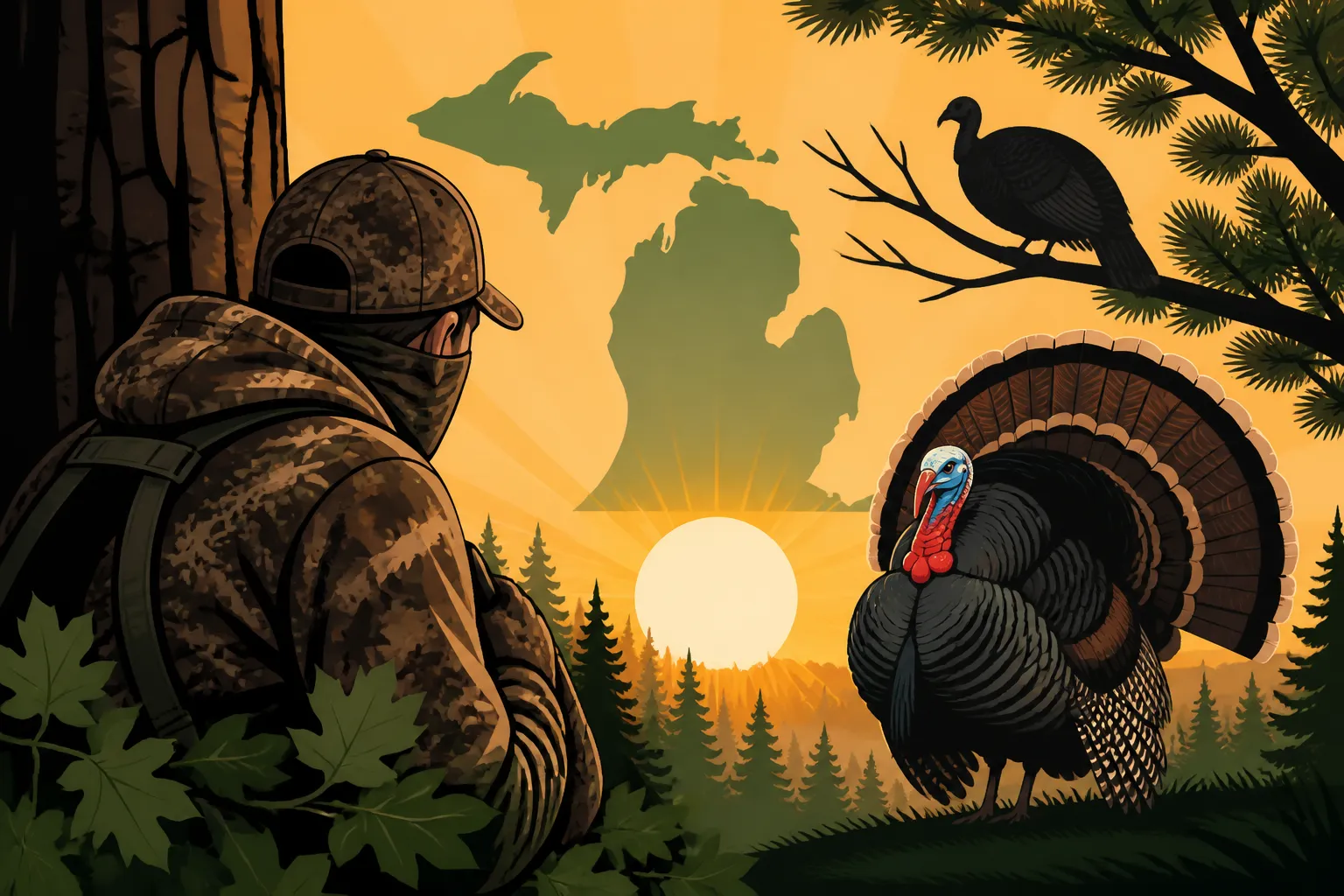
There’s nothing quite like the anticipation of a Michigan spring turkey hunt. You've scouted, you've practiced your calls, and you're ready. But then, it happens: you hear a tom gobble from the roost, get all set up, and at fly-down, he either goes silent, flies down far away, or struts off in the completely wrong direction. It's a truly frustrating experience, making you wonder what you did wrong. This guide aims to help you master the art of roost hunting Michigan gobblers, turning those early morning disappointments into successful harvests.
Understanding Gobbler Roosting Behavior in Michigan
Michigan's wild turkeys are fascinating creatures, and understanding their nightly rituals is the first step to consistently putting them in your lap come morning. They don't just pick any tree to sleep in; there's a method to their madness, driven by survival and instinct.
Why Gobblers Roost Where They Do
Gobblers choose roosting sites primarily for safety from nocturnal predators like coyotes, bobcats, and even great horned owls. They seek out the highest points in the immediate landscape, often mature trees with strong, horizontal limbs that provide a clear line of sight and an easy take-off platform. Think towering white pines or large, mature oaks and hickories, especially those on ridge lines or along steep river drainages. These locations offer an unobstructed view and allow them to glide down from their perch with minimal effort, reducing their vulnerability on the ground.
Moreover, turkeys often prefer to roost near reliable food sources or strutting zones they frequent the next morning. If you've located a prime feeding area or a field they love to strut in, chances are there's a roost site nearby, acting as their nocturnal base camp. This predictability is what makes roost hunting so effective; you're essentially finding out where they'll be before the hunt even begins. Identifying these patterns is key, and often involves dedicated pre-season scouting or reviewing historical data from previous hunts.
Their choice of roost can also be influenced by the structure of the surrounding forest. Areas where two distinct cover types meet, like a mature hardwood stand bordering a cedar swamp or a pine plantation, can create ideal edges for roosting. These "edge habitats" provide diverse forage and cover, making them attractive to turkeys throughout the day and therefore good candidates for nightly roosts. The thicker cover often found along these edges offers a measure of windbreak and concealment as well.
Seasonal and Weather Influences on Roosting
The time of year and prevailing weather conditions play a significant role in where and how Michigan gobblers roost. In early spring, when foliage is sparse, turkeys might favor dense conifer stands or trees with thicker branches for better concealment. As the leaves begin to flush out, they might shift to deciduous trees, using the new cover to their advantage. The "Michigan Spring Turkey Season Dates" typically span this transition, so being adaptable is crucial.
Weather is another major factor. On calm, clear nights, gobblers might roost more spread out and slightly lower. However, a windy or rainy night will often push them into thicker, more sheltered cover, such as the leeward side of a ridge or within a dense stand of pines. They're looking to minimize exposure to the elements and maximize their comfort. Knowing these patterns helps you narrow down potential roosting areas, even when you haven't heard a single gobble during your scouting efforts. Always check the forecast before heading out for a roost hunt, as a sudden change in weather can completely alter their roosting plans.
Deep snow in the northern parts of the state or the Upper Peninsula can also affect roosting behavior, forcing birds to seek out more sheltered valleys or areas with less snow accumulation under the trees. While less common during the typical spring season, an unseasonable late snow can definitely impact where you'll find birds at night. Understanding these nuanced shifts in behavior is what truly separates the seasoned turkey hunter from the novice.
Scouting for Roost Sites Before the Hunt
You can’t roost hunt successfully if you don’t know where the birds are roosting! This isn’t a game of chance; it’s a game of reconnaissance and using every tool at your disposal to pinpoint those sleepy gobblers.
Locating Active Roosts Through Sound and Sign
The most classic way to find a roost is by listening. As dusk approaches, head to likely turkey areas and listen for "shock gobbling" – a reaction gobble to a loud noise like an owl hoot, crow call, or even a slammed car door. These late-day gobbles tell you exactly where a bird is settling in for the night. Do the same at first light, as turkeys will often gobble aggressively from the limb before flying down. This practice of listening at dawn and dusk is crucial for a successful roost hunt.
Beyond listening, look for physical signs. Turkeys leave behind plenty of clues. Fresh droppings under large trees, especially those with good lateral limbs, are a dead giveaway. You'll often find concentrated areas of droppings, sometimes even splash marks from their nightly perch. Feathers, particularly primary wing feathers, can also be found at the base of active roost trees. These signs indicate not just a turkey, but a regular turkey roost. Sometimes you might even find disturbed leaf litter or small scratch marks where a bird landed and walked a few steps before settling on a limb. Keep your eyes peeled for all these subtle indications.
Using Technology for Roost Reconnaissance
In today's hunting world, technology can be a massive advantage in scouting. Mapping apps like GoHunt are invaluable for identifying potential roosting areas from your couch. Look for significant topographical features like high ridges, steep creek drainages, or islands of mature timber in otherwise open country. These features often concentrate turkey activity. Layers showing timber type can also highlight stands of mature pines or oaks that are prime roosting habitat.
Aerial imagery available on GoHunt allows you to virtually "scout" vast areas, identifying fields, food plots, and water sources that turkeys frequent, and then looking for tall trees nearby. You can mark these potential roost sites as waypoints, giving you a starting point for on-the-ground investigation. This reduces wasted time and energy, directing you to the most promising spots. Remember, turkeys are creatures of habit, and once you locate a few active roosts, they tend to use them repeatedly, especially if undisturbed. You can even use the app to plot your quiet approach routes, ensuring you don't spook birds before the hunt even begins.
Consider using a GPS unit or a reliable phone app with offline maps (like GoHunt offers) to mark specific roost trees or areas where you’ve heard gobbles. This precise data makes subsequent hunts much more efficient. Don't forget that scouting for Where Michigan Gobblers Roost extends beyond just the trees themselves; it includes understanding the surrounding landscape and how turkeys will move once they hit the ground. Mapping out escape routes, potential strut zones, and natural funnels will give you an edge.
| Roost Site Scouting Checklist | Visual Signs | Auditory Signs | Tech/Map Scouting Tips |
|---|---|---|---|
| Active Roost Indicators | Fresh droppings, feathers, scratch marks | Dusk/Dawn gobbles, shock gobbles to owl/crow | Identify high ground, mature timber, distinct edges (GoHunt) |
| Preferred Tree Types | Large pines, oaks, hickories | Consistent gobbling from same general area | Look for dark green patches on aerials (conifers) |
| Landscape Features | Ridge tops, river drainages, islands of timber | Contour lines, elevation changes on topographical maps | |
| Proximity to Resources | Near known food plots or strut zones | Fields, open areas, transition zones near cover on maps |
Strategic Setup for Roost Hunting Success
Once you’ve done your homework and pinpointed a likely roost, the next critical phase is your setup. A stealthy approach and well-chosen location can make or break your hunt before you even make your first call.
Approaching the Roost in Darkness
The absolute key to roost hunting is a silent, undetectable approach. You need to be in position well before the first hint of daylight, meaning you'll be walking in the dark. Plan your route carefully using your GPS or the GoHunt app, identifying any potential obstacles like fences, thick brush, or noisy leaf litter that could give you away. Move slowly, deliberately, and avoid using a bright headlamp directly on the roost tree. A subdued red light is often preferred if you absolutely need illumination.
Your goal is to get within comfortable calling and shooting range, typically 75-150 yards, without alerting the turkeys. This can be tricky on Michigan's often-noisy forest floors, especially with crunchy leaves in early spring. Try to walk through grassy areas, along old logging roads, or in stream beds if possible, to muffle your footsteps. The slightest twig snap or loud cough can send a roosted gobbler into high alert, making him much less likely to come your way. Sometimes, finding a natural screen like a small rise or a dense thicket to approach behind is the best strategy.
As you get closer to the roost, rely on your ears. Listen for soft tree yelps or even the distinct flapping of wings as birds shift on their branches. These sounds will help you fine-tune your final approach and identify exactly which tree the gobbler is in. Always err on the side of caution; if you suspect you’re too close or have made too much noise, back off and choose a slightly more distant, but safer, setup location. This initial approach sets the tone for the entire morning, so make it count.
Optimal Positioning and Decoy Placement
Once you're close, it's time to choose your exact setup. You want to position yourself where you have a clear shot, good back cover to break up your silhouette, and a direct line of sight to where you expect the gobbler to fly down and approach. Often, the best spot is against a large, mature tree or in a dense brush pile, ideally with a clear shooting lane in front of you. Think about "Setting Up Against a Big Oak" for ultimate concealment and stability. Remember, turkeys have incredible eyesight, so staying still and camouflaged is paramount.
When it comes to decoys, less can sometimes be more, especially for pressured Michigan birds. A single hen decoy, or a jake and a hen, placed 20-30 yards from your position, can be incredibly effective. Position them where the gobbler will see them easily upon fly-down, but not so close that he’s already inside your minimum shooting range when he first encounters them. Decoy placement is especially critical for Decoy Placement for Pressured Birds. The key is to make the decoy setup look as natural and inviting as possible, mimicking a relaxed hen or an approachable jake.
Consider the angle of the sun. If possible, set up with the rising sun at your back, forcing the gobbler to look into the glare as he approaches your position. This can give you a few precious extra seconds for a clean shot. Also, pay attention to the terrain. Turkeys often prefer to fly down to a slightly elevated position or a clear area where they can strut. Setting your decoys in such a spot, or along a natural travel corridor, can greatly increase your chances of success. A careful setup, even if it means sacrificing a few yards of proximity, is often rewarded.
Tactics for Calling Roosted Birds
Calling a gobbler off the roost is an art form, a delicate dance between sounding inviting and not spooking the bird. Your approach will change from when he's on the limb to when he hits the ground.
Soft Calls to Wake Up a Roost
When a gobbler is still on the roost, you don't want to hit him with a full concert. The goal is to simply let him know there’s a hen (you!) nearby and interested. Start with soft, subtle tree yelps, clucks, and purrs just as the sky begins to lighten. These are quiet, reassuring sounds that mimic a hen waking up on the roost. Wait for him to gobble in response, then hold off on calling for a bit. You want him to wonder where that hen went and encourage him to fly down to find her.
The timing of these calls is critical. Start too early, and you might make him nervous; call too late, and he might have already committed to a different fly-down spot or another hen. Often, a few soft yelps every 10-15 minutes is plenty. Think of it as subtle flirtation, not an aggressive come-on. Listen to the cadence of his gobbles; sometimes a quick series of soft clucks right after he gobbles can really pique his interest. The goal is to draw him in, not scare him off. For more detailed instructions, check out Calling a Michigan Gobbler Off the Roost.
If he's gobbling consistently, but not flying down, sometimes a very soft wing beat sound, made with your hand or a specialized call, can encourage him. It mimics a hen flying down, which can trigger him to follow suit. Be patient during this phase; turkeys can often stay on the limb for a surprising amount of time, especially if the weather is chilly or foggy. Don't feel the need to overcall; let his gobbles dictate your responses.
Aggressive Calling to Draw Them Down
Once that gobbler hits the ground, the game changes. He’s no longer confined to his perch and is actively looking for that hen he heard. This is when you can become a bit more aggressive with your calling. Transition to louder yelps, cuts, and even some excited cackles. The goal here is to sound like an eager, available hen that’s ready to breed. This can often be enough to pull him right in, especially if you have a decoy spread to visually seal the deal.
However, be mindful of his response. If he's gobbling hard and closing the distance, maintain some realism and don't call so much that he expects you to come to him. Sometimes, less is more even now. If he hangs up at a distance, particularly common with older, wiser birds, try varying your calls. Switch from a box call to a slate call, or add in some contented purrs and clucks. He might be trying to locate the "flock." Sometimes going silent for a few minutes can drive him crazy, making him come look for you.
If you’ve got a boss hen in the area that's pulling him away, you might need to try to sound like a more dominant hen yourself, or even a different flock. This is where Locator Calls for Michigan Gobblers can come into play, not just for locating, but for simulating a group of birds. Sometimes a "gobble" call can work too, challenging him to come in and investigate. The key is to adapt to the turkey's mood and the situation at hand.
Troubleshooting and Adapting During the Roost Hunt
Even the best-laid plans go awry in turkey hunting. Gobblers are notoriously fickle, and sometimes they just don't do what you expect. Knowing how to react to these curveballs is crucial.
When They Fly Down and Go the Other Way
It’s happened to all of us: you hear him gobbling like crazy on the limb, you call, you wait, and then at fly-down, he sails off in the complete opposite direction, often with a few hens. This is one of the most frustrating aspects of roost hunting, but it's not necessarily the end of your hunt. First, stay put for a moment. Sometimes, a gobbler will land with hens, gobble a few times, and then slowly work his way back towards where he heard your calls. Give him 15-20 minutes, calling sparingly.
If he’s clearly committed to going the other way, it's time to adapt. Carefully extract yourself from your setup, being as quiet as possible. This is where a "Run-and-Gun on Michigan State Land" strategy might become necessary. Try to circle ahead of the birds, using terrain and cover to your advantage, and set up again. If you know the direction they're headed, get out in front of them, pick a new spot, and try to intercept them. This often means putting a lot of ground between you and the birds, but it can pay off.
Another option, if the terrain allows and you have a partner, is for one hunter to stay put and call, while the other circles wide to cut off the birds. The stationary hunter acts as an anchor, keeping the gobbler's attention while the mobile hunter tries to get into a shooting position. This requires good communication and knowledge of the land, but it's a tactic that often works when a gobbler is hen-up and moving away from your initial setup. Don't be afraid to put some miles on your boots if you want to salvage a morning that started poorly.
Handling Hung-Up Birds and Re-Engaging
The "hung-up" gobbler is another common dilemma. He’ll gobble his head off, strut and drum, but just won’t commit to coming the last 50-75 yards. He’s often waiting for the "hen" to come to him. This is particularly common if you're hunting in flat, open areas, or if he's encountered too many hunters who call excessively. You might need to adjust your strategy. First, go completely silent for a while. Sometimes, a lack of calling will make him nervous and impatient, encouraging him to close the distance.
If silence doesn't work, try changing your call type or volume. Switch from a slate to a box call, or vice versa, to sound like a different hen. Sometimes a very soft, contented cluck and purr can sound less threatening and more inviting than an aggressive yelp. If you're using decoys, a subtle tweak in position, or even removing one, might change his perspective. For Turkey Tactics for Southern Michigan Farms, where birds are often highly pressured, these subtle changes are paramount.
Another tactic for a hung-up bird is to play hard to get. Slowly and quietly, move a short distance (20-30 yards) away from your last calling position, mimicking a hen that's moving off. Make a few soft calls from your new spot. This often triggers the gobbler's innate desire to chase the hen and can sometimes pull him those last crucial yards. Just ensure you have good cover in your new position before you call again. A well-placed decoy could also make him commit, as the visual reassurance might be what he needs.
Safety and Ethical Considerations When Roost Hunting
Turkey hunting, especially in the early morning darkness, comes with inherent safety responsibilities. Being mindful of your surroundings and adhering to ethical guidelines ensures a safe and enjoyable experience for everyone.
Legal Shooting Hours and Respect for Other Hunters
In Michigan, legal shooting hours for turkeys begin 30 minutes before sunrise. This means you need to be set up, quiet, and ready to go before legal light. Never attempt to shoot a bird on the roost in the dark, even if you can vaguely see it. Not only is it illegal, but it's incredibly unsafe, as you cannot properly identify your target or what is beyond it. Patience is a virtue in turkey hunting, and waiting for legal shooting hours is a non-negotiable part of that.
Michigan's public lands, particularly during the spring turkey season, can see a fair amount of hunter pressure. Always be aware that other hunters might be in the same general area, especially near known roosting locations. If you hear another hunter calling or moving in, give them space. A simple, loud "Gobbler here!" or a similar verbal warning can alert others to your presence without spooking the birds too badly. Never "sneak" in on another hunter's calls. Always assume any movement or sound you hear could be another person. Understanding Michigan Legal Shooting Hours is not just about the law, but about safety.
It's also crucial to respect private property boundaries. Use mapping apps like GoHunt to clearly define property lines and ensure you are only hunting on land where you have permission or which is public. Trespassing is not only illegal but can ruin hunting opportunities for everyone by souring landowner relations. A good rule of thumb: if you’re not 100% sure, don’t go there.
Minimizing Disturbance and Impact
The very nature of roost hunting means you’re getting close to where turkeys sleep, making it easy to accidentally spook them. To minimize disturbance, always approach and leave roost sites as quietly and discreetly as possible. Avoid excessive calling from the roost, and once the birds have flown down, don't immediately crash through the woods to try and find them if they go the wrong way. Give them time, and try to circle wide and quietly.
Ethical hunting also means being a responsible steward of the land. Pack out all your trash, including spent shotgun shells, and leave the area cleaner than you found it. If you harvest a bird, ensure a quick and clean kill. Track a wounded bird diligently, even if it takes hours. Recovering a bird from a Michigan swamp or thick timber can be challenging, but it's our responsibility. Always remember to validate your tag and report your harvest according to Michigan DNR regulations, usually within 72 hours. This data helps wildlife managers make informed decisions for future turkey populations, which ultimately benefits us all.
Disclaimer
This guide is for informational purposes only and does not supersede official Michigan Department of Natural Resources regulations. Always consult the current Michigan Hunting and Trapping Digest for the most up-to-date laws, season dates, and license requirements before heading afield. Safety should always be your top priority.