Calling a Michigan Gobbler Off the Roost
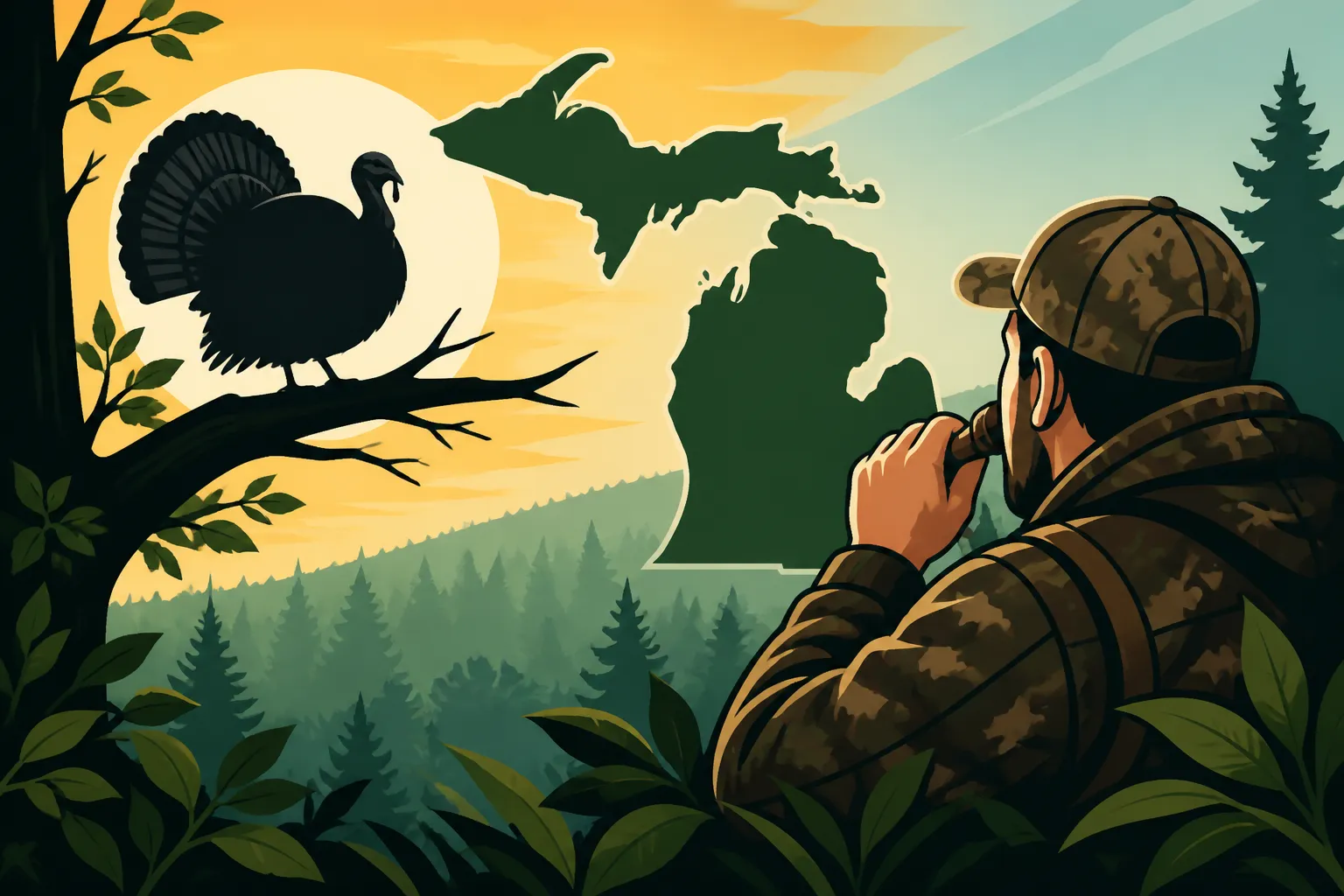
There are few things as frustrating in Michigan turkey hunting as getting within earshot of a gobbler on the roost, making what you think are perfect calls, only to have him fly down and wander off in the opposite direction, or worse, just stay silent. We've all been there, scratching our heads, wondering what we did wrong. This guide aims to pull back the curtain on the subtle art of calling a Michigan gobbler off the roost, helping you understand their morning routine and how to play your cards right for a successful hunt.
The Art of the Pre-Dawn Roost Approach
Successfully calling a gobbler off the roost begins long before the first hint of daylight. It starts with strategic planning and a silent, thoughtful approach to your chosen setup location. This initial phase is absolutely critical – mess it up, and your hunt might be over before it even truly begins.
Why Locating the Roost Matters
Knowing exactly where a gobbler is roosting is half the battle. Turkey roosting habits are often quite predictable. They usually prefer tall, open-canopied trees, like big oaks, pines, or even dead snags, that offer a good vantage point and protection from predators. These spots are often near water, food sources, or along creek bottoms, hillsides, or ridges where they can easily fly up to roost in the evening and fly down in the morning.
Understanding these patterns allows you to scout effectively. Before the season opens, spending time in the woods listening for evening gobbling, especially just before dark, can pinpoint potential roost sites. Using mapping tools like the Michigan DNR Hunt Fish App or even specialized hunting apps like GoHunt can provide invaluable insights into terrain features, tree cover, and potential travel corridors, allowing you to mark likely roosting areas and plan your approach. This groundwork is paramount because it dictates where you'll need to be in the dark, and how quietly you'll need to get there. Without a solid understanding of where they're bedding down, you're essentially stumbling around in the dark, literally and figuratively.
Stealth and Safety in the Dark
Once you've identified a likely roost, the approach needs to be executed with surgical precision. Gobblers have incredible hearing, and any unnatural noise will immediately put them on high alert. This means walking in well before dawn, using a quiet headlamp on its lowest setting (or better yet, a red light filter), and avoiding crunching leaves, snapping twigs, or bumping into brush. Take your time. Every step should be deliberate and thought-out. Imagine yourself as a predator, silent and unseen.
It’s not just about being quiet; it’s about being safe. Walking in the dark, especially on public land where other hunters might also be trying to get into position, requires heightened awareness. Always know your exact location and be certain of your shooting lanes and backdrop before light. Remember, Michigan Spring Turkey Season Dates can fall on cold, damp mornings, so dressing in layers that allow for quiet movement is crucial. Synthetic fleeces or wool are often preferred over noisy nylon. Your chosen path should ideally use terrain features like depressions, creek beds, or dense brush to mask your movement and sound.
Optimal Setup for Success
Your setup is everything when trying to call a gobbler off the roost. The goal is to get as close as possible without being detected, ideally within 100-150 yards of the roost tree, depending on the terrain and how well you can hide. You want to position yourself so that when the gobbler flies down, he's within your effective shooting range and ideally, has to walk past or directly towards your position.
Choose a spot with good concealment, such as behind a large tree, a thick blowdown, or dense brush. Make sure you have a clear shot in the direction you expect the bird to approach. This might mean clearing a few small branches before legal shooting light, but again, do it quietly. Face yourself towards the direction you anticipate the turkey will come from, ensuring your shotgun or bow is rested and ready. Often, setting up with your back to a large obstacle, like a sturdy oak or pine, helps break up your silhouette and prevents you from being skylined. For more specific advice on this, you might find our guide on Setting Up Against a Big Oak helpful. Don't forget your decoys! Depending on the situation and how much cover you have, deploying one or two hen decoys, positioned to face away from you (as if feeding naturally), can draw a gobbler in that final critical distance. For more on this, check out Decoy Placement for Pressured Birds.
Deciphering the Morning Roost Chorus and Initial Calls
Once you’re set up, the waiting game begins. This is where patience, keen listening, and precise calling become your most valuable assets. Don't be too eager; let the morning unfold naturally, and react to the birds, rather than trying to force their hand.
Reading the Roost and Timing Your Calls
As dawn approaches, the woods will slowly come alive. Songbirds will begin to chirp, and then, if you're lucky, you'll hear the distinct "gobble, gobble, gobble!" that sets every turkey hunter's heart racing. This initial gobbling on the roost is critical for assessing the bird's mood and location. He might gobble once, or he might unleash a volley of calls. Listen intently. Is he alone, or are there multiple birds? Are other hens already yelping nearby?
Generally, the first calls from you should be soft and subtle. Think tree yelps and soft clucks, mimicking a hen just waking up. You’re not trying to yank him off the roost with aggressive calls right away. You’re simply letting him know there’s a hen in the area. Wait for him to gobble a few times naturally. Let him "wake up" a bit. If you call too aggressively too early, he might get suspicious or think you're just another hen that's already with him or nearby, and he might fly down in another direction. Timing is everything here. You want to be just intriguing enough to keep his attention, but not so forward that he feels pressured.
First Light Calling Strategies
As the light increases and gobblers continue to sound off, you can slowly escalate your calling if the bird shows interest. A simple series of three to five soft tree yelps, followed by a cluck or purr, can be incredibly effective. The goal is to sound like a hen who is ready to fly down, but not desperate. Listen for his response. Does he gobble immediately after your calls? Does he gobble on his own? Is he changing the direction he's gobbling from, indicating he might be turning on his limb?
Avoid over-calling. A common mistake is to "talk" to the bird too much. If he’s gobbling every time you call, that’s great – but don't feel like you need to respond to every single gobble. Let him wonder a bit. Build his anticipation. Sometimes, the best call after a few soft yelps is no call at all. Just wait for him. This can drive him crazy, making him think the hen is moving away or losing interest, which often compels him to fly down in your direction. Consider using different types of calls to add realism; our article on Box Calls Versus Mouth Calls delves into the strengths of each. For instance, a soft purr on a slate call followed by a few diaphragm yelps can sound like multiple hens, making your setup even more irresistible.
Common Calling Mistakes to Avoid
One of the biggest blunders hunters make is calling too loudly or too aggressively right off the bat. A gobbler on the roost is often surrounded by his harem of hens or is waiting for them to show up. If you sound like a super aggressive hen, he might actually fly down and go to his real hens, expecting them to come to him. Remember, he's the king of the roost, not you. Another mistake is calling after he flies down but before he hits the ground. This often makes him land farther away, thinking the hen is already on the move. Let him hit the ground silently, then give him a few soft calls once his feet are firmly planted.
Another pitfall is not matching the bird's intensity. If he's only gobbling every few minutes, responding with continuous, loud yelps can sound unnatural. If he's hammering, you can be a bit more liberal with your calls, but always be mindful of realism. Finally, failing to scout or using a generic approach without understanding the specific bird's roosting habits and the local terrain can lead to disappointment. Every bird and every location can be a little different, so adaptability is key. Sometimes, even the best plans go awry, and you might find that When Michigan Gobblers Go Quiet, it's time to switch up your strategy.
| Call Type | Best Use for Roost Calling | Pros | Cons |
|---|---|---|---|
| Mouth Call | Tree yelps, soft clucks, purrs | Hands-free, versatile, realistic | Takes practice, can sound bad if not mastered |
| Slate Call | Soft purrs, clucks, yelps | Excellent for subtle, realistic sounds | Requires movement, sound can carry far |
| Box Call | Aggressive yelps, cutting (later) | Easy to use, loud, good for drawing attention | Can be too loud early, requires movement |
| Locator Call | Hoot owl, crow call (pre-dawn) | Locates birds without spooking them | Not for actual "calling in" a bird |
When They Hit the Ground: Adapting Your Tactics
The moment a gobbler flies down from his roost is a pivotal point in the hunt. Your strategy needs to shift from attracting him off the branch to enticing him the rest of the way into your shooting lane.
The Fly-Down and the Waiting Game
When the gobbler flies down, resist the urge to immediately call or even move. He's often looking for the hen he heard, scanning the area with those incredible eyes. If he sees movement or hears a call that doesn't match his expectations, he'll likely disappear into the timber. Let him land, compose himself, and take a few steps.
Once he's on the ground and moving, that's your cue. A few soft clucks and purrs, or a short series of yelps, can be highly effective. The key is to sound like a hen that has also just flown down and is now feeding or casually moving. You're trying to project a sense of ease and availability, not desperation. If he gobbles in response, don't rush to call back. Let him gobble again. Make him want to find you. Remember, turkeys are visual animals too, so if you've strategically placed a decoy, he's likely looking for it. This is where your chosen setup, potentially including a simple hen decoy from the Decoy Placement for Pressured Birds guide, can really pay off.
Aggressive vs. Subtle Calling Post-Fly-Down
The decision to be aggressive or subtle after fly-down depends heavily on the gobbler's demeanor and whether he has real hens with him.
-
Subtle Approach: If the gobbler is with hens, or if he's being very cautious, less is often more. Keep your calls soft and infrequent. You're trying to act like a single, desirable hen that he might want to leave his current hens for. If he has a harem, they will often pull him away from your calls, making it incredibly challenging. In these scenarios, sounding like a contented, indifferent hen can sometimes pique his curiosity just enough.
-
Aggressive Approach: If the gobbler is alone, especially if he's gobbling his head off and seems eager, you can gradually increase your calling intensity. Try some cutting or a louder series of yelps to show more excitement. The aim here is to sound like a hot hen, ready for action. However, always be ready to back off if he suddenly shuts up or seems to lose interest. Over-calling can still happen, even with an aggressive bird. Knowing when to use different calls is key, and our guide on Locator Calls for Michigan Gobblers can help identify their position without giving away yours early on.
Sometimes, after a few calls, a gobbler might just "hang up," meaning he'll gobble and strut just out of range, unwilling to commit further. This is maddening! When this happens, a technique often called "running and gunning" can be effective. Our Run-and-Gun Turkey Tactics on State Land article offers more insights here, but the basic idea is to circle around the bird's position, trying to get ahead of him or come in from a different angle, then set up and call again.
What to Do When They Hang Up or Drift Away
So, you've done everything right: perfect approach, soft calls, he flew down, and… he's just standing there, gobbling, but won't take those last 50 yards. Or maybe he just turned and walked off with his hens. Don't despair! This is part of turkey hunting, especially in areas like Michigan where birds can be highly pressured.
- Be Patient: Sometimes, simply waiting him out can work. Give him 15-30 minutes of silence. He might decide to come looking for that "quiet hen" who suddenly disappeared.
- Move and Re-Call: If silence doesn't work, consider a subtle move. Crawl silently 50-100 yards in a different direction, out of his line of sight, and set up again. Then, try a completely different series of calls, perhaps from a different type of call (e.g., switch from a mouth call to a slate). This can sometimes fool him into thinking a new hen has arrived.
- Circle and Intercept: If he's drifting away with hens, you might need to make a larger, wider circle, trying to get ahead of them and set up an ambush. This takes a good understanding of terrain and turkey travel routes. Use your mapping app to identify potential funnels or crossings they might use.
- Cut Him Off: If you hear him moving, especially if he's cutting across a ridge or field edge, you might be able to sprint (quietly, of course!) to a new position to try and cut him off. This is a higher-risk, higher-reward move, but it can pay off big time.
- Re-Roosting: If all else fails, and he's completely gone, you might spend the rest of the morning still-hunting or trying to strike another gobbler. But don't give up on the first bird entirely. Mark his general location, and come back late in the afternoon to try and roost him for the next morning. Sometimes, a full day of "running and gunning" will also get a bird to commit later on.
Gear and Mindset for Roost Hunting Michigan Gobblers
Success isn't just about calling; it's also about having the right tools and the right attitude. Michigan weather can be fickle, and turkeys are wily, so being prepared physically and mentally is crucial.
Essential Gear for Early Morning Hunts
For those early morning roost hunts, a few pieces of gear are non-negotiable:
- Calls: A good variety is best. A reliable mouth call for hands-free operation, a slate or glass call for realistic soft sounds, and perhaps a box call for louder, more aggressive sequences. For specific recommendations, check out our guide on Box Calls Versus Mouth Calls.
- Decoys: While not always necessary, a single hen decoy or a jake/hen combo can be a game-changer, especially on public land where birds are pressured.
- Camouflage: Full camo is essential, including a head net and gloves. Break up your silhouette completely.
- Comfortable Seat: A small folding stool or a cushion can make those long waits much more bearable. A comfortable hunter is a patient hunter.
- Optics: Binoculars (8x or 10x) are useful for spotting birds on the roost or discerning movement in the timber.
- Mapping Device: A GPS unit or a smartphone with a reliable hunting app like GoHunt is invaluable for navigation in the dark, marking roost sites, and planning escape routes. This can save you from getting lost and help you understand the terrain.
- Water and Snacks: Staying hydrated and fueled will keep you alert during those long waits.
- Hunter Orange: While not always required during all turkey seasons, it's a good idea to carry a piece of hunter orange to put on if you need to move through thick cover, especially if other hunters are in the area. This is covered in our Michigan Hunter Orange Rules guide, though it's mainly for firearm deer season, being aware and cautious is always good.
The Mental Game of Roost Calling
Turkey hunting, especially calling off the roost, is as much a mental game as it is a physical one. You need patience, perseverance, and the ability to read the situation and adapt. It's easy to get discouraged when a gobbler hangs up or slips away, but those are the moments that truly test your mettle.
Embrace the challenge. Understand that not every bird will come in, and sometimes, despite your best efforts, they simply won't cooperate. Learn from each encounter. What did he do? How did he respond to your calls? Could you have set up differently? Every hunt is a learning experience, helping you refine your skills for the next one. Maintain a positive attitude, enjoy the dawn chorus, and savor the experience of being in Michigan's wild places. After all, the pursuit itself is often as rewarding as the harvest.
Safety First: Hunter Orange and Awareness
Beyond the mental aspect, safety should always be your top priority. When hunting turkeys, especially during the spring firearm season, it's crucial to be mindful of legal shooting hours and positive target identification. Never shoot at sound or movement. Wait until you can clearly identify your target as a legal gobbler and are certain of what's beyond it.
While specific hunter orange requirements vary by season, carrying a piece of orange to wear while walking to and from your stand, especially on Scouting Michigan Public Land Before Season or when moving between setups, is a wise safety practice. Be aware of other hunters, especially on public land. Use extreme caution when making gobbling calls, as another hunter might mistake you for a bird. Always assume there are other people in the woods, and take every precaution to ensure a safe and enjoyable hunt for everyone.
Disclaimer
Please note: Hunting regulations and seasons can change. Always consult the official Michigan Department of Natural Resources (DNR) website or their current hunting digest for the most up-to-date and accurate information before planning your hunt. The information provided here is for general guidance and educational purposes only.