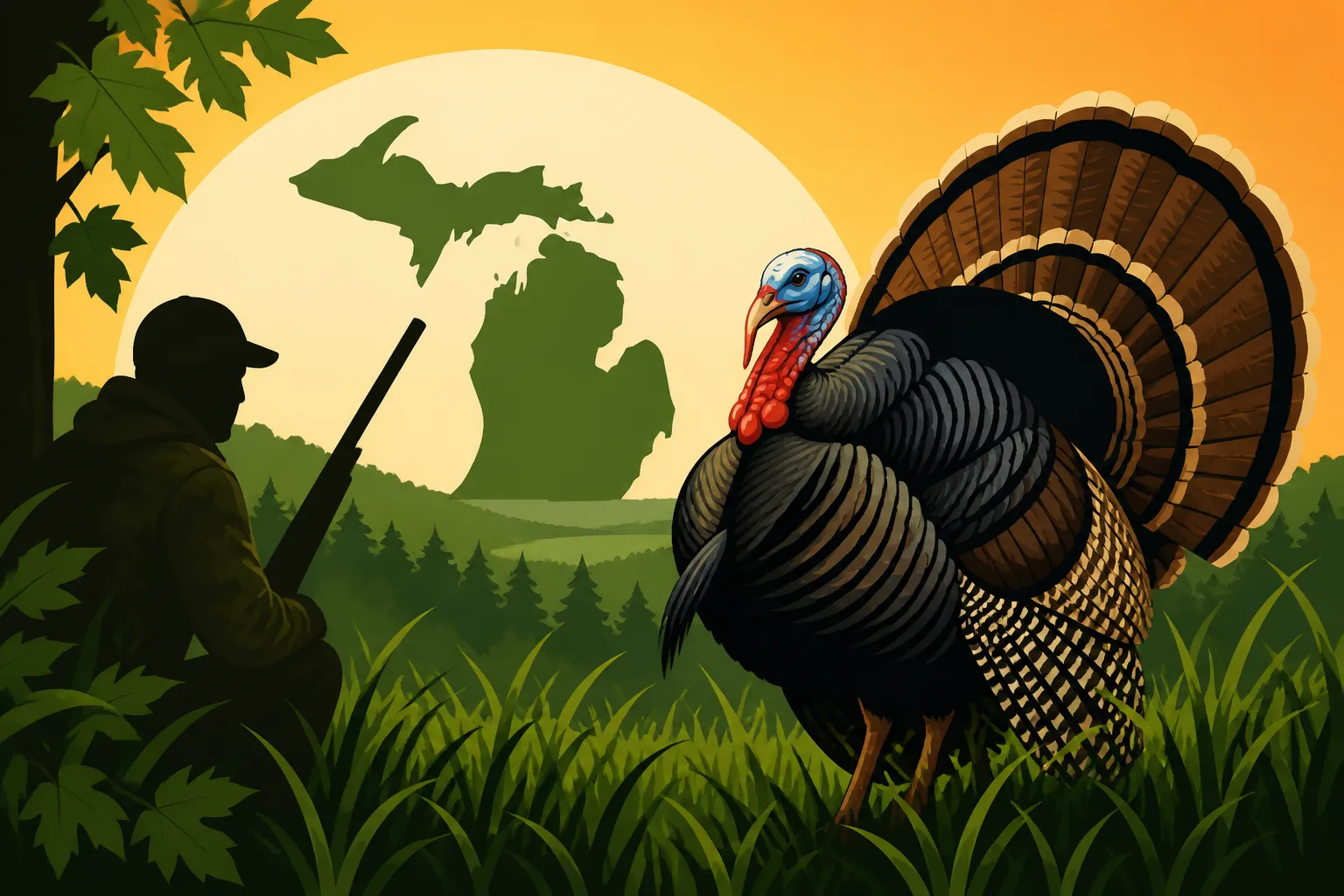
Hunting Gobblers Late in May
By late May, many Michigan turkey hunters feel like the woods have gone silent, the gobblers have been pressured into oblivion, and the season is pretty much a bust. It's a common frustration to hear those booming gobblers of April turn into ghosts by the time the leaves are fully out. But don't throw in the towel just yet! This comprehensive guide will delve deep into why late-season gobblers act the way they do and equip you with practical, actionable strategies to tag a bird when most others have given up, turning those quiet woods back into a place of opportunity.
Understanding Late-Season Gobbler Behavior in Michigan
As the Michigan spring turkey season stretches into its final weeks, the game fundamentally changes. The eager, lovesick gobblers you heard echoing across the ridges in April are often replaced by birds that seem to have vanished entirely. This isn't just bad luck; it's a direct result of shifting biological priorities and increased hunting pressure. Understanding these changes is the first step to adapting your strategy.
Post-Breeding Phase and Shifting Priorities
In early spring, a gobbler's world revolves around breeding. His primary goal is to find hens, breed them, and establish dominance. This makes him vocal, visible, and often susceptible to aggressive calling. However, by late May, much of the breeding is done. Many hens are already nesting, sitting on eggs, or have even hatched poults. The urgency that drove gobblers to sound off constantly and readily come to a call dissipates significantly. Their motivation shifts from breeding to self-preservation and recovery. They’ve spent weeks expending massive amounts of energy, so finding reliable food sources and staying safe become paramount.
This behavioral change means that the loud, boisterous gobblers are now often "henned up" with the few remaining receptive hens, or they've become solitary and extremely wary. They might still gobble on the roost, but they're far less likely to commit to a distant call once on the ground. Hunters who continue to use early-season tactics often find themselves met with silence or birds that hang up just out of range, leading to immense frustration. The woods are thicker, providing more cover, and these birds have undoubtedly had numerous encounters with hunters, making them even more cautious.
The Impact of Intense Hunting Pressure
Michigan's spring turkey season can be long, often spanning well into May across various hunt periods. This extended season, especially on public land, means that gobblers have been educated, sometimes multiple times over. They've heard every call in the book, seen countless decoys, and have had close calls with human predators. This constant pressure makes them incredibly wary. They learn quickly that a gobble often leads to danger, and a soft cluck or purr might still be a setup.
Heavily pressured birds will often gobble only once or twice on the roost, if at all, and then slip quietly off with hens or melt into the thick cover. They'll use terrain to their advantage, often staying in deep ravines, dense swamps, or thick conifer stands where visibility is limited and they can easily evade detection. You'll rarely find a late-season gobbler strutting openly in a field for long unless it's a very secluded spot or he’s with a group of hens. This heightened caution demands a different approach, one that emphasizes stealth, patience, and a deep understanding of their security needs. You need to become a silent predator, not a noisy one, to get a shot at these educated birds.
Strategic Adjustments for Late-Season Success
Hunting gobblers in late May requires a complete overhaul of your early-season playbook. Aggressive calling and static setups often lead to disappointment. Instead, you need to adopt more nuanced, stealth-focused methods that cater to the wary nature of these pressured birds. Think like a deer hunter, not just a turkey hunter, focusing on subtle movements, keen observation, and precise execution.
Becoming a Run-and-Gun Master
One of the most effective strategies for late-season gobblers, especially on Michigan's vast public lands, is the run-and-gun method. Forget setting up in one spot for hours. By late May, you need to cover ground, listen intently, and be ready to move quickly to any faint gobble or distant clue. The idea is to locate a bird, quickly assess the terrain, and close the distance before setting up to call. This approach acknowledges that birds are less vocal and more likely to respond to a close-range, subtle setup than a long-distance conversation.
To successfully Run-and-Gun Turkey Tactics on State Land, start by moving slowly and quietly through areas you believe hold birds. Pause frequently, listening for soft gobbles, clucks, or even the subtle sound of a bird scratching in the leaves. Use locator calls sparingly – an owl hoot, crow call, or coyote howl can sometimes elicit a shock gobble without giving away your exact position. Once you hear a bird, quickly use your mapping app, like GoHunt, to identify potential approach routes, terrain features, and property lines. The goal is to get within 100-150 yards, if possible, before setting up. This reduces the distance the bird needs to travel and increases the likelihood of him committing.
Subtle Calling and Minimal Decoy Use
The loud, excited calling that worked in April will often scare off a late-season gobbler. These birds have heard it all, and aggressive yelping often signals danger. Instead, scale back your calling dramatically. Think subtle, soft, and enticing. Use soft tree yelps, clucks, purrs, and quiet hen whistles. Mimic a lonesome hen subtly trying to find her flock or a tom that thinks he's heard a real hen nearby. Sometimes, a single, well-placed series of purrs or clucks is all it takes to pique a gobbler's curiosity. If you get a response, resist the urge to over-call. Just enough to keep him interested.
Decoy use also changes drastically. While earlier in the season, a jake and hen or even a full strut tom decoy could be irresistible, these can often be a liability in late May. Pressured gobblers are quick to identify anything "off" about a decoy setup. If you do use a decoy, consider a single hen, maybe in a breeding posture to appear vulnerable, or even no decoy at all. A lone hen decoy like those from Avian-X or Mojo can sometimes still work, but place it carefully. Consider Decoy Placement for Pressured Birds in a way that forces the gobbler to come looking for the "hen" from a particular angle, ideally into your shooting lane. Often, concealment and natural movement are far more effective than a static plastic bird that might look suspicious.
Patient Ambush and Roost Hunting
Given how quiet and wary late-season gobblers become, sometimes the most effective strategy isn't to call them in, but to be where they're going to be. This involves a lot of stealth, observation, and patience, much like still-hunting for deer. Start by identifying potential travel corridors, feeding areas, or strut zones. These might be subtle openings in the woods, along field edges, or ridges overlooking thick cover. Use your GoHunt app to pinpoint these natural funnels and bedding areas. Set up well before dawn, and quietly wait.
Roost Hunting Michigan Gobblers can be particularly fruitful, even in late May. While they might not gobble much, you can still listen for wing beats, soft clucks, or even just the subtle "thump" of a bird flying down from the roost. Position yourself carefully in known roosting areas, ensuring you're hidden and have a clear line of sight, but not so close that you spook them off the limb. Once they're on the ground, they might silently filter into a feeding area. Your goal is to intercept them. This often means waiting for hours, so bring a comfortable seat, plenty of water, and absolute patience. Sometimes, you'll hear that first quiet gobble right off the limb, and you need to be set up and ready to capitalize on it immediately.
Locating Elusive Late-Season Birds
Finding late-season gobblers is arguably the most challenging part of hunting them. They're scattered, quiet, and often utilize denser cover. Your scouting efforts become paramount, shifting from listening for loud gobblers to searching for subtle signs of presence.
Pre-Hunt Scouting and Sign Reading
Even if you've hunted an area all season, late May requires fresh scouting. The birds' patterns have changed. Instead of focusing solely on open fields, start looking for birds in more secluded, thick cover. Pay attention to deep creek bottoms, dense cedar swamps, or areas of regenerating timber that offer security and potential food sources. Look for fresh tracks, droppings, and dusting bowls. Dusting bowls, especially in dry, sandy soil, indicate where birds are spending time cleaning themselves. Fresh scratchings in the leaves might reveal a feeding area.
When scouting, use a mapping tool like GoHunt to identify these features. You can mark areas of dense cover, potential travel corridors, and even specific trees that might serve as roosts. Pay attention to water sources as well; birds need to drink, and sometimes a secluded spring or small pond can be a magnet. Remember, Hunting Turkeys in Upper Peninsula Timber might look different than Turkey Tactics for Southern Michigan Farms, so adapt your scouting based on the specific habitat you're in. The goal is to find the freshest sign in areas that offer maximum security and are less likely to have been hammered by other hunters.
Midday Exploration and Shock Calling
While early mornings and late evenings are traditionally prime turkey hunting times, late-season gobblers can often be found moving and feeding throughout the midday, especially if they're not with hens. This is a great time to implement a low-impact scouting mission. Walk slowly and quietly through likely areas, stopping to listen every 100-200 yards. Use your ears for subtle sounds like soft clucks, purrs, or the distinct scratching of turkeys foraging in the leaves.
Occasionally, it can pay to use a shock call during midday. Instead of a turkey call, use a loud crow call, an owl hoot, or even a sharp clap of your hands. The objective isn't to call the bird in, but to get a "shock gobble" – a reflexive response from a tom that feels startled. This gives you a bearing on his location without giving away your exact position as a potential predator. Once you pinpoint a bird, you can then make a more strategic move to set up or plan a morning ambush for the next day. This strategy is particularly effective for uncovering those silent toms that have stopped gobbling to direct hen movement. For more on this, check out Locator Calls for Michigan Gobblers.
Adapting Your Gear for Late May Conditions
The gear you carry in late May should also reflect the changing conditions. Warm weather, thick foliage, and the need for stealth all play a role in what will make your hunt more comfortable and successful.
Lightweight & Breathable Apparel
By late May, Michigan temperatures can be quite warm, even hot, especially in the afternoon. Heavy early-season camouflage is out. You'll want lightweight, breathable clothing that wicks away moisture. Synthetic blends or thin cotton can work well. The goal is to stay cool and comfortable, minimizing sweat, which can make you scent more and just feel miserable. Choose clothing with good ventilation, perhaps even short sleeves if allowed and appropriate for the bug situation.
Layering is still important, even in warmer weather. A lightweight base layer, a slightly warmer mid-layer (like a thin fleece), and a quiet, breathable outer layer are ideal. This allows you to shed layers as the day warms up and add them back if a late-day shower or cool front moves in. Don't forget a lightweight rain jacket – Michigan weather can be unpredictable, and a sudden downpour can make you uncomfortable and ruin your day if you're not prepared. Look for camouflage patterns that blend well with the now-full foliage, typically greener and denser patterns.
Bug Protection and Essential Extras
One of the less enjoyable aspects of late May hunting in Michigan is the explosion of insects. Mosquitos, ticks, and gnats can be relentless, turning an otherwise peaceful hunt into a battle against bites. Proper bug protection is absolutely essential. Carry a good quality insect repellent containing DEET or picaridin, or consider permethrin-treated clothing. A head net can be a lifesaver during quiet sits, allowing you to focus on the hunt instead of swatting at bugs.
Beyond bug spray, make sure your pack is stocked with essentials for a longer, more mobile hunt. This includes plenty of water, especially if you're Hunting the Peak Rut Week in Michigan and covering a lot of ground. High-energy snacks, a small first-aid kit, and a fully charged phone (with a portable charger) are crucial. Remember that dense foliage can sometimes obscure terrain features, so a reliable GPS app on your phone, coupled with physical maps of Public Hunting Land in Michigan, is always a good idea. A comfortable, lightweight cushion or seat is also a must for those long, patient waits.
Comparing Early vs. Late Season Turkey Strategies
To highlight the shift in tactics, here's a quick comparison of general approaches for early versus late Michigan spring turkey seasons.
| Feature | Early Season (April – Early May) | Late Season (Mid-Late May) |
|---|---|---|
| Gobbler Behavior | Vocal, aggressive, driven by breeding, actively seeking hens. | Quieter, wary, often henned-up or solitary, focus on security/food. |
| Calling Strategy | Aggressive yelps, cuts, fly-down cackles, loud locator calls. | Subtle clucks, purrs, soft tree yelps, minimal locator calls. |
| Decoy Use | Jake/hen combo, full strut tom, often highly effective. | Single hen (breeding posture), often no decoy, focus on naturalism. |
| Movement | Can set up and call from one spot, waiting for birds to come. | Run-and-Gun Turkey Tactics on State Land, cover ground, stalk. |
| Setup Locations | Open fields, ridge tops, clearings where birds strut. | Thick cover edges, swamp fringes, secluded timber pockets, ambush points. |
| Scouting Focus | Listening for loud gobblers on roost and throughout the day. | Looking for fresh sign, tracks, dusting bowls, subtle movements, roosts. |
| Hunting Pressure | Moderate to high, but birds still tolerant. | Very high, birds are educated and extremely cautious. |
| Environmental | Fewer leaves, easier visibility, cooler temps. | Full foliage, limited visibility, warmer temps, more bugs. |
Remember, while the Michigan Spring Turkey Season Dates extends well into May, the dynamics change significantly. Understanding these shifts and adapting your strategy accordingly is key to punching that tag when most others have given up. Don't be afraid to put in the miles, embrace the quiet hunt, and savor the challenge of outsmarting an educated late-season gobbler. You might be surprised at how rewarding it can be.
Disclaimer
Hunting is an inherently dangerous activity. Always prioritize safety, understand and follow all Michigan hunting regulations, and respect wildlife. This guide provides informational content and should not be considered a substitute for proper hunter education or personal judgment in the field.