Michigan Hunter Orange Rules
It’s a scenario many of us have faced: standing in the sporting goods aisle, staring at a rack of blaze orange vests and hats, and wondering, “Do I really need this much? And for this season?” Michigan’s hunter orange rules, while designed for safety, can feel confusing at times, especially with different seasons, weapon types, and land ownership potentially changing the game. This guide is dedicated to cutting through the jargon, making sure you understand exactly when and how to wear hunter orange in Michigan so you can hunt confidently and, most importantly, safely.
The Absolute Basics: When Hunter Orange is a Must in Michigan
Let’s be honest, nobody wants to get a ticket or, worse, put themselves or others at risk because they misunderstood a regulation. Michigan's hunter orange laws are fundamentally about making hunters visible to each other, drastically reducing the chances of mistaken identity accidents. Understanding the core requirements is your first step to a safe and legal hunt.
General Firearm Seasons: The Core Requirement
If you're heading into the woods during any firearm deer season in Michigan, whether it's the traditional November firearm season, the early antlerless firearm weekend, or even the late antlerless firearm season, hunter orange isn't just a suggestion; it's the law. This isn't just about deer either; if you're out hunting any species during these defined firearm deer seasons, you're required to wear hunter orange. The Michigan Department of Natural Resources (DNR) mandates that anyone hunting with a firearm, or even just accompanying someone who is hunting with a firearm, must wear a specific amount of hunter orange.
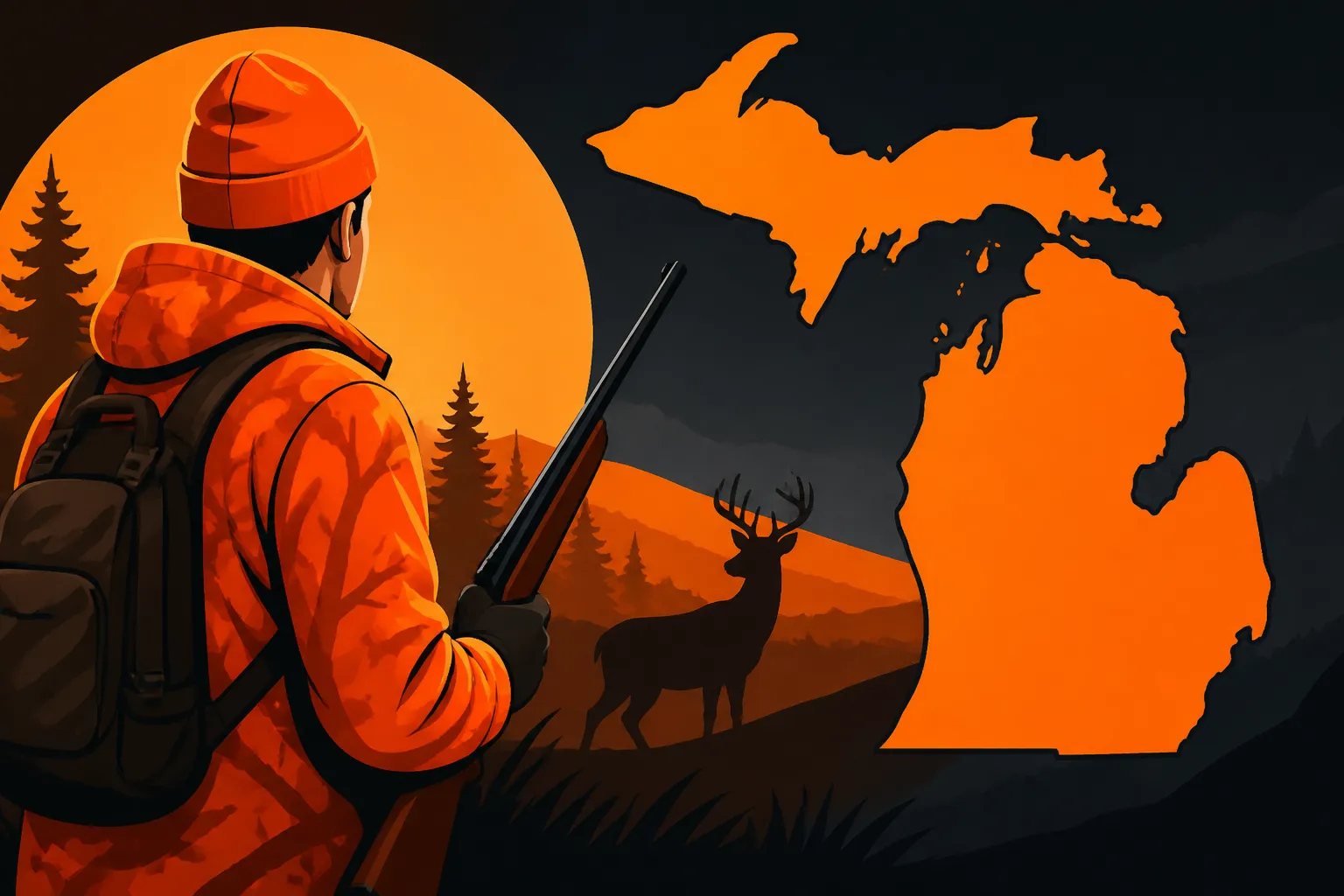
The requirement is quite specific: you must wear an outer garment of hunter orange, fluorescent orange, or blaze orange that is visible from all sides. This means a minimum of 50% of your outermost garment above the waist, excluding the sleeves and headgear, must be orange. And yes, headgear counts too – an orange hat must be worn. This visual pop of color is crucial in Michigan's often dense and varied terrain, from thick cedar swamps to open hardwoods. It's a non-negotiable part of your gear, just like your firearm or bow. For those new to the woods, remember that complying with the Michigan Hunter Safety Requirement emphasizes these visual safety measures as foundational.
Exceptions and Grey Areas for Specific Hunts
Now, here’s where some of the confusion often creeps in. While hunter orange is mandatory for most firearm hunting, there are significant exceptions. You do not need to wear hunter orange when hunting waterfowl, crow, or while hunting furbearers at night. These specific activities have different safety considerations and are typically conducted in environments or times of day where hunter orange isn't practical or necessary for its intended purpose.
Another big exception is during the archery deer season. Whether you’re out in early October or during Michigan's split archery season that reopens in December, hunter orange is generally not required for archers. This is because archery hunting relies heavily on camouflage and concealment, and the effective range of a bow is much shorter than a firearm, reducing certain types of mistaken identity risks. However, if you are an archer hunting during a period when firearms are also legal for deer (for example, if you are bowhunting during the Michigan Firearm Deer Season Dates in November alongside firearm hunters, or during the early or late antlerless firearm periods), then yes, you absolutely must wear hunter orange. It's all about sharing the woods safely. This principle also applies to the Michigan Muzzleloader Season Tactics, where orange is a must, just like any other firearm deer season.
Why Hunter Orange Matters: Safety First in the Woods
Let's cut to the chase: hunter orange isn't just about following rules; it's about saving lives. We all go into the woods hoping for a successful hunt, but far more important is that everyone comes home safely at the end of the day. The frustration of trying to identify movement in thick cover is real, and hunter orange is the most effective tool we have to mitigate that risk.
Preventing Tragic Accidents
Imagine still-hunting through a thick aspen stand, heart pounding, when you glimpse movement. Is it a deer? Another hunter? In those split seconds, the presence of hunter orange can be the difference between a safe identification and a tragic mistake. Michigan's woods, particularly during peak firearm seasons, can be bustling with activity. Hunters are often focused, moving quietly, and their senses are on high alert for game. In such an environment, the human eye is incredibly good at picking up the unnatural, bright pop of blaze orange, even in low light or dense foliage, much better than distinguishing subtle camouflage patterns from a deer's hide.
This is especially critical in areas of high hunting pressure, like many public lands on opening day. When you're Hunting Pressure on Michigan State Land, the likelihood of encountering other hunters increases dramatically. Hunter orange acts as a universal signal: "I am a human. Do not shoot." It reduces the chances of "sound shots" (shooting at a noise) or "sight shots" (shooting at a glimpse of movement without positive identification). Every year, sadly, accidents occur because hunters fail to positively identify their target. Wearing hunter orange is a simple, yet profoundly effective, way to prevent these devastating incidents. It’s part of the ethical responsibility we all share as hunters.
Visibility in Varied Michigan Landscapes
Michigan's diverse landscapes present unique challenges for visibility. In the dense conifer swamps of the Upper Peninsula or the thick lowland cover found throughout the Lower Peninsula, a deer can disappear in an instant. A hunter in camouflage can likewise blend in seamlessly, becoming virtually invisible. Hunter orange, however, stands out against every natural backdrop Michigan offers – the greens of pines and cedars, the grays and browns of hardwoods, and even the stark white of winter snow.
Consider a cloudy, overcast day in November, with diffused light filtering through a leafless hardwood forest. A hunter in dark clothing might be easily mistaken for a deer standing against a dark background or in deep shadows. Add to that the common scenario of hunting near dawn or dusk, during Michigan Legal Shooting Hours, when light is naturally low. These are prime hunting times, but also prime times for visibility challenges. Blaze orange, with its high luminosity, is specifically designed to be highly visible in these low-light conditions and against varied natural colors, making it stand out as an unnatural element that immediately registers as human. It gives other hunters a critical extra second to identify you and make a safe decision, regardless of whether you're moving through a thicket or sitting still in a treestand as part of your Cold Weather Sitting Strategy.
What Counts as Hunter Orange? Understanding the "Fifty Percent" Rule
So, you know when you need it, but what exactly counts as hunter orange in Michigan? It's not just about throwing on any old orange garment. The law has specific requirements to ensure adequate visibility. This is where many hunters, especially those new to the state or to hunting in general, can get confused.
Headwear and Outerwear: The Mandate
The Michigan DNR rules on hunter orange are pretty clear: an outer garment of hunter orange that is exposed and visible from all sides, and covers at least 50% of your torso above the waist. This 50% rule explicitly excludes the sleeves of your garment. In addition, you must wear a hunter orange cap or hat. So, a small patch of orange on your sleeve or a tiny logo on your hat isn't going to cut it. We’re talking about significant, unmistakable blocks of color.
Practically, this usually means a hunter orange vest or jacket that covers your chest and back, combined with a hunter orange hat. The material needs to be true "hunter orange," not just any shade of orange you might find in your closet. This specific hue is chosen for its visibility characteristics in natural light, making it easily distinguishable to the human eye. Don't try to get by with a bright construction worker's vest if it doesn't meet the 50% torso coverage and headwear requirements. The intent is to make you as obvious as possible to other hunters, and the specifications are designed to achieve that.
Beyond the Vest: Practical Application of the Rule
While a vest and hat are the most common ways to meet the 50% rule, it's worth thinking about the practical application, especially when you consider layering for Michigan's notoriously unpredictable weather. For example, if you're wearing a heavy winter jacket, your hunter orange vest needs to be on the outside of that jacket. The 50% rule applies to your outermost garment. This means if you start the day with just a vest and then add a camo rain shell over it later, you're no longer in compliance. You’d need an orange rain shell, or to put your orange vest over the rain shell. This is a common oversight when the weather turns.
Another consideration for How Much Orange Michigan Requires is your backpack. If you're carrying a large pack that covers a significant portion of your back, you might need to think about adding an orange panel or cover to your pack to ensure you still meet the "visible from all sides" requirement. Many hunting packs now come with integrated orange rain covers for this very reason. It’s all about creating that unmistakable orange silhouette, ensuring you don’t disappear into the woods, especially when you’re on the move or dragging a deer. Remember, the goal isn't just to be technically compliant, but to be truly safe.
Specific Season Breakdowns: When and Where to Wear It
Understanding the general rules is one thing, but knowing how they apply to the specific seasons you're hunting is crucial. Michigan's hunting calendar is packed, and hunter orange requirements can shift depending on the game animal, the weapon, and the time of year.
Deer Hunting: Firearm, Muzzleloader, and Archery Considerations
Let's break down deer hunting, as this is where most hunter orange rules come into play.
- Firearm Deer Season (General): This is the big one, the quintessential Michigan deer hunt. From November 15-30, hunter orange is mandatory for all hunters in the deer woods, regardless of what species they are hunting. If you're out chasing whitetails with your rifle or shotgun, or even small game during this period, you need that vest and hat. This is the busiest time in Michigan's woods, and visibility is paramount. It’s also important during special firearm hunts like the Early Antlerless Firearm Weekend or the Late Antlerless Hunting in Michigan periods.
- Muzzleloader Season: Typically running in December, after the general firearm season, muzzleloader season also requires hunter orange. Even though muzzleloader hunting can sometimes feel a bit more solitary, the principle of identifying fellow hunters remains. So, if you're out in the December cold with your smoke pole, make sure you're lit up in orange.
- Archery Season: As mentioned, archery season, which runs from October 1 to November 14 and then reopens from December 1 to January 1, generally does not require hunter orange. Archers rely on concealment. However, this rule changes if you are archery hunting during any period when firearm deer hunting is also permitted. For example, if you're bowhunting on November 15, you must wear hunter orange, even though you have a bow in hand, because general firearm deer season is open. The same applies during the youth Hunting the Michigan Liberty Hunt Weekend or the Independence Hunt. Always check the specific dates if there's overlap. This is where a tool like GoHunt can be invaluable to quickly check regulations on the fly, especially if you're navigating overlapping seasons or special hunts.
Small Game, Turkey, and Predator Hunting Scenarios
The rules aren't just for deer. Many other seasons have specific hunter orange requirements, or exemptions.
- Small Game Hunting: This is where it can get tricky. During any open firearm deer season, if you are hunting small game (like rabbits, squirrels, or grouse), you must wear hunter orange. However, outside of those firearm deer seasons, during the general Michigan Small Game and Furbearer Seasons, hunter orange is not required for small game hunting. Many grouse and woodcock hunters, for instance, prefer to wear camouflage or less conspicuous clothing to better blend in with the cover, especially when hunting with dogs.
- Turkey Hunting: Whether you're chasing gobblers in the spring or fall, hunter orange is not required for turkey hunting. Turkeys have exceptional eyesight, and wearing bright orange would severely hinder a hunter's ability to get close. This is one of the distinct exceptions where camouflage is absolutely essential.
- Predator Hunting: For predators like coyotes or bobcats, if you're hunting them during an open firearm deer season, you must wear hunter orange. If you're calling coyotes in Michigan winter outside of those seasons, orange isn't required. For night hunting of furbearers, it's also not required. The general rule of thumb is: if it's firearm deer season, wear orange. If it's not, and you're not specifically deer hunting, other rules might apply.
It's a lot to keep track of, but the pattern is clear: firearm deer season trumps all when it comes to orange.
Compliance and Common Misconceptions: Don't Get Caught Off Guard
Even seasoned hunters can sometimes misinterpret the rules, or get complacent. It’s vital to stay on top of the regulations, especially since they can occasionally change. Avoiding common misconceptions can keep you safe and legal.
Public vs. Private Land: Are the Rules Different?
A very common misconception, especially among those who primarily hunt family land or leased property, is that hunter orange rules differ between public and private land. Let's make this crystal clear: Michigan's hunter orange rules apply equally to both public and private land. There is no distinction. If the season and weapon type dictate that hunter orange is required, it doesn't matter if you're on a vast stretch of state forest, your own 40 acres, or a friend's farm via Hunting Small Private Tracts in Michigan.
This means if you're hunting during the general firearm deer season on your grandmother's back forty, you still need to be wearing that blaze orange vest and hat. The reason is simple: safety is universal. Bullets and arrows don't know property lines, and neither do accidental discharges. While you might feel safer on private land where you know who else is (or isn't) present, other hunters might be nearby on adjacent properties, or even just passing through if the land isn't clearly marked. Always assume you could encounter another hunter, regardless of whose name is on the deed. Understanding Michigan State Forest Hunting Rules and applying them broadly is always a good practice.
The Role of Technology: Using GoHunt for Current Regs
In today’s digital age, staying informed is easier than ever, but it still requires diligence. Relying solely on a dog-eared hunting digest from last year can be a recipe for trouble. Regulations, while generally stable, can see minor tweaks.
Before heading out, always double-check the latest Michigan Department of Natural Resources (DNR) regulations. Their official website is a goldmine of information, and the DNR’s official Hunt Fish app is a fantastic resource to have in your pocket. Beyond official sources, many hunters swear by specialized apps, like GoHunt, for their GPS capabilities and ability to overlay different property boundaries, making it easier to stay on the right side of the law. A comprehensive app like GoHunt can provide not just mapping and scouting tools, but also direct links or summaries of state hunting regulations, ensuring you have the most up-to-date info. This is particularly useful for hunters traveling to different parts of the state or exploring new areas they’ve discovered through Scouting Michigan Public Land Before Season. Having quick access to verified information can save you a lot of headaches and ensures you're always compliant with rules like When Michigan Requires Hunter Orange.
Consequences of Non-Compliance: What's at Stake
Ignoring Michigan's hunter orange rules isn't just a minor infraction; it can lead to serious legal and personal ramifications. It’s crucial to understand that these aren’t just suggestions; they’re laws designed for the well-being of the entire hunting community.
Fines and Penalties for Violations
Getting caught without proper hunter orange in Michigan during a required season can result in a civil infraction. This means you’re likely looking at a ticket and a fine. While the specific amount can vary, these fines are certainly an unwelcome hit to your wallet, potentially ranging from $100 to $500 depending on the severity and any additional associated violations. Conservation officers take these rules seriously because they directly impact safety. They are patrolling the woods specifically to ensure compliance, among other things.
Beyond the immediate financial penalty, there could be other implications. Repeated offenses, or a violation coupled with other infractions, could potentially lead to more severe penalties, including loss of hunting privileges. No hunter wants to face the prospect of losing their ability to enjoy the sport they love, especially over something as easily preventable as wearing the correct gear. The legal system doesn't differentiate between "I forgot" and "I didn't care." Ignorance of the law is generally not considered an excuse, so it’s your responsibility to know and follow the rules. This is covered under broader Michigan Wildlife Violation Penalties and serves as a strong deterrent.
The True Cost: Risking Lives and Reputation
However, the legal consequences, while unpleasant, pale in comparison to the far more devastating potential outcome: an accident. The true cost of not wearing hunter orange could be a serious injury or, tragically, a fatality. No fine or penalty can ever account for the irreversible damage caused by a mistaken identity shooting. Imagine the guilt, the heartbreak, and the lifetime of regret for everyone involved. That’s the real reason these rules exist.
Beyond the immediate safety concerns, a disregard for hunter orange rules also reflects poorly on the entire hunting community. It contributes to a negative public perception of hunters as careless or irresponsible, potentially fueling anti-hunting sentiment. As hunters, we are stewards of the land and of our traditions. Part of that stewardship involves practicing extreme caution and adhering to all safety regulations, demonstrating respect for the wildlife we pursue, the land we use, and our fellow outdoors enthusiasts. By consistently wearing our hunter orange when required, we not only protect ourselves and others, but we also uphold the integrity and positive image of hunting in Michigan.
| Season/Activity | Hunter Orange Required? | Notes |
|---|---|---|
| General Firearm Deer (Nov. 15-30) | Yes | For all hunters, regardless of species. |
| Muzzleloader Deer Season | Yes | For all hunters. |
| Early Antlerless Firearm / Late Antlerless Firearm | Yes | For all hunters. |
| Archery Deer Season (Oct. 1 – Nov. 14 / Dec. 1 – Jan. 1) | No | Unless firearm deer season is concurrently open (e.g., during Nov. 15-30). |
| Small Game (during firearm deer seasons) | Yes | Must comply with orange rules if firearm deer season is open. |
| Small Game (outside firearm deer seasons) | No | Not required for species like rabbit, squirrel, grouse, woodcock when no firearm deer season is open. |
| Spring or Fall Turkey Hunting | No | Camouflage is essential due to turkey eyesight. |
| Waterfowl Hunting | No | Waterfowl hunters generally use blinds and camouflage. |
| Crow Hunting | No | |
| Furbearer Hunting (at night) | No | |
| Predator Hunting (during firearm deer seasons) | Yes | If hunting coyotes, bobcats, etc. when firearm deer season is open. |
| Predator Hunting (outside firearm deer seasons) | No | Not required. |
| Accompanying a Firearm Hunter (during required seasons) | Yes | Even if not actively hunting, you must wear orange. |
Disclaimer
The information provided in this guide is intended for general informational purposes only and does not constitute legal advice. While we strive to ensure accuracy, hunting regulations can change. It is always the hunter's responsibility to consult the most current Michigan Department of Natural Resources (DNR) hunting regulations and local ordinances before engaging in any hunting activity.