How Michigan Bear Preference Points Work
It's no secret that drawing a Michigan bear license can feel like an impossible task for many hunters. Year after year, you apply, hold your breath, and then face the disappointment of not seeing your name on that coveted list. This cycle can be incredibly frustrating, leaving you wondering if you'll ever get to experience the unique challenge of a Michigan bear hunt. This comprehensive guide is here to demystify the system, explaining exactly how Michigan's bear preference points work and how you can maximize your chances of finally drawing a tag.
Understanding Michigan's Bear License Drawing System
Hunting black bear in Michigan is a highly sought-after experience, drawing thousands of applicants each year. Unlike deer tags, which are generally available over the counter, bear licenses are strictly limited. This scarcity makes understanding the drawing process, especially the role of preference points, absolutely critical for anyone hoping to pursue a Michigan bruin.
Why a Drawing for Bear Licenses?
The primary reason for a limited drawing system for Michigan bear licenses is to manage the state's black bear population sustainably. While Michigan boasts a robust and healthy bear population, particularly in the Upper Peninsula and the northern Lower Peninsula, the Michigan Department of Natural Resources (DNR) sets specific harvest quotas for different regions, known as Bear Management Units (BMUs), to ensure the population remains stable and healthy for future generations. If every hunter who wanted a bear license could get one, the pressure on the population would be immense, leading to potential overharvest and long-term population decline. Therefore, the drawing system balances hunter demand with conservation goals, making every tag awarded a valuable commodity. It's a system designed to spread hunting opportunity over time, rather than letting a few lucky individuals hunt every year.
The Basics of Preference Points
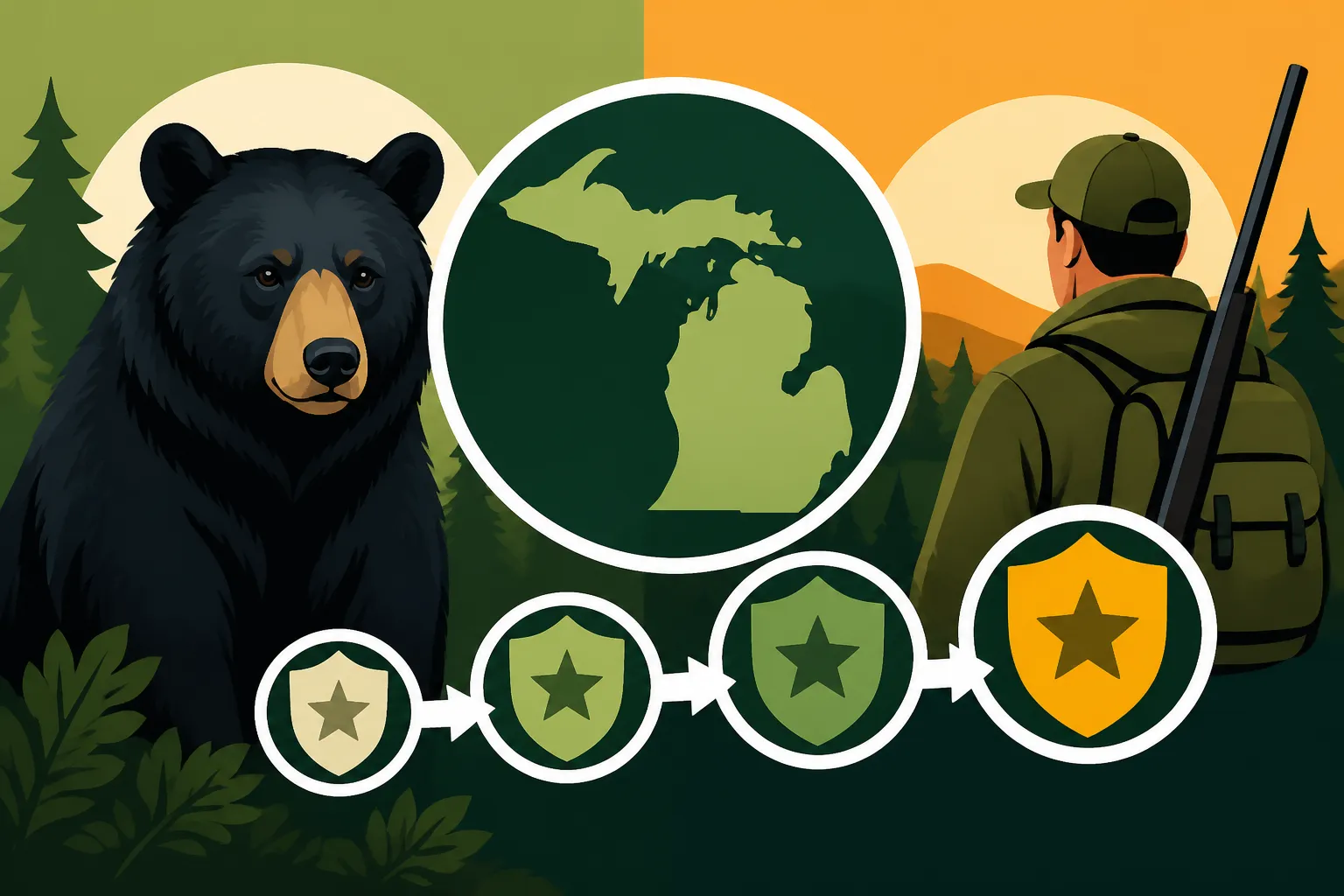
So, what exactly are preference points? In simple terms, a preference point is essentially a non-hunting permit that you accumulate when you apply for a bear license but are unsuccessful in the drawing. Think of it as a loyalty reward for your persistence. Each year you apply for a bear license and don't draw, you earn one preference point, provided you applied correctly and paid the application fee. These points then carry over from year to year, adding up over time. The fundamental idea behind preference points is to give hunters who have waited longer a better chance of drawing a license in subsequent years. It’s not a guarantee, but it significantly tips the odds in your favor compared to someone with fewer points. This system ensures that while luck plays a role, consistent application and patience are eventually rewarded.
Accumulating and Using Preference Points
Understanding the theory behind preference points is one thing, but knowing how to actively accumulate and strategically use them is where the real advantage lies. It's a long-term game, but one that pays off for dedicated hunters.
How You Earn Preference Points
Earning preference points in Michigan is straightforward: you apply for a bear license during the annual application period, which typically runs from early May to early June. If you are not selected for a license in that year's drawing, you automatically receive one preference point. It’s important to note that you must apply each year to earn a point or retain your existing points. If you skip a year of applying, you will forfeit any accumulated preference points, essentially starting over from zero. This is a crucial detail many hunters overlook, leading to frustration when they realize their years of waiting have been undone by a missed application deadline. The application process itself involves selecting your desired Bear Management Unit (BMU), which is important because different units have different demand and point requirements, which we'll discuss shortly.
The Strategic Advantage of Points
The true power of preference points comes from how they impact your drawing odds. When the Michigan DNR conducts its bear license drawing, applicants with the highest number of preference points for a given BMU are considered first. While it's not a purely linear system where the person with the most points always draws, it creates tiers of applicants. For example, if a BMU has 100 available licenses and 100 applicants have 10 points, those 10-point holders will enter a drawing for those licenses. If there are fewer 10-point holders than licenses, then the remaining licenses go to 9-point holders, and so on.
Imagine two hunters: Hunter A has 8 preference points, and Hunter B has 2. When they both apply for the same BMU, Hunter A will have a significantly higher chance of drawing a license because they are competing in a pool with other high-point holders, or in some cases, might be guaranteed a tag if their point total exceeds the maximum points needed for a draw in that unit for that year. This system is designed to reward that long-term commitment. It transforms the drawing from a pure lottery into a more predictable waiting game, encouraging hunters to stick with the system even if they face initial disappointment. Eventually, your number will come up, especially if you consistently apply.
Drawing a Michigan Bear License with Preference Points
Once you've accumulated a decent number of preference points, the next step is to strategically decide when and where to "burn" them to draw that coveted bear license. This requires a bit of research and a clear understanding of the different Bear Management Units.
Researching Bear Management Units BMUs
Michigan is divided into several Bear Management Units, each with its own specific license quota and, consequently, its own preference point requirements for drawing a tag. Some BMUs, particularly those in the northern Lower Peninsula and certain parts of the Upper Peninsula with higher bear densities or more accessible hunting grounds, are incredibly popular and often require many more preference points to draw a tag. Conversely, some less-pressured or more remote units might be drawn with fewer points.
This is where your research comes into play. The Michigan DNR publishes drawing statistics each year, showing the minimum, maximum, and average number of points required to draw a license in each BMU. Tools like those offered by GoHunt, or simply diving into the DNR's annual reports, can be invaluable for understanding these trends. For instance, the Red Oak or Baldwin BMUs in the northern Lower Peninsula often demand a higher point total compared to, say, the Baraga or Bergland units in the more remote western Upper Peninsula. Understanding these differences allows you to make an informed decision when it's time to apply. You can check the current year's statistics to get a good feel for what it might take. Remember to also look into the specific details of each unit, as explained in our guide on Michigan Bear Management Units.
Deciding When to Burn Your Points
The decision of when to apply for a license versus continuing to accumulate points is perhaps the most strategic choice in the entire process. If you have, say, 5 points, and you apply for a BMU that historically requires 8-10 points, you're almost certainly not going to draw, but you will earn another point. This is the "point building" strategy. However, if you have 8 points and you've been eyeing a unit that typically draws with 7-9 points, this might be the year to apply for the license and "burn" your points.
Here's a table to help visualize typical point requirements in various (hypothetical, for illustrative purposes) Michigan Bear Management Units, based on historical averages:
| Bear Management Unit (BMU) | Average Points to Draw (Last 3 Years) | Typical Demand | Primary Regions |
|---|---|---|---|
| Red Oak | 9-11 | Very High | Northern LP |
| Baldwin | 8-10 | High | Northern LP |
| Baraga | 6-8 | Moderate | Western UP |
| Bergland | 6-8 | Moderate | Western UP |
| Drummond Island | 7-9 | Moderate-High | Eastern UP |
| Gladwin | 7-9 | Moderate-High | Northern LP |
(Note: These point requirements are illustrative. Always check the official Michigan DNR draw statistics for the most current and accurate data.)
If you have accumulated 10 points and the BMU you desire is consistently drawn with 7 or 8 points, it's a good year to put in for the license. You'll likely draw, and you'll get to experience your hunt. If you don't draw with high points, you still retain your points and gain another. However, if you do draw, your preference point total resets to zero the following year. It’s a calculated risk versus reward, balancing the desire to hunt now with the certainty of higher odds later. Make sure you also understand the different Michigan Bear Season Dates by Unit as this might influence your choice.
Checking Your Point Totals and Drawing Results
The Michigan DNR makes it easy to keep track of your preference points and check drawing results. After the application period closes and the drawing is conducted (usually in mid-June), you can log into your Michigan DNR eLicense account online. Here, you'll find your current preference point total for various limited-entry hunts, including bear. This is also where you'll see your drawing results. Many hunters eagerly await these results, and it's always a good idea to check your account directly rather than relying on email notifications, which can sometimes be delayed or filtered. Knowing your current point total is key to planning your application strategy for the next season. The system aims for transparency so you always know where you stand. You can find more information about the overall system in our guide to the Michigan Bear Licence Drawing.
Common Misconceptions and Advanced Strategies
The Michigan bear preference point system can seem a bit opaque at first, leading to some common misunderstandings. Let's clear those up and discuss a few more nuanced strategies for success.
Point Averaging and Group Applications
One frequent question that comes up is about "point averaging" when applying with a group. In Michigan, preference points are individual to each hunter. If you apply as a group, the DNR considers the individual with the lowest number of preference points in that group for the drawing. This means if you have 10 points and your buddy has 2, and you apply together, your group will be considered in the 2-point pool. This can be a huge disadvantage for high-point holders.
Therefore, the general advice for Michigan bear hunting is: if drawing a license quickly is your top priority, apply as an individual, especially if you have a significant number of points. If hunting with a specific partner or group is more important than drawing a tag quickly, then applying together makes sense, but be aware that it will likely extend the waiting period for everyone in the group if there's a large disparity in points. This is a critical distinction that sets Michigan apart from some other states where group applications might average points or use the highest point total.
What Happens if You Don't Apply?
As mentioned earlier, if you decide to skip a year of applying for a bear license, you will forfeit all your accumulated preference points. This is a common pitfall for hunters who might get busy, forget the application window, or decide they can't hunt that year. It's an "all or nothing" scenario for retaining your points. Even if you know you can't hunt, it's almost always worth paying the small application fee to ensure you continue to gain a point and don't lose your years of patiently waiting. That single point could be the difference between drawing next year and waiting several more. This consistency is the backbone of successful preference point strategies. If you're looking for broader information on securing your permits, check out our piece on Michigan Hunting Licences and What They Cost.
Beyond the Draw: Preparing for Your Hunt
While preference points get you in the door, a successful bear hunt involves much more than just drawing a tag. Once you do draw, the real work begins. You'll need to decide if you plan on Baiting Bears in the Upper Peninsula (where legal) or try Hunting Bear Without Bait or Dogs. Preparing for your hunt also includes understanding the local terrain, bear habits, and scouting. Don't forget about critical post-harvest steps either, such as Handling Bear Meat Safely and meeting the deadlines for Reporting a Michigan Harvest in 72 Hours. The thrill of the hunt is just part of the experience, and being prepared for all aspects will make it much more rewarding. For a broader overview of the species, our article on How Many Michigan Black Bears There Are provides excellent context.
Disclaimer
The information provided in this guide is for general informational purposes only and is subject to change. Hunting regulations, season dates, and license requirements are set by the Michigan Department of Natural Resources (DNR) and can be updated annually. Always consult the official Michigan DNR hunting digests and regulations for the most current and accurate information before planning any hunting activity.