Michigan CWD Prevalence Rates
The silent threat of Chronic Wasting Disease (CWD) casts a long shadow over Michigan's deer hunting landscape, creating anxieties and uncertainties for many of us who cherish our time in the woods. It's tough to know what to believe with so much information out there, and even tougher to understand what those "prevalence rates" really mean for your hunt this season. This guide is here to cut through the noise, explaining Michigan's CWD prevalence rates in plain language and outlining what every hunter needs to know to protect our deer herd and their hunting traditions.
What CWD Is and Why It Keeps Michigan Hunters Up at Night
CWD isn't just another disease; it's a neurological disorder that affects deer, elk, and moose, slowly but inevitably leading to death. It's a member of the transmissible spongiform encephalopathy (TSE) family, similar to "mad cow disease" in cattle. The real worry for hunters, beyond the obvious concern for the animals themselves, is that it's always fatal, there's no cure, and it can spread through direct contact or contaminated environments. For those of us who have spent years building traditions around deer camp and providing venison for our families, the thought of CWD taking root and decimating our beloved herd is a deeply unsettling one. We've watched other states grapple with widespread outbreaks, and no one wants to see Michigan go down that path.
The Insidious Nature of the Disease
What makes CWD so insidious is its mechanism. It's caused by abnormal proteins called prions, which can persist in the environment for years, even decades, in soil, plants, and water, making it incredibly difficult to eradicate once it's present. Imagine prions as tiny, invisible seeds that can infect a deer long after an infected animal has passed through an area. Deer can be infected for a long time before showing any symptoms, meaning a seemingly healthy deer could be carrying and spreading the disease. This "silent period" is what makes CWD so challenging to manage and detect early on, as hunters might harvest a deer that appears perfectly healthy, only to find out later it was CWD positive.
Why Hunters Are on the Front Lines
As hunters, we're not just participants in the ecosystem; we're often the first line of defense in monitoring wildlife health. Our presence in the field, our passion for the deer herd, and our willingness to participate in surveillance efforts are absolutely critical in the fight against CWD. We're the ones encountering these animals daily, and our observations, combined with our contributions to testing programs, provide invaluable data that biologists simply couldn't gather otherwise. The Michigan Department of Natural Resources (DNR) relies heavily on hunters to submit deer heads for testing, especially in known CWD areas. This collective effort is what gives us the clearest picture of where and how much CWD is truly present.
Where We're Seeing CWD in Michigan: Current Hotspots and Trends
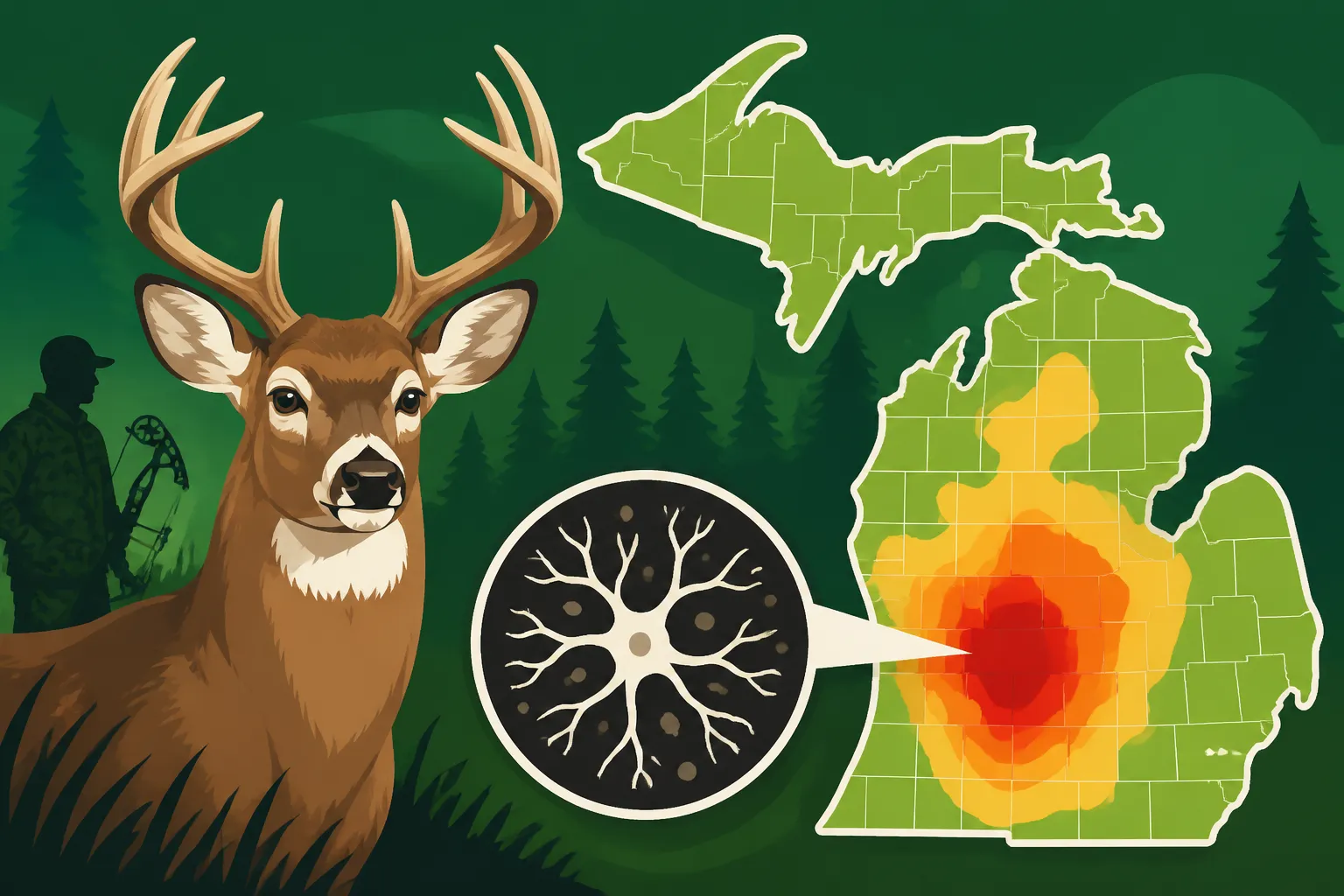
CWD isn't evenly distributed across Michigan, which is a small comfort but also a challenge. The initial detection of CWD in Michigan was a wake-up call, and since then, efforts have focused heavily on identifying affected areas and containing the spread. We've learned a lot about Where CWD Was First Found in Michigan and how the disease tends to cluster, often around initial infection sites. Knowing these areas is paramount for hunters, as it dictates specific regulations and recommendations you might need to follow. Understanding these geographical trends helps us target our efforts more effectively.
Key Counties and DMUs with Confirmed Cases
When we talk about CWD in Michigan, certain geographic areas tend to come up more frequently. These are the regions where the disease has been confirmed in wild deer. The state is divided into Deer Management Units (DMUs), and specific DMUs and counties have heightened surveillance and specific rules. Typically, the southern Lower Peninsula has been the primary focus, especially counties surrounding the initial detection sites. For instance, areas around Kent, Ionia, and Montcalm counties have historically seen more cases, and consequently, more rigorous testing and carcass movement restrictions. Always make it a point to check the latest maps and regulations for your specific DMU before you head out, and a tool like GoHunt can really help visualize these zones. It’s important to remember that these "hotspots" aren't static; the DNR continuously updates its information as new cases are found and surveillance expands.
The Difference Between Prevalence and Distribution
It’s easy to get prevalence and distribution mixed up, but they tell us different things. Distribution refers to the geographical areas where CWD has been detected. For example, knowing How Many Michigan Counties Have CWD gives us a sense of its overall reach across the state. Prevalence, on the other hand, tells us how common the disease is within a specific, already known affected population or area. So, while CWD might be distributed across several counties, its prevalence rate might be very low in one county (meaning only a tiny fraction of deer tested positive) and higher in another (meaning a more significant percentage of tested deer are positive). High prevalence in a small area indicates a more entrenched problem locally, even if the overall distribution isn't massive. It's about density of infection, not just presence.
Understanding the Numbers: Interpreting CWD Prevalence Rates
When the DNR reports CWD prevalence rates, they're giving us a snapshot of the disease's intensity within a specific area, usually expressed as a percentage. These numbers are derived from the total number of deer tested against the number that came back positive for CWD. It's crucial not to just look at the raw percentage but to understand what goes into generating that figure and what it truly signifies for the health of the herd and for your hunting plans. A low prevalence rate doesn't mean you can ignore CWD, and a slightly higher one needs careful interpretation.
Interpreting Percentage Rates
Let's say a specific DMU reports a CWD prevalence rate of 1% for antlerless deer and 3% for antlered deer in a given year. What does that actually mean? It means that out of all the antlerless deer tested in that DMU, 1 out of every 100 tested positive for CWD. For antlered deer, it would be 3 out of every 100. It's not a count of every deer in the woods, but a percentage of the tested sample.
Here's a simplified look at how to interpret prevalence, which can vary based on factors like the deer's age and sex:
| Prevalence Rate | Interpretation for Hunters | Hunter Action Recommendation |
|---|---|---|
| < 1% | Low detection, but disease is present. | Continue testing, adhere to carcass rules. |
| 1% – 5% | Active presence, local management critical. | Prioritize testing, understand specific DMU rules. Check Michigan CWD Testing for Hunters. |
| 5% – 10% | More established, potential for local impact on herd health. | High priority for testing, strict adherence to all rules. Consider hunting strategies to manage herd. |
| > 10% | Significant presence, active herd health concern. | Crucial to participate in testing, follow all guidelines, and support management efforts. |
It's often seen that older bucks have slightly higher prevalence rates because they've had more time to be exposed to prions in the environment. This isn't a hard and fast rule, but it's a common trend observed in CWD-affected areas. A hunter seeking a mature buck in a known CWD area might have a slightly higher chance of encountering an infected animal compared to someone harvesting a fawn or a yearling.
Factors Influencing Detection Rates
The prevalence rate isn't just a raw number; it's influenced by several factors. The intensity of testing in an area, for instance, plays a huge role. If the DNR focuses its efforts and resources on a specific hotspot and tests hundreds or thousands of deer, they're more likely to find cases, potentially leading to a higher reported prevalence. Conversely, if testing is sparse, the reported prevalence might be artificially low, not because the disease isn't there, but because it simply hasn't been detected.
Another factor is hunter participation. If hunters in an area are diligent about submitting heads for testing, the data collected will be more robust and representative of the actual disease status. However, if participation is low, the data becomes less reliable, making it harder for biologists to get an accurate picture of the disease's true extent. Habitat type and deer density can also play a role; areas with high deer populations and frequent deer congregation points might see faster or more widespread transmission. This is why tools like GoHunt are so helpful, often providing maps and information that can help you understand where testing is most critical.
Your Role in Monitoring and Preventing CWD's Spread
As Michigan hunters, we have a vital role to play in the ongoing surveillance and prevention efforts against CWD. It’s not just about what the DNR does; it’s about our actions in the field, our willingness to adapt, and our commitment to the long-term health of the deer herd. Our vigilance is the most powerful tool we have. By following guidelines and staying informed, we can make a real difference.
Mandatory and Voluntary Testing
In certain DMUs or counties where CWD has been detected or is under intensive surveillance, the DNR may implement mandatory CWD testing. This means that if you harvest a deer in one of these designated areas, you are required to submit its head for testing at a specified drop-off location or check station. It's not an inconvenience; it's a critical part of understanding the disease's spread and intensity. Outside of these mandatory zones, voluntary testing is often encouraged. Even if it's not required, submitting a deer for testing, especially if you harvest an animal that appears sickly or emaciated, provides valuable data. You can find information on drop-off locations and requirements by checking the DNR's website or using helpful resources like GoHunt, which often has up-to-date links and maps to help hunters navigate these requirements. The more deer that are tested, the clearer the picture we get of CWD's presence in Michigan.
Carcass Movement Restrictions
One of the most effective ways to prevent the spread of CWD is by limiting the movement of deer carcasses from affected areas. CWD prions are concentrated in the brain, spinal cord, lymph nodes, and spleen, but can also be present in other tissues. To prevent hunters from inadvertently moving these prions to unaffected areas, Michigan has Michigan Carcass Transport Restrictions in place. These rules typically dictate that if you harvest a deer in a CWD-positive area, you can only transport certain parts of the carcass out of that area, such as deboned meat, antlers, hides, or skull caps free of brain material. Whole carcasses, or even bone-in cuts, might be restricted. It's a small change to how we process our deer, but it’s a huge step in preventing the disease from jumping to new regions. Knowing these rules before you head into the woods can save you a lot of hassle and ensure you're compliant, which is just good practice for any responsible hunter. Always make sure to report your harvest by the Michigan Harvest Report Deadline to ensure accurate data is collected for management.
Adapting Hunting Strategies and Practices
Beyond testing and carcass rules, adapting your hunting strategies is another way to help. If you're hunting in an area with confirmed CWD, consider the ethical consumption of venison. While no human cases of CWD have ever been detected, public health organizations generally advise against consuming meat from CWD-positive animals. This is why testing is so important, as it gives you the information you need to make informed decisions for your family. Additionally, avoiding practices that unnaturally congregate deer, like baiting (which is generally banned in Michigan, especially in CWD areas), can reduce nose-to-nose contact and slow disease transmission. Understanding general Chronic Wasting Disease in Michigan facts and participating in local management efforts, like selective harvesting if recommended by the DNR, can contribute significantly to mitigating the long-term impacts of this challenging disease on Michigan's beloved deer herd. It's all part of being a responsible steward of our wildlife.
Disclaimer
This article is for general informational purposes only and does not constitute professional advice. Laws, prices and regulations vary by location and change over time. Consult a qualified professional for guidance on your specific situation.