Michigan Record Book Bull Elk
If you're an avid hunter in Michigan, you know the dream: drawing that elusive elk tag. It's truly a once-in-a-lifetime opportunity for most, and when you finally get the chance to pursue one of these magnificent animals in our home state, the excitement is almost unbearable. But then, as you're out there glassing the Pigeon River Country, the thought might cross your mind: "Could this be a record book bull?" It's a thrilling notion, but understanding what truly qualifies a Michigan bull elk for the record books involves more than just seeing a big rack. This guide is here to shed some light on the criteria, the organizations, and the sheer challenge of harvesting a truly world-class Michigan elk.
The Rarity and Allure of Michigan Elk Hunting
For many Michigan hunters, the pursuit of an elk isn't just a hunt; it's a pilgrimage, a deeply personal quest that can take decades just to get the chance to participate. Our elk herd is a testament to conservation efforts, a thriving population against all odds in a state not typically known for these majestic cervids. The very act of chasing a Michigan elk, let alone a record-book caliber animal, is an experience steeped in anticipation and respect.
A Dream Hunt for Many
Let's be real, the odds of drawing an elk tag in Michigan are incredibly slim. Most hunters apply year after year, accumulating preference points, holding onto that sliver of hope that their name will finally be called. It's a stark contrast to hunting deer, where licenses are readily available. This scarcity makes the Michigan elk hunt one of the most coveted big game opportunities east of the Mississippi. When you consider the vast, wild landscape of the northern Lower Peninsula where these elk roam, you begin to appreciate the unique challenge it presents. It's not just about a big animal; it's about connecting with a truly wild experience in Michigan's back country. The sheer volume of applications speaks to how many people yearn for this chance, and how special it is when it finally happens. You can learn more about Elk in Michigan's Pigeon River Country.
The allure isn't just in the challenge of the hunt itself, but in the story of Michigan's elk herd. Brought back from near extinction, these animals are a symbol of successful wildlife management. Their presence in Michigan today is a testament to dedicated conservation efforts that have allowed their numbers to rebound and thrive in their natural habitat. For hunters, being part of this story, even in a small way, adds immense value to the experience. It's a connection to a wild Michigan that few ever get to see or experience firsthand.
Understanding the Michigan Elk Management
The Michigan Department of Natural Resources (DNR) manages our elk herd meticulously, using a lottery system to issue a very limited number of tags each year. This careful management ensures the herd remains healthy, balances population numbers with available habitat, and minimizes conflicts with landowners. Understanding the intricacies of the draw system, including how preference points work, is crucial for anyone hoping to hunt elk. Michigan Elk Application Rules can be complex, but persistence often pays off.
Each year, the number of tags issued is directly tied to the herd's health and specific management objectives for different units. This means the number can fluctuate, adding to the competitive nature of the draw. Resources like GoHunt can be incredibly valuable here, as they often compile data on draw odds and unit breakdowns, helping you strategize your application. While nothing guarantees a tag, understanding the system is your best shot. Hunters play a vital role in this management, not just through their license fees that fund conservation, but also by providing valuable data through successful harvests. Knowing How Many Elk Michigan Has helps shape these management strategies.
What Makes a Michigan Bull Elk "Record Book" Quality?
So, you've drawn a tag, you're in the woods, and suddenly, a bull steps out of the timber. Your heart pounds. But is it a "record book" animal? This is where understanding the established systems for measuring big game antlers comes into play. It's not just about how "big" it looks; there are specific criteria and measurements involved.
The Boone and Crockett Club and P&Y System
When hunters talk about "record book" animals, they are almost always referring to the Boone and Crockett Club (B&C) for firearms kills, or the Pope and Young Club (P&Y) for archery kills. Both organizations use very similar scoring systems that meticulously measure various aspects of the antlers to determine a numerical score. This system provides a standardized way to compare trophies from across the continent, allowing hunters to appreciate the genetic potential and maturity of individual animals. The prestige of making either book is immense, a testament to a truly exceptional animal and a skilled hunt.
The basic scoring principles focus on the size and symmetry of the antlers. For typical categories, symmetry is key; deductions are made for differences between the left and right antlers. Non-typical categories, on the other hand, celebrate unique and often chaotic antler growth, with abnormal points adding to the score rather than being deductions. Both systems provide minimum entry scores, which vary significantly between typical and non-typical categories, and also by species. For elk, these minimums are quite high, reflecting the massive size these animals can achieve. Knowing these benchmarks gives you a target, even if it's a long shot.
Key Scoring Metrics for Elk Antlers
Scoring an elk involves several precise measurements that, when added together and with specific deductions, give the final net score. The main components are main beam length, the length of individual tines (points), circumferences (mass measurements) taken at four different places along each main beam, and the greatest inside spread. Each of these factors contributes significantly to the overall score, and a truly impressive bull will show outstanding qualities across all categories.
For a typical score, the ideal elk has antlers that are nearly identical from side to side. Points are measured from the top of the main beam, and circumferences reflect the thickness of the antler. Any abnormal points, such as kickers or drop tines that don't match on both sides, are considered deductions in the typical category. However, in the non-typical category, these unique formations are actually added to the score, rewarding bulls with truly wild and impressive headgear. A bull with a wide spread, long tines, and heavy mass will always score well.
The Importance of a 6×6 or Larger
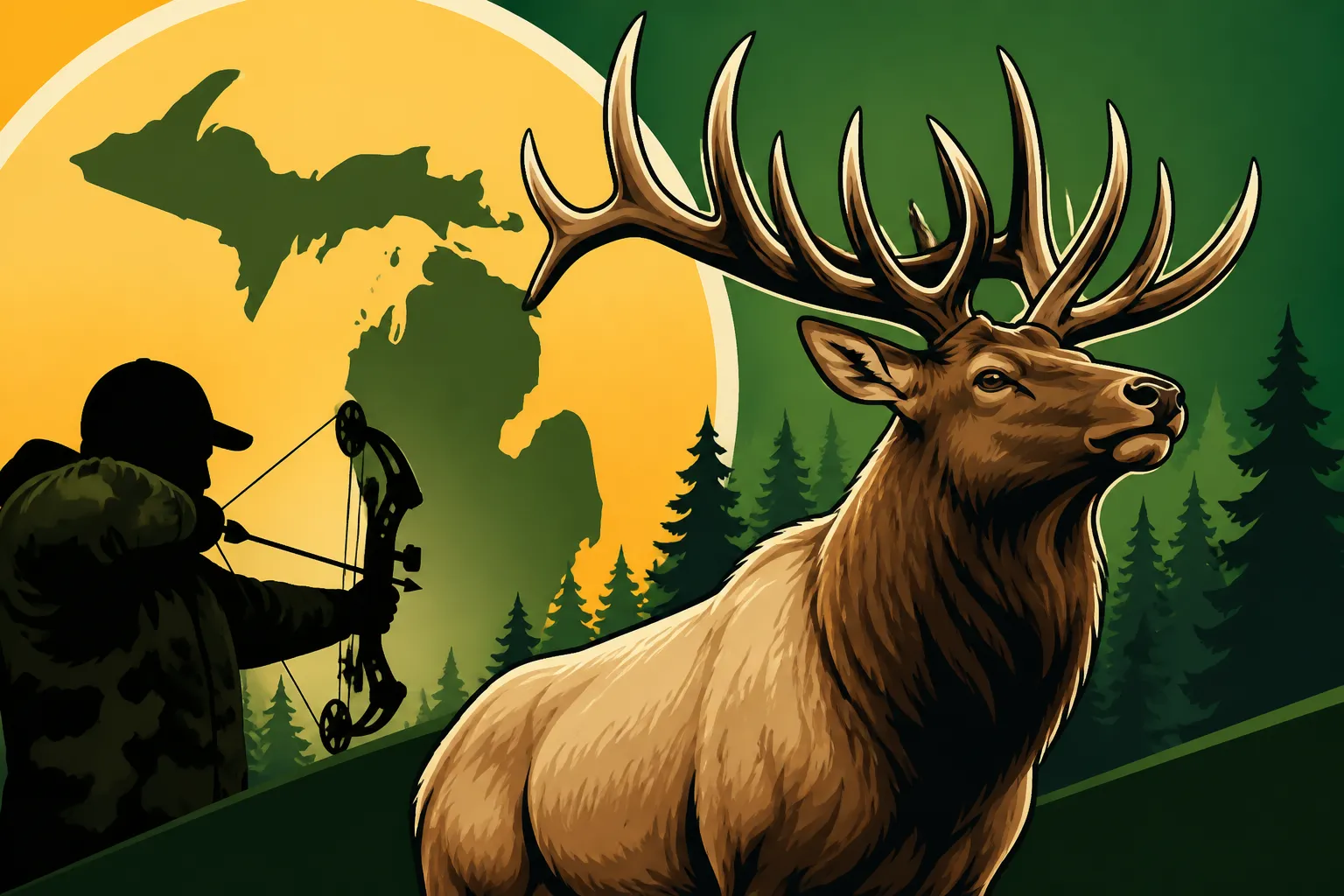
While an elk with impressive antlers can come in many forms, the gold standard for a record book bull, especially in the typical category, is almost invariably a mature 6×6. This means the bull has six points on each antler, and these points are well-defined and substantial. Occasionally, a truly massive 5×5 might break into the books, but it's rare. A 6×6 often indicates an older, more mature animal that has reached its peak antler growth potential.
Age is a huge factor in antler development. Younger bulls might have respectable antlers, but it's generally the older bulls, often 6.5 years or more, that carry the sheer mass and tine length required for record book status. They've had more seasons to grow, to reach their genetic potential. While you might see a young bull with a wide spread, it's often the deep, heavy bases and long, symmetrical tines of an older 6×6 that truly add up to those impressive net scores.
Field Judging Elk for Potential Record Status
Hunting elk in Michigan is already an intense experience. Add the pressure of trying to determine if the bull you're looking at is a potential record book animal, and it can be overwhelming. Field judging on the fly is a skill that takes years to hone, and even seasoned veterans make mistakes. The key is to quickly assess a few critical features before deciding to make the shot.
Initial Assessment – Width and Mass
When that bull steps out, your first glance will often tell you about its width. A quick way to estimate width is to compare the antler tips to the width of the elk's ears. An adult bull elk's ears are typically around 30-32 inches wide from tip to tip. If the antlers extend well beyond the ears on both sides, you know you're looking at a bull with significant width. This is a good starting point, but width alone won't get you into the record books.
Mass is another crucial factor that's often harder to judge quickly. Look for thick bases where the antlers meet the skull, and observe how well that thickness carries throughout the main beams. Many bulls will have good width and decent tine length, but they lack the heavy mass that adds those critical inches to the circumference measurements. A bull with heavy, robust antlers from base to tip is almost always a better scorer than a wide, spindly-racked bull.
Counting Points and Estimating Length
Once you've quickly assessed width and mass, the next step is to count the points on each side. For typical scores, you're looking for symmetry in the number and length of points. Are there six solid points on both the left and right side? Are they roughly the same length? Try to differentiate between true points (at least one inch long and longer than they are wide) and small bumps or non-scoring protrusions.
Estimating tine length and main beam length is the trickiest part. Use the elk's body or head as a reference. How long are the main beams compared to the length of its back? Are the G-points (tines) long and sweeping, or short and stubby? This is where experience really comes into play. You're trying to quickly visualize the measuring tape on the antlers, a task made infinitely harder by adrenaline and the fleeting nature of the moment. Remember, while a grand total of points is exciting, it's the specific measurements that count for the record books.
Ethical Considerations and Making the Shot
Ultimately, while the dream of a record book bull is powerful, the most important consideration is always an ethical, clean harvest. The rarity of a Michigan elk tag means that if you have a legal bull in your sights, and you can make a good shot, that should be your priority. Don't let the pursuit of "record book" status overshadow your responsibility as a hunter. Passing up a shot on a legal, mature bull because you're unsure if it will score can lead to regret, especially given how hard these tags are to come by.
The goal of any hunt should be to secure healthy, wild game meat for your family and to have a meaningful experience in nature. A big set of antlers is a bonus, a magnificent trophy that represents the culmination of years of effort and a once-in-a-lifetime tag. But the true trophy is the experience itself and the meat in your freezer. Focus on making the best shot possible, and let the scoring happen later. Hunting the Northern Lower Peninsula often involves quick decisions.
After the Harvest: Official Scoring and Recognition
You've done it. You've harvested a magnificent Michigan bull elk. Now comes the time to truly appreciate its size and, if you believe it has the potential, to pursue official record book recognition. This process involves specific steps and a mandatory waiting period to ensure fair and accurate measurements.
Waiting Period and Green Scoring
Antlers, like wood, contain moisture. This means that a rack measured immediately after harvest (known as "green scoring") will likely shrink slightly as it dries out. To ensure consistency and fairness across all entries, both the Boone and Crockett Club and Pope and Young Club require a mandatory drying period, typically 60 days, before an official score can be taken. During this time, the antlers should be kept in a stable environment, away from extreme heat or humidity, to allow for natural desiccation.
While waiting for the official period to pass, many hunters will do a "green score" themselves or have a friend do one. This is a fun way to get an initial idea of the bull's potential and fuel the excitement, but it's important to remember that this isn't the final, official score. Always anticipate a slight reduction in measurements once the antlers are fully dry. This waiting period also gives you time to reflect on the hunt and truly appreciate the animal.
Finding an Official Measurer
Once the 60-day drying period has passed, it's time to find a certified official measurer. These individuals have undergone rigorous training and certification processes through Boone and Crockett or Pope and Young to ensure they can accurately and consistently apply the scoring system. You can usually find a list of official measurers on the respective organizations' websites, often searchable by state or region. It's a good idea to reach out to a measurer in your area well in advance to schedule an appointment.
During the scoring session, the measurer will meticulously go over every aspect of the antlers, taking precise measurements of main beams, tines, circumferences, and spreads. They'll also carefully note any deductions for asymmetry in the typical category or count abnormal points for non-typical entries. This can take some time, as accuracy is paramount. It's an educational experience to watch them work and understand the finer points of the scoring system. For comparison, you can also look into Michigan Deer Record Book.
The Prestige of a Michigan Record Book Bull
Harvesting any bull elk in Michigan is an incredible accomplishment, but securing one that qualifies for the record books is truly a crowning achievement. It's a testament to the quality of Michigan's elk herd, the effectiveness of its management, and your skill and perseverance as a hunter. This isn't just about bragging rights; it's about contributing to the legacy of hunting in Michigan and having your animal recognized among the best of its kind.
The recognition you receive, whether through B&C or P&Y, connects you to a long history of big game hunting and conservation. It's a source of immense pride and a story you'll be able to share for generations. Your successful hunt also provides valuable data for the DNR, helping them to continue their excellent work in managing and sustaining this precious resource for future generations of Michigan hunters.
Disclaimer
This article is for general informational purposes only and does not constitute professional advice. Laws, prices and regulations vary by location and change over time. Consult a qualified professional for guidance on your specific situation.