Michigan Grouse Drumming Surveys
As a Michigan hunter, you know the frustration of hitting your favorite grouse covers only to find them eerily silent. One year, the woods are drumming with activity, and the next, it feels like the birds have vanished. It can be incredibly tough to predict what kind of season you're going to have. This guide is going to pull back the curtain on Michigan's grouse drumming surveys, explaining what they are, how they're conducted, and most importantly, what those numbers actually mean for your time afield, helping you understand the rhythm of the ruffed grouse population in our beloved state.
What Exactly Are Grouse Drumming Surveys?
When you talk about ruffed grouse, that distinct drumming sound is probably the first thing that comes to mind. It's not just a cool woodland symphony; it's a critical behavior that wildlife biologists use to monitor the health and abundance of Michigan's grouse populations. Grouse drumming surveys are essentially a methodical way for the Michigan Department of Natural Resources (DNR) to listen in on this activity and track trends over time.
These surveys aren't about counting every single bird, which would be impossible in Michigan's dense cover. Instead, they provide an index – a snapshot that, when compared year after year, shows whether populations are increasing, decreasing, or remaining stable. Think of it like a stock market index; it doesn't tell you the exact value of every company, but it gives you a clear indication of the market's overall health and direction. For us hunters, understanding these surveys can be the difference between heading into the woods with high hopes and a realistic game plan or just a blind guess.
The Ruffed Grouse Drumming Display
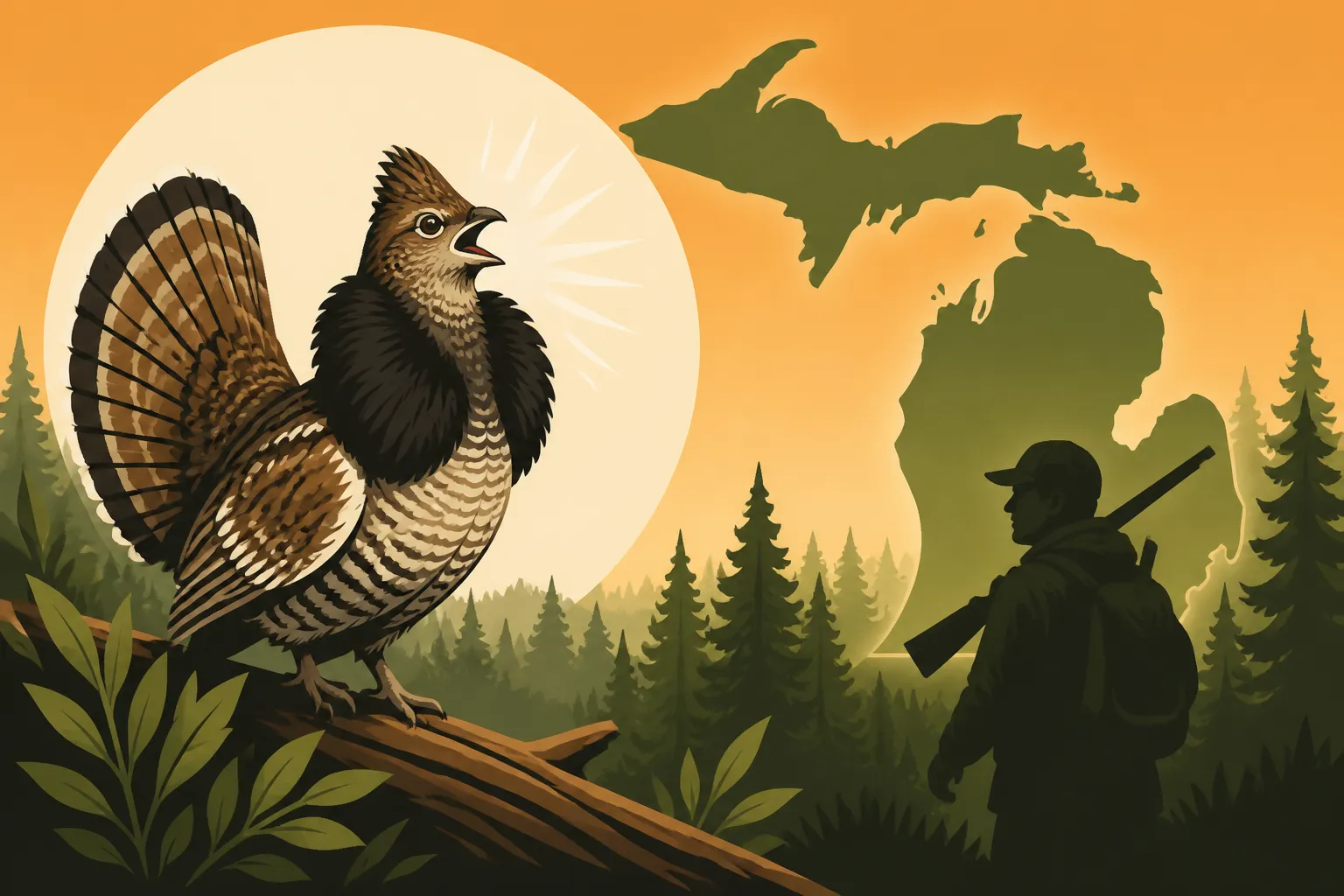
Let's dive a little deeper into what's actually happening when a ruffed grouse drums. It's a male's way of staking out his territory and attracting a mate. He'll typically stand on a fallen log, rock, or other elevated "drumming log" and beat his wings rapidly against the air, creating a vacuum that produces that deep, resonant "thump-thump-thump-thump-thump-thump-RUMMMMMM" sound. It starts slow and accelerates, almost like an old engine trying to turn over before finally roaring to life. This display is incredibly energy-intensive and makes the male vulnerable, but it's essential for reproduction.
The drumming isn't constant; it typically occurs most frequently at dawn and dusk, especially during the peak breeding season in late April and early May. This specific timing is what makes it so useful for surveys. Biologists can predict when the birds will be most vocal, allowing for standardized listening periods that yield comparable data. It's a truly iconic sound of the Michigan spring woods, a signal of life and renewal, and a vital piece of information for those of us who chase these magnificent birds.
Why the DNR Relies on Drumming Counts
The Michigan DNR has been conducting these drumming surveys for decades, and there's a good reason for that long-term commitment. Unlike direct counts, which are difficult and costly for a secretive bird like the grouse, drumming counts are relatively efficient and provide a reliable indicator of breeding male density. A higher number of drums heard per listening stop generally correlates with a higher population of grouse in that area.
The beauty of this method lies in its consistency. By using the same routes, the same listening protocols, and conducting surveys at the same time of year, the DNR can minimize variables and produce data that truly reflects changes in the grouse population over time. This data is crucial for wildlife managers to make informed decisions about hunting seasons, bag limits, and habitat management practices. Without these consistent surveys, we'd be flying blind, unable to understand the broader trends affecting Michigan Ruffed Grouse Numbers Today or how they relate to the natural Michigan grouse cycles. For hunters, it offers a scientific basis for managing expectations and targeting efforts more effectively, even if local conditions can always present surprises.
How Michigan Conducts Its Drumming Surveys
Understanding the "why" behind the surveys is one thing, but knowing the "how" can give you an even deeper appreciation for the data. Michigan's drumming surveys are a coordinated effort that relies on specific timing, standardized routes, and dedicated observers to gather consistent and comparable data across the state. It's a rigorous process designed to capture the most accurate picture possible of our grouse populations.
Imagine driving down a quiet two-track in the pre-dawn light, pulling over, shutting off your engine, and just listening. That's essentially what these surveyors do, but with a scientific method behind every stop. This systematic approach ensures that the data collected from the vast state forests of the Upper Peninsula is comparable to that from the northern Lower Peninsula, even if the habitat and terrain are vastly different.
The Survey Season and Timing
The timing for Michigan's grouse drumming surveys is absolutely critical, driven by the biological rhythms of the ruffed grouse. The surveys typically run from late April through early May, coinciding with the peak of the breeding season when male grouse are most actively drumming to attract hens and establish territories. This window ensures maximum detectability and consistency year after year.
Surveys are conducted specifically during the first hour after sunrise. Why then? Because that's when drumming activity is at its highest and most consistent. Weather also plays a significant role; surveys are only conducted on clear, calm mornings with little to no wind and no precipitation. Wind, rain, or even heavy fog can suppress drumming activity or obscure the sound, leading to inaccurate counts. So, if you're ever out in the woods during this period and the weather is perfect, you're likely listening to the same symphony the DNR surveyors are tracking.
Establishing and Running Survey Routes
The DNR establishes predetermined survey routes across various grouse habitats throughout Michigan. These routes are usually 10-mile stretches of road, often on quiet county roads or forest two-tracks, where a vehicle can be safely stopped. Each route has 10 listening stops, spaced at one-mile intervals. The routes are mapped out using GPS, and the exact locations of these stops are maintained to ensure consistency for decades.
At each stop, the surveyor gets out of their vehicle and listens intently for four minutes, recording the number of individual drums heard. They also note the weather conditions, time, and any other relevant observations. This careful, standardized approach is vital. It's not about finding every grouse; it's about systematically sampling representative habitats. Many of these routes cut through prime grouse country, areas that might be familiar to hunters who regularly visit Michigan State Forest Hunting lands or Hunting the Northern Lower Peninsula. The consistency of these routes is what allows the DNR to track long-term population trends, providing invaluable data for both wildlife management and us hunters.
What the Surveyors Are Listening For
When a surveyor stops and listens, they're not just trying to catch any sound; they're specifically keying in on the distinct drumming sound of the ruffed grouse. Each "drum" heard is counted, and often, surveyors try to determine if multiple drums are coming from different individual birds. This takes a trained ear, as the sound can travel a surprising distance, and echoes can sometimes be confusing.
The goal is to get a count of "drums per stop" or "drums per route." This raw number is then used to calculate an average for a particular region or the entire state. For instance, if a route averages 1.5 drums per stop, that's the metric. They're also listening for the direction of the sound, which can sometimes help differentiate individual birds, especially if two are drumming in different quadrants from the listening point. It's a careful, quiet, and focused task, requiring patience and a good set of ears. The data they collect ultimately informs hunters, helping us understand areas with higher densities and predicting where we might find the most activity during hunting season.
Interpreting the Drumming Survey Results
Once all the surveys are completed and the data compiled, the DNR releases its findings. For us hunters, these reports are far more than just dry statistics; they're a window into the health of our grouse populations and can offer valuable insights for the upcoming season. However, simply looking at a number isn't enough. It's about understanding what those numbers represent within the larger context of grouse biology and Michigan's diverse ecosystems.
A statewide average of "drums per stop" can tell you a lot about the overall trend, but it's important to remember that averages can mask local variations. A great year in the western Upper Peninsula might offset a down year in the northern Lower, for example. Understanding how to connect these broad trends to specific areas you hunt, or plan to hunt, is where the real interpretive skill comes in.
Connecting Counts to Population Trends
The most straightforward way to interpret drumming survey results is by looking at the year-over-year change in the "drums per stop" average. If the average is up significantly from the previous year, it generally indicates a healthier, increasing grouse population. Conversely, a noticeable drop suggests a decline. These fluctuations are often linked to the well-known Michigan grouse cycles, an 8-10 year pattern of population booms and busts.
When the survey shows consistently high drumming rates over a couple of years, it often means the population is in the upswing or peaking phase of its cycle. This is generally good news for hunters, suggesting better hunting opportunities. Low counts, on the other hand, signal a population trough, meaning birds might be harder to find. It's important to recognize that these aren't exact population counts, but rather indices of abundance. They help the DNR manage the resource and allow hunters to adjust their expectations, providing a more informed perspective on what to expect in the coverts.
Factors Affecting Annual Survey Numbers
While drumming surveys are standardized, several factors can still influence the annual results beyond just the sheer number of birds. Weather conditions during the survey period are paramount. A particularly cold, wet, or windy spring can suppress drumming activity, leading to lower counts even if the population itself hasn't significantly declined. Conversely, an ideal string of survey days might lead to slightly higher counts.
Another factor is habitat. The quality and availability of suitable grouse habitat, primarily young aspen forests, directly impacts grouse numbers. Areas with recent clearcuts or vigorous aspen regeneration, like those discussed in Aspen Management and Michigan Grouse, tend to support higher grouse populations, which would naturally be reflected in higher drumming counts. Predators, disease, and winter severity can also play a role, influencing survival rates and thus the number of drumming males. A tool like GoHunt, which can overlay habitat types and logging activity, can be invaluable here.
| Factor | Impact on Drumming Counts (General) | Explanation |
|---|---|---|
| Ideal Spring Weather | Higher counts (more drumming) | Clear, calm, mild mornings encourage more active drumming behavior. |
| Poor Spring Weather | Lower counts (less drumming) | Cold, windy, rainy conditions suppress drumming activity and make sounds harder to hear. |
| Good Habitat (Young Aspen) | Higher counts | Optimal habitat provides food, cover, and drumming logs, supporting denser grouse populations. |
| Poor Habitat (Mature Forest) | Lower counts | Lacks necessary food and cover, leading to lower grouse densities. |
| High Brood Survival | Higher counts (in subsequent years) | More chicks survive to adulthood, boosting future breeding populations. |
| Severe Winter/High Predation | Lower counts (in subsequent years) | Reduced overwinter survival of birds means fewer drumming males in spring. |
| Surveyor Experience | Can introduce slight variability | Experienced surveyors may be better at differentiating individual drums or hearing faint sounds. |
Using Survey Data to Plan Your Hunt
So, how does all this science translate to practical application for your hunting trips? First, use the statewide or regional survey results as a broad indicator. If the DNR reports a strong year for drumming, you can head into the season with a positive outlook for finding birds. If counts are down, you might need to adjust your expectations and perhaps hunt harder or in more productive areas.
Next, try to find localized data if it's available, or compare the state report with your personal scouting. A good way to do this is by cross-referencing survey-reported trends with specific areas you know have good habitat. If a region generally shows an increase and you know a specific state game area within that region has prime Grouse Hunting Michigan Aspen Cover, that's a good place to start your season. Utilizing mapping tools, like the Michigan Mi-HUNT Map or a platform like GoHunt, allows you to identify public lands with suitable cover types, like aspen cuts, that are historically good for grouse and where high drumming counts are likely to occur. This combination of scientific data and boots-on-the-ground knowledge is truly powerful.
Beyond the Numbers: Practical Implications for Hunters
While the drumming survey numbers provide an excellent baseline, they're just one piece of the puzzle. For serious grouse hunters in Michigan, integrating this broad data with hyper-local observations, an understanding of habitat, and a bit of old-fashioned intuition is what really makes a successful season. The woods are a dynamic environment, and grouse populations, while cyclical, are also influenced by immediate conditions and habitat changes that might not be fully captured by a wide-ranging survey.
This is where your personal scouting efforts become even more critical. The surveys tell us "where the birds generally are," but your own time in the woods helps you pinpoint "where your birds are." This deeper understanding allows you to move beyond simply chasing numbers and truly connect with the landscape and the birds themselves.
Reading Between the Lines for Local Conditions
Statewide or even regional drumming counts are invaluable, but they represent averages. What happens on a particular parcel of state land or within a specific block of cover can vary wildly. For instance, a small, isolated aspen cut that's been consistently productive for you might still hold good numbers of birds even if the broader regional counts are slightly down. This could be due to unique local conditions, like ideal thermal cover, a lack of predation, or simply being overlooked by other hunters.
Conversely, a booming statewide count doesn't guarantee every cover will be packed with birds. Heavy local hunting pressure, a localized disease outbreak, or recent changes in timber management that haven't yet produced optimal grouse cover can all depress numbers in an otherwise "hot" area. This is where diligent pre-season scouting, looking for fresh cuttings, droppings, and dusting areas, really pays off. A quick visit to your favorite Michigan Grouse Enhanced Management Site List areas or historical haunts will give you a real-time pulse that complements the survey data. Remember, the surveys are a guide, not a definitive map of every bird in the state.
The Role of Habitat in Grouse Populations
Ultimately, grouse populations, and thus drumming counts, are intrinsically linked to habitat. Ruffed grouse thrive in young, regenerating forests, particularly those dominated by aspen. These areas provide the dense cover needed for protection from predators, abundant food sources like buds and catkins, and those all-important drumming logs. Without this specific type of habitat, grouse numbers will inevitably decline, regardless of how good the previous year's hatch was.
This is why understanding habitat management, especially in areas like the Huron-Manistee National Forest or various Michigan State Forest Hunting lands, is so vital. When you see logging activity or clearcuts, especially 5-15 years old, you're looking at prime future grouse habitat. The drumming surveys often reflect the success or failure of these long-term habitat management strategies. If you're using a mapping system like GoHunt, you can often track recent timber harvests, helping you predict where grouse numbers might surge in a few years, giving you a serious edge in finding new productive coverts. While the overall numbers are important, the specific patches of woods dictate where you'll find the birds on any given day.
Disclaimer
This article is for general informational purposes only and does not constitute professional advice. Laws, prices and regulations vary by location and change over time. Consult a qualified professional for guidance on your specific situation.