Where Michigan Cougars Have Been Photographed
It’s a persistent question among Michigan hunters: are there cougars in our woods? We’ve all heard the stories, seen the blurry photos shared on social media, and wondered if that fleeting shadow in the treeline was truly a ghost cat. The frustration of trying to discern fact from fiction can be real, especially when you spend so much time in wild places. This guide will dive into the concrete evidence – specifically, where cougars have been photographed in Michigan – to give you a clearer picture of their confirmed presence and what that means for hunters and outdoor enthusiasts in our state.
The Reality of Confirmed Cougar Sightings in Michigan
For decades, the idea of cougars roaming Michigan's forests felt more like folklore than fact to many. Hunters would swear they saw one, only to be met with skepticism. Yet, the truth is, cougars do exist in Michigan, and the Michigan Department of Natural Resources (DNR) has a system for confirming these sightings, primarily through photographic evidence. It’s important to distinguish between anecdotal reports and scientifically confirmed presence, and that distinction often comes down to a clear photo or video.
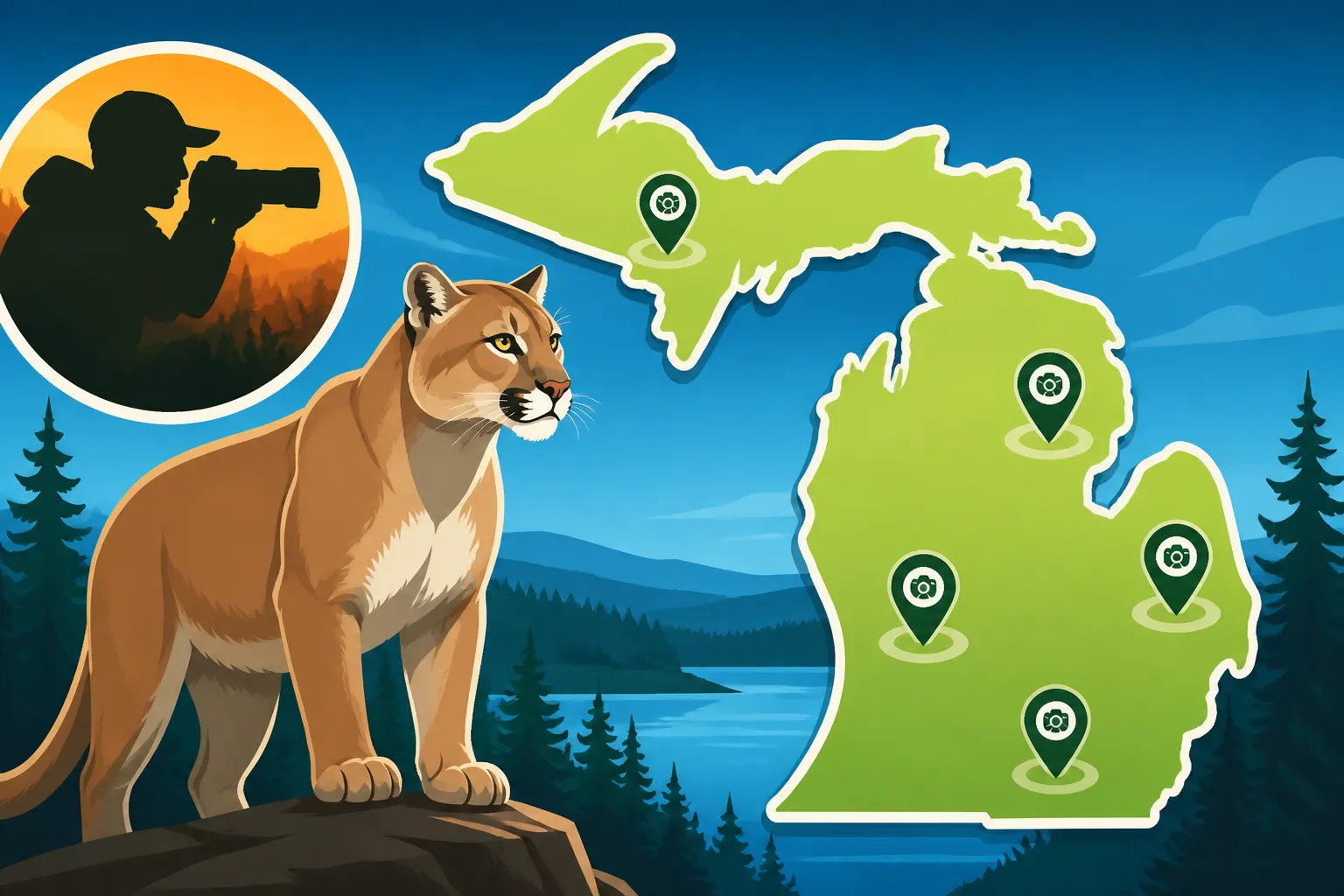
Most of the time, when we talk about a "confirmed" cougar in Michigan, we're talking about a picture from a trail camera or a clear photo taken by a landowner or hunter. These aren't always close-up encounters, but rather definitive proof of the animal's presence in a specific area at a specific time. The DNR meticulously tracks these confirmations, helping to build a more accurate map of where these elusive predators might be moving. The vast wilderness of parts of our state, especially the Upper Peninsula, provides ample cover for such secretive animals, making definitive sightings rare but not impossible.
Many hunters, myself included, spend countless hours afield, and the thought of sharing the woods with a top predator adds another layer to the experience. Whether you’re scouting new ground or checking old stand sites, having an awareness of where these animals have been confirmed can inform your outdoor habits. Tools like the Mi-HUNT map, or even detailed satellite imagery from platforms like GoHunt, can help you visualize the kind of remote, dense habitat where a cougar might roam, even if you’re unlikely to ever cross paths.
Documented Photographic Evidence and Primary Locations
The overwhelming majority of confirmed cougar photographs in Michigan originate from the Upper Peninsula. This isn't surprising when you consider the vast, unbroken tracts of forest, low human population density, and abundant prey found there. These are ideal conditions for a wide-ranging predator. The DNR maintains a running tally of these confirmations, and year after year, the U.P. stands out as the primary area of documented cougar activity.
Many of these confirmed photos come from remote trail cameras set up by deer hunters or wildlife enthusiasts. It's often a serendipitous capture – an unexpected visitor caught on film while aiming to photograph a trophy buck. These cameras are often placed on game trails, near scrapes, or in natural funnels, which are also routes cougars might use while hunting their primary prey, white-tailed deer. The sheer number of trail cameras deployed by hunters across the U.P. significantly increases the chances of capturing an image of such a secretive animal. For those who dive into detailed mapping applications for their hunting strategy, like GoHunt, it's clear that the rugged terrain of the Upper Peninsula Big Woods Counties offers prime habitat for these elusive cats.
While much rarer, there have also been a handful of confirmed cougar photographs in the Lower Peninsula. These sightings are typically even more isolated and often involve a single animal, usually a dispersing male, that has traveled a great distance. These Lower Peninsula confirmations often generate a lot of public interest and local buzz, precisely because they are so uncommon. It's a stark reminder that while the core presence remains in the U.P., these animals are capable of wide-ranging movements. The DNR investigates each credible report thoroughly, looking for clear photographic or video evidence, or physical signs like tracks, scat, or kill sites that can be definitively attributed to a cougar.
Here’s a general overview of where photographic evidence tends to originate:
| Region | Primary Source of Photos | Frequency of Confirmation | Typical Habitat | Notes |
|---|---|---|---|---|
| Upper Peninsula (U.P.) | Trail cameras, opportunistic photos | Frequent (relative to L.P.) | Vast forests, remote swamps, rugged terrain | Dispersing individuals, potentially resident cats |
| Northern Lower (N.L.P.) | Very rare trail camera or direct photos | Extremely rare | Dense forests, remote state land | Likely transient dispersing males only |
| Southern Lower (S.L.P.) | Extremely rare, almost anecdotal | Nearly non-existent | Fragmented woodlots, agricultural areas | Almost certainly transient dispersing males only |
It’s important to remember that "frequent" in the U.P. context still means a relatively small number of confirmed sightings over a large area, reflecting the cougar's elusive nature and low population density.
Understanding Cougar Movement and Habitat in Michigan
Cougars are natural wanderers, especially young males seeking new territory. The prevailing theory for their presence in Michigan is that these animals are primarily individuals dispersing from established populations in western states like the Dakotas. They follow river systems, large forest corridors, and generally avoid dense human development, making the Upper Peninsula a much more hospitable environment for their long journeys. For more on how these animals make their way, you might consider how some larger predators establish themselves over time, which relates to discussions around Are There Breeding Cougars in Michigan?.
Their preferred habitat in Michigan mirrors what you’d expect for a solitary ambush predator. They thrive in areas with dense cover – think thick cedar swamps, mature conifer stands, and rugged, hilly terrain that offers plenty of hiding spots. These areas are often where deer concentrate, providing a consistent food source. Scouting for deer often means scouting for prime cougar habitat, whether you realize it or not. When you're using aerial photos to find Reading Aerial Photos for Swamp Deer, you're also identifying potential areas a cougar might favor. The thickest, nastiest spots that deer escape to are also where a cougar can patiently wait.
One of the reasons photographic evidence is so critical is that it allows wildlife biologists to track these movements and understand if these are truly transient individuals or if any are establishing more permanent residences. So far, there's no conclusive evidence of a breeding population of cougars in Michigan. The confirmed cats appear to be solitary males, often traveling hundreds of miles from their natal ranges. This makes each photograph a valuable data point for understanding the dynamics of these large predators in our state. For hunters leveraging tools like GoHunt to understand land contours and dense cover, identifying areas of limited human disturbance can provide insights into where a cougar might feel secure enough to establish a temporary presence.
What to Do If You See or Photograph a Cougar
Encountering a cougar in the wild is an incredibly rare event, especially a direct visual sighting. If you are lucky enough to spot one, or even better, capture a photo or video, your actions can contribute valuable data to Michigan’s wildlife management efforts. The first rule, as with any large wild animal, is to give it space and never approach it. Keep calm, make yourself look as large as possible, and back away slowly, never turning your back on the animal. If you have children or pets with you, keep them close.
If you manage to get a clear photo or video, the most important thing you can do is report it to the Michigan DNR. They have a specific reporting process for cougar sightings. This isn't just about satisfying curiosity; it's about providing concrete evidence that helps wildlife biologists understand cougar presence, movement patterns, and potential habitat use. The DNR relies heavily on credible reports, especially those accompanied by clear photographic evidence, to update their understanding of these animals in Michigan. You can typically find their reporting mechanism through their official website or by using resources available on their Michigan DNR Hunt Fish App.
Reporting also helps to prevent misinformation. Blurry, unverified photos can quickly spread on social media, creating unnecessary alarm or confusion. By reporting directly to the DNR with solid evidence, you contribute to a factual understanding of Michigan's wildlife. This responsible approach ensures that future discussions about Michigan's Black Bear Population or Michigan's Elk Herd Size and History – or any other large game species – are based on the best available data, not just hearsay. Your trail camera photos, while primarily aimed at deer, can also be invaluable for capturing these elusive creatures and adding to the collective knowledge.
Disclaimer
This article is for general informational purposes only and does not constitute professional advice. Laws, prices and regulations vary by location and change over time. Consult a qualified professional for guidance on your specific situation.