Handgun Hunting Rules in Michigan
For many Michigan hunters, the thought of pursuing game with a handgun adds an entirely new layer of challenge and satisfaction. However, navigating the specific rules and regulations surrounding handgun hunting in our state can feel like deciphering ancient scrolls. It's a common point of confusion, especially with the unique "limited firearm zone" and the nuances of caliber restrictions. This guide aims to demystify Michigan's handgun hunting rules, helping you understand exactly what's permitted, where you can hunt, and how to prepare for a successful and legal hunt.
Understanding Michigan's Handgun Hunting Landscape
Handgun hunting in Michigan offers a distinct experience, often requiring closer engagement with your quarry and a deeper understanding of shot placement. While less common than rifle or shotgun hunting for deer, it's a perfectly legal and rewarding pursuit if you adhere to the specific guidelines.
Who Can Hunt with a Handgun?
Just like with any other firearm, anyone wishing to hunt with a handgun in Michigan must possess the appropriate hunting licenses. This typically means a valid Michigan Base Licence and the relevant game-specific tag (e.g., a deer license for deer hunting). Age requirements are also consistent with other firearm hunting. Youth hunters, for instance, can participate through programs like the Michigan Mentored Youth Licence Rules, which allows them to hunt without prior hunter safety certification under the direct supervision of a licensed adult.
The critical distinction for handguns often comes down to possession laws. While a Concealed Pistol License (CPL) allows you to carry a concealed handgun, its relevance to hunting is primarily for transport to and from the hunting grounds or for personal protection in the field, assuming other hunting regulations are met. When actively hunting, the handgun is typically openly carried, and the focus shifts to whether the firearm and ammunition meet the specific hunting season and species requirements, not just general carry laws. Always ensure you understand both hunting regulations and general firearms laws.
What Game Can You Hunt with a Handgun?
Michigan allows handgun hunting for a variety of game species, though the most common and often discussed is deer. For big game like deer, specific caliber and cartridge length requirements come into play. Many hunters find the challenge of taking a deer with a handgun to be incredibly satisfying, pushing their skills in tracking, stealth, and marksmanship.
Beyond deer, handguns are also legal for many small game species and furbearers. A .22LR handgun, for example, can be an excellent tool for Squirrel Hunting Michigan Hardwoods, offering a lightweight and accurate option for those quiet hunts in the timber. For predators like coyotes, larger caliber handguns might be preferred, again, within the specific legal parameters for that species and season. It's important to remember that for any species, you must possess the correct license and be hunting within the designated season. Always double-check the current Michigan hunting digest for season dates and specific game rules.
Specific Regulations: Calibers, Ammunition, and Zones
The core of handgun hunting legality in Michigan revolves around the precise specifications of the firearm and ammunition, especially when it comes to deer. These rules are in place to ensure ethical and humane harvests.
Legal Calibers and Ammunition for Deer
When hunting deer with a handgun in Michigan, you can't just pick up any pistol. The regulations are quite specific and aim to ensure sufficient knockdown power for a clean kill. Generally, the rules focus on two main aspects: bullet diameter and cartridge casing length. While Michigan's rifle rules often discuss "straight-wall cartridges" for the Limited Firearm Zone, handgun rules for deer are defined slightly differently, but the effect is similar – promoting cartridges suitable for closer-range hunting.
For deer, handguns must generally use a cartridge with a bullet diameter of at least .35 caliber and a minimum cartridge case length. Common handguns that meet these criteria include revolvers chambered in .357 Magnum, .44 Magnum, .45 Colt, and even some powerful semi-automatics like those chambered in 10mm Auto. These calibers offer the necessary energy and bullet mass to ethically harvest a deer at appropriate handgun ranges. It's crucial to consult the current Michigan Hunting and Trapping Digest or the DNR website for the exact minimum bullet diameter and case length requirements, as these can sometimes be updated. Many hunters utilize resources like GoHunt to research and compare ballistics data for various handgun calibers, helping them make informed choices within the legal framework.
The Limited Firearm Deer Zone and Handguns
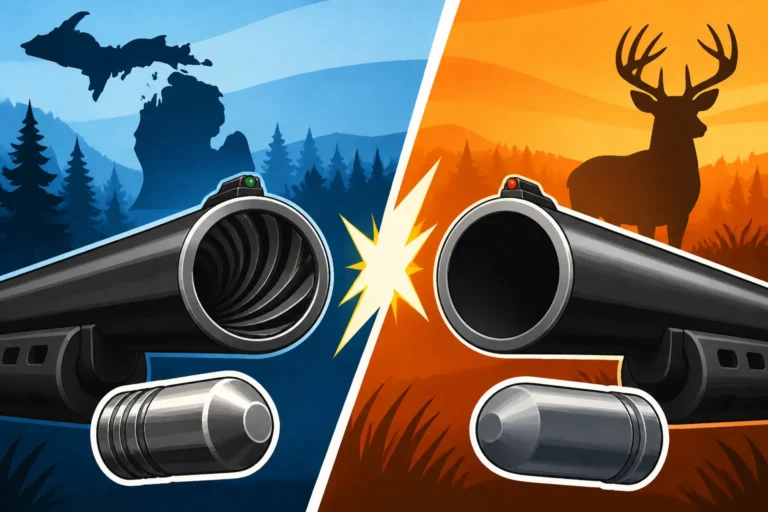
One of the most significant aspects of Michigan's firearm regulations is the "Limited Firearm Deer Zone," often colloquially referred to as the "shotgun zone." This zone, which covers much of the southern Lower Peninsula, restricts hunters to shotguns (loaded with slugs), muzzleloaders, and certain straight-walled rifle cartridges for deer hunting. The good news for handgun enthusiasts is that legal deer hunting handguns are permitted in this zone.
Essentially, if a handgun meets the specific caliber and cartridge length requirements for deer, it is considered a legal firearm in the Limited Firearm Deer Zone, just like a shotgun slug gun or a straight-walled rifle. This means hunters in southern Michigan, where traditional rifles are Where Michigan Restricts Rifles for Deer, can still enjoy the challenge of big game handgun hunting. This flexibility makes handgun hunting an appealing option for those who hunt both north and south, or for hunters in the southern counties who prefer a handgun over a shotgun.
Small Game and Other Species Handgun Rules
While deer hunting has stringent handgun regulations, hunting small game and certain furbearers with a handgun is generally less restrictive regarding caliber and cartridge length, though it's always wise to confirm. For species like squirrels, rabbits, or even raccoons, a .22LR rimfire handgun is a popular and effective choice. Its light recoil, readily available ammunition, and accuracy make it ideal for smaller targets where precision is paramount.
When pursuing predators or furbearers like coyotes or bobcats, hunters might opt for slightly more powerful rimfire cartridges such as the .22 Magnum or .17 HMR, or even the same centerfire handguns used for deer if the situation calls for it and regulations allow. Remember to verify the specific regulations for each target species, as furbearer hunting and trapping can have unique rules regarding seasons, bag limits, and methods, including those for Coyote Calling in Michigan Winter. The key across all species is ensuring the handgun you choose is appropriate for the game, capable of a humane harvest, and compliant with all current Michigan DNR guidelines.
Safety, Ethics, and Practical Application
Beyond the legalities, responsible handgun hunting in Michigan demands a strong commitment to safety, a high level of proficiency, and an ethical approach to the hunt.
Safety Considerations and Hunter Orange
Safety is paramount in any hunting scenario, and handgun hunting is no exception. Due to the shorter barrel lengths and often more open sights, precise shot placement and a clear understanding of your backdrop become even more critical. Handguns can be challenging to shoot accurately, especially under hunting conditions, so a thorough knowledge of your firearm's capabilities and your own limitations is essential. Every hunter must have completed a certified hunter safety course, as detailed in the Michigan Hunter Safety Requirement, which instills fundamental safety principles.
Additionally, Michigan has strict requirements for wearing hunter orange during specific seasons. For deer firearm seasons, including the handgun portion, hunters must wear a certain amount of hunter orange. This typically involves an outer garment above the waist that is at least 50% hunter orange and visible from all sides. Understanding How Much Hunter Orange Michigan Requires and when it's mandatory is not just a legal obligation but a crucial safety measure to prevent accidents in the field.
Practice and Proficiency
Handgun hunting is often considered a close-range pursuit. Unlike rifles that can be effective at hundreds of yards, a handgun's practical ethical range for big game is much shorter, typically under 50 yards for most hunters and setups, sometimes even closer depending on the caliber and individual skill. This demands a high degree of shooting proficiency and a commitment to practice.
Regular target practice at various distances, from bench rests to off-hand shooting, is vital. You need to be confident in your ability to consistently place a shot in a vital area under pressure. Understanding your handgun's effective range and sticking to it is an ethical imperative. Many hunters spend considerable time at the range, trying different ammunition types, sight systems, and shooting positions to maximize their accuracy. This dedication ensures that when a deer steps into range, you're prepared to make a clean, humane shot.
Carrying and Transporting Handguns
Transporting handguns to and from your hunting location, whether for hunting or target practice, falls under Michigan's general firearm transport laws. Typically, a handgun must be unloaded and either enclosed in a case designed for the purpose or carried in the trunk of a vehicle (if it has one) or otherwise inaccessible to occupants. If you possess a Michigan Concealed Pistol License (CPL), the rules for transport become more flexible, allowing you to transport a loaded pistol in the passenger compartment.
However, even with a CPL, when actively hunting, you must comply with all hunting regulations, which may dictate how and where the handgun is carried during the hunt itself. It's always best practice to ensure the handgun is visibly carried or holstered while actively hunting (if not concealed under clothing), leaving no doubt about your intent or compliance with hunting regulations. Always verify the most current regulations from the Michigan State Police and DNR regarding firearm transport.
Maximizing Your Handgun Hunting Success
Choosing to hunt with a handgun means embracing a unique set of challenges and rewards. To truly excel, you'll need to think strategically about your gear, your field tactics, and how you approach public lands.
Choosing the Right Handgun and Optics
When selecting a handgun for deer hunting in Michigan, revolvers are often the preferred choice due to their robust construction and reliability with powerful cartridges. Models chambered in .357 Magnum, .44 Magnum, or .45 Colt are very popular. However, some hunters opt for larger, more powerful semi-automatic handguns, such as those in 10mm, which also meet the legal criteria. Your choice should balance legal requirements, recoil management, and personal comfort.
Optics can significantly enhance handgun accuracy. While some purists prefer open sights, many handgun hunters utilize red dot sights or low-power handgun scopes. Red dot sights offer fast target acquisition and improved accuracy at closer ranges, especially in dense timber or low light conditions, which can be critical for Optics for Michigan Timber and Swamp. Handgun scopes, typically with long eye relief, allow for magnified views, extending the effective range for precise shots. When using a platform like GoHunt, you can often find reviews and discussions about different handgun models and optic setups that other Michigan hunters have found effective.
Field Tactics and Shot Placement
Handgun hunting inherently means hunting at closer ranges. This translates into tactics that emphasize stealth, woodsmanship, and patience. Still-hunting slowly through cover, ambushing deer from well-placed ground blinds, or using treestands in tight cover are all highly effective strategies. You'll need to pay extra attention to wind direction, scent control, and minimizing movement, as deer will be much closer when you take a shot.
Developing exceptional tracking skills is also incredibly important. Even with a well-placed shot, a deer might run, and a precise Blood Trailing After Dark in Michigan can be the difference between recovery and a lost animal. Since handgun bullets can have different terminal ballistics than rifle rounds, shot placement on deer becomes even more critical. Aiming for the vital lung/heart area is always paramount, and avoiding marginal shots is an ethical responsibility for all handgun hunters.
Public Land Handgun Hunting
Michigan boasts vast amounts of Public Hunting Land in Michigan, including state forests, state game areas, and national forests, all generally open to handgun hunting where firearm deer seasons are permitted. However, hunting public land, especially with a handgun's shorter range, requires careful planning. You'll need to scout diligently to find areas that offer sufficient cover and deer activity, while also considering hunting pressure.
During the firearm deer season, public land can experience significant Opening Day Crowds on Michigan State Land. Finding less pressured areas might mean walking further, utilizing lesser-known access points, or focusing on terrain that deters other hunters, such as thick swamps or steep hillsides. Tools like the DNR's Mi-HUNT map or third-party mapping apps can be invaluable for identifying property lines, terrain features, and potential bottlenecks to help you find those quieter spots conducive to close-range handgun hunting. Always confirm local rules and regulations for specific public land parcels, as some smaller managed areas might have unique restrictions.
Disclaimer
This article is for general informational purposes only and does not constitute professional advice. Laws, prices and regulations vary by location and change over time. Consult a qualified professional for guidance on your specific situation.