Michigan Pheasant Release Program
There's nothing quite like the explosive flush of a pheasant, but for many Michigan hunters, the opportunity to chase these vibrant birds has become a rare and frustrating prospect. The wild pheasant populations that once thrived across our state's farmlands have seen significant declines over the decades, making it incredibly tough to find consistent hunting opportunities, especially on public land. This guide dives deep into Michigan's Pheasant Release Program, offering a lifeline to those who yearn for the thrill of the hunt and detailing how you can make the most of these managed opportunities.
The Fading Call of the Wild: Why Michigan Needs Pheasant Releases
For generations, the cackle of a rooster pheasant erupting from a cattail marsh or a corn stubble field was as iconic to a Michigan autumn as falling leaves. Farmers recalled working fields where pheasants seemed to be everywhere, and hunting parties would fill their vests with birds. However, if you've tried to find wild pheasants in Michigan recently, particularly in the Lower Peninsula, you've likely experienced the profound disappointment of empty fields and silent coverts. The truth is, the heyday of wild pheasants has, for the most part, passed us by.
Habitat Loss and Agricultural Shifts
The primary driver behind the decline of Michigan's wild pheasant populations is, without a doubt, habitat loss. Pheasants are creatures of agricultural landscapes, but they need a specific type of agriculture to thrive: diverse farms with small fields, fencerows, fallow corners, and plenty of idle grassland for nesting and winter cover. Think of the old-style family farms that once dotted the landscape. As farming practices modernized, fields grew larger, fencerows were removed, and "clean farming" became the norm. The ubiquitous corn and soybean monocultures that dominate much of our southern Michigan landscape today offer excellent food sources for part of the year, but they often lack the year-round cover pheasants need to nest successfully and survive harsh winters.
Consider a spring nest. A hen needs undisturbed grass cover for weeks to lay and incubate her eggs. If that field is tilled, mowed, or sprayed during this critical period, the nest is lost. Modern farming, while efficient for food production, simply doesn't leave enough of these safe havens. Furthermore, as suburbs expanded, more farmland was converted into housing developments or industrial parks, further fragmenting and diminishing what little prime habitat remained. It's a tough pill to swallow for those who remember better days, and it creates a real challenge for new hunters hoping to experience what was once a common Michigan tradition.
The Need for Supplemental Opportunities
With wild bird populations struggling, Michigan faced a dilemma: either let pheasant hunting fade into memory or find a way to supplement the wild stock. The Michigan Pheasant Release Program emerged as a pragmatic solution to this challenge. It acknowledges the harsh reality that large, self-sustaining wild populations are not currently widespread enough to support significant hunting pressure across the state. By releasing pen-reared birds on public lands, the program provides accessible hunting opportunities, especially for hunters without private land access or those who lack the time and resources to search for elusive wild birds.
This program isn't designed to re-establish robust wild populations directly, though habitat efforts certainly aim for that long-term goal. Instead, it's about providing an experience. It allows seasoned hunters to continue a cherished tradition and, critically, introduces new generations to the excitement of pheasant hunting. For a youth hunter, for instance, hearing that first cackle and seeing a rooster flush can be an incredibly powerful and inspiring moment, fostering a lifelong love for hunting and conservation. It keeps the pheasant hunting heritage alive, even if the birds themselves are a little less "wild" than they once were.
How Michigan's Pheasant Release Program Delivers Opportunities
Michigan's Pheasant Release Program is a coordinated effort to ensure hunters have a chance to chase pheasants, even when natural populations are sparse. It involves raising birds, selecting appropriate release sites, and setting specific rules to manage the hunt. Understanding the mechanics is key to planning a successful outing.
Program Mechanics and Bird Characteristics
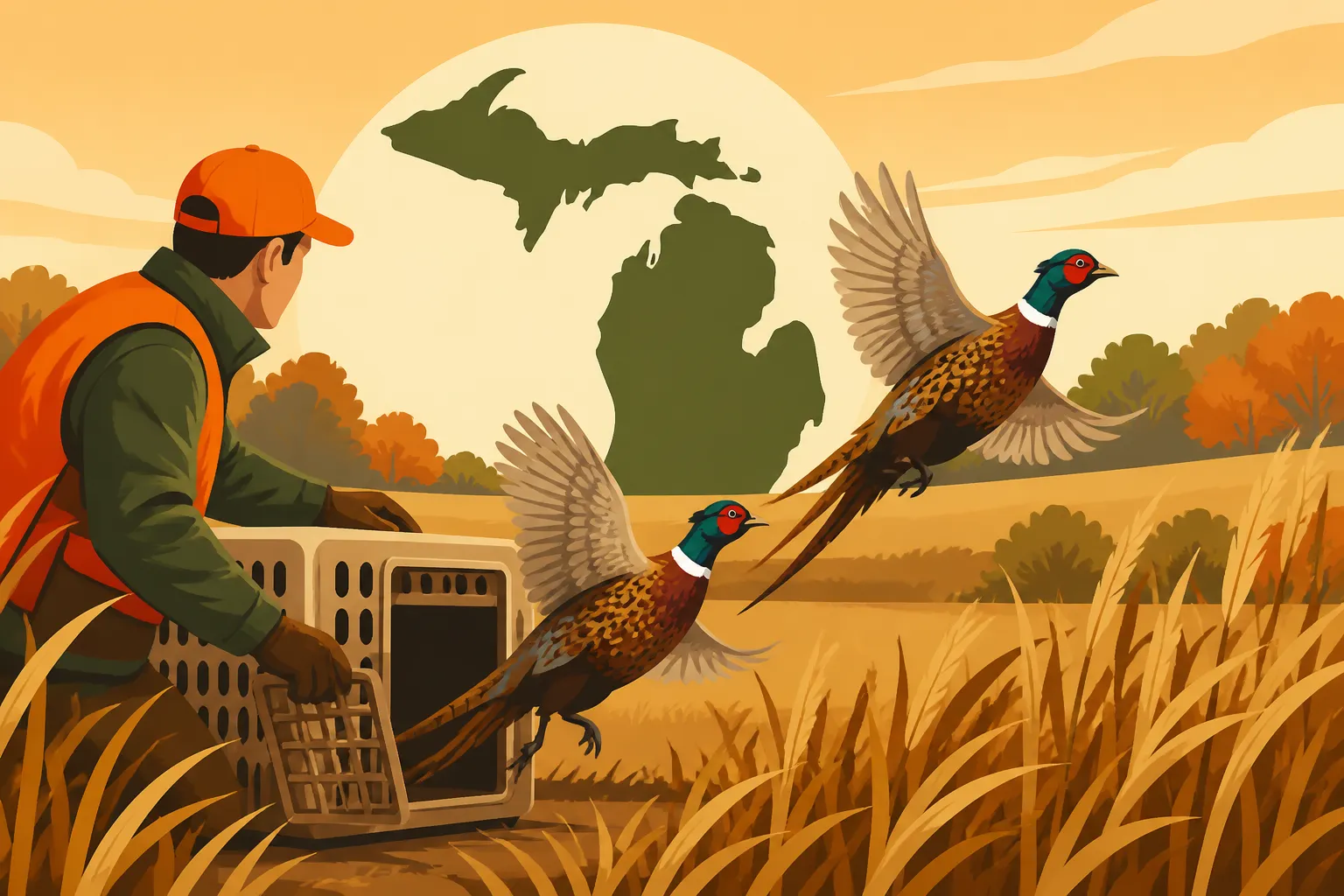
The program typically sources pen-reared pheasants, often from commercial game farms or through partnerships with non-profit organizations dedicated to game bird conservation. These birds are raised in controlled environments and, while genetically the same as wild pheasants, their behavior can differ significantly. They aren't as wary or "wild" as their free-ranging counterparts. When released, they tend to hold tighter in cover, run less, and sometimes flush with less vigor than a truly wild bird. This isn't a bad thing for hunters; in fact, it often makes them more accessible, especially for those hunting with less experienced dogs or even without a dog at all.
Release sites are carefully selected public lands, primarily State Game Areas (SGAs) and some properties enrolled in the Michigan Hunting Access Program (HAP). These locations are chosen for their cover, accessibility, and their ability to absorb hunting pressure. The birds are usually released in blocks, meaning a certain number of birds are let go in a specific area on designated days. The goal is to provide a fresh batch of birds for hunters to pursue, typically spread out over several weekends during the dedicated pheasant season. Hunters need to check the DNR's specific announcements each year for details on which SGAs are participating and the exact release dates, as these can vary. Using resources like the Michigan Pheasant Release Program information or the Michigan DNR Hunt Fish App can be invaluable for pinpointing these areas.
Accessing Release Sites and Required Permits
Hunting released pheasants isn't quite as simple as just showing up on opening day with a shotgun. While you'll still need your base Michigan hunting license and small game license, there's often an additional requirement: a specific pheasant hunting permit. This permit helps fund the program, covering the costs of raising and releasing the birds. It's an important investment that directly contributes to creating these opportunities. The specifics of purchasing these permits, including any potential quotas or application windows, are outlined by the Michigan Department of Natural Resources (DNR) annually.
When planning your hunt, remember that these public release sites are often popular. On opening weekends or peak release days, you can expect company. Many hunters use mapping applications like GoHunt to scout the terrain, identify prime cover within an SGA, and even locate potential access points away from crowded parking areas. Being aware of other hunters and exercising proper safety protocols, including wearing hunter orange, is paramount. Michigan Hunter Orange Rules apply, and it's always wise to wear more than the minimum to be easily seen by others. Some of these release sites may also have special regulations regarding legal shooting hours or bag limits specifically for released birds, so always check the local rules for the specific SGA you plan to visit.
Key Differences Between Wild and Released Pheasants
It's important to understand that hunting a released pheasant is a different experience than hunting a truly wild bird. Both are challenging and rewarding in their own ways, but knowing what to expect can temper expectations and help you adjust your strategy.
| Feature | Wild Pheasants | Released Pheasants |
|---|---|---|
| Warily & Flight | Extremely wary, prone to running, explosive, high flushes. | Less wary, may hold tighter, often flush lower and slower. |
| Habitat Use | Utilizes diverse natural cover: dense grass, swamps, fencerows. | Tends to stick close to initial release cover, may linger near food. |
| Survival Instincts | Highly developed evasion tactics, difficult to approach. | Often less "street smart," may be easier to flush or approach. |
| Taste of Meat | Often described as richer, gamier, leaner. | Can be slightly milder, sometimes fattier due to diet. |
| Hunting Effort | Requires extensive scouting, knowledge of specific habitat. | Success often depends on recent release and effective coverage of a smaller area. |
| Dog Work | Demands keen nose, strong retrieve, and endurance. | Still beneficial, but a less experienced dog can often succeed. |
This table illustrates why a different approach might be needed. You're hunting a bird that hasn't spent its life evading predators in the wild, so your tactics need to reflect that.
Tactics for Hunting Released Pheasants: Making the Most of the Day
Hunting released pheasants might not offer the same "wilderness" feel as tracking a wild bird, but it's still an engaging and often challenging pursuit. Success often comes down to understanding how these birds behave after release and adapting your hunting strategy accordingly.
Working with a Good Bird Dog
Having a well-trained bird dog is, without a doubt, the single greatest asset for hunting pheasants, whether wild or released. Even though released birds might hold tighter, a dog's nose is still invaluable for locating birds that might otherwise be overlooked in thick cover. For many, the joy of pheasant hunting is as much about watching their dog work as it is about harvesting a bird. A flushing dog, like a Springer Spaniel or Labrador Retriever, will systematically work cover, pushing birds out. A pointing dog, such as a German Shorthaired Pointer or English Setter, will lock up on scent, giving you time to approach and get ready for the flush.
When working released birds, your dog can really shine. They help cover ground efficiently, and their enthusiasm often triggers flushes from birds that might sit tight under human pressure. If your dog is still in training, a pheasant release program hunt can be an excellent opportunity for them to get on live birds and gain valuable experience in a more controlled environment. Remember to keep your dog hydrated, especially on warmer days, and always be aware of their location relative to other hunters for safety. Checking resources like Bird Dog Gear for Michigan Cover can help ensure you have the right equipment for a comfortable and safe hunt for your canine companion.
Hunting Without a Dog: Strategic Walking and Flushing
Don't have a dog? No problem! While a dog certainly enhances the experience and improves success rates, you can absolutely hunt released pheasants effectively without one. It just requires a more strategic and often more collaborative approach. The key is to systematically cover promising habitat, forcing birds to flush.
One effective tactic is "still-hunting," which means moving slowly and deliberately through cover, pausing frequently to listen and observe. Pheasants often hold tight, so a sudden movement or even a loud step might be enough to make them burst out. Another common strategy, especially on larger fields, is to organize a "drive" with a small group of hunters. One or two hunters act as "blockers" at the end of a field, while others "walk-up" or "push" through the cover, moving towards the blockers. This puts pressure on the birds, encouraging them to flush within range of one of the hunters. When planning such a strategy, communication is crucial, and everyone must be aware of safe shooting lanes. Wide, open fields or strips of switchgrass within State Game Areas are perfect for this. When navigating these areas, having a reliable app like the one offered by GoHunt can help everyone stay oriented and understand boundaries.
Scouting and Shot Placement
Scouting, even for released birds, can make a difference. While you won't be looking for natural population sign like you would for wild pheasants, you'll want to identify the densest cover within the designated release area. Think tall grasses, thick brush, cattail sloughs, and even standing corn or sorghum plots specifically maintained for wildlife. Birds that have been out for a day or two will gravitate towards the thickest stuff for protection. Pay attention to fence lines, ditch banks, and edges where different types of cover meet, as these are natural travel corridors and holding spots. Mapping tools like the Michigan Mi-HUNT Map are indispensable for this kind of reconnaissance, allowing you to visualize cover types and access routes before you even step foot in the field.
When a pheasant flushes, especially a released bird, it might fly differently than expected. They can be a bit slower or fly lower. The key is to stay calm, shoulder your shotgun smoothly, and get ahead of the bird with your swing. Pheasants are tough birds, and a clean kill requires good shot placement. Aim for the front half of the bird to hit the vitals. Most pheasant hunters opt for 12 or 20 gauge shotguns, using shot sizes like 5 or 6, which offer a good balance of pattern density and knockdown power. Remember, safety always comes first; ensure you have a clear shot, are aware of your surroundings, and never shoot towards other hunters or buildings.
Beyond the Field: The Broader Picture of Michigan Pheasant Conservation
While the Michigan Pheasant Release Program provides immediate hunting opportunities, it's just one piece of a much larger puzzle when it comes to the future of pheasants in our state. True, long-term sustainability hinges on robust habitat and dedicated conservation efforts. As hunters, our involvement extends far beyond the time we spend in the field.
Habitat Restoration and Wild Bird Initiatives
Many organizations, both local and national, are tirelessly working to restore and create suitable pheasant habitat in Michigan. Groups like Pheasants Forever and Quail Forever, for example, collaborate with landowners, farmers, and government agencies to plant native grasses, establish food plots, and restore wetlands. These efforts are crucial for creating the kind of diverse, year-round cover that wild pheasants need to thrive. The hope is that with enough quality habitat, wild populations can begin to rebound in certain areas, reducing the long-term reliance on released birds.
Hunters play a vital role in funding these initiatives. A portion of every hunting license and small game stamp purchased goes directly towards wildlife management and habitat restoration. Additionally, specific conservation stamps, like the Federal Migratory Bird Hunting and Conservation Stamp (Duck Stamp), contribute to wetland preservation, which benefits pheasants and many other species. Every time you purchase a license or contribute to a conservation organization, you're directly investing in the future of hunting and wildlife in Michigan. This includes efforts to improve pheasant habitat on public lands, such as those found in Southern Michigan Farm Country Deer Hunting zones, which often share similar landscapes with prime pheasant country.
The Hunter's Role in Conservation
Beyond financial contributions, hunters are often the boots on the ground for conservation. Many volunteer their time to plant trees, restore wetlands, or build nesting structures. We are the eyes and ears in the field, often the first to notice changes in wildlife populations or habitat conditions. Participating in programs, sharing observations with wildlife biologists, and advocating for sound wildlife management policies are all critical roles for hunters.
The Michigan Pheasant Release Program, while a fantastic way to enjoy the sport, should also serve as a reminder of what we've lost and what we need to work towards. It's a call to action to support habitat initiatives and to understand the delicate balance of ecosystems. We all want to see the day when the wild pheasant population is strong enough that supplemental releases are less necessary, and every flush is a truly wild one. Until then, these programs offer a valuable bridge, keeping the tradition alive and introducing new enthusiasts to the incredible world of Michigan hunting. Remember to always report your harvest, even of released birds, through the Reporting a Michigan Harvest in 72 Hours system, as this data is vital for DNR management efforts across all game species.
Disclaimer
This article is for general informational purposes only and does not constitute professional advice. Laws, prices and regulations vary by location and change over time. Consult a qualified professional for guidance on your specific situation.