Where Michigan Black Bears Live
For many Michigan hunters, the black bear represents the ultimate big game challenge. But knowing where these elusive animals truly live and thrive across our state can feel like cracking a secret code. You might spend countless hours scouting only to realize you're looking in the wrong kind of cover. This guide aims to pull back the curtain on Michigan's black bear population, helping you understand their preferred habitats and where you'll have the best chance of encountering these magnificent creatures.
Michigan's Black Bear Landscape: Understanding Their Distribution
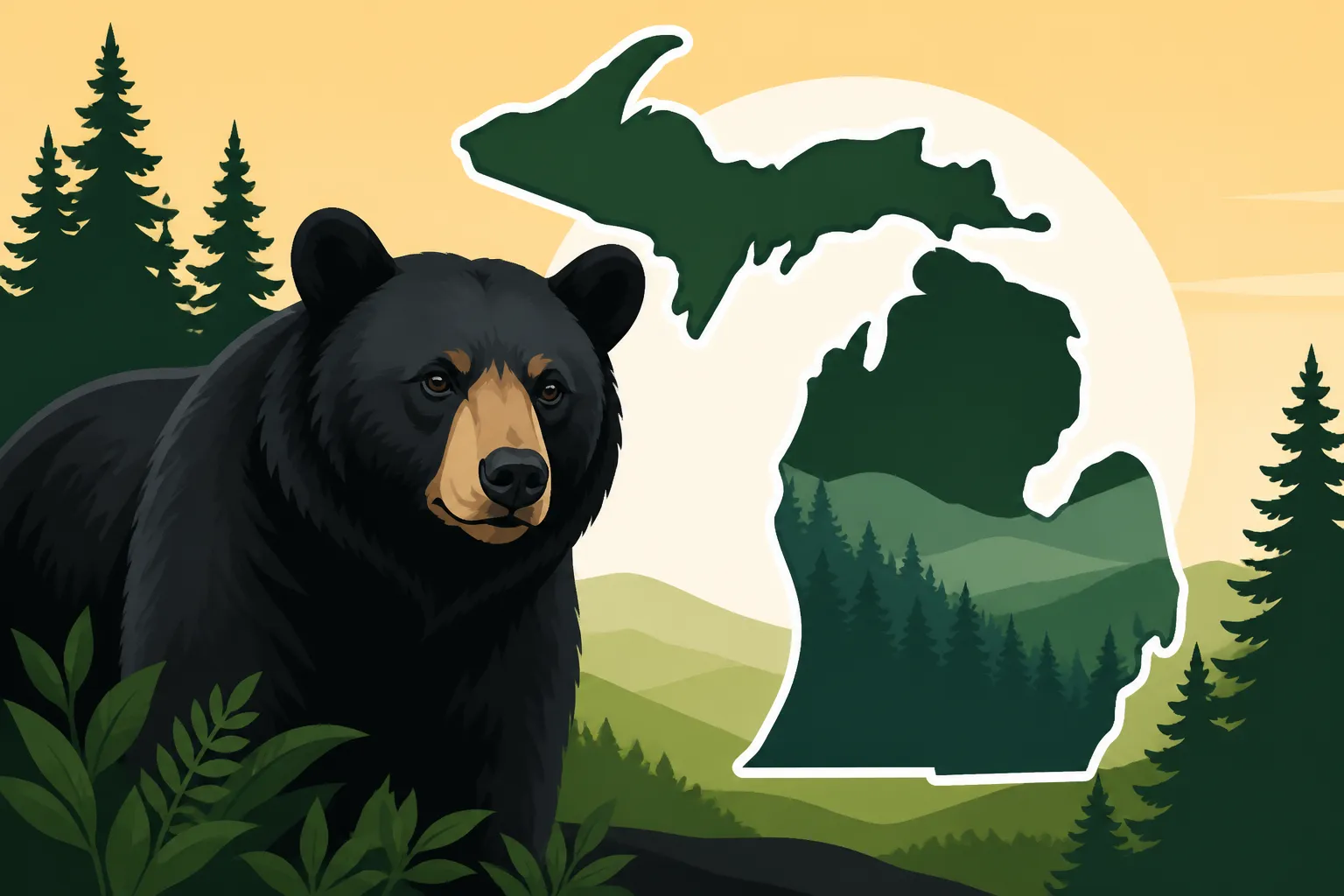
Michigan is a remarkable state for black bears, boasting healthy and growing populations, particularly in its northern regions. While it might seem like bears are everywhere in the deep woods, their distribution is actually quite specific, driven by habitat, food availability, and human presence. Understanding these broad patterns is the first step in successful bear hunting or even just bear viewing.
The Upper Peninsula: A Bear Stronghold
When most people think of black bears in Michigan, their minds immediately jump to the Upper Peninsula, and for good reason. The U.P. is the undisputed heartland of Michigan's black bear population. It's a vast expanse of continuous forest, dotted with swamps, rocky outcroppings, and remote timberlands that provide exactly what bears need: cover, food, and solitude. The density of bears here, especially in the central and western U.P., is significantly higher than anywhere else in the state. If you're looking to understand more about the overall numbers, you might want to delve into How Many Michigan Black Bears There Are, which provides a deeper look at the population estimates.
The sheer remoteness of much of the Upper Peninsula plays a huge role in its status as a bear haven. Unlike more developed areas, there's less fragmentation of habitat from roads, agriculture, and urban sprawl. This allows bears to establish large home ranges and move freely without constant human disturbance. From the dense cedar swamps of the central U.P. to the rugged, heavily forested hills near Lake Superior, these wild landscapes offer prime real estate for black bears. Hunters often find excellent opportunities here, especially in areas with a mix of hardwoods, conifers, and wetland systems.
The Northern Lower Peninsula: A Growing Population
While the U.P. often steals the spotlight, the northern Lower Peninsula (NLP) has a robust and expanding black bear population that offers fantastic hunting opportunities. Historically, bears were less common here due to more intensive logging and settlement, but conservation efforts and natural forest regeneration have led to a strong rebound. Areas like the northern third of the Lower Peninsula, particularly north of M-20, now support thriving bear populations. You can explore more specifics about Bears in the Northern Lower Peninsula for a detailed breakdown.
The habitat in the NLP, while perhaps not as uniformly vast and wild as the U.P., still provides ample cover and food sources. Large tracts of state forest land, such as the Huron-Manistee National Forest, the Pere Marquette State Forest, and the Jordan Valley State Forest, are prime bear country. These areas feature a mix of oak-hickory stands, aspen regeneration, pine plantations, and extensive cedar swamps. While bear densities might not reach U.P. levels, the NLP still offers excellent hunting, especially for those who prefer not to make the long trek north across the Mackinac Bridge. The key here is focusing on those large, contiguous blocks of public land away from major roads and towns.
Key Habitats and What Bears Seek
Black bears aren't just looking for "woods"; they're looking for specific types of cover and food sources that allow them to thrive. Understanding these preferences is critical, whether you're scouting for a hunt or just hoping to catch a glimpse of one in the wild. Think like a bear, and you'll be one step closer to finding them.
Dense Forests and Swamp Thickets
Bears are masters of discretion, and their preferred habitat reflects this need for security. They gravitate towards areas with extremely dense cover, often so thick that a human struggles to walk through it. This includes extensive cedar swamps, thickets of alders, regenerating clear-cuts with dense saplings, and mature conifer stands. These areas provide sanctuary for bedding, raising cubs, and escaping human disturbance. A bear feels safe when it's virtually invisible.
Within these dense areas, they'll often utilize small pockets of higher ground or dry islands in swamps for bedding, especially during the fall when they are putting on weight for winter. The dense canopy also offers shade during hot summer days and protection from the elements. When you're scouting, don't just look for "woods" on a map; zoom in and identify those dark, impenetrable patches that other hunters might avoid. These are often the places where bears are quietly going about their business. A tool like GoHunt can be invaluable for identifying these dense, remote pockets using satellite imagery and topographic maps.
Food Sources: Seasonal Foraging
A bear's life revolves around food, and their movements are largely dictated by the availability of seasonal forage. They are omnivores, meaning they eat pretty much everything, from berries and nuts to grubs, carrion, and even vegetation. Knowing what's ripe and when it's available in your hunting area is paramount to finding bears.
- Spring/Early Summer: As bears emerge from their dens, they're looking for easily digestible greens and early protein. This might include tender shoots, grasses, and grubs found by flipping rocks or tearing apart rotting logs. They'll also actively seek out carrion from winter-killed deer. Later in spring, they'll target things like dandelions and clover.
- Mid-Summer: Berries become a huge draw. Raspberries, blueberries, and black cherries are absolute magnets for bears. Find a patch of wild blueberries, especially in a remote clear-cut or along the edge of a swamp, and you've found a potential bear dining room.
- Fall: This is the critical fattening-up period, and hard mast (acorns, beech nuts) is king. Areas with abundant oak and beech stands will draw bears from miles around. If it's a poor mast year, bears will shift their focus to soft mast (late-season berries, apples) or even agricultural crops like corn, if available. Understanding these food cycles is crucial for effective scouting. This is also a great time to learn about Hunting Bear Without Bait or Dogs, as it forces you to become a true student of their natural feeding habits.
Locating Bears by Management Unit
Michigan manages its black bear population through a system of Bear Management Units (BMUs). These units are specific geographical areas where bear hunting licenses are issued through a lottery system. Understanding which BMU you're applying for, and the specific characteristics of that unit, is fundamental to bear hunting in Michigan.
Navigating Bear Management Units (BMUs)
Each BMU has a specific quota of licenses, based on the local bear population density and management goals. The U.P. generally has higher quotas due to its denser bear population, while NLP units have fewer tags but still offer good opportunities. Knowing the boundaries of these units is crucial not only for hunting but also for understanding the local bear population trends. Information about the various Michigan Bear Management Units is easily accessible and should be thoroughly reviewed before applying for a license.
When you apply for a bear license, you're essentially choosing the general region where you hope to hunt. Within that BMU, your scouting then becomes hyper-focused on finding specific bear sign. This might include rubs on trees, scat, tracks along two-tracks or river bottoms, and flipped rocks or logs where they've dug for grubs. Websites and apps like GoHunt can be incredibly helpful for overlaying BMU boundaries onto topographic and aerial maps, allowing you to visualize potential hunting grounds.
Public Land Hotspots for Bear Activity
While private land can certainly hold bears, a significant portion of Michigan's bear habitat is on public land. This includes vast state forests, national forests, and state game areas. Identifying the "hotspots" within these public lands often comes down to looking for the intersection of dense cover, reliable food sources, and reduced human pressure.
- Remote State Forest Tracts: In both the U.P. and NLP, look for the largest, most contiguous blocks of state or national forest. The further you get from main roads and trails, the better. Bears will gravitate towards these quieter, less disturbed areas. Scouting Michigan Public Land Before Season with map tools can highlight these remote sections.
- Swamp Edges and Drainage Systems: Bears love wetlands. The edges of large cedar swamps, river bottoms, and complex drainage systems offer a mix of cover, water, and diverse food sources. These areas often connect different habitat types, acting as natural travel corridors for bears.
- Recently Logged Areas: While a fresh clear-cut might look stark, those regenerating areas, especially after a few years, become incredibly dense and provide excellent cover and browse for bears. They'll also find berries and grubs in these disturbed areas.
It's a combination of understanding the broader BMU and then drilling down into specific, quality habitat on public lands. Many experienced bear hunters will tell you that effort spent scouting in these public land hotspots far outweighs random wandering. Knowing Where Michigan Bears Range on a broad scale informs your application choice, then precise, on-the-ground (or digital map) scouting within that unit hones in on your hunting location. For those truly dedicated, resources like Best Michigan Ground for Public Land Bears provide valuable insights into where to focus your efforts.
Seasonal Movements and Scouting Strategies
Black bears aren't static residents; their movements are dynamic, shifting with the seasons, food availability, and breeding cycles. Being attuned to these patterns is crucial for any hunter or wildlife enthusiast. The bear you see in spring might be in a completely different area by fall, even within the same general region.
Spring Emergence and Breeding Season
When bears emerge from their dens in early spring, often in April or May, they are lean and hungry. Their initial movements are typically conservative, focusing on finding the first green vegetation and any available carrion from winter-killed animals. They'll often stay close to denning areas in dense cover, gradually expanding their search for food. This period is less about long-distance travel and more about finding immediate sustenance.
Later in the spring, typically from late May through July, the breeding season (the "rut") kicks into full gear. Boars (males) will travel extensively, covering large distances in search of sows (females). Sows with cubs, however, tend to be much more secretive and restricted in their movements, prioritizing the safety of their young. During this time, you might see more evidence of boars moving through areas, like larger tracks or fresh rubs, as they mark their territory and advertise their presence. Keep in mind that cubs will stay with their mother for about 17 months, so finding a sow often means finding her family.
Fall Fattening and Denning Prep
As summer transitions to fall, black bears enter a hyperphagic state, meaning they eat almost constantly to put on critical fat reserves for winter denning. This is when their movements become most predictable for hunters, as they heavily concentrate around abundant food sources. Hard mast, particularly acorns and beech nuts, becomes their primary focus. If you find a productive oak or beech ridge, especially one interspersed with dense cover like a cedar swamp, you've likely found a bear's dining room.
In years with poor mast crops, bears will broaden their search, turning to other foods like apples, remaining berries, or even venturing into agricultural fields for corn or oats. They will continue this intense feeding until late fall or early winter, depending on food availability and weather, before retreating to their dens. Understanding the local mast crop is arguably the most critical piece of information for fall bear hunting. Tools like GoHunt can help you identify areas with a high concentration of oak or beech trees on public land, which is a great starting point for your scouting efforts during this crucial period. This seasonal movement pattern is a key part of Michigan's Black Bear Hunting strategies.
Remember, bears are creatures of habit but also opportunists. While dense cover and reliable food sources are constant attractions, their exact location can vary year to year based on environmental factors. Persistent scouting, attention to seasonal changes, and using modern tools can significantly increase your chances of finding these incredible animals in Michigan's wild places.
Disclaimer
This article is for general informational purposes only and does not constitute professional advice. Laws, prices and regulations vary by location and change over time. Consult a qualified professional for guidance on your specific situation.