Isle Royale and Where Hunting Is Banned
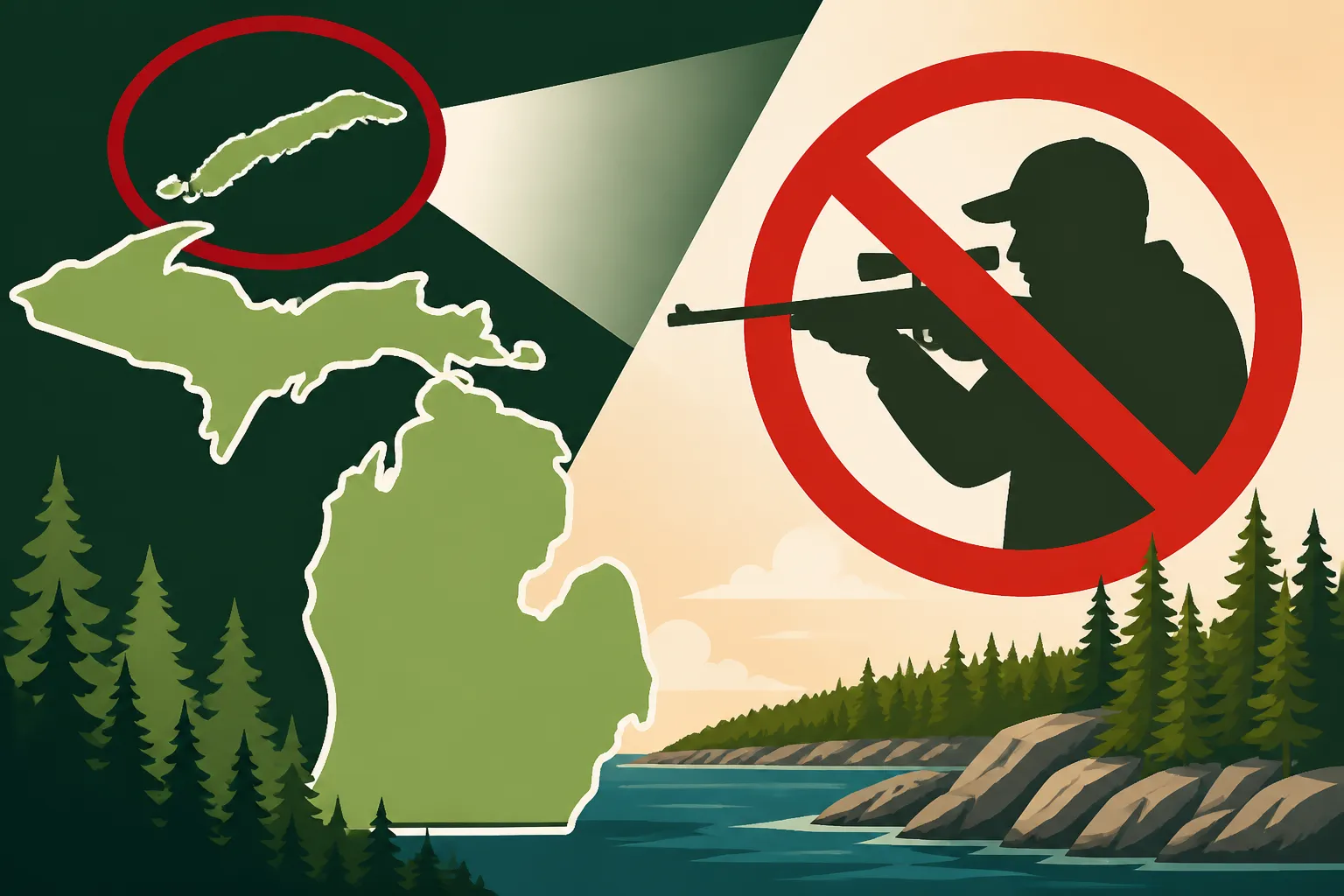
It’s a common daydream for many of us Michigan hunters, isn't it? Imagining ourselves in the most remote, untouched corners of our beautiful state, pitting our skills against wild game in truly wild settings. For many, that dream might even conjure up images of Isle Royale, a truly iconic piece of Michigan wilderness. But before you start packing your gear for an island adventure, there's a crucial reality to understand: hunting is, in fact, prohibited on Isle Royale. This guide is here to explain why, what makes Isle Royale so unique, and more importantly, where you can find those incredible public hunting opportunities across the rest of our great state.
Understanding Isle Royale's Unique Status
Isle Royale holds a special place in Michigan's natural heritage, but its designation means a fundamentally different approach to wildlife and land management compared to the vast majority of our other public lands. It's a place where nature is largely left to its own devices, a concept that often sparks curiosity, and sometimes a bit of disappointment, among those of us who cherish our hunting traditions.
National Park Protection and Wildlife
The primary reason you won't be drawing a deer tag for Isle Royale is simple: it is designated as Isle Royale National Park. Unlike state forests, game areas, or even some national forests, National Parks have a specific mandate from the federal government that prioritizes the preservation of natural and cultural resources, including wildlife, in an unimpaired state for future generations. This mission inherently excludes recreational hunting as a wildlife management tool.
When you think about the island, you probably picture its famous wolf and moose populations, right? These animals are part of one of the longest-running predator-prey studies in the world, an incredible natural laboratory. The park's management aims to allow these populations to fluctuate and interact naturally, with minimal human intervention. This contrasts sharply with most of Michigan's mainland, where hunting plays a vital role in managing deer herds, controlling populations to mitigate disease spread, reduce crop damage, and maintain a healthy forest ecosystem. We’re used to managing our game proactively through hunting, but on Isle Royale, it’s a hands-off approach.
The Role of the National Park Service
The National Park Service (NPS), which manages Isle Royale, operates under different principles than the Michigan Department of Natural Resources (DNR). The NPS Organic Act of 1916 dictates that parks are to "conserve the scenery and the natural and historic objects and the wild life therein and to provide for the enjoyment of the same in such manner and by such means as will leave them unimpaired for the enjoyment of future generations."
This means that while you can visit Isle Royale, hike its trails, camp in designated areas, and observe wildlife, activities like hunting are not permitted. Their focus is on ecological integrity and visitor experience through observation and appreciation, not harvest. It’s a conservation model that emphasizes natural processes over human-directed manipulation of animal numbers, setting it apart from the hunting lands most of us are familiar with and rely on.
Why Hunting is Excluded: Ecological and Legal Reasons
The decision to exclude hunting from Isle Royale isn't arbitrary; it's rooted in the island's unique ecological characteristics and a robust framework of federal law and policy. It’s a combination of the island’s fragile nature and the legal teeth behind its protected status.
The Island's Isolation and Fragile Ecosystem
Isle Royale is an isolated landmass in the vast expanse of Lake Superior. This isolation means it functions as a relatively closed ecosystem. Wildlife populations on the island are naturally limited by the availability of resources and, crucially, by the presence of predators like wolves. Introducing hunting into such a system could have unpredictable and potentially detrimental effects on population dynamics, especially given the already delicate balance between species.
Consider mainland Michigan, where deer populations can move freely between different habitats and even migrate to new areas if local conditions become unfavorable. If a severe winter or disease outbreak impacts a specific area, the population can often rebound thanks to surrounding healthy herds. On an island, this isn't the case. A small, self-contained population is more vulnerable to overharvesting or other impacts that could disrupt its long-term viability. The animals on Isle Royale have evolved without significant human hunting pressure, and the park aims to maintain that natural evolutionary path as much as possible.
Federal Regulations and Park Management Plans
Beyond the ecological arguments, the legal framework is unequivocally clear. Federal regulations explicitly prohibit hunting within the boundaries of National Parks. This isn't unique to Isle Royale; it's a blanket rule across the entire National Park system in the United States. This is a key distinction from other federal lands, such as National Forests, which are often managed for multiple uses, including hunting, under the guidance of agencies like the U.S. Forest Service.
The park's specific management plans, developed through extensive scientific research and public input, reinforce this prohibition. These plans focus on maintaining biodiversity, preserving natural processes, and allowing visitors to experience wilderness without the sound of gunshots or the presence of hunting activities. For those of us who appreciate the quiet solitude of the hunt, this might seem counterintuitive, but for the National Park Service, maintaining that specific type of "unimpaired" wilderness experience is paramount.
Exploring Michigan's Other Public Hunting Opportunities
Okay, so Isle Royale is off the table for hunting. But don't let that dampen your spirits! Michigan offers an incredible wealth of public hunting land that is absolutely open for business, teeming with diverse game, and waiting for you to explore. We are truly fortunate to live in a state with such abundant access.
Let's shift our focus to where your hunting dreams can become a reality, offering experiences just as wild and rewarding, perhaps even more so, because you're actively participating in the management of healthy game populations.
State Forests and Game Areas: Your Mainland Havens
Michigan boasts millions of acres of public land, and a huge chunk of that comes in the form of State Forests and State Game Areas. These are managed by the Michigan DNR, and hunting is not just permitted, it's encouraged as a vital wildlife management tool.
Think about the vast expanses of the northern Lower Peninsula and the Upper Peninsula. These areas are home to incredible tracts of Michigan State Forest Hunting land, offering endless opportunities for deer, grouse, bear, and more. From dense cedar swamps to rolling hardwood ridges, you can find just about any terrain imaginable. The sheer acreage ensures that even during peak seasons, you can often find solitude if you're willing to walk a bit further or scout a little harder. For southern Michigan hunters, the Michigan State Game Area Acreage provides critical habitat and access in more populated regions, often acting as important pockets of wilderness within agricultural landscapes. These areas are often intensively managed for various game species, making them excellent places to pursue everything from whitetails to pheasants and waterfowl. When you're looking for new hunting spots on the mainland, tools like onX Hunt become your best friend for quickly identifying these crucial public boundaries and navigating within them.
National Forests and Commercial Forest Lands
Beyond our state-managed lands, Michigan is also home to three magnificent National Forests: the Huron-Manistee, Ottawa, and Hiawatha. These are federal lands, managed by the U.S. Forest Service, and just like our State Forests, they are open to hunting. These areas provide vast, contiguous blocks of timber, making them ideal for big woods deer hunting, Hunting the Michigan Upper Peninsula bear hunting, and fantastic grouse cover. They operate under slightly different rules than state land, so always double-check the specifics with the Forest Service or DNR regulations. You can explore Michigan's Three National Forests to find which one suits your hunting style best.
Additionally, Michigan has a unique program called the Commercial Forest Act (CFA) program, which allows privately owned timberland to be open to public hunting in exchange for tax incentives. These lands offer fantastic access, especially in the northern parts of the state, but require a bit of research to find. They are explicitly managed for timber, but this often creates excellent diverse habitat for wildlife, making them a fantastic hunting resource. You can learn more about Michigan Commercial Forest Land Access and how to identify these parcels. Utilizing mapping applications like onX Hunt becomes incredibly helpful here, as they often include layers that delineate CFA lands, making it easier to pinpoint legal access points.
| Feature / Location | Isle Royale National Park | Michigan State/National Forests & Game Areas | Commercial Forest Lands (CFA) |
|---|---|---|---|
| Hunting Permitted? | No | Yes | Yes |
| Management Authority | National Park Service (Federal) | Michigan DNR (State), US Forest Service (Federal) | Private Landowners (Public Access Mandated) |
| Primary Goal | Preservation of ecosystem, visitor observation | Wildlife management, timber, recreation | Timber production, public hunting access |
| Wildlife Interaction | Natural processes, minimal intervention | Active management, including hunting as a tool | Habitat benefits from timber practices, hunting permitted |
| Vehicle Access | Limited to park ferry, no personal vehicles | Extensive two-tracks, designated roads | Often gated or limited, foot access common |
| Overnight Stay | Designated campgrounds, backcountry permits | Dispersed camping (some areas), campgrounds | Dispersed camping (check specific rules) |
| Key Attraction | Wolves/Moose study, pristine wilderness | Diverse game, vast public access, variety of habitats | Remote feel, good timber/game habitat |
Planning Your Hunt: Resources and Respecting Regulations
The sheer amount of public land in Michigan can feel a bit overwhelming, but with the right tools and a solid understanding of the regulations, you'll be well on your way to a successful hunt. Remember, being a responsible hunter means doing your homework.
Utilizing Digital Mapping Tools
In today's hunting world, digital mapping applications are an absolute game-changer. Services like onX Hunt are invaluable for identifying property lines, understanding land ownership (public versus private), and finding access points. You can overlay different maps to see public land boundaries, game habitat, and even topography, which is crucial for planning your approach and knowing exactly where you can legally hunt. onX Layers for Michigan Land Status can show you everything from state land to national forest and even those tricky Commercial Forest Act parcels.
These tools allow you to scout from your couch, pinpoint potential hotspots, and, most importantly, ensure you're not trespassing. They can display things like wilderness areas where specific rules might apply, or even safety zones around buildings. For any serious Michigan hunter, a reliable mapping app is as essential as your rifle or bow. Don't forget to familiarize yourself with Scouting With Michigan's Mi-HUNT Map as well, which is another excellent resource provided by the state.
Connecting with Michigan DNR and Local Rules
While mapping apps are fantastic, they are not a substitute for the official rules and regulations. Always, and I mean always, consult the current Michigan Hunting and Trapping Digest published by the Michigan DNR. This document is your bible for understanding Michigan Hunting Licences and What They Cost, Michigan Deer Seasons and Tags, Michigan Antler Point Restrictions by DMU, and critical rules like Michigan Baiting and Feeding Rules.
It’s crucial to remember that rules can vary significantly even between different types of public land. National Forests might have slightly different rules regarding vehicle access or camping than State Game Areas, for instance. Specific regulations, such as those related to Chronic Wasting Disease (CWD) or Bovine Tuberculosis (TB), can also impact carcass transport or baiting in certain areas. Staying informed through the DNR's website and their official publications, and even completing your Michigan Hunter Safety and Youth Licences requirements, ensures you’re not only hunting ethically but also legally, helping to preserve our hunting heritage for years to come.
Disclaimer
This article is for general informational purposes only and does not constitute professional advice. Laws, prices and regulations vary by location and change over time. Consult a qualified professional for guidance on your specific situation.