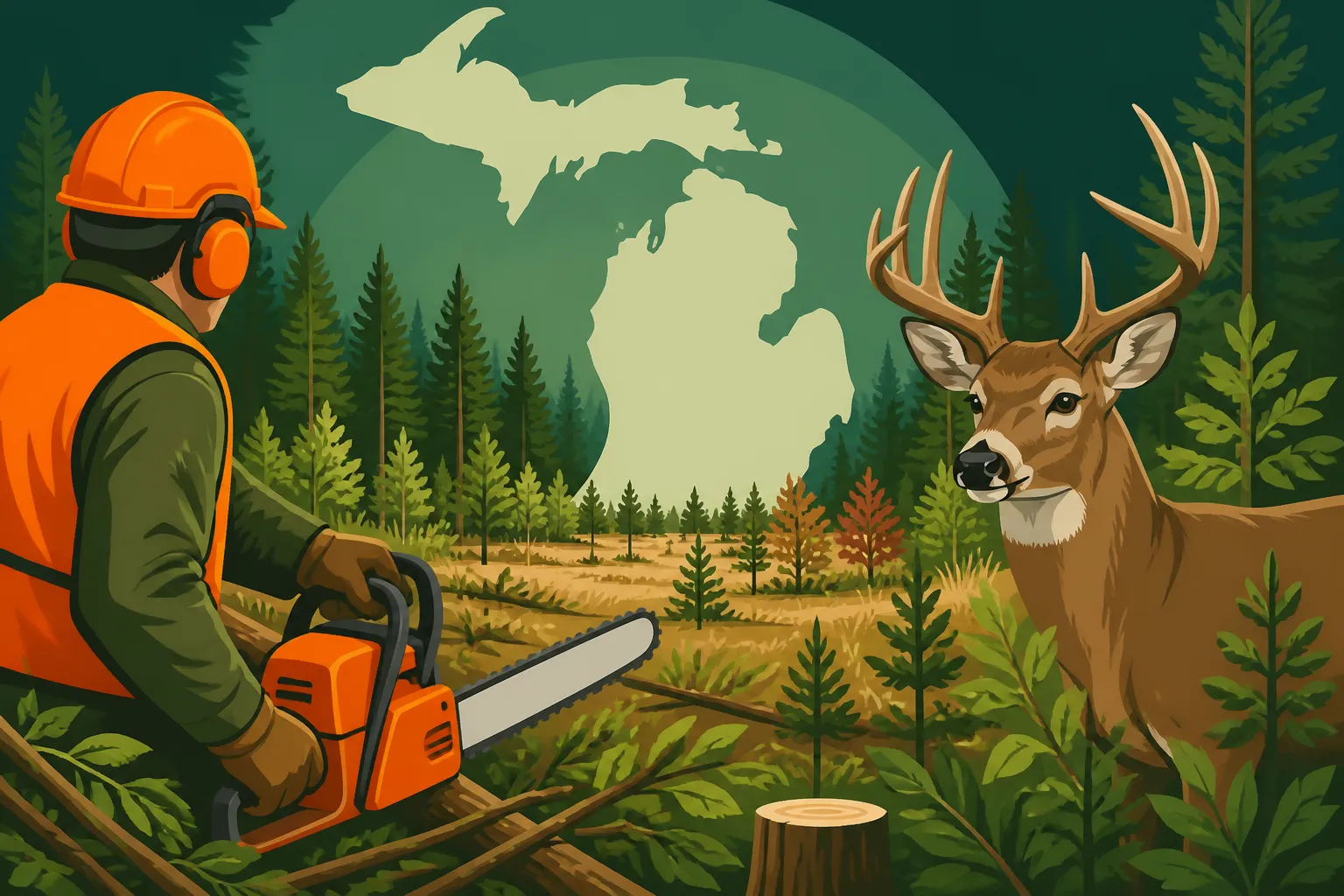
Habitat Work on Michigan State Forest
It can be incredibly frustrating to scout vast tracts of Michigan state forest, only to feel like you're constantly walking through the same old timber with little sign of deer, turkeys, or grouse. Many hunters feel like public land is just "woods," and that finding prime habitat is a matter of pure luck or stumbling upon a hidden gem. But the truth is, a lot of what makes certain areas shine comes down to intentional habitat work carried out by our wildlife agencies. This guide will help you understand the various habitat management practices on Michigan State Forest land, what to look for, and how to use this knowledge to significantly improve your hunting success.
Understanding Michigan's State Forest Management Goals
Michigan's state forests aren't just left to grow wild; they're actively managed for a variety of purposes, and wildlife habitat is a huge part of that. When you see signs of recent work, it's not random. These efforts are often driven by long-term management plans designed to improve conditions for specific game species, boost forest health, or manage timber resources, which in turn benefits wildlife. Thinking about the "why" behind the work can give you a significant advantage.
Balancing Timber and Wildlife Needs
One of the primary drivers of habitat work in Michigan's state forests is timber management. Trees mature, they get harvested, and new ones grow. This cycle is crucial not just for the forest products industry, but also for creating diverse habitat. A dense, mature stand of hardwoods might look beautiful, but it often lacks the undergrowth and diverse food sources that deer, grouse, and turkeys crave. By harvesting timber, especially through methods like clearcutting, managers create openings that allow sunlight to reach the forest floor. This explosion of new growth, from grasses and forbs to young saplings, provides abundant browse and cover for many species, dramatically changing the hunting landscape. It's a delicate balance, ensuring that we have a sustainable timber resource while simultaneously fostering robust wildlife populations.
Creating Specific Habitats for Key Game Species
Beyond general forest health, much of the habitat work is tailored to specific game species. For example, Michigan Ruffed Grouse Cycles are closely tied to young aspen stands. To maintain a healthy grouse population, foresters will strategically clear-cut blocks of mature aspen, knowing that the new, dense saplings that emerge will create ideal drumming and nesting cover. Similarly, deer benefit from a mix of young and old forest, with clearcuts providing forage and mature timber offering thermal and security cover. Turkeys thrive in areas with open hardwoods for foraging and roosting, interspersed with brushy areas for nesting. By understanding what different species need, you can learn to "read" the landscape and identify areas where recent work will concentrate game. This intentionality in management is what transforms a vast forest into pockets of high-quality hunting.
Types of Habitat Work You'll Encounter
When you're out in the Michigan state forests, you'll see a range of habitat improvement projects. These aren't just logging operations; they're carefully planned interventions, each with a specific goal that benefits wildlife in its own way. Knowing what each type of work looks like and why it's done will help you predict game movement and concentration.
Clearcuts and Regeneration Areas
Clearcuts are perhaps the most noticeable form of habitat work. These are areas where almost all trees within a designated block are harvested, leaving behind a relatively open landscape. While they might look barren at first, a clearcut quickly becomes a haven for wildlife, especially deer, rabbits, and grouse. The immediate benefit is an explosion of new growth. Sunlight floods the forest floor, stimulating the growth of herbaceous plants, shrubs, and young trees like aspen, oak, and maple. This dense regrowth provides a smorgasbord of browse for deer and rabbits, and incredible security cover. For grouse, a regenerating clearcut offers crucial drumming sites and protection from predators.
Over time, these areas transform. Within a few years, a clearcut can become an impenetrable thicket, offering fantastic bedding and escape cover. Deer will often browse the edges and use the dense interior for midday refuge. Older clearcuts, say 5-15 years old, become phenomenal pheasant and rabbit habitat, and are prime spots for Grouse Hunting Michigan Aspen Cover. The key is understanding the age of the clearcut – very recent cuts offer food, slightly older cuts offer cover, and older, brushier cuts offer both.
Prescribed Burns
You might occasionally see evidence of prescribed burns, especially in areas with pine stands or open grassy fields within the state forest. Prescribed fire is a vital tool for forest managers to mimic natural fire cycles. The "why" behind these burns is often to reduce fuel loads (preventing catastrophic wildfires), control invasive species, and stimulate the growth of desirable native plants. For wildlife, the benefits are significant. A burn can clear out dense underbrush, making it easier for turkeys to walk and forage for insects and seeds. It can also encourage the growth of tender new shoots and forbs, which deer readily browse.
In pine barrens or oak savannas, burns help maintain the open, park-like structure that these ecosystems naturally had, benefiting species like sharp-tailed grouse (though less common for hunters) and providing better visibility for predators hunting rodents, which then become prey for coyotes and bobcats. After a burn, animals are often drawn to the nutrient-rich new growth. Looking for areas that have been recently burned can pinpoint a temporary food magnet, especially a few weeks to a few months after the fire has passed.
Food Plots and Supplemental Plantings
While less common on vast state forest tracts than on private land, you might encounter small, strategically placed food plots or supplemental plantings. These are typically managed by the Michigan DNR or local conservation groups in specific State Game Areas or designated hunting areas to enhance wildlife nutrition and draw. These plots can consist of clover, brassicas, standing corn, or perennial grasses. The goal is often to provide a high-quality food source during specific times of the year, particularly late season when natural browse is scarce.
For deer and turkeys, a well-maintained food plot can be an absolute magnet. A small plot of clover in an otherwise dense timber stand can concentrate deer movement for miles. Understanding the timing is key: some plots are most attractive in early fall, others in late fall or even winter. If you locate a food plot, consider its surroundings – nearby bedding cover, water sources, and travel corridors will often connect to it. Food Plots Instead of Bait can be incredibly effective, especially where baiting is prohibited.
Thinning Operations and Selective Cuts
Not all timber management is as dramatic as a clearcut. Thinning operations or selective cuts involve removing only a portion of the trees in a stand, often focusing on less healthy or less desirable trees to give remaining trees more room to grow. This type of work aims to improve the overall health and timber value of the stand. For wildlife, the benefits are more subtle but still important.
By opening up the canopy slightly, more sunlight reaches the forest floor, encouraging understory growth without completely altering the mature forest feel. This can create pockets of better browse and cover within an otherwise homogenous stand. It also increases forest edge habitat within the stand itself, which is always a draw for deer and other edge-dwelling species. While perhaps not as immediately obvious as a clearcut, areas with recent thinning can offer improved hunting conditions due to better forage and easier movement for game.
How to Locate and Interpret Habitat Work
Knowing what habitat work looks like is one thing, but finding it and using it to your advantage is where the real skill comes in. Technology has made this easier than ever, allowing you to scout from your couch before ever stepping foot in the woods.
Utilizing Online Mapping Tools
Modern hunting apps and online mapping tools like onX Hunt have revolutionized how we find and interpret habitat work. These platforms often feature layers that show land ownership, recent timber harvests, prescribed burn units, and sometimes even specific wildlife openings or food plots. Before your hunt, spend time exploring the Michigan State Forest land you plan to visit using these tools. Look for clear, distinct boundaries that suggest a past timber cut or burn. Some states even provide detailed public data on forest management plans or recent activities that can be imported into these mapping apps, providing invaluable insights into where work has occurred or is planned.
Another excellent resource is the Michigan DNR's own mapping system, often linked through the "Mi-HUNT" portal. This tool allows you to filter by different forest types, management activities, and public land boundaries. Overlaying this information with satellite imagery (which both onX Hunt and GoHunt provide excellent versions of) can reveal the age and stage of regrowth in clearcuts, the extent of burn areas, and the location of subtle thinning operations. For example, a clearcut that looks like a brown scar on a satellite image from last year might be bursting with green growth this season, making it a prime target. Scouting With Michigan's Mi-HUNT Map is a crucial step in your planning.
Ground Scouting for Fresh Sign
Even with the best digital tools, nothing beats boots-on-the-ground scouting. Once you've identified potential areas of habitat work on your map, go visit them. Look for direct evidence of the work: stumps from recent logging, blackened trees from a burn, or rows of planted saplings. But more importantly, look for how game is using these areas.
In clearcuts, look for heavy browse lines on young saplings and shrubs, deer trails cutting through the dense cover, and tracks leading in and out of the thickest parts. In burned areas, search for fresh tracks around new growth. Near food plots, investigate trails leading to and from nearby bedding areas. Pay attention to how the wind and thermals might influence game movement in these altered landscapes. If you're looking for Finding Sign in Big Timber, fresh habitat work often concentrates that sign in more predictable locations. The transition zone, or "edge," between different habitat types created by these projects is almost always a hotspot for activity.
Hunting Strategies Around Recent Habitat Changes
Once you've located and understood the habitat work, the next step is to adapt your hunting strategy to capitalize on these changes. Different types of work will require different approaches, but the underlying principle is always to key in on how game animals use the newly created or enhanced habitat.
Hunting Clearcuts and Young Growth
Hunting clearcuts, especially those that are a few years old and have grown into dense thickets, requires patience and often an aggressive approach. These areas are usually too thick to see far, making long-range shots impossible. Instead, focus on the edges where deer transition between heavy cover and more open foraging areas. Setting up a ground blind or treestand overlooking a well-used trail on the edge of a clearcut can be very effective, especially during the rut when bucks are cruising for does. Consider using rattling and grunting calls, as the dense cover provides excellent sound baffling, making these calls seem more natural. Hunting Michigan Clearcuts and Aspen Cuts can be incredibly productive, but it demands specific tactics.
For grouse, these young, regenerating cuts are phenomenal. Walking slowly through them, especially with a good bird dog, can result in numerous flushes. For deer, still-hunting through the thickest parts can push deer out to waiting hunters or surprise a bedded buck. Remember that deer will often bed deep within these thickets for security, so don't be afraid to get into the cover.
Focusing on Edges and Transition Zones
Regardless of the type of habitat work, the edges where different habitat types meet are consistently productive. Whether it's the edge of a clearcut meeting mature timber, a burned area bordering an unburned section, or a food plot next to a swamp, these transition zones concentrate game. Animals frequently use these edges as travel corridors because they offer a balance of cover and accessibility to food.
Identify pinch points, funnels, or natural crossings along these edges. These are prime locations for setting up a stand or blind. Deer often feel more secure traveling along an edge than out in the open, and they can quickly duck into cover if threatened. For example, Hunting a Funnel Between Two Swamps is a classic tactic, but a funnel created by the edge of a clearcut and a block of mature pines can be just as effective. Pay attention to wind direction, as deer will often travel with the wind in their favor when using these edges.
Adjusting for Prescribed Burns
Hunting areas after a prescribed burn requires a different mindset. Immediately after a burn, the area might be less appealing due to the lack of green forage. However, as soon as new growth begins to emerge, it becomes a strong attractant. Deer and turkeys will be drawn to the tender, nutrient-rich plants. Focus your efforts on the edges of the burn unit, where animals might be staging before entering, or on pockets within the burn that perhaps didn't burn as intensely and retained some cover.
For turkeys, a recently burned area can make finding insects and seeds much easier, so calling techniques might draw birds into these more open spaces. For deer, the new browse will be key. This is a situation where fresh tracks and droppings become especially important to confirm deer are actually utilizing the area. Remember that deer are constantly looking for the best food sources, and a fresh flush of green in a burned area can offer just that.
Hunting Around Food Plots and Plantings
If you're lucky enough to find managed food plots on state land, they can be excellent spots. The key here is not to just sit on the plot, but to understand the entry and exit routes deer use. Scout trails leading from known bedding areas (often dense clearcuts, cedar swamps, or thick brush) to the food plot. Deer will often approach a plot cautiously, especially if it’s open.
Set your stand or blind along these main travel corridors, perhaps 50-100 yards off the plot, giving you a shot opportunity before they reach the main feeding area. Hunt the wind, always. Also, consider the time of day: early morning hunts might catch deer leaving the plot for bedding, while late afternoon hunts will catch them moving in to feed. For turkeys, food plots can be incredible magnets, especially in spring. They'll often feed in open plots throughout the day, so knowing their roosting locations and setting up an ambush point between the roost and the plot can be very effective.
Understanding and leveraging the habitat work undertaken on Michigan State Forests can transform your public land hunting experience. It's about seeing beyond just "trees" and recognizing the intentional, dynamic changes that create prime habitat for the game you pursue.
Disclaimer
This article is for general informational purposes only and does not constitute professional advice. Laws, prices and regulations vary by location and change over time. Consult a qualified professional for guidance on your specific situation.