Boots for Michigan Swamps and Snow
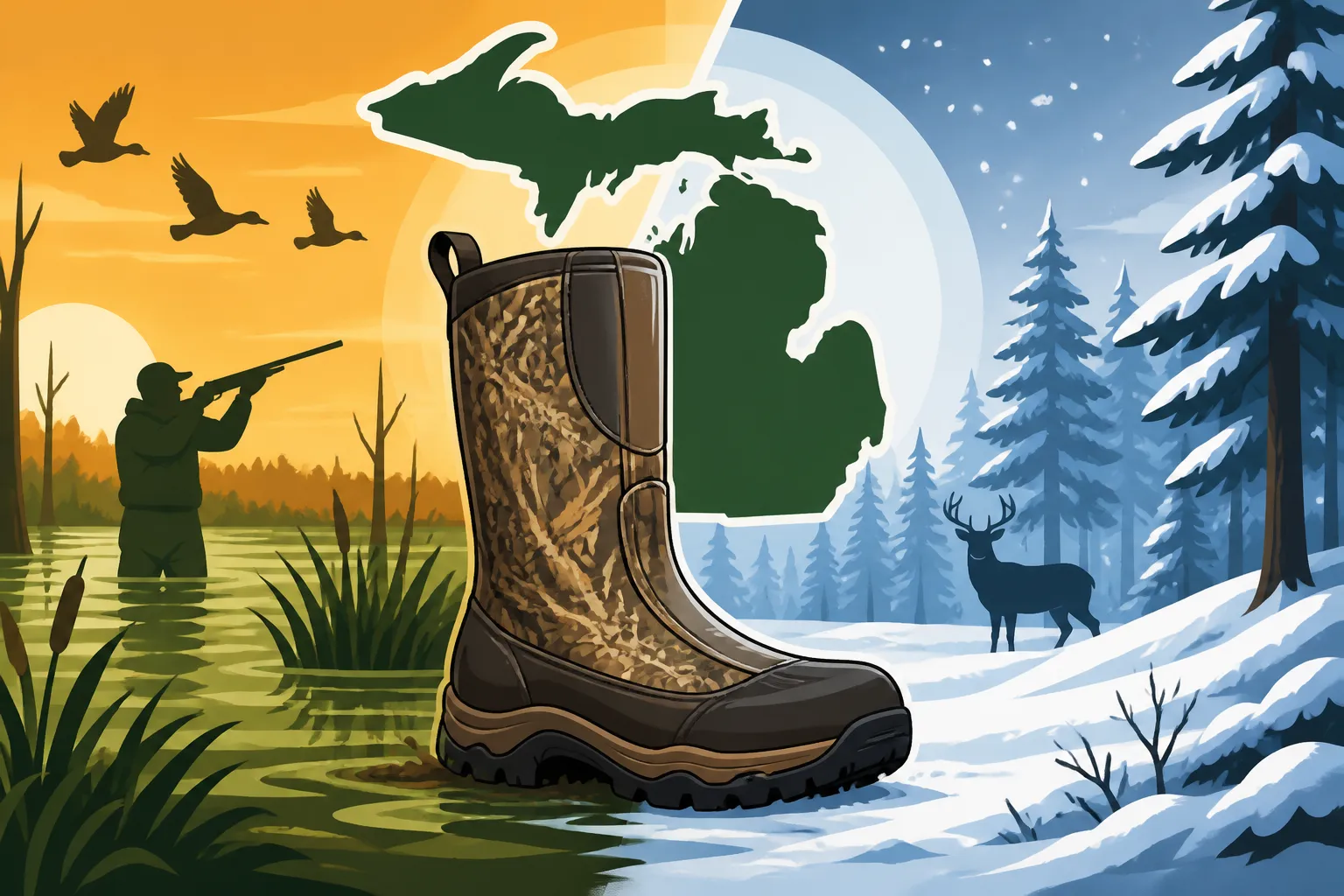
One of the biggest struggles we face as Michigan hunters isn't just finding the game, it's enduring the diverse and often brutal conditions our beautiful state throws at us. From sloshing through muddy swamps in October to busting snow drifts in December, your footwear can make or break a hunt. This guide is all about helping you navigate the confusing world of hunting boots so you can stay dry, warm, and comfortable, no matter what Michigan's woods present.
The Unique Footwear Challenges of Michigan's Diverse Terrain
Michigan isn't just one type of hunting ground; it's a tapestry of varied landscapes, each presenting its own specific challenges for your feet. What works perfectly for a quick walk through a southern Michigan cornfield might leave you soaking wet and freezing in a U.P. cedar swamp. Understanding these distinct environments is the first step to choosing the right boots.
From Soggy Swamps to Sandy Plains
Walk through the Lower Peninsula, especially in many of our state game areas or even parts of the Huron-Manistee National Forest, and you're likely to encounter a mix of sandy ridges, mucky low spots, and outright swamps. Early archery season, when temperatures can still be quite mild, often means negotiating standing water from recent rains or the perennial wetness of a beaver pond. These areas are notorious for sucking boots right off your feet if they aren't laced properly, and if your boots aren't truly waterproof, you'll feel every drop. Then, as you move toward later seasons, the ground might freeze, but the potential for breaking through thin ice into cold water remains. When you're Hunting Michigan Swamp Edges for Deer, having footwear that can handle continuous moisture is non-negotiable.
Meanwhile, hunting the rolling hills of the northern Lower Peninsula or the vast expanses of the Upper Peninsula can mean long walks over hard ground, through dense hardwoods, or across open clear-cuts. While perhaps less about constant standing water, these areas demand exceptional durability, support for uneven terrain, and good ankle stability to prevent twists and falls. The ever-present possibility of unexpected bogs or stream crossings still makes waterproofing a concern, but the emphasis shifts slightly.
Dealing with Michigan's Variable Weather
Michigan's weather is famously unpredictable. You can start a November firearm season hunt with crisp, cool air, only for a lake effect snow squall to blow in, dropping several inches of wet, heavy snow within hours. Early season archery can swing from humid 70-degree days to frosty mornings in a single week. This extreme variability means your boot choice often has to be a compromise, or you need different pairs for different seasons.
Later in the season, when Muzzleloader Tactics in December Cold become the focus, or you're chasing deer during Michigan's November Firearm Deer Season, snow is almost a given, especially in the northern parts of the state. Wet snow quickly turns to slush and then refreezes, demanding boots that not only keep water out but also provide ample insulation against biting cold. Traction on icy trails or snow-covered logs also becomes a critical safety factor. A slight misstep on a slippery surface can turn a great hunt into a painful trip to the emergency room, or worse.
Rubber Boots: The Swamp Hunter's Best Friend
When it comes to Michigan's wettest conditions, rubber boots are often the first choice for good reason. Their inherent waterproofness and ability to seal out moisture are unparalleled, making them indispensable for anyone who spends significant time in swamps, marshes, or wet fields.
Unmatched Waterproofing and Scent Control
The primary advantage of rubber boots is their complete and seamless waterproof construction. Unlike leather or synthetic boots that rely on membranes which can eventually fail or be compromised, a solid rubber boot is impervious to water. This is a game-changer when you're wading through knee-deep water to get to a remote stand, or simply slogging through a rain-soaked forest where every step pushes water over the top of your hiking boots. For places like the Saginaw Bay or any managed waterfowl area, rubber boots, especially knee-high or hip waders, are absolutely essential for Hunting a Michigan Managed Waterfowl Draw.
Beyond keeping your feet dry, rubber boots offer a significant advantage in scent control, which is huge when hunting whitetails. Traditional leather or fabric boots absorb and retain human scent from sweat and skin cells. Rubber, being a non-porous material, doesn't hold scent nearly as much. This makes them an excellent choice for walking into your deer stand, especially if you're crossing open fields or trails where your scent might easily waft to bedded deer. While no boot can completely eliminate scent, rubber boots significantly reduce your footprint, giving you a better chance to slip undetected past a deer's keen nose.
Considerations for Comfort and Durability
While rubber boots excel in waterproofing and scent control, they do come with their own set of considerations. Comfort can be a mixed bag. Many rubber boots lack the structured ankle support and cushioning found in traditional hiking boots. This can lead to fatigue on long walks, and the loose fit can cause blisters if you're not wearing appropriate socks or if the boot isn't sized correctly. Some hunters overcome this by opting for higher-quality rubber boots that integrate better footbeds and more supportive designs.
Durability is another factor. While the rubber itself is tough, punctures from sharp sticks, barbed wire, or even aggressive thorns can compromise their waterproof integrity. It's a good practice to inspect your rubber boots regularly for small nicks or tears. Fortunately, many minor punctures can be repaired with rubber cement or specialized patch kits, extending the life of your boots. Remember, the true enemy of a rubber boot is usually not wear and tear from walking, but external puncture wounds.
Insulated Boots: Conquering Michigan's Cold and Snow
When the thermometer drops and Michigan truly embraces winter, insulation becomes paramount. Rubber boots, unless heavily insulated, just won't cut it for those frigid late-season sits or long treks through deep snow. This is where dedicated insulated hunting boots shine.
Warmth for Freezing Temperatures
The primary purpose of insulated boots is, of course, warmth. Michigan's winters can be brutal, with temperatures regularly dipping below freezing and often into the single digits, especially when hunting Michigan's Late Antlerless Season or during Muzzleloader Deer Hunting in Michigan. Good insulated boots feature various types of insulation, such as Thinsulate, Primaloft, or proprietary blends, measured in grams (e.g., 400g, 800g, 1200g, 2000g). The higher the gram count, the warmer the boot, generally speaking.
Choosing the right level of insulation depends on your activity level and the expected temperatures. If you're primarily stand hunting in extreme cold, you'll want boots with a higher gram count, perhaps 1200g or even 2000g, paired with quality wool socks. For active hunting, like still-hunting or tracking deer in the snow, 400g to 800g might be sufficient, as your body will generate more heat. It's a delicate balance: too much insulation on a long walk can lead to sweaty feet, which paradoxically can make you colder once you stop moving. I've been there, thinking "more is better" only to end up with clammy, cold feet an hour into my sit.
Traction for Snow and Ice
Beyond warmth, insulated boots designed for winter conditions offer superior traction on snow and ice. Their outsoles are often more aggressive, featuring deeper lugs and specialized rubber compounds that remain flexible in cold temperatures. This flexibility helps the sole grip better on slick surfaces. When you're trying to stay quiet on a deer drive or carefully picking your way through a snow-covered cedar swamp where deer yard up, good traction is essential. Still-Hunting Michigan Cedar Swamps in winter demands confidence in every step.
Some boots even incorporate features like ice-specific rubber or carbide studs, though these are more common in extreme mountaineering or ice fishing boots than general hunting footwear. For most Michigan hunting scenarios, a well-designed, aggressive rubber lug sole will provide the necessary grip. Always consider the terrain you'll be covering. If you're often on icy paths or navigating frozen stream banks, prioritizing sole design over other features might be a smart move.
Hybrid Boots: Versatility for Varied Conditions
For many Michigan hunters, a single pair of boots just won't cut it for all seasons and conditions. But if you're looking to minimize your gear or find a versatile option that handles a range of scenarios, hybrid boots aim to bridge the gap between pure rubber and heavy insulated winter boots.
Blending Waterproofing with Breathability
Hybrid boots often feature a combination of materials, typically a waterproof rubber lower section merged with a more flexible, breathable upper made of synthetic fabric or leather. The goal is to provide the critical waterproof barrier where it's most needed – around the foot and lower ankle – while allowing for more breathability and flexibility in the upper part of the boot. This design can be particularly appealing for hunters who encounter intermittent wet conditions but also need to cover a lot of ground in varying temperatures.
Many of these boots utilize advanced waterproof-breathable membranes, such as Gore-Tex or similar technologies, to allow perspiration to escape while preventing external water from entering. This can be a huge benefit when you're hiking in early November, where you might cross a small stream or a wet marsh but also spend hours walking through dry uplands. The breathability helps prevent your feet from overheating and sweating excessively, which is a common complaint with all-rubber boots during active periods or milder weather.
When a Hybrid Might Be Your Best Choice
A hybrid boot truly shines when your hunting plans involve diverse terrain and temperatures that aren't at the extreme ends of the spectrum. If you hunt from early archery through the firearm season, and your areas include both some wet lowlands and dry ridges, a well-chosen hybrid could be your all-around performer. For instance, a hunt that starts with a long walk across a dewy field to get to a hardwood ridge before dropping into a swamp edge might be perfectly suited for a hybrid.
They offer a compromise that many hunters find appealing: more comfort and support than most all-rubber boots, combined with more reliable waterproofing than many traditional leather hiking boots. When using a tool like GoHunt to scout new public lands, you might notice varying terrain within a single parcel. A hybrid boot would prepare you for both the swampy access point and the drier, higher ground you'll traverse to reach your stand. It's about having one boot that's "good enough" for most situations, rather than needing a specialized boot for every single one.
Key Features to Look For Beyond Insulation and Waterproofing
While insulation and waterproofing are often the first things we consider, a truly great hunting boot offers a suite of features that contribute to comfort, safety, and performance. Neglecting these details can lead to discomfort, premature wear, or even a ruined hunt.
Sole Traction and Arch Support
The sole of your boot is your connection to the ground, and its design is crucial for stability and safety. As discussed, aggressive lugs are vital for grip in mud, snow, and on uneven terrain. But beyond the pattern, consider the stiffness of the sole. A stiffer sole provides better support on rocky or root-strewn ground, reducing foot fatigue on long treks, especially when carrying a heavy pack. However, a very stiff sole might feel clunky for still-hunting or stalking where sensitivity to the ground is desired. It's a trade-off based on your primary hunting style.
Arch support is another often-overlooked feature. Many stock insoles offer minimal support, which can lead to foot pain, especially after hours of standing or walking. Replacing the factory insoles with aftermarket orthopedic inserts can dramatically improve comfort and support, making a huge difference in your ability to stay in the woods longer. Your feet are your foundation; don't skimp on supporting them. This is especially true when you're Hunting the Michigan Upper Peninsula for Deer, where challenging terrain is the norm.
Fit, Comfort, and Durability
A boot, no matter how technically advanced, is useless if it doesn't fit well. Always try on boots with the kind of socks you'll wear while hunting. Pay attention to heel lift (too much means blisters), toe room (you want about a thumb's width to prevent bruised toes on descents), and overall snugness without being tight. Walk around in them, go up and down stairs, and try to simulate hunting movements. Remember that your feet swell throughout the day, so trying boots on later in the afternoon can give you a more accurate fit.
Durability comes from quality construction and materials. Look for double or triple stitching, reinforced toe and heel areas, and robust hardware for laces. A common failure point is where the sole meets the upper; a well-constructed boot will have a strong, seamless bond or welted construction. While good boots are an investment, they are one that pays dividends in comfort and longevity. A cheap boot that falls apart mid-season or leaves your feet soaked is no bargain.
The Right Socks and Layering: An Often-Forgotten Component
Even the best hunting boots can't do their job effectively if you're wearing the wrong socks or neglecting proper layering techniques for your feet. Socks are not just an afterthought; they are an integral part of your foot system, managing moisture and providing additional insulation and cushioning.
Wicking Away Moisture is Key
The biggest enemy of warm feet is moisture. When your feet sweat, that moisture sits against your skin and rapidly conducts heat away, making your feet feel much colder, much faster. Cotton socks are the absolute worst choice for hunting, as they absorb moisture and hold it, turning into cold, wet sponges. Instead, opt for socks made from wool (especially merino wool) or high-quality synthetic blends. These materials are designed to wick moisture away from your skin, pushing it to the outer layers of the sock where it can evaporate.
For long periods of activity, like Deer Drives With Three or Four Hunters, a thin wicking liner sock worn under a thicker outer sock can be highly effective. The liner sock pulls moisture from your skin, and the outer sock provides insulation and further wicking. Even in rubber boots, where breathability is limited, a good wicking sock is critical for managing the inevitable sweat. Always carry an extra pair of dry socks in your pack; there's nothing more morale-boosting than swapping out damp socks for fresh, dry ones halfway through a long day.
Layering for Optimal Warmth and Comfort
Just like you layer your upper body clothing, you can layer your socks to adapt to changing temperatures and activity levels. For very cold weather, a mid-weight merino wool sock might be your base, with a heavier wool or synthetic blend sock over it. This creates air pockets that trap warmth, similar to how insulation works in a jacket. However, be careful not to over-layer to the point where your boots become too tight. Restricted circulation will make your feet colder, regardless of how many layers of socks you have on.
The beauty of quality wool socks is their ability to provide warmth even when damp, and they don't itch like traditional wool can. Brands like Darn Tough, Smartwool, and Farm to Feet offer excellent options that are durable and comfortable for the rigors of Michigan hunting. Investing in good socks is just as important as investing in good boots. You can have the most expensive, highly insulated boots, but if you're wearing cheap cotton socks, your feet will still get cold. It's truly a system, and every component plays a role.
Care and Maintenance for Longevity
You've invested your hard-earned money in a good pair of boots designed to handle Michigan's tough conditions. To ensure they last for many seasons to come, proper care and maintenance are absolutely essential. Neglecting your boots will dramatically shorten their lifespan and compromise their performance.
Cleaning and Drying After Every Hunt
The first rule of boot care is to clean them after every use, especially if they've been exposed to mud, snow, or harsh elements. Mud can dry out and crack leather, and corrosive elements like road salt or agricultural chemicals can degrade materials over time. Use a stiff brush and water to remove dirt and debris. For rubber boots, a simple rinse is often enough. For leather or synthetic boots, a gentle soap or boot cleaner might be necessary for tougher grime.
Once clean, proper drying is critical. Never dry boots directly by a heat source like a campfire, wood stove, or direct sunlight. Extreme heat can dry out leather, warp rubber, and delaminate waterproof membranes, effectively destroying your boots. Instead, remove the insoles and allow them to air dry in a well-ventilated area, away from direct heat. Boot dryers, which use gentle, circulating air, are an excellent investment for rapidly and safely drying boots overnight. Stuffing boots with crumpled newspaper can also help absorb moisture and maintain their shape, but be sure to replace the paper regularly.
Conditioning and Storage Practices
Leather boots, in particular, need regular conditioning to prevent drying and cracking. After cleaning and drying, apply a quality leather conditioner or treatment to keep the material supple and maintain its water resistance. There are many products available, including waxes, oils, and creams, each designed for specific leather types. Be sure to follow the manufacturer's recommendations for your particular boots. For rubber boots, conditioning isn't usually necessary, but occasionally cleaning with a rubber-safe protectant can help prevent cracking and maintain flexibility.
When storing your boots for the off-season, ensure they are thoroughly clean and dry. Store them in a cool, dark, well-ventilated area, away from direct sunlight or extreme temperatures. Avoid storing them in plastic bags or airtight containers, as this can trap moisture and encourage mold or mildew growth. Keeping them upright with boot shapers or crumpled newspaper can help maintain their form. Proper storage not only extends the life of your boots but also ensures they're ready to go When Michigan's Archery Season Opens rolls around again. Being prepared saves time and prevents frustration when you just want to get out in the woods.
| Boot Type | Best For | Key Features | Pros | Cons |
|---|---|---|---|---|
| Rubber Boots | Swamps, deep mud, early season, scent control | Seamless waterproof, uninsulated/insulated | Unmatched waterproof, excellent scent control | Less breathable, can lack support, heavy for long treks |
| Insulated Boots | Cold weather, snow, stand hunting | High insulation (grams), aggressive traction | Superior warmth, good grip on snow/ice | Can be bulky, less breathable, too warm for active hunting |
| Hybrid Boots | Varied terrain, mixed conditions, active hunting | Rubber lower, breathable upper, waterproof membrane | Versatile, good balance of features, moderate warmth | May not excel in extreme conditions (wet/cold), membrane can fail |
| Hiking Style Boots | Dry conditions, long walks, mild weather | Ankle support, flexible sole, breathable | Comfortable, great support, lightweight | Limited waterproofing, poor for deep snow/mud, poor scent control |
Disclaimer
This article is for general informational purposes only and does not constitute professional advice. Laws, prices and regulations vary by location and change over time. Consult a qualified professional for guidance on your specific situation.