Binocular Power for Timber Hunting
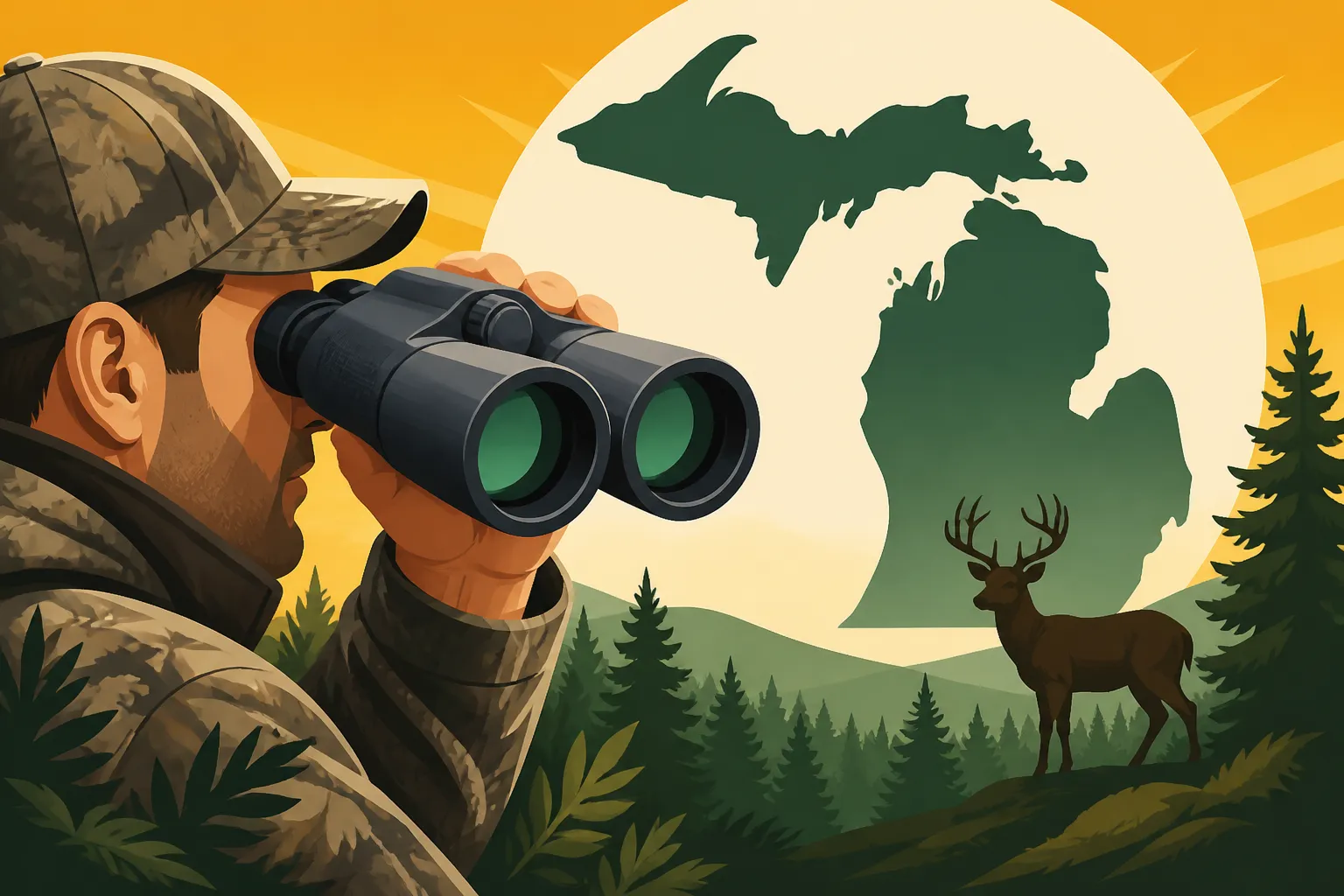
If you've spent any time at all chasing whitetails in Michigan, you know our woods can be a dense, unforgiving place. It's not the wide-open West where you can glass for miles; here, you're often looking through a maze of aspens, thick pines, or tangled brush, and choosing the right binocular power can make or break your ability to spot that crucial flicker of an ear or the subtle horizontal line of a deer's back. This guide will dive deep into binocular magnification, helping you understand what numbers really mean in our Michigan timber and how to pick the best optic for your hunting style.
The Perennial Debate: Magnification for Timber
Hunters, myself included, often get caught up in the "more power is better" mindset, especially when it comes to optics. We see those big numbers – 10x, 12x, even 15x – and instinctively think that a higher magnification means we'll see more deer, or see them more clearly. But when you're hunting in Michigan's thick timber, whether it's the sprawling Michigan State Forest Hunting land in the north or the smaller woodlots bordering cornfields in Southern Michigan Farm Country Deer Hunting, that assumption can actually work against you.
The reality of timber hunting is that your sightlines are usually limited. You're not often glassing across vast valleys. Instead, you're picking apart dense cover, trying to identify movement or parts of an animal in a small window through the trees. In these scenarios, the disadvantages of high magnification, such as a narrow field of view and increased shakiness, quickly become apparent.
Imagine trying to find a needle in a haystack, but through a tiny straw. That's what it can feel like with too much magnification in tight quarters. We need optics that help us quickly scan and identify, not necessarily count the whiskers on a squirrel at 200 yards. This is why many seasoned Michigan hunters often gravitate towards more moderate magnifications for their primary hunting binoculars.
Decoding Binocular Specifications: What 8×42 Actually Means
Before we can talk about what works best in the woods, let's quickly break down what those numbers stamped on your binoculars actually mean. When you see something like "8×42" or "10×42," you're looking at two critical pieces of information: magnification and objective lens diameter.
The first number, the "8x" or "10x," refers to the magnification power. An 8x binocular makes an object appear eight times closer than it would to your naked eye. So, if a deer is 100 yards away, it looks like it's only 12.5 yards away through your 8x binoculars. A 10x binocular would make that same deer appear as if it were 10 yards away. Seems simple enough, right? But the implications of that "x" factor are huge for practical field use.
The second number, the "42" in our example, is the diameter of the objective lens (the front lens) in millimeters. This measurement is crucial because it dictates how much light your binoculars can gather. A larger objective lens gathers more light, which generally translates to a brighter image, especially in low-light conditions like dawn, dusk, or deep in a dark cedar swamp. It also plays a role in the exit pupil size, which is the diameter of the light beam that exits the eyepieces and enters your eyes.
The Case for Lower Magnification (8x) in Michigan's Woods
When you're trying to pick apart the dense foliage of a Michigan State Forest Hunting area or the complex cover found in places like the Huron-Manistee National Forest Hunting, an 8x binocular often provides a significant advantage over its higher-powered cousins. It's not about seeing further, but about seeing better in the typical timber hunting situation.
Field of View: Seeing More of the Big Picture
One of the biggest benefits of an 8x binocular for timber hunting is its wider field of view (FOV). Field of view refers to the width of the area you can see through your binoculars at a specific distance, typically expressed in feet at 1,000 yards. The lower the magnification, the wider your field of view will be.
In Michigan's thick cover, where deer often appear suddenly and are quickly swallowed by the trees, a wide FOV is invaluable. It allows you to scan larger swaths of timber quickly, increasing your chances of picking up movement or the subtle outline of a deer before it slips away. Think of it like trying to find a specific leaf on a tree: with a wider view, you can find the general branch faster, then focus. With a narrow view, you might miss the branch entirely while scrutinizing individual leaves.
This wider perspective is especially helpful when still-hunting through thick areas or trying to locate a deer that's just been bumped. You can follow moving animals more easily without losing them from your sight picture, which is a common frustration with high-power optics in dense woods.
Image Steadiness: Battling the Shake
Let's be honest, we're all human. Even the steadiest hands will have a slight tremor, and the higher the magnification, the more pronounced that tremor becomes. Trying to hold 10x or 12x binoculars perfectly still for extended periods in the field, especially after a long hike or when your adrenaline is pumping, is a real challenge.
With 8x binoculars, the image is inherently more stable. This means less frustrating shake, allowing you to observe details more comfortably and for longer durations. That stability translates directly into better clarity and the ability to discern subtle details like antler tines or a twitching ear through the brush. When you're trying to determine if that dark spot is a shadow or a deer's flank, a steady image is absolutely critical.
This reduced shake also makes them much more practical for quick, off-hand glassing. You don't always have time to brace yourself against a tree or deploy a tripod when a deer materializes in front of you. The 8x allows for faster, more effective target acquisition under pressure.
Low Light Performance: When Every Ray Counts
Michigan's prime deer movement times are often at dawn and dusk, or on dark, overcast days, when light is at a premium. This is where the exit pupil comes into play, and where 8x binoculars often shine. The exit pupil is calculated by dividing the objective lens diameter by the magnification. For an 8×42 binocular, the exit pupil is 42/8 = 5.25mm. For a 10×42, it's 42/10 = 4.2mm.
Our human pupils dilate in low light, typically up to 5-7mm in adults. An exit pupil that matches or exceeds your eye's dilated pupil means more light is entering your eye, resulting in a brighter, more usable image in dim conditions. While a 4.2mm exit pupil from a 10×42 is still good, the 5.25mm from an 8×42 will generally provide a noticeably brighter image when those critical minutes of legal shooting light are fading fast. This is invaluable when trying to identify a deer deep in a shadowy timber pocket or confirm antler points just before dark.
Many hunters find that this enhanced low-light performance with an 8x binocular gives them precious extra minutes of effective glassing, which can be the difference between filling a tag and going home empty-handed. When hunting the deep shadows of Hunting a Funnel Between Two Swamps or watching a remote clearcut edge, every bit of light helps.
Practical Engagement Ranges: Timber vs. Open Country
Let's be realistic about typical shot distances in Michigan's timber. While you might occasionally get a longer shot across a clearcut or field edge, the vast majority of deer encounters in dense woods happen within 100 yards, often much closer.
At these closer ranges, the extra magnification of a 10x or 12x binocular often provides diminishing returns and can actually be detrimental. At 50 yards, an 8x binocular makes a deer look like it's 6.25 yards away – plenty close for identification. The wider field of view at this range helps you find the animal quickly. Trying to use 10x or 12x at these distances can feel like looking through a telescope, where you're constantly trying to track and pan, often losing the animal in the process. Rifle Scopes for Low-Light Swamps also face similar challenges with high magnification.
The primary goal of binoculars in timber hunting is detection and quick identification, not precision ranging at extreme distances (that's what a Rangefinders in Thick Cover is for). For close to medium ranges, 8x power excels at this job.
When to Consider Higher Magnification (10x or More)
While 8x binoculars are fantastic for the majority of Michigan's timber hunting scenarios, there are specific situations where a 10x or even higher magnification might offer a distinct advantage. It's all about understanding your hunting environment and adapting your gear accordingly.
Openings and Longer Views: Beyond the Brush
Michigan isn't all thick timber. We have numerous clearcuts, expansive marshes, vast ag fields in the southern part of the state, and even some rolling hills that offer longer sightlines. If your hunting property or preferred public land, such as certain areas within the Hiawatha National Forest Hunting, includes significant open areas or long field edges, a 10x binocular can definitely come in handy.
In these situations, where you might be glassing across a quarter-mile field, a power of 10x provides that extra reach to better identify deer browsing at a distance, or to pick apart the details of a distant woodline where deer might be staging. When setting up on the edge of a standing cornfield in the Thumb or overlooking a large marsh, the added magnification helps you confirm antlers or gauge the size of an animal before committing to a stalk.
Even in timber, if you're hunting along a very wide two-track or a long, straight utility corridor, 10x can help you pick up deer further down the lane. However, it's a balance; you still want to ensure your chosen optic performs well if that deer suddenly veers into the adjacent thick stuff.
Detailed Scouting and Target Identification
Another scenario where higher magnification proves useful is during dedicated scouting trips or when you've already spotted a deer and need to confirm specific details without moving in closer. If you're Scouting Michigan Public Land Before Season from a distance, trying to identify rub lines, scrape areas, or potential bedding locations, 10x or 12x can help you see subtle signs that 8x might miss.
Once you've located a deer, particularly a buck, higher power allows you to more accurately count antler points, assess mass, or identify unique characteristics from a safe distance. This is especially important in areas with Michigan Antler Point Restrictions by DMU, where correctly counting points is crucial to avoid a violation. You can use apps like GoHunt to mark those locations on a map once you've made your observations. This detailed observation minimizes disturbance and gives you better intel for a potential stalk or stand setup.
However, remember that stability is key for detailed observation. For serious long-range glassing or extreme detail work, consider a monopod or tripod. Even a 10x handheld will still show significant shake compared to an 8x, making fine details harder to resolve without support.
Beyond Magnification: The Objective Lens and Optical Quality
While magnification gets a lot of attention, it's only one part of the binocular equation. The size of the objective lens and the overall optical quality play an equally, if not more, important role in how well your binoculars perform in Michigan's challenging conditions.
The Power of the Objective Lens: Light Gathering Ability
As we discussed, the second number in "8×42" (the 42mm) represents the diameter of the objective lens. This lens is the gateway for light entering your binoculars. Simply put, a larger objective lens can gather more light. More light gathered generally means a brighter image, which is paramount during those critical low-light periods at dawn and dusk when deer are most active.
For timber hunting, where you're often staring into dark, shadowy pockets of cover, a generous objective lens diameter like 42mm or even 50mm is a huge asset. It helps you distinguish deer from shadows, or pick out subtle details that would be lost in dimmer optics. While you might see compact binoculars with smaller objective lenses (e.g., 8×25), they will sacrifice significant low-light performance, making them less ideal for serious hunting in the woods.
It's a trade-off, though. Larger objective lenses mean larger, heavier binoculars. You'll need to balance that light-gathering capability with how much weight you're willing to carry on a full day of Still-Hunting Michigan Cedar Swamps or hiking through the U.P. Packs for a Day on State Land will be essential.
Glass and Coatings: The Unsung Heroes of Clarity
You can have the perfect magnification and objective lens size, but if the quality of the glass and the coatings isn't up to par, your image will still be disappointing. This is where optical quality truly shines, and it's often what separates a budget binocular from a premium one.
High-quality glass, often referred to as ED (Extra-low Dispersion) or HD (High Definition) glass, minimizes chromatic aberration (color fringing) and delivers sharper, truer-to-life colors. This crispness and color accuracy are vital for discerning subtle details and natural camouflage in the woods. Furthermore, the coatings applied to the lenses and prisms are incredibly important. Fully multi-coated lenses reduce glare, increase light transmission, and protect the glass from scratches and moisture.
The type of prism also matters. Bak-4 prisms are generally preferred over BK7 prisms because they produce a rounder, brighter, and clearer image with less vignetting (darkening at the edges). These are the details that GoHunt often highlights in their gear reviews, reminding hunters that the overall optical system, not just magnification, dictates performance. Investing in good glass and coatings means you'll get a clearer, brighter image throughout the day, in a wider range of conditions.
Choosing Your Timber Hunting Partner: Practical Considerations
Beyond the technical specifications, there are several practical factors that will influence your enjoyment and effectiveness with your binoculars in Michigan's hunting environments.
Weight, Size, and Ergonomics: Comfort in the Field
Imagine still-hunting all day in the Upper Peninsula Deer Yarding and Winter Movement areas, carrying your rifle, pack, and binoculars. Every ounce matters. Heavier, bulkier binoculars might gather more light, but if they're cumbersome to carry or uncomfortable to hold for extended periods, you won't use them as much.
For timber hunting, where quick target acquisition is common, a binocular that feels balanced and natural in your hands is a huge plus. Look for models that are relatively compact and lightweight for their class. Ergonomics, such as comfortable eyecups, easy-to-reach focus wheels, and a good grip, also contribute to user comfort and effectiveness.
Many hunters find that a mid-size binocular (e.g., 8×42 or 10×42) strikes the best balance between optical performance and portability for typical Michigan deer hunting. Test different sizes and weights to see what feels right for you, especially if you plan on covering a lot of ground.
Durability and Weatherproofing: Michigan Tough
Michigan weather is notoriously unpredictable. You can start a November morning in crisp, clear air and end it slogging through freezing rain or wet snow. Your binoculars need to be able to withstand these conditions without fogging up or taking on water.
Look for binoculars that are nitrogen or argon purged and O-ring sealed. This ensures they are waterproof and fogproof, protecting the internal optics from moisture and temperature fluctuations. A rubber-armored exterior provides both a better grip and a layer of protection against bumps and drops that inevitably happen in the field. This ruggedness is a non-negotiable for serious Michigan hunters. You're not going to baby your gear when you're focused on getting a deer out of a Michigan Cedar Swamp for Deer.
A good quality neck strap or chest harness is also a critical accessory. It keeps your binoculars secure, readily accessible, and prevents them from swinging around and getting damaged as you navigate brush or climb into a stand.
Making Your Decision and Getting Hands-On
Ultimately, the "best" binocular power for timber hunting in Michigan is a personal choice based on your specific hunting style, the terrain you frequent, and your budget. However, for the majority of situations in Michigan's dense woods, an 8x magnification with a 42mm objective lens (an 8×42) offers a superb balance of field of view, image steadiness, and low-light performance.
| Feature | 8×42 Binoculars (Timber Optimized) | 10×42 Binoculars (Versatile) |
|---|---|---|
| Magnification | 8x | 10x |
| Field of View | Wider, excellent for scanning dense cover | Narrower, requires more panning |
| Image Steadiness | Very stable, less hand shake | More susceptible to hand shake |
| Low Light Brightness | Excellent, brighter image in dim conditions | Good, but slightly dimmer than 8×42 in deep low light |
| Target Acquisition | Fast, easy to find and track targets | Slower, harder to acquire fast-moving targets |
| Detail at Distance | Good for typical timber ranges (<150 yds) | Better for long distance details (>150 yds) |
| Weight/Size | Often slightly lighter/more compact | Generally similar, but can feel more cumbersome |
| Ideal Use Case | Thick timber, swamps, moving targets, close range | Open fields, clearcuts, long-range scouting, stationary targets |
Before making a final decision, I highly recommend getting your hands on a few different models. Visit a sporting goods store, compare 8x and 10x side-by-side, and look out the window at varying distances and light conditions. If you can, go outside and try to pick out details in brush or shadows. See what feels comfortable, what offers the best image to your eye, and what you can hold steady. You might even find reviews and comparisons on sites like GoHunt that help narrow down your choices based on user experience in similar hunting environments.
Remember, your binoculars are an extension of your eyes in the field. Choosing the right power will significantly enhance your ability to spot game, especially in the unique and often challenging timber country that Michigan offers.
Disclaimer
This article is for general informational purposes only and does not constitute professional advice. Laws, prices and regulations vary by location and change over time. Consult a qualified professional for guidance on your specific situation.