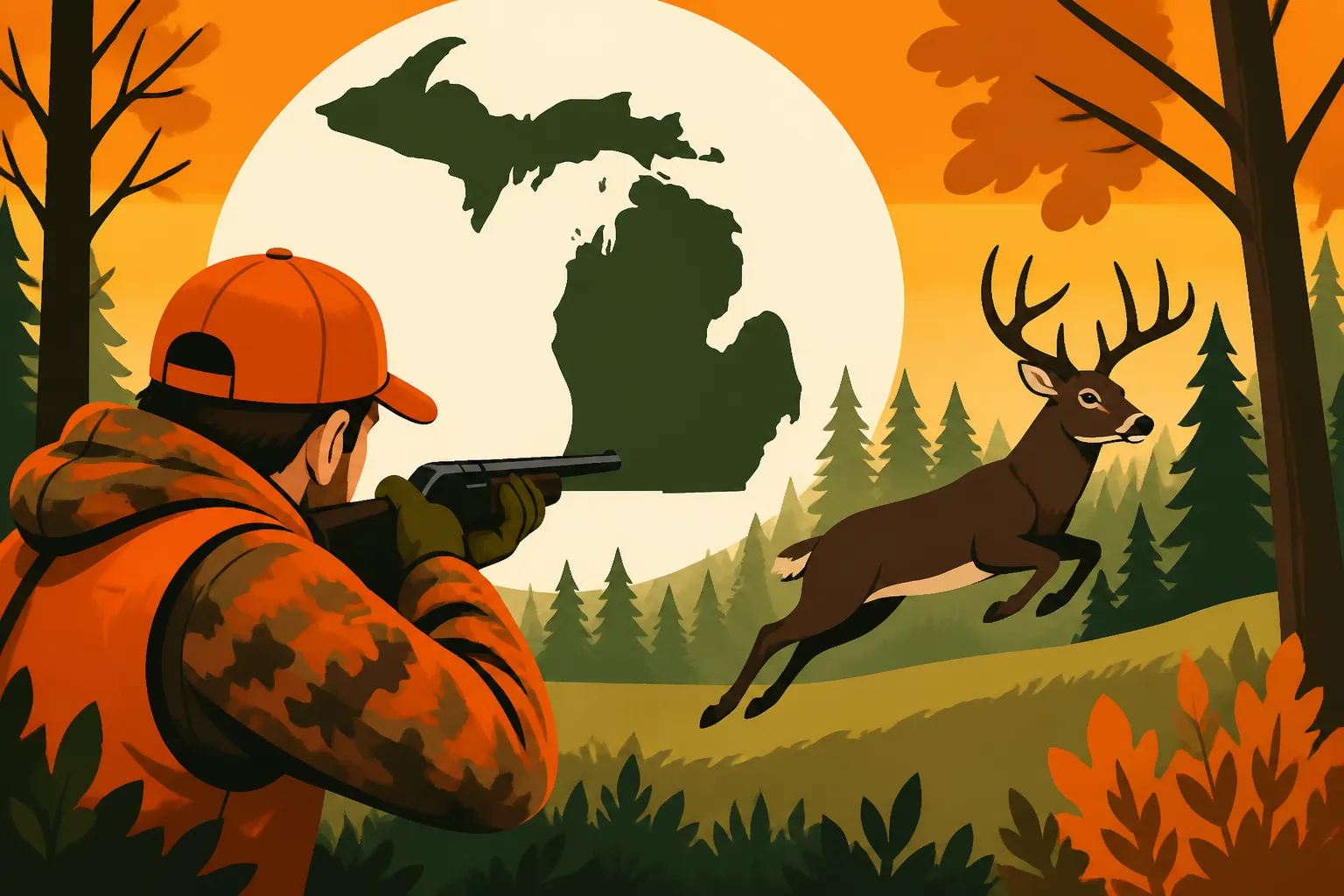
Deer Drives on Michigan State Land
Deer drives on Michigan state land can feel like a chaotic gamble, often leading to frustration rather than venison, especially when dealing with heavy pressure or unfamiliar territory. This guide is designed to cut through the confusion, offering practical strategies and insights to help you effectively organize and execute deer drives on Michigan's public hunting grounds, increasing your odds of success and making the most of your hunting efforts with friends or family.
The Basics of Deer Drives on State Land
When you're trying to fill a tag on Michigan's public land, the idea of a deer drive often comes up. It's a time-honored tradition, but executing it effectively, especially in areas with significant hunting pressure, requires more than just making noise and hoping for the best. Understanding the nuances of deer behavior and the unique challenges of public land is your first step toward success.
Why Deer Drives Work in Michigan
Deer, particularly those on pressured public land in Michigan, are creatures of habit and survival. They have established bedding areas where they feel secure, intricate travel corridors they use to move between food and cover, and ingrained escape routes that they'll instinctively use when disturbed. Deer drives, when done correctly, leverage these natural tendencies. The goal isn't to just scatter deer wildly; it's to gently, yet persistently, push them out of their sanctuaries and along predictable paths toward waiting hunters. Michigan's diverse terrain, from the sprawling cedar swamps and thick pine plantations up north to the dense woodlots and marsh edges of the southern Lower Peninsula, often provides natural funnels and pinch points that can be exploited by a well-planned drive.
The sheer volume of public land in Michigan, while fantastic, means deer have vast areas to hide. They learn quickly where human activity is frequent and where they can find refuge. A strategic drive can be incredibly effective at dislodging deer from these seemingly impenetrable pockets of cover. It's about moving deer with purpose, creating opportunities for standers who are positioned intelligently, rather than just running them aimlessly into the next county.
Ultimately, deer drives are a collaborative effort, embodying a social aspect of hunting that many cherish. They allow multiple hunters to work together, covering more ground and increasing the collective chance of success beyond what a single hunter might achieve alone. This teamwork is especially valuable on Michigan's expansive public lands, where the odds can feel stacked against solo hunters. Sharing the experience, the challenges, and hopefully, the success, is a significant part of why drives remain a popular method.
Understanding Michigan's Public Land Challenges
Let's be real: hunting Michigan state land means dealing with hunting pressure. This isn't your own private 100-acre paradise where deer have never seen a human. Deer on public ground are often much warier, moving mostly at night or holding incredibly tight in cover when they detect human presence. They've learned to associate vehicle sounds and human voices with danger, adapting their patterns accordingly. For a drive to be successful, you must acknowledge this pressure and plan to push deer out of areas they perceive as safe, often meaning you need to go into the thickest, nastiest cover that other hunters might avoid.
Michigan's terrain is incredibly varied, and each type presents its own set of challenges and opportunities for a deer drive. The vast, often flooded, cedar swamps of the Upper Peninsula or northern Lower Peninsula demand a slow, deliberate push and precise stander placement. Conversely, driving a mature hardwood ridge with scattered thickets requires a different strategy than pushing through a dense, young aspen clearcut. A drive in a flat, open pine plantation where deer can see far ahead will require tighter spacing between drivers than one through rolling hills and valleys. Understanding these differences and adapting your approach is critical for success.
Another significant factor on public land is the presence of other hunters. You're rarely alone, especially during the firearm season. Respect for fellow hunters is paramount. This means you need to scout not only for deer but also for signs of other hunting activity, like existing stands or popular access points. Your drive plan should clearly define your boundaries and avoid disrupting other hunters. An unexpected drive crashing through someone's well-established stand setup can create frustration and even unsafe situations. Always be visible with proper hunter orange, especially if you anticipate pushing deer towards adjacent private property or areas where others might be still-hunting.
Planning Your Deer Drive: Key Considerations
A successful deer drive is less about brute force and more about meticulous planning and execution. You can't just show up on opening day with a few buddies and expect to push deer out of the woods. The real work begins long before you set foot in the timber with your gun.
Scout for Success, Not Just Bucks
The foundation of any effective deer drive is thorough pre-season scouting. This goes far beyond just finding a few rubs or scrapes. You need to identify the deer's lifestyle in the area you plan to drive. Where are their primary bedding areas – those thick, nasty spots they retreat to when pressured? What are their preferred travel corridors between these bedding areas and food sources? Are there natural funnels, like narrow strips of cover between open fields or a point of timber jutting into a swamp, that deer are likely to use when moving? Tools like the Michigan DNR's Mi-HUNT map are invaluable for overlaying public land boundaries, habitat types, and topographical features. Premium hunting apps like GoHunt can further enhance your scouting by allowing you to mark waypoints for bedding areas, escape routes, and potential stander locations, creating a detailed plan that everyone in your group can access.
Just as important as identifying bedding areas are the deer's escape routes. When disturbed, deer almost always have a preferred way out. Do they tend to slip into a nearby cedar swamp, cross a river, or dart across a field into an adjacent private woodlot? Knowing these escape routes is absolutely critical for positioning your standers effectively. For example, understanding how deer move through thick swamp edges can help you anticipate where they'll emerge. Check out our guide on Reading Aerial Photos for Swamp Deer for more in-depth tips on this. If you don't account for these, deer will simply blow out the sides or slip back through the drivers, rendering your efforts fruitless.
One often-overlooked aspect of planning a drive is the wind direction. Deer rely heavily on their sense of smell, and the wind is their primary defense. Your drive should always be set up so that your standers are downwind of the anticipated deer movement, and your drivers are pushing deer into the wind or crosswind towards the standers. This strategy minimizes the chance of deer scenting a stander prematurely and busting out in an unpredictable direction. Always carry a wind checker and verify the wind immediately before starting your drive. If the wind isn't favorable for your plan, be flexible enough to adjust the drive direction or even move to a different location.
Forming Your Driving Team and Roles
Every successful deer drive requires a clear understanding of roles within the team. Generally, you have two primary groups: the drivers and the standers. Drivers are the ones actively walking through cover, making noise (sometimes), and pushing the deer. They need stamina, an awareness of their position relative to others, and a good sense of direction. Standers are positioned ahead of the drive, waiting quietly and patiently for deer to be pushed to them. They need excellent observational skills, patience, and the ability to make a clean, ethical shot when the opportunity arises.
The number of people in your group will dictate how you assign these roles. For a smaller group, say Deer Drives With Three or Four Hunters, you might have one or two drivers and a couple of standers covering key escape routes. With more hunters, you can deploy a more intricate strategy, potentially having multiple drivers in a line and several standers covering different angles and escape routes. When you're scouting Michigan public land before season, think about how many people you'll have on opening day. When assigning roles, consider each person's strengths: who has the best sense of direction for driving, who has the most patience for standing, and who is the steadiest shot?
Clear communication is the linchpin of any deer drive. Before you even step into the woods, everyone needs to be briefed on the plan. This includes the designated starting and stopping points, the exact boundaries of the drive, any known hazards (like deep water or private property lines), and a thorough safety briefing. While cell phones can work, reception on Michigan state land can be spotty, so two-way radios are often a more reliable option. However, even with radios, agree on simple, clear commands and signals. Knowing who is doing what and where everyone is positioned prevents confusion, enhances safety, and increases the chances of a successful outcome.
Safety First: Communication and Awareness
I cannot stress this enough: hunter safety is not negotiable. When conducting a deer drive, especially on public land where other hunters might be present, safety must be your absolute top priority. Every single person involved needs to know exactly where every other person is at all times. This means wearing bright hunter orange – and lots of it – is crucial. Michigan mandates specific hunter orange requirements, so make sure everyone in your party understands and adheres to Michigan Hunter Orange Rules. Even if you're bowhunting during a firearms season, hunter orange is a smart choice for drivers.
Beyond visibility, standers must have clear shooting lanes and be absolutely certain of their target and what lies beyond it. Never, under any circumstances, take a shot into thick cover where you can't definitively identify the animal, or if there's any doubt whatsoever about another hunter's position. Blind shots are dangerous and entirely unacceptable. Before the drive, standers should identify safe shooting zones and potential areas where deer might emerge, visualizing their shot before the moment of truth.
Establishing clear communication protocols before the drive begins is vital. Whether you use verbal calls, whistles, or hand signals, everyone needs to be on the same page. A simple, agreed-upon command like "Deer moving left!" is far more effective than a panicked shout. If a driver spots another hunter outside the group, they need to communicate that immediately. If a stander needs to shift position for any reason, they must alert the group. Consider a pre-arranged signal for "I see another hunter, hold tight." This constant awareness and open communication prevent accidents and ensure that everyone can focus on the hunt responsibly.
Executing the Drive: Tactics and Techniques
Once the planning is done, it's time to put boots on the ground. But just like a well-drilled football team, execution is everything. There’s a distinct art to moving deer effectively, and it involves more finesse than you might think.
The Art of the Slow Push
Forget the image of hunters crashing through the woods like a stampede. A slow, methodical push is almost always more effective than a fast, chaotic one. When drivers move too quickly, deer often break cover prematurely, blowing out the sides of the drive or slipping back through the drivers before they ever reach the waiting standers. Deer are masters of evasion; a rapid push just incites panic, making them unpredictable and difficult to intercept.
The key is to maintain a consistent, measured pace. Drivers should walk abreast, ideally within sight or consistent vocal contact with each other, covering their assigned lanes. If one driver lags or gets too far ahead, it creates a gap that deer will quickly exploit. This requires discipline from every driver in the line. Imagine a deer trying to skirt around a driver, only to find another driver there, subtly redirecting it back into the desired path. This is the goal of a controlled push.
Varying the amount of noise made by drivers can also be incredibly effective. It doesn't have to be a constant yell-fest. Sometimes, simply walking steadily through crunchy leaves or thick brush is enough to make deer feel uneasy and prompt them to move. Other times, a few well-timed shouts or a stick banging against a tree can be used to nudge deer in a specific direction. The goal is to make the area uncomfortable enough for deer to move, but not so terrifying that they bolt blindly or curl back into the drivers. The slower pace also allows drivers to spot deer ahead of time, potentially giving them a quick, ethical shot if the opportunity arises within their safe zone.
Strategic Standers and Escape Routes
Stander placement is not a random affair; it's a critical strategic decision based on your scouting. Standers should always be positioned on known escape routes, natural funnels, or areas where deer are likely to pause and assess before breaking into more open ground. Think about a narrow bottleneck between two swamps, a small gap in a dense hedgerow leading to a field, or a specific ridge line that deer always seem to use for travel. These are the sweet spots. Our guide on Posting a Drive on a Michigan Swamp offers specific insights into these challenging but rewarding areas. If you’ve scouted a Hunting a Funnel Between Two Swamps, that’s precisely where your standers should be.
Even though deer are being pushed, they're still incredibly alert. Therefore, concealment for standers is paramount. Don't just stand out in the open. Use natural cover like thick brush, large trees, or even a subtle rise in terrain to break up your silhouette. A well-brushed-in ground blind can be incredibly effective, especially in areas where natural cover is sparse. For tips on setting these up, refer to Using a Ground Blind on Michigan State Land. The less a deer detects you visually or by scent, the more likely it is to move naturally into your shooting lane.
In larger drives, or in areas with very predictable deer movement, standers can also act as "blockers." These individuals might be positioned not necessarily to shoot, but to simply deter deer from using a specific escape route, thereby funneling them towards another stander with a better shot opportunity. This requires incredible discipline, as a blocker must resist the temptation to shoot if it compromises the overall strategy or the safety of others. Their role is to be a silent, strategic barrier, working in concert with the entire team.
Dealing with Difficult Terrain
Michigan's landscape offers a diverse range of terrain, and each presents its own unique set of challenges for deer drives. From the impenetrable thickets of young conifers to the knee-deep (or deeper!) cedar swamps, or the steep, rolling hills of our northern counties, you need to adapt your driving tactics. In very thick cover, drivers may need to be spaced closer together to prevent deer from slipping between them, and the pace will naturally slow to a crawl. The difficulty of the terrain should always dictate your approach.
Smart hunters use natural features to their advantage. Rivers, roads, power lines, and significant changes in elevation can all act as natural barriers or funnels for deer. A drive might be initiated at a two-track road, pushing deer towards a river where standers are waiting patiently along the bank. Conversely, a drive could push deer along a ridge line, knowing they prefer to travel its crest rather than descend into a valley. Using these features effectively can simplify your drive and make deer movement more predictable.
Overcoming obstacles without breaking the driving line requires excellent coordination and communication. If your driving path encounters a massive blowdown, a sudden drop-off, or an especially swampy section, the drivers need to communicate and adapt. One driver might temporarily pause while others swing around, then the line reforms and continues. Flexibility and problem-solving in real-time are crucial. For instance, successfully navigating a drive through the infamous Michigan cedar swamps requires precise communication and an understanding that everyone might be slogging through water and dense brush. Remember that getting a deer out of challenging terrain, like a Getting a Deer Out of a Michigan Cedar Swamp, is a whole different beast, so planning for extraction is also important.
Common Mistakes and How to Avoid Them
Even the most experienced hunting groups can fall prey to common missteps during deer drives. Avoiding these pitfalls can dramatically increase your chances of success and, just as importantly, ensure a safe and enjoyable hunt for everyone involved.
Rushing the Drive
One of the most frequent and detrimental mistakes in a deer drive is moving too fast. There's an understandable excitement when you know deer are in a block of cover, but a rushed drive almost always backfires. When drivers push too quickly, deer often break cover prematurely, sometimes even before they reach the well-positioned standers. They might blow out the sides of the drive in an unexpected direction, or worse, curl back and slip through gaps in the driving line that formed because of the rapid pace. This is a common pitfall, particularly for less experienced groups eager for immediate action.
Deer are incredibly agile and masters of evasion. If they feel overly pressured or panicked, they will bolt, making them exceptionally difficult targets for standers and increasing the risk of a poor shot. A panicked deer might also run across property lines or into unsafe areas. A slower, more deliberate pace, on the other hand, allows deer to walk or trot, offering standers much better opportunities for a clean, ethical shot. It’s about letting the deer lead, to some extent, into the funnel you've painstakingly created. Think of it as gently guiding them, rather than stampeding them.
Driver discipline is key to avoiding a rushed drive. It takes patience and a conscious effort for drivers to maintain a slow, steady pace, especially when visibility is low or the terrain is challenging. Designating a "pace-setter" who sets the tempo for the entire driving line can be extremely helpful. Drivers should also periodically check in on each other's position to ensure the line remains consistent and hasn't stretched too thin. Remember, the primary goal is to move the deer into a predictable situation, not to spook them into oblivion.
Ineffective Communication
A breakdown in communication can unravel even the best-planned deer drive. If drivers and standers aren't constantly aware of each other's positions and the unfolding situation, it can lead to dangerous scenarios, missed opportunities, or a complete failure of the drive. Without clear signals or knowing exactly where everyone is, safety is inherently compromised, and deer are often pushed out the wrong side of the drive or escape unnoticed.
Imagine a scenario where a driver veers off course because they couldn't hear the person next to them, creating a large gap in the line that a wise old buck quickly exploits. Or a stander who doesn't know a deer is approaching until it bursts into view at full speed, leaving no time for a responsible shot. The collective success of a drive hinges on everyone being connected, sharing vital information in real-time. This is another area where tools like GoHunt's shared mapping features can be invaluable during pre-hunt planning, ensuring everyone has the same detailed map of the drive area, even if radio communication is intermittent during the actual drive.
To counteract this, invest in robust two-way radios if cell service is unreliable in your hunting area. More importantly, agree on clear, concise commands and signals beforehand. A simple "Deer, heading north!" is far more effective than a lengthy explanation in the heat of the moment. Establish regular check-in points or times, especially if the terrain becomes tricky or visibility drops. If any hunter spots something concerning, like another hunting party or a potentially unsafe situation, it should be communicated immediately to the entire group. Proactive, clear communication is the bedrock of a safe and successful deer drive.
Ignoring Wind and Thermals
Deer possess an incredible sense of smell, and ignoring the wind is arguably the fastest way to guarantee a failed drive. The wind constantly carries your scent. If it's blowing your scent directly into the area you're driving, or towards your standers, the deer will detect your presence long before they are within range. They'll simply circle back, slip out the sides, or hold tight until the "danger" (your scent) has passed, making your efforts futile. It’s a simple biological fact that often gets overlooked in the excitement of the moment.
Beyond the prevailing wind, thermals play a significant role, especially in Michigan's varied topography. In the mornings, cooler, denser air tends to flow downhill, carrying scent with it. In the evenings, as the ground cools, warmer air rises, and thermals reverse, carrying scent uphill. These micro-climates can dramatically affect how deer detect you, even if the primary wind seems favorable. A stander positioned on a ridge might have their scent carried down into a valley by morning thermals, alerting deer below them despite a favorable crosswind higher up. Understanding these subtle movements of air is crucial for predicting where your scent will travel.
Always, always, always check the wind direction immediately before starting a drive. Don't rely on the forecast from hours ago. If the wind isn't favorable for your planned drive, you have two options: either adjust the direction of your drive, reposition your standers, or even abort that particular drive and move to a different location where the wind works in your favor. It's far better to reset and replan than to commit to a drive that's doomed from the start. A small squeeze bottle with unscented powder is an invaluable tool for constantly monitoring wind direction and thermal currents, helping you make real-time adjustments.
Post-Drive Strategies and Ethical Considerations
The moment a deer hits the ground, or even after a shot is fired and the deer runs, the hunt isn't over. The post-drive phase is just as critical for ethical hunting and successful recovery.
Tracking and Recovery
Getting a shot on a deer during a drive is exhilarating, but the work doesn't end when the shot breaks. Deer don't always drop in their tracks, even with a well-placed shot. It's imperative to give the deer time after the shot, especially when the adrenaline is pumping. Mark the exact spot where the deer was standing when you shot, where you last saw it, and its direction of travel. This initial marking is crucial because everything looks different once you step away from the gun.
Patience is your greatest ally when blood trailing. Look for blood, hair, bone fragments, and disturbed ground. Take your time, moving slowly and methodically. If the blood trail is sparse, or if daylight is fading, it's often wise to back out and return in the morning. Pushing a wounded deer further into dense cover makes recovery much more difficult. In Michigan, particularly with early archery or late-season muzzleloader hunting, conditions can range from warm, dry ground to heavy snow. Our guide on Tracking a Deer in Michigan Snow provides specific advice for those colder conditions. If you've shot a deer late and are struggling, consider Blood Trailing After Dark in Michigan carefully, weighing the pros and cons of pushing the animal.
One of the great advantages of a deer drive is the collective effort in recovery. More eyes on the ground significantly increase your chances of finding a downed deer, especially in Michigan's thick brush and heavy timber. Every member of the team should be ready to help with the search, even if they didn't take the shot. Once found, getting a deer out of a remote or difficult area, such as a Getting a Deer Out of a Michigan Cedar Swamp, requires planning and teamwork. Having sleds, deer carts, or even frame packs ready can make the arduous task much easier.
Respecting Other Hunters and the Land
Public land is a shared resource, and while deer drives are a legitimate and effective hunting method, they must always be conducted with respect for other users and the land itself. This means being aware of your surroundings and avoiding areas where other hunters are clearly established. If you come across another hunting party's vehicle or stand, it's a good idea to adjust your drive to avoid disturbing them unnecessarily. Being a good steward of Michigan's public land also means leaving no trace behind – pack out all your trash, don't damage property, and minimize your impact on the habitat.
In the heat of a drive, especially if deer are breaking quickly, there can be a temptation to take risky or unsafe shots. Always prioritize safety over the kill. Ensure you have a safe backstop, positive target identification, and are aware of where all members of your party (and potentially other hunters) are located. Never shoot over ridges or towards unknown areas where you cannot clearly see what lies beyond your target. "Sky busting" or taking low-percentage shots endangers everyone.
Once a deer is recovered, Michigan law requires immediate validation of your tag and reporting your harvest within 72 hours. This isn't just bureaucracy; it provides the Michigan DNR with crucial data to manage the state's deer herd effectively. Additionally, be aware of specific CWD (Chronic Wasting Disease) regulations in your Deer Management Unit regarding carcass transport and testing. You can learn more about What Michigan Requires After You Kill a Deer through the DNR’s resources. Ethical hunters contribute to responsible wildlife management, ensuring healthy deer populations for generations to come.
| Role | Primary Goal | Key Actions | Important Considerations |
|---|---|---|---|
| Driver | Push deer towards standers and funnels | Walk slowly and deliberately, maintain line, vary noise | Stay safe, know boundaries, avoid rushing, communicate constantly |
| Stander | Intercept deer on escape routes and funnels | Remain still and quiet, use concealment, be ready for ethical shot | Absolute target identification, clear shooting lanes, stay downwind |
| Pace-Setter | Dictate the speed of the drive | Lead the driving line, monitor terrain, ensure consistent speed | Keep the line even, prevent rushing, adjust for obstacles |
| Blocker | Redirect deer from unwanted escape routes | Positioned to deter deer, may not shoot, act as a silent barrier | Patience, discipline, understanding overall strategy |
| Scouter | Gather pre-season intelligence | Identify bedding, travel routes, funnels, escape routes, stand locations | Use maps (e.g., GoHunt, Mi-HUNT), check wind/thermal patterns, find Finding Ground Others Walk Past |
Disclaimer
The information provided in this guide is for general informational purposes only and does not constitute professional advice. Hunting regulations and conditions in Michigan can change frequently. Always consult the latest Michigan Department of Natural Resources (DNR) regulations and local laws before engaging in any hunting activity. Safety should always be your top priority.