Jump Shooting Michigan Rivers
Tired of packed public blinds, the same old spots, or just feeling like you're missing out on some incredible hunting opportunities? Michigan offers a fantastic, often overlooked avenue for waterfowl hunters: jump shooting its countless rivers and streams. This guide will take you deep into the world of river jump shooting, showing you how to find success, what gear you'll need, and how to navigate the waters safely and ethically to put some ducks and geese on the strap.
The Thrill of Jump Shooting Michigan Rivers
For many waterfowl hunters, the idea of sitting patiently in a blind, waiting for birds to commit to a decoy spread, is the only way to go. And don't get me wrong, that can be incredibly effective! But there's a whole different kind of excitement, a more active and dynamic experience, to be had by jump shooting Michigan's abundant river systems. It's a method that rewards stealth, keen observation, and quick reflexes, turning a peaceful float or walk into a heart-pounding flush in an instant.
What is Jump Shooting, Anyway?
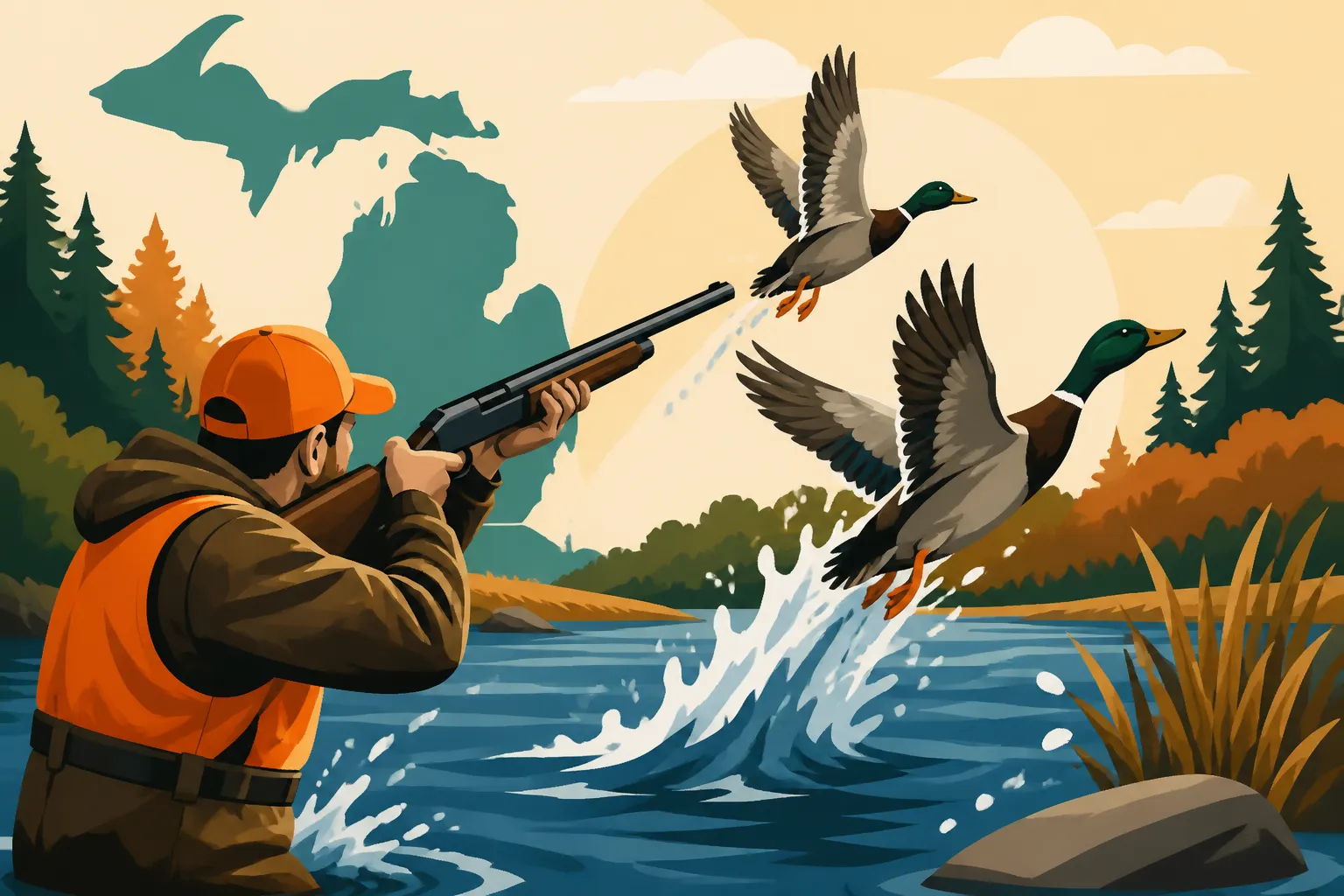
At its core, jump shooting is a form of stalking waterfowl. Instead of waiting for the birds to come to you, you actively pursue them. This usually involves slowly and quietly moving along riverbanks or floating downstream in a small, quiet craft like a canoe or kayak, keeping a sharp eye out for ducks or geese tucked into the bends, behind logjams, or in quiet backwater eddies. The goal is to surprise them, forcing them to flush within shotgun range. It's a game of cat and mouse where you're the predator, constantly scanning, anticipating, and being ready to react the moment a bird lifts off the water.
The appeal of this method is undeniable. It's often far less crowded than popular marshes or managed waterfowl areas, giving you a sense of solitude and adventure that's hard to find elsewhere. It's also incredibly engaging; you're constantly moving, observing, and making decisions. This isn't a sit-and-wait game; it's a seek-and-find mission. However, it's not without its challenges. It demands a good understanding of river dynamics, excellent stealth, and the ability to make split-second decisions when birds explode from cover. It can also be physically demanding, especially if you're navigating rough terrain or wading through cold water for extended periods.
Prime Michigan Rivers and Their Inhabitants
Michigan is crisscrossed by thousands of miles of rivers and streams, from small, winding creeks to wider, slower-moving waterways. While many hold potential, the best ones for jump shooting typically have plenty of natural cover like overhanging trees, undercut banks, logjams, and secluded oxbows where ducks love to loaf and feed. Rivers like the Grand River, Kalamazoo River, Muskegon River, and countless smaller tributaries are prime candidates. Even stretches of larger rivers that wind through more remote or agricultural areas can offer fantastic opportunities.
The primary species you'll encounter are often mallards and wood ducks. Wood ducks, with their incredible agility and preference for timbered waterways, are almost tailor-made for jump shooting in the early season. Mallards will be found throughout the season, especially as colder weather pushes them off larger, open water bodies. Don't be surprised to jump Canada geese, especially on wider river stretches or where cornfields border the riverbanks. During the early September teal season, you might even surprise some blue-winged or green-winged teal hidden in the reeds. These rivers act as crucial corridors and refuges for waterfowl, offering food, rest, and protection from the elements and hunting pressure found elsewhere.
Seasons and Timing for River Hunts
Timing is everything when it comes to jump shooting Michigan rivers. The waterfowl seasons in Michigan are broken down into different zones, and it's vital to check the current Michigan Waterfowl Seasons and Zones for specific dates. However, generally speaking, you can break down river jump shooting into a few key periods:
- Early Season (September/October): This is prime time for wood ducks and resident mallards. Rivers still have ample vegetation, offering excellent cover for birds and hunters alike. The weather is often milder, making for a more comfortable hunt. This is also a fantastic time to scout new stretches of river.
- Mid-Season (November): As the migration kicks into full gear and colder weather starts to freeze up smaller ponds and marshes, more mallards and other puddle ducks will funnel into river systems. The foliage is often down, which can make stealth a bit more challenging, but also improves visibility once birds are in the air. This period often coincides with prime deer hunting, so it's a good alternative or a way to stretch your hunting days.
- Late Season (December/January): This can be some of the most challenging but also the most rewarding jump shooting. Many lakes and marshes will be completely frozen, forcing all remaining waterfowl onto open river sections. These birds can be incredibly wary, having survived weeks of pressure, but finding an open stretch of river packed with ducks on a frigid day is truly special. Just be prepared for the cold; it’s a whole different ballgame.
Weather also plays a significant role. Overcast, windy days are often better, as the wind can mask your sounds and movements, and ducks often prefer to be in more sheltered areas. A light snow can be a hunter's best friend, muffling footsteps and making it easier to spot birds against the white background. Remember, the Michigan Duck Daily Bag Limit will apply, so be sure you know your limits for each species.
Essential Gear for River Hunters
Success in jump shooting often boils down to preparation. Unlike sitting in a static blind, you’re constantly moving, interacting with varied terrain, and needing to react quickly. This requires a specific set of gear designed for mobility, durability, and safety in a dynamic river environment.
Shotguns, Loads, and Chokes
Your shotgun is arguably your most important piece of gear. A reliable, fast-swinging 12 or 20-gauge shotgun is ideal. Many hunters prefer semi-automatic shotguns for their reduced recoil and the ability to get off quick follow-up shots, but a pump-action is certainly up to the task and often more robust for trudging through brush. What's crucial is familiarity and comfort with your chosen firearm, as shots will often be snap shots at fast-moving birds.
When it comes to ammunition, non-toxic shot is mandatory for all waterfowl hunting in Michigan. Steel shot is the most common and economical choice. For ducks, shot sizes like #3 or #4 steel are generally excellent all-around choices. If you anticipate encountering more geese, or just want a bit more punch, #2 or BB steel would be appropriate. Remember, these shots are often at closer ranges, so you don't necessarily need magnum loads. Regarding chokes, a modified or improved cylinder choke is usually perfect. These provide a wider pattern for those close-range flushing shots, increasing your chances of connecting, especially when birds burst from thick cover. An extra-full choke suitable for long-range turkey hunting would be detrimental here.
Clothing, Waders, and Footwear
Dressing for the unpredictable Michigan weather, which often involves cold and wet conditions near water, is paramount. Layers are your best friend. Start with a moisture-wicking base layer, add an insulating mid-layer (fleece or down), and top it off with a waterproof and windproof outer shell. Consider a good quality soft shell or fleece layer that you can shed or add easily. If you want a deeper dive on how to tackle the cold, check out our guide on Layering for a Michigan Deer Stand – many of the principles apply here, even for waterfowl. Camouflage is important to blend in with the riverbank vegetation. Earth tones, browns, and greens that mimic dead leaves and marsh grasses are usually effective.
Chest waders are absolutely essential. You'll be wading through shallow sections, crossing small channels, and retrieving birds from varying depths. Breathable waders are great for comfort, but ensure they are durable enough to withstand snags from brush, barbed wire, or sharp rocks you might encounter. Look for waders with reinforced knees and seat. As for footwear, your wader boots need good traction for slippery river bottoms and muddy banks. Some hunters prefer felt-soled boots for better grip on submerged rocks, but these can be slick on dry ground. Neoprene-lined boots offer excellent insulation in colder water. For even more insights on sturdy footwear for challenging terrain, our article on Boots for Michigan Swamps and Snow offers valuable tips that apply well to river hunting.
Navigation, Retrieval, and Safety Equipment
Knowing where you are, where you can go, and how to get your birds back is critical. A reliable GPS unit or a mapping app like GoHunt or ONX Hunt on your smartphone is invaluable. These tools allow you to pinpoint public land access, identify property boundaries to avoid trespassing, and mark productive spots for future hunts. GoHunt offers excellent public land overlays that can make planning your river adventures much easier. For more information on leveraging digital maps, you might find our article on Using Mi-HUNT on a Phone helpful.
Retrieving downed birds can be tricky in a river. If you have a well-trained retriever, they are an invaluable asset. Without a dog, you’ll need to be prepared to wade, sometimes into surprisingly deep or swift water, or use a long retrieve pole. A small, quiet canoe or kayak can be a game-changer for covering long stretches of river silently, especially if you plan to float downstream. If using any watercraft, a PFD (personal flotation device) or life jacket is non-negotiable, even in shallow water – accidents happen fast. Other critical safety items include a basic first aid kit, a dry bag for your phone, keys, and wallet, a whistle, and a length of rope. Let someone know your hunting plan, including your intended route and expected return time.
Table: Jump Shooting River Methods Comparison
| Feature | Walking the Banks | Floating in a Small Craft (Canoe/Kayak) |
|---|---|---|
| Control/Stealth | High control, easier to move silently through brush | Excellent stealth on water, very quiet approach |
| Coverage | Slower, more thorough for small pockets | Faster, covers more miles, good for wider rivers |
| Physical Demands | High (walking, wading through varying terrain) | Moderate (paddling/poling, less walking) |
| Access | Requires bank access points, easy entry/exit | Requires put-in/take-out points, shuttle vehicle often needed |
| Retrieval | Primarily wading or dog, can be challenging | Easier from boat, but current can carry birds away |
| Best For | Smaller, shallower, brushy rivers; meticulous hunting | Wider, deeper, longer river stretches; covering ground |
| Advantages | Less gear needed, more intimate experience | Covers more water, less physical strain, can be very quiet |
| Disadvantages | Physically demanding, slower pace, limited by bank access | Requires boat/shuttle, current can be tricky, more gear |
Mastering the Art of the River Stalk
Jump shooting is less about brute force and more about finesse and understanding the nuances of river dynamics and waterfowl behavior. It's a constant mental game, demanding patience, observation, and the ability to adapt on the fly.
Approaching the Water and Reading the River
Stealth is your most potent weapon. When walking the banks, move slowly and deliberately. Use any available cover – trees, brush, natural dips in the terrain, and especially river bends – to conceal your approach. Try to stay out of sight until you're ready to make your move. A key tactical consideration is to generally approach into the wind. This keeps your scent from carrying ahead of you and often causes flushing birds to fly into the wind, slowing them down slightly for a better shot. If possible, try to keep the sun at your back, making it harder for birds to see you and easier for you to see them.
Learning to "read" the river is crucial. Ducks and geese aren't just anywhere; they seek out specific types of water and cover. Look for slack water, particularly on the inside of bends or in backwater eddies, where the current is minimal. Undercut banks, fallen trees, logjams, beaver lodges, and dense cattail or willow thickets are prime spots where birds will loaf, feed, and seek refuge. Small feeder creeks or ditches that drain into the main river can also hold hidden birds. These are the "ducky" spots, the places where you should slow down, be extra vigilant, and anticipate a flush. Keep in mind that some areas are designated Michigan River Corridor Public Land, offering excellent access.
The Flush and Follow-up
This is the moment of truth. As you round a bend or creep over a rise, be absolutely ready for birds to explode into the air. Ducks, especially wood ducks, are incredibly fast and can go from zero to full throttle in a blink. Avoid rushing your shot. Instead, focus on a single bird, swing through it, and take the shot. Since they'll likely be going away or quartering away, aim for the front of the bird, letting your lead do the work. The beauty of jump shooting is often the close range, making clean kills more likely with proper technique.
If you're hunting with a partner, communicate clearly before the flush. One common strategy is for the first hunter to take the lead bird, and the second hunter to take the next one, or a specific bird on the right or left. Always be prepared for a follow-up shot. Ducks can be tough, and even with a good hit, they might need a second shot to anchor them. Immediately after the shot, mark where the bird falls. In a river, a downed bird can quickly float downstream or get lost in thick bankside cover, making retrieval difficult. Move quickly and decisively to retrieve your bird, ensuring it doesn't become lost.
Floating vs. Walking Tactics
Both walking the banks and floating in a small craft are effective jump shooting methods, and each has its distinct advantages and disadvantages.
Walking the banks gives you more control over your pace and allows you to meticulously investigate every small pocket and hidey-hole that might hold a duck. It's often quieter if you're careful, as you're not generating any noise from paddles or hulls against the water. This method is ideal for smaller, shallower, or extremely brushy rivers where navigating a boat would be cumbersome or impossible. However, it's more physically demanding, requiring constant walking, climbing, and wading. You're also limited by public access points and can encounter more private land issues.
Floating in a small, quiet canoe or kayak allows you to cover significantly more ground with less physical exertion, especially on wider or deeper rivers. Your approach from the water can be incredibly stealthy, often surprising birds that are accustomed to human activity only from the banks. The current helps you move, and you can simply drift silently around bends. The main drawback is the need for a put-in and take-out point, often requiring a shuttle vehicle. You also have less control over your exact position once the current takes hold, making some precise stalking difficult. Many hunters combine these methods, walking sections of a river and then using a hidden boat to float other stretches.
Rules, Ethics, and Conservation
Like all forms of hunting, jump shooting Michigan rivers comes with its own set of rules, ethical considerations, and a responsibility towards conservation. Knowing and respecting these guidelines ensures a safe, legal, and sustainable hunting experience for everyone.
Michigan Waterfowl Regulations
Before you even think about hitting the river, ensure you have all the necessary licenses and stamps. In Michigan, this includes a Base License, a Michigan Waterfowl License, a Federal Duck Stamp, and registering for the Harvest Information Program (HIP) certification. You can find detailed information on these requirements in our comprehensive guide on Michigan Hunting Licences and What They Cost. These are not optional; they are critical for legal hunting and contribute directly to waterfowl conservation efforts.
Pay close attention to daily bag limits and possession limits, which vary by species. For instance, the daily bag for mallards often has restrictions on the number of hens you can take. Exceeding these limits is a serious offense. Also, be acutely aware of legal shooting hours, which typically run from a half-hour before sunrise to sunset. Attempting to hunt outside these hours is illegal and unethical.
One of the most important regulations, especially in populated areas, concerns safety zones. Michigan law dictates that you cannot discharge a firearm within 150 yards (450 feet) of an occupied dwelling, building, or barn without the owner's permission. Rivers often flow through a mix of remote and developed areas, so always be mindful of homes or cabins along the banks. Know your Michigan Safety Zone Rules intimately.
Respecting the Resource and Other Users
Jump shooting rivers often means hunting in areas that are also used by other outdoor enthusiasts, such as kayakers, canoeists, anglers, hikers, and property owners. Being courteous and respectful is paramount. Give anglers a wide berth, don't blast through someone's fishing spot, and be mindful of noise. Remember, public access is a privilege, and ensuring positive interactions helps maintain a good public image for hunters.
Always confirm land ownership. While the navigable waters themselves are generally public, the riverbanks above the ordinary high-water mark may be private property. Using mapping apps like GoHunt is essential for identifying public land boundaries. Never trespass; if you need to access private land for retrieval or to continue your hunt, always seek permission first. Our article on Michigan Trespass and Permission Law provides more detailed guidance.
Finally, practice "leave no trace" principles. Pack out all your spent shotgun shells, trash, and any other litter you might generate. Leave the riverbanks cleaner than you found them. This ensures the beauty and wildness of Michigan's rivers remain intact for future generations of hunters and outdoor enthusiasts. Supporting organizations like Ducks Unlimited or the Michigan United Conservation Clubs also plays a direct role in habitat conservation, which benefits all waterfowl. Understanding Michigan Waterfowl Migration Timing can also give you a deeper appreciation for the journeys these birds undertake.
Carcass Handling and Reporting
While Michigan does not require hunters to report waterfowl harvests in the same way they do for deer or bear, ethical carcass handling is still crucial. Once you've retrieved your bird, you can field dress it to cool the meat, especially on warmer days. Carry game bags to keep your birds clean and protected. Store them properly to prevent spoilage.
Preventing the spread of wildlife diseases is another critical aspect. If you notice any signs of illness in a harvested bird, such as lethargy, disoriented behavior, or unusual growths, report it to the Michigan DNR. Proper cleaning and disposal of carcasses, away from water sources and public areas, helps mitigate potential disease transmission. For more general guidance on equipment for handling your harvest, our article on Meat Care Gear for Michigan Hunters could be helpful, as many principles translate from deer to waterfowl.
Jump shooting Michigan rivers offers a unique, exciting, and rewarding way to pursue waterfowl. It’s an active, engaging method that reconnects you with the landscape in a profound way. With the right preparation, gear, and respect for the rules and the resource, you can unlock a whole new dimension of Michigan hunting.
Disclaimer
Please note that hunting regulations, seasons, and licensing requirements in Michigan are subject to change. Always consult the latest Michigan Department of Natural Resources (DNR) hunting digests and regulations before planning any hunting activity. This guide is for informational purposes only and does not supersede official DNR regulations. Ensure you understand and comply with all current laws.