Grouse Hunting Michigan Aspen Cuts
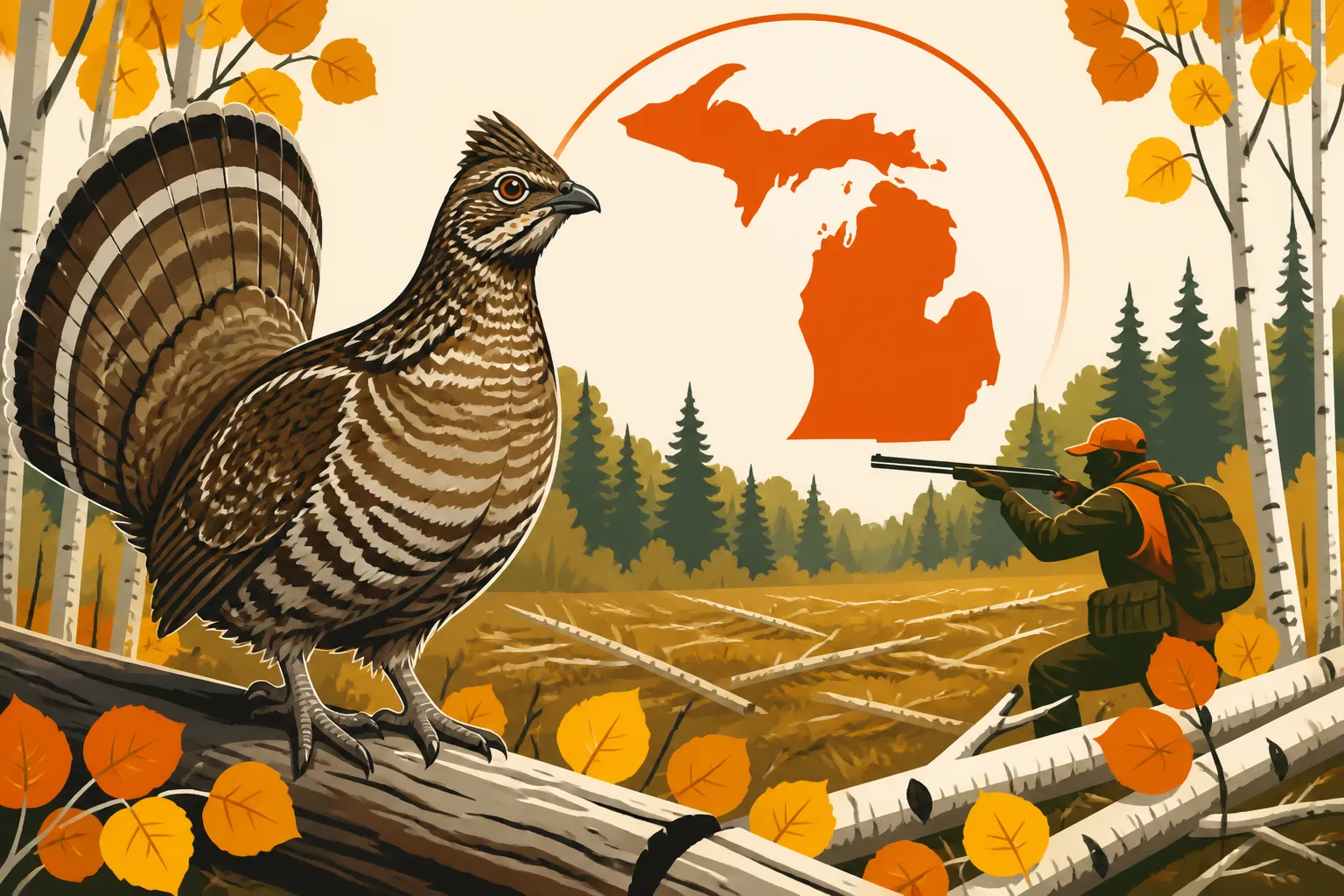
Chasing ruffed grouse in Michigan's sprawling forests offers some of the most thrilling upland hunting experiences, but finding these elusive birds can feel like searching for a needle in a haystack. Many hunters struggle to pinpoint exactly where grouse prefer to spend their time, often walking miles through seemingly perfect cover only to hear nothing but their own footsteps. This comprehensive guide is designed to cut through that frustration, focusing specifically on how to effectively hunt ruffed grouse in Michigan's prime aspen cuts, offering proven strategies and insights to increase your chances of a successful flush.
Understanding Aspen Cuts: Why Grouse Love Them
Aspen stands are not all created equal when it comes to holding ruffed grouse. It's a nuanced dance between the age of the cut, the density of the regeneration, and the surrounding habitat. Understanding this ecosystem is the first step to becoming a more effective grouse hunter. The unique characteristics of young aspen growth provide everything a grouse needs to thrive, from food to shelter from predators.
The Habitat Sweet Spot
Grouse are creatures of cover, and young, regenerating aspen stands offer that in spades. When a mature aspen stand is cut, it often regenerates in incredibly dense thickets. We're talking about stems so close together you can barely walk through them, often reaching heights of 10 to 20 feet within a few years. This extreme density is a grouse's best friend. It provides horizontal cover from aerial predators like hawks and owls, and vertical cover from ground predators like coyotes and bobcats. A grouse can often duck and weave through these thickets with remarkable agility, leaving a human hunter or even a dog struggling to keep up.
The ideal age for an aspen cut to hold grouse usually ranges from 8 to 25 years post-harvest. Younger than 8 years, and the stems might not be dense enough or tall enough to provide adequate cover. Older than 25-30 years, and the stand starts to thin out as individual trees grow larger and the canopy closes, reducing the understory cover grouse rely on. For more detailed information, check out our guide on How Old a Cut Should Be for Grouse. These cuts often create a patchwork of different age classes within the broader forest, which is excellent for grouse, as they can move between areas with varying cover and food sources. This diverse habitat is a direct result of forest management practices, and understanding Aspen Management and Michigan Grouse can give you a significant advantage in predicting where birds will be.
Beyond just cover, aspen cuts are also food factories for grouse. Young aspen buds are a critical winter food source, particularly the catkins of male aspen trees. In fall, grouse also feed heavily on various berries, seeds, and insects found within the undergrowth of these young stands. The vibrant ground cover, often rich with clover, ferns, and other herbaceous plants that thrive in the increased sunlight, provides a buffet for grouse and the insects they eat.
Reading the Timber: Signs of Life
Stepping into an aspen cut, it can often feel like a uniform wall of timber. However, a keen eye can spot subtle differences that indicate grouse activity. Look for areas where the density changes, perhaps a slightly thicker patch of aspen intertwined with dogwood or hazelnut. These transition zones, especially where the cut meets a mature hardwood stand, a swamp edge, or a conifer block, are often hotspots. Grouse will use these edges to access different food sources or to escape to denser thermal cover in cold weather.
Another tell-tale sign is the presence of drumming logs. Male grouse establish drumming territories, often on a downed log, stump, or even a rock, from which they perform their mating display. While most active in spring, these logs indicate consistent grouse presence. Look for a log with a clear area around it, where the grouse has a good vantage point but is still surrounded by thick cover. You might even find droppings on the log. If you find one, it's a good bet grouse are in the vicinity, perhaps even using that same area in the fall.
When you're scouting, whether in person or using online mapping tools, pay close attention to the topography. Slight rises or depressions within the cut can funnel grouse movement. Also, consider the water sources nearby. While grouse don't need open water like ducks, areas with consistent moisture often have more diverse undergrowth and insect life, attracting birds. A good resource for understanding grouse populations and trends across the state is our article on Michigan Ruffed Grouse Numbers Today, which can help set expectations for certain regions. Using a service like GoHunt, you can overlay public land boundaries with satellite imagery to identify these distinct habitat types and potential transition zones, making your pre-hunt scouting much more efficient.
Strategic Approaches to Hunting Aspen Cuts
Hunting aspen cuts isn't about aimlessly wandering; it's about systematically covering ground, anticipating flushes, and being ready to react. The sheer density of these areas demands a methodical approach, whether you're hunting with a dog or on foot.
Grid Patterns and Lane Hunting
The most effective way to cover a large aspen cut is often by employing a grid pattern. This means walking straight lines through the cover, then turning and walking another straight line parallel to the first, essentially "combing" the area. The distance between your parallel lines depends on the density of the cover and whether you have a dog. If you're hunting without a dog, you might need to keep your lines closer, perhaps 20-30 yards apart, to ensure you're flushing birds within shooting range. For those interested in how to tackle this challenge, we have a specific guide on Flushing Grouse Without a Dog.
When hunting with a partner or a small group, you can implement a "lane hunting" strategy. Two or three hunters walk abreast, maintaining visual and auditory contact, effectively covering a wider swath of timber. This pushes birds forward, creating more opportunities for flushes. The key is to walk slowly and deliberately, pausing frequently. Grouse are known for holding tight, often letting hunters walk right past them. A sudden stop or a change in pace can sometimes be just the trigger needed for a nervous bird to flush. This is where patience truly pays off.
Another crucial aspect is understanding how grouse flush. They typically erupt with explosive speed, flying horizontally through the thick cover, often presenting only a momentary window for a shot. Don't expect long, open shots. Most grouse shots in aspen cuts are fast, close-range affairs, often through a screen of twigs and branches. This makes quick gun handling and instinctive shooting paramount. Many experienced grouse hunters will tell you they rarely see the bird clearly until after the shot.
Working the Edges and Transitions
While the dense heart of an aspen cut is important, the edges and transition zones are often where you'll find the most consistent action. These areas offer grouse a blend of dense cover for protection and easier access to diverse food sources. Imagine an aspen cut bordering a mature oak ridge. Grouse will often move from the thick aspen to feed on acorns in the oaks, especially during the morning and late afternoon.
Key transition areas to focus on include:
- Aspen to Hardwood: Where young aspen meets older oak, maple, or beech stands.
- Aspen to Conifer: Especially spruce, fir, or cedar swamps. These provide excellent thermal cover in cold weather and escape routes. Understanding how to interpret mapping data can really help here. When you use an app like GoHunt, zoom in and look for those sharp contrasts in cover types. You're looking for that distinct line on the map where the light-green aspen gives way to the darker green of conifers or the varied hues of hardwoods.
- Aspen to Openings/Clearings: Small food plots, old logging roads, or natural clearings within or adjacent to the cut. Grouse might venture into these areas to dust bathe, feed on insects, or simply to sun themselves.
- Aspen along Waterways: Creeks, rivers, or marshy edges. These areas often have a mix of aspen, alder, and other berry-producing shrubs, creating ideal habitat.
When hunting these edges, it's often productive to walk just inside the denser aspen, parallel to the transition. This positions you to catch birds that might be moving between cover types or are holding tight along the edge before flushing into the thicker stuff. Remember, grouse often try to put the densest cover between themselves and a perceived threat. By staying just inside the aspen, you force them to flush out into slightly more open areas, or at least parallel to your line of travel, potentially giving you a clearer shot.
A good strategy is to use the terrain and cover to your advantage. If there's a slight rise, approach from below. If there's a gully, walk along its rim. The goal is to always be mentally prepared for a flush, knowing that it could happen at any moment, often when you least expect it.
Gear and Tactics for Michigan Grouse Hunters
Successful grouse hunting in Michigan's aspen cuts isn't just about knowing where the birds are; it's also about being properly equipped and having the right mindset. The gear you choose can make a significant difference in your comfort, safety, and ultimately, your success.
Shotgun and Ammunition Choices
For grouse in thick aspen, a fast-handling, lightweight shotgun is paramount. Most experienced grouse hunters favor 20-gauge or 28-gauge shotguns, often in an over/under or side-by-side configuration, though semi-autos and pumps are also popular. The key is quick target acquisition and ease of carry through dense brush. A shorter barrel, typically 26 inches or less, helps with maneuverability in tight quarters. For a deeper dive into selecting the right firearm, consider our article on the Best Shotgun Gauge for Michigan Grouse.
Choke choice is also critical. Given the close-range nature of most grouse flushes, an open choke like improved cylinder or skeet is generally preferred. This allows for a wider pattern at close distances, increasing your chances of connecting with a fast-flushing bird before it disappears into the cover. Some hunters even run skeet in both barrels of a double gun, or an improved cylinder/modified combination for slightly longer shots. Our guide on Choke Choice for Fast Flushes provides more specific insights. As for ammunition, light game loads with 7.5 or 8 shot are standard. You want enough pellets to ensure a clean kill without over-penetrating and destroying too much meat.
It's a common rookie mistake to bring a long-barreled magnum waterfowl gun into grouse cover. You'll quickly find yourself snagging branches, struggling to shoulder the gun, and missing those snap shots. Keep it light, quick, and open-choked for the best results in the Michigan woods.
Essential Apparel and Navigation
Dressing appropriately for Michigan grouse hunting is crucial, as you'll be busting through thick brush, often in variable autumn weather. Durable, briar-resistant brush pants or chaps are an absolute must. Without them, your legs will be shredded by thorns, brambles, and sharp branches in no time. Layering is also key, as you'll be expending a lot of energy walking, but also standing still and listening. A good base layer, a warm but breathable mid-layer, and a durable, water-resistant outer shell will serve you well. Our guide on Upland Gear for Michigan Grouse Cover offers a comprehensive look at what to wear.
Footwear is another non-negotiable. You need comfortable, waterproof, and supportive boots that can handle uneven terrain, mud, and potentially shallow water. Many grouse hunters prefer knee-high rubber boots for their waterproof qualities and protection from thorns, while others opt for sturdy leather hiking boots. No matter your choice, ensure they are broken in and comfortable for miles of walking. For specific recommendations, check out our piece on Boots for Walking Michigan Aspen Cuts.
Navigation in dense aspen can be disorienting. A reliable GPS unit or a smartphone with a robust hunting app like GoHunt is indispensable. Pre-load your maps, mark your vehicle's location, and use tracking features to ensure you can always find your way back. Aspen cuts can look remarkably similar from all directions, and it's easy to get turned around, especially when focused on a dog or a bird. Don't rely solely on cell service, as many prime grouse areas are in remote locations with spotty reception. Always carry a compass and a physical map as a backup. A small, lightweight daypack with water, snacks, a first-aid kit, and a whistle for signaling is also highly recommended.
Beyond the Flush: Post-Shot and Planning
The moment of the flush and the shot is exhilarating, but the hunt isn't over until the bird is in hand and properly cared for. Ethical hunting practices and smart planning extend well beyond pulling the trigger.
Retrieving Your Bird and Field Care
When a grouse falls in thick cover, the immediate priority is to mark the spot precisely and go directly to it. Even a bird that appears to be cleanly hit can disappear into the undergrowth surprisingly quickly. If you have a retrieving dog, this task becomes significantly easier, as they can often pinpoint the bird even if you didn't see it drop. If hunting without a dog, pay attention to a specific tree, stump, or landmark near where you saw the bird fall. Walk a straight line to that point and then begin a systematic search, often on your hands and knees. It's frustrating to lose a bird, so take your time and be thorough.
Once you have the bird, proper field care is essential to ensure quality table fare. Grouse meat is delicate and lean, so it's best to cool it down as quickly as possible. Many hunters immediately gut the bird in the field, which helps dissipate body heat. If you have a small game vest with a large game pouch, that's ideal. On warmer days, or if you have a long walk back to the vehicle, carrying a small game bag specifically designed to vent heat can be beneficial. Avoid piling multiple birds on top of each other, especially if they are still warm, as this can trap heat and degrade the meat quickly.
Scouting and Future Success
The best grouse hunters are constantly scouting, even when they aren't actively hunting. Pay attention to past hunting success, both yours and others'. Did you find birds in a specific age of aspen? Was there a particular type of transition zone that was hot? Keep notes, mark locations on your GoHunt app or GPS, and build a mental library of productive cover.
Michigan's state forests and state game areas offer vast opportunities for grouse hunting. Utilize resources like Using the Michigan Mi-HUNT Map to identify public land tracts with recent timber harvest activity. Timber cuts are usually well-documented, and you can often find information on their age and size. Look for the distinct squares or rectangles on satellite imagery that denote recent clear-cuts or select harvests. Often, the DNR or local forest service websites will have maps detailing recent and upcoming timber sales. This is invaluable information for identifying prime future grouse habitat.
Also, be mindful of hunting pressure. Popular areas, especially those easily accessible from main roads or two-tracks, can get heavily hunted, especially early in the season. Don't be afraid to walk further, deeper into the cover. Grouse in remote, less-pressured areas are often less wary and might hold tighter, providing better shot opportunities. Our article on Finding Ground Others Walk Past can provide more strategies for locating less-pressured areas. Sometimes, all it takes is a willingness to push a little harder and venture a bit deeper into the thick stuff to find those overlooked pockets of grouse.
| Aspen Cut Age (Years Post-Harvest) | Grouse Habitat Quality | Notes |
|---|---|---|
| 1-7 | Poor to Fair | Too young, not enough dense cover for protection. |
| 8-15 | Excellent | Peak density, ideal cover, abundant food sources. |
| 16-25 | Good | Still good cover, some thinning, excellent for drumming logs. |
| 26-35 | Fair to Poor | Canopy closing, understory thinning, less dense cover. |
| 35+ | Poor | Mature forest, little understory cover, not preferred by grouse. |
Remember, grouse populations can fluctuate with habitat changes and cycles. Stay informed about Michigan Ruffed Grouse Cycles and population trends in your preferred hunting areas. By continually adapting your approach and leveraging all available resources, you'll significantly enhance your success and enjoyment of grouse hunting in Michigan's beautiful aspen country.
Disclaimer
The information provided in this guide is for informational purposes only and is not a substitute for official regulations. Always consult the Michigan Department of Natural Resources (DNR) official hunting regulations and local ordinances before engaging in any hunting activities. Hunting involves inherent risks, and safety should always be your top priority.