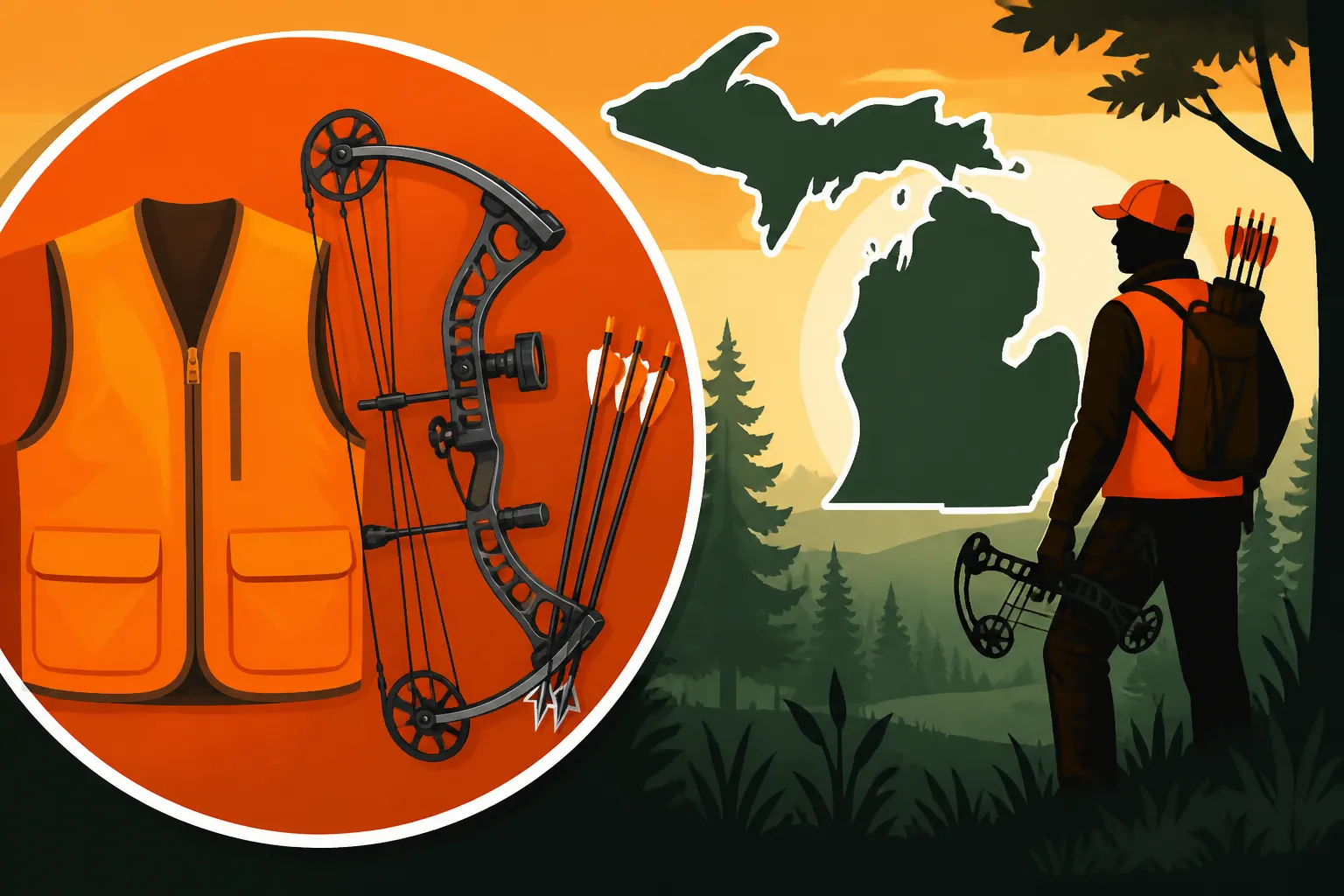
Orange Requirements for Archery Hunters
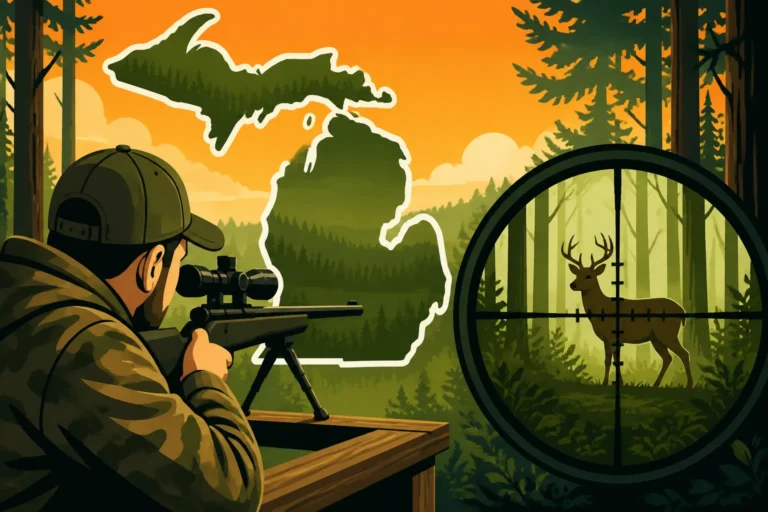
Every fall, Michigan bowhunters hit the same wall of confusion: you spent October perfecting a camo setup that disappears against oak bark, and then November 15 arrives and suddenly someone at deer camp swears you need blaze orange in your treestand. Do you? This guide explains exactly when archery hunters in Michigan need orange, how much, and how to wear it without wrecking your hunt.
Why Orange Rules Confuse So Many Michigan Bowhunters
Let’s be honest about why this topic causes so many arguments. Most of us learned to hunt with a bow precisely because it lets us slip into the woods quietly, wear full camouflage, and hunt close to deer without a crowd. Orange feels like the opposite of everything bowhunting is supposed to be. On top of that, Michigan’s archery season is split around the firearm season, so a single bowhunter can spend part of the fall in camo-only conditions and part of it sharing the woods with tens of thousands of rifle and shotgun hunters.
If you want a refresher on how that calendar works, start with How Michigan’s Archery Split Works. The short version: archery deer season opens October 1, pauses for the regular firearm season from November 15 through November 30, and reopens December 1, running through January 1. During that December stretch, though, the muzzleloader season and, in some areas, a late antlerless firearm season also run. That overlap is where most of the orange confusion comes from.
The Core Principle Behind the Law
Michigan’s hunter orange requirement is built around one idea: when people are in the woods with firearms, every hunter needs to be visible to every other hunter. The law does not care how you personally plan to kill your deer. It cares whether a hunter with a rifle, shotgun, or muzzleloader could be moving through the same cover at the same time.
That is why the rule is tied to firearm seasons and firearm hunting rather than to the weapon in your hands. A bowhunter sitting 20 feet up an oak on November 16 is surrounded by firearm hunters, even if that bowhunter never touches a gun. For the full legal language and every species-specific detail, read Michigan Hunter Orange Rules alongside the current Michigan Hunting Digest.
What Hunter Orange Actually Means in Michigan
When Michigan says hunter orange, it means a cap, hat, vest, jacket, or rain gear that is hunter orange and visible from all sides. It is not enough to tie a scrap of orange tape to your quiver or have a small patch on your pack. The garment has to be worn, and it has to be visible from every angle another hunter might approach from.
Camouflage orange is allowed, provided at least half of the visible surface area is hunter orange. That detail matters a lot to bowhunters, because orange camo breaks up your outline far better than a solid blaze vest while still meeting the legal standard. The specifics of that percentage are covered in Michigan’s Fifty Percent Orange Rule, and it is worth reading before you buy anything new.
When Archery Hunters Must Wear Orange
Here is the practical breakdown most bowhunters are actually looking for. The general rule is simple to state: if you are hunting during daylight hours on any day when a firearm deer season is open in the area you are hunting, you need orange, even with a bow or crossbow in hand. Outside those windows, archery-only deer hunting does not require orange.
Season-by-Season Breakdown
The table below summarizes how the typical Michigan deer calendar affects bowhunters. Season dates can shift from year to year and by zone, so treat this as the shape of the calendar and confirm every date in the current digest.
| Time of Year | What Is Open | Orange Required for Bowhunters? | Notes |
|---|---|---|---|
| Liberty Hunt weekend in September | Youth and qualifying hunters with firearms | Yes, for any deer hunter afield that weekend | Falls before the archery opener, but matters if you are mentoring |
| Early antlerless firearm weekend in September | Firearm antlerless deer in eligible areas | Yes, for any deer hunter afield in those areas | Also falls before the archery opener in a typical year |
| Early archery, October 1 to November 14 | Archery and crossbow deer | No, unless a firearm deer season is open where you hunt | Small game hunters with firearms will be in the woods wearing orange |
| Regular firearm season, November 15 to 30 | Rifle, shotgun, and archery | Yes | Bowhunters hunting deer must wear orange |
| Late archery, December 1 to January 1 | Archery, muzzleloader, and in some areas late antlerless firearm | Yes, on days a firearm deer season is open where you hunt | Check zone-specific muzzleloader dates |
| Small game with a firearm, any time | Squirrel, rabbit, grouse, and similar | Yes, for the firearm hunter | Your bow hunt is unaffected unless a firearm deer season is open |
The single biggest mistake is assuming that once December 1 arrives, you are back to camo-only archery. In much of Michigan, muzzleloader season runs at the same time as late archery, which means you are still hunting during a firearm deer season. If you plan to bowhunt in December, read Hunting Michigan’s Late Archery Season and check the muzzleloader dates for your zone before you head out.
Crossbow Hunters Follow the Same Rules
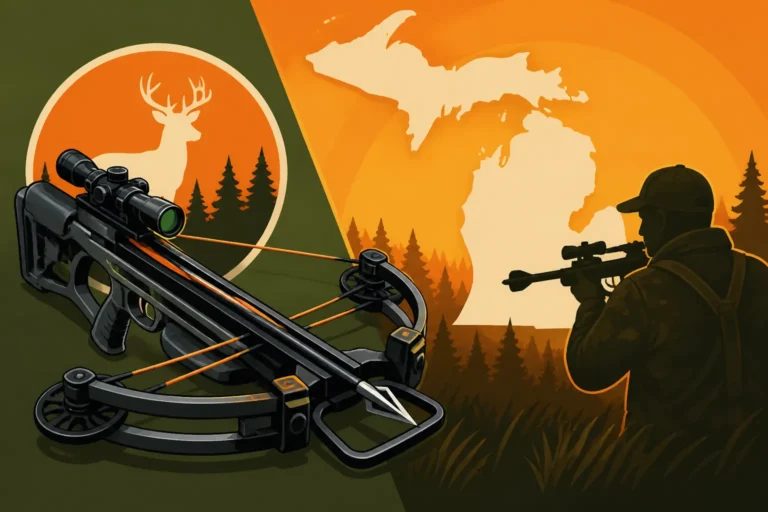
Crossbows are legal during Michigan’s archery deer season for properly licensed hunters, and from an orange standpoint, a crossbow is treated just like a vertical bow. If a firearm deer season is open, a crossbow hunter needs orange. If it is the archery-only portion of the year, a crossbow hunter does not. The finer points of crossbow legality are laid out in Crossbow Rules During Michigan Archery Season.
Treestands, Saddles, and Ground Blinds
A question we hear constantly: “I’m 20 feet up in a stand. Do I really need orange up there?” Yes. The requirement applies to you as a hunter, not to whether you are standing on the ground. Elevation does make you less likely to be in the line of fire, but the law does not carve out an exemption for elevated hunters.
Ground blinds deserve special attention. Sitting inside a fully enclosed blind hides most of your orange from approaching hunters, which defeats the purpose. Many experienced Michigan hunters hang an orange band or panel on the outside of their blind during firearm season as a courtesy and a safety measure, especially on public land where foot traffic is heavy. Requirements for blinds on public ground have changed over the years, so check the current digest before your hunt. For the general rules about blinds on state ground, see Using a Ground Blind on Michigan State Land.
How to Wear Orange Without Ruining Your Bowhunt
Now for the part that frustrates bowhunters most. You have accepted that you need orange during firearm season, but you also need to get within 20 to 30 yards of a deer that sees color differently than we do. The good news is that the problem is smaller than it feels.
How Deer Actually See Orange
Whitetails have limited color vision compared to humans. Their eyes are more sensitive to the blue end of the spectrum and much less sensitive to longer wavelengths like red and orange. To a deer, blaze orange tends to look like a muted tone rather than a glowing beacon. What deer pick up much more readily is movement, a solid block of shape, and garments that reflect ultraviolet light from certain laundry detergents.
That means the real risks with orange are not the color itself but two things you can control. First, a solid orange vest creates a large, uniform blob that does not break up your outline. Second, orange clothing washed in detergent with brighteners can glow under certain light conditions. Use a UV-free wash and store your hunting gear in a scent-free tote.
Hat, Vest, or Orange Camo
Michigan lets you meet the requirement with a cap, hat, vest, jacket, or rain gear. Each option has trade-offs for an archery hunter, and the subject gets fuller treatment in Orange Hats Versus Vests in Michigan. Here is how they compare from a bowhunter’s seat.
| Option | Strengths for Archery | Weaknesses for Archery |
|---|---|---|
| Orange hat or cap only | Minimal bulk, no interference with bowstring or harness | Less visible from below and at long range; check that it is visible from all sides |
| Solid blaze vest | Highly visible, inexpensive, easy to layer over camo | Can snag a bowstring, adds a uniform block of color |
| Orange camo vest | Breaks up outline, meets the rule if at least half is orange | Must confirm the percentage of orange on the pattern |
| Orange camo jacket | Warm, no extra layer to manage | Bulk can affect draw length and string clearance |
| Orange rain gear | Doubles as weather protection | Can be noisy in some fabrics |
A lot of seasoned bowhunters land on a combination: an orange hat plus a mesh orange camo vest worn over their normal camo layers. The mesh vest is quiet, adds almost no bulk, and slips over a safety harness without trouble. If you are building out a cold-weather system, Layering for a Michigan Deer Stand shows how to fit a vest in without overheating on the walk in.
Clearing the Bowstring
Before you ever climb a tree in orange, practice in it. Put on your full late-season setup, including your harness, and shoot at least a dozen arrows in the backyard. Pay attention to these points:
- Check that the vest does not ride up into the string path when you raise and draw your bow.
- Confirm that zippers, pull tabs, and vest pockets lie flat on your bow-arm side.
- Make sure your safety harness tether does not trap the vest in a way that shifts it into the string at full draw.
- Use an armguard if the vest material is loose around your forearm.
- Shoot from a seated position as well as standing, since a seated shot changes how fabric drapes.
That last step catches a lot of hunters by surprise. A vest that clears the string perfectly while standing can easily catch the string from a seated position in a saddle or stand. For more on tree safety gear that has to work alongside your orange, see Safety Harnesses and Lifelines.
Practical Scenarios Michigan Bowhunters Run Into
Rules make more sense when you see them applied. Here are a few common situations we hear about from readers across the state.
Scenario One: The Thanksgiving Weekend Bowhunter
You live near Lansing, hunt a small private woodlot with your bow, and only get free time over Thanksgiving weekend. That weekend falls inside the regular firearm season, so you need orange even though you are carrying a compound. Neighbors on adjacent parcels are almost certainly hunting with shotguns or rifles. Wear your orange hat and vest from the moment you leave the truck until you are back at it.
Scenario Two: The December Swamp Sit
You are bowhunting a swamp edge in the northern Lower Peninsula during the second week of December. Muzzleloader season is open in that zone, and you may share the swamp with someone carrying a muzzleloader. Orange is required. Many hunters drop it here because the woods feel quiet after the November rush, but quiet woods are not empty woods. Before you go, scout the area with a mapping tool such as GoHunt so you know where the nearest roads and access points are, since that is where other hunters are most likely to enter. Reading Muzzleloader Tactics in December Cold will also give you a sense of how muzzleloader hunters tend to move.
Scenario Three: Mid-October in the Upper Peninsula
You are hunting a remote cut in the UP in mid-October. No firearm deer season is open, so orange is not required for your bow hunt. However, grouse hunters with shotguns are in the same woods, and they must wear orange. Some bowhunters choose to wear an orange hat on the walk in and out anyway, then remove it once they are settled in the stand. That is legal and is a smart habit on busy public land.
Scenario Four: Bowhunting With a Youth Hunter
If you are mentoring a youth hunter during the Liberty Hunt weekend, both of you should be in orange because a firearm deer season is open. The digest spells out exactly what is required of a mentor who is not carrying a weapon, but there is no good reason to be the one person in the woods without it. Getting kids used to the routine early builds safer habits for life. See Hunting the Liberty Hunt With a Youth for more on making that weekend a success.
Planning Your Season Around Orange Days
The easiest way to stay compliant is to mark your calendar before the season starts. Pull the dates from the current digest and highlight every day a firearm deer season is open in the zones you hunt. Some hunters also use GoHunt or a similar planning service to layer season information over their hunting areas and build a simple season schedule. If you use one of these tools, check the provider’s own page for current features and pricing, and always cross-check the dates with the Michigan DNR digest, since that is the final authority.
Keep one orange hat and one orange vest permanently stored in your archery pack. That way, if a plan changes and you find yourself in the woods on a firearm day, you are never caught without it. A small zippered bag in the bottom of your pack takes up almost no room. Whether you use GoHunt, a paper calendar, or both, the habit matters more than the tool.
Disclaimer
This article is for general informational purposes only and does not constitute professional advice. Laws, prices and regulations vary by location and change over time. Consult a qualified professional for guidance on your specific situation.