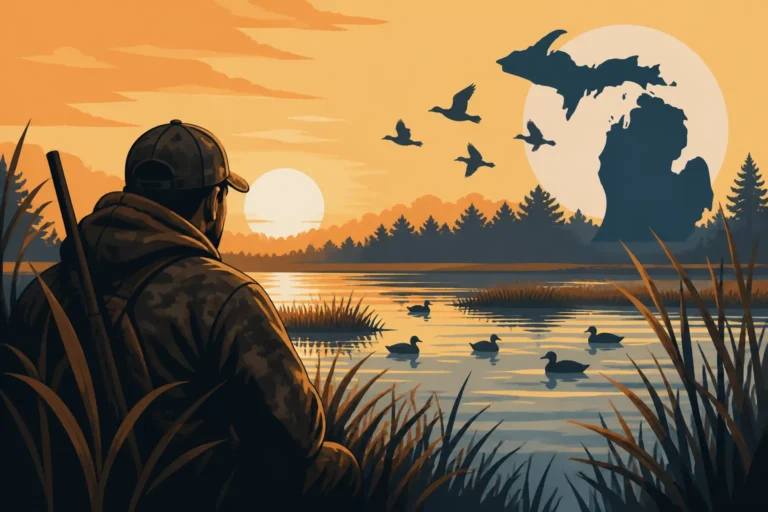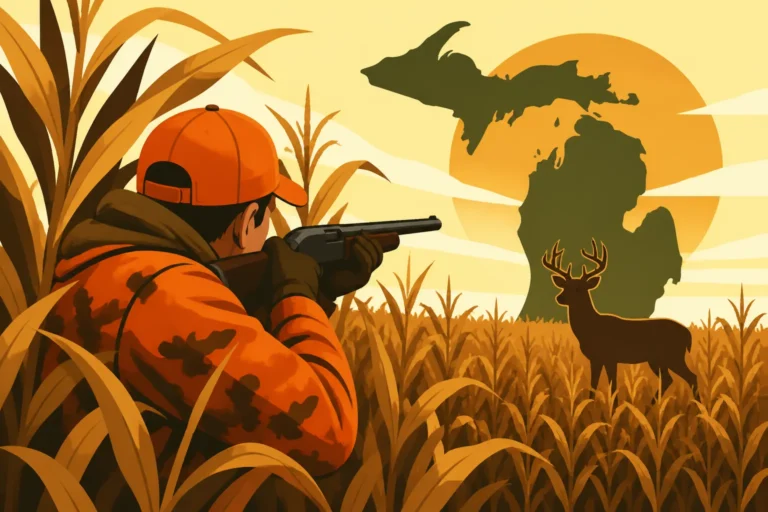
Field Hunting Geese in Southern Michigan
The crisp chill of a southern Michigan morning can be one of the most exhilarating times to be in the field, but nothing is quite as frustrating as watching a perfect V of geese set their wings, only to suddenly flare at the last moment. These birds are smart, constantly changing their patterns, and field hunting them successfully takes more than just a handful of decoys and a lucky guess. This guide is dedicated to helping you decipher the often-mystifying world of Canada goose behavior in our farm country, giving you the tools and tactics to consistently put geese in your bag.
The Behavior of Southern Michigan Geese and Their Haunts
Understanding the geese you're pursuing is the absolute bedrock of successful field hunting. Southern Michigan is a melting pot for Canada geese, hosting both year-round residents and transient migratory flocks. Their habits, their preferred hangouts, and how they react to pressure are all critical pieces of the puzzle that every hunter needs to put together.
Resident Versus Migratory Flocks
It’s easy to just call them all "geese," but in southern Michigan, you're dealing with two distinct populations: the fat, sassy resident birds that spend their entire lives here, and the sleek, often more wary migratory geese that are just passing through. Resident geese are often born and raised near our local ponds, lakes, and rivers, spending their summers raising goslings and their winters bouncing between open water and abundant agricultural fields. They tend to be a bit more predictable in their daily routines, often flying from the same roost to the same feeding fields for days on end, until hunting pressure makes them wise up. They're also often larger, with a heavier body mass than their migrating cousins.
Migratory geese, on the other hand, are the travelers, stopping over in Michigan on their journey south from Canada or other northern states. These birds are often much warier, having encountered hunting pressure across hundreds, if not thousands, of miles. They might hit a field once or twice and then move on, making them harder to pattern. Their flight paths can be more erratic, influenced heavily by major weather fronts and larger bodies of water like the Great Lakes. Distinguishing between these groups isn't always easy, but observing their behavior—how quickly they decoy, their flight altitude, and their overall wariness—can offer clues. Knowing if you're chasing local birds or fresh migrators can drastically alter your setup and calling strategy, particularly as the season progresses.
Preferred Field Types and Foraging Patterns
Geese are creatures of habit, and their habits revolve around food and safety. In southern Michigan, this typically means agricultural fields. The prime real estate for geese includes cut cornfields, soybean stubble, and sometimes winter wheat or alfalfa pastures. Cut corn is often king, especially early in the season, as it provides an abundance of leftover kernels that are rich in energy. As the season wears on and cornfields get picked clean or covered by snow, geese will shift their focus. Soybean fields offer a different nutritional profile, and while perhaps not as preferred as corn, they can be absolute magnets, especially if they’re adjacent to a good roosting area.
Their foraging patterns are typically very regimented. Geese will leave their roosting waters (a large lake, river, or even a local retention pond) at first light, fly directly to a feeding field, gorge themselves for a few hours, then often fly to a loafing field or back to water for a mid-day break, only to return to a feeding field in the late afternoon. This is where scouting comes in. You need to identify the field they are using, not just a field with goose sign. Look for fresh droppings, pulled cornstalks, and tracks in the mud. A field that geese are actively using will often have distinct "pies" of droppings, indicating they've been there for an extended period. Paying close attention to these patterns will tell you not only where they want to be, but often what time they prefer to be there.
The Impact of Pressure and Weather
Geese are incredibly adaptable, and nothing influences their behavior more than hunting pressure and weather conditions. Early in the season, before they've been shot at much, geese might be more forgiving, decoying easily and tolerating more noise or movement. But as soon as they encounter a few hunters, they become incredibly wary. They'll start flying higher, circling outside of gun range, and abandoning fields where they've been shot. This is where the resident birds, initially predictable, become much harder to fool. They might switch fields daily, start using smaller, less obvious spots, or fly much later in the morning.
Weather plays an equally significant role. Bluebird days with high pressure often mean geese fly higher and might be less inclined to commit to a spread. Overcast, low-pressure days, especially with a bit of wind, can be ideal, as the geese fly lower and seem more comfortable in the grey skies. A strong cold front from the north can bring in fresh waves of migratory birds, disrupting established patterns but offering new opportunities. Snow cover, particularly deep snow, can drastically change feeding habits, pushing birds to fields that have been cleared by wind or that offer readily accessible waste grain. Rain, sleet, or freezing conditions also influence their flight and feeding, sometimes driving them to seek shelter or making them less active. Always check the forecast and consider how the day's conditions will impact bird movement; it's a critical component of successful hunting, similar to understanding deer movements during Michigan's November Firearm Deer Season.
Unlocking Success Through Diligent Scouting
Field hunting geese isn't a "show up and hope" game. It's a "show up where they were yesterday and mimic what they like" game. And that starts and ends with meticulous scouting. You can have the best decoys and call like a champion, but if you're not where the birds want to be, you might as well be hunting unicorns. Scouting isn't just a pre-season activity; it's an ongoing, daily commitment throughout the season.
Reading Roost-to-Field Flight Lines
One of the most valuable pieces of information you can gather while scouting is understanding the geese's flight lines – specifically, their path from their overnight roost to their morning feeding field. Geese are energy efficient flyers, and once they establish a route, they tend to stick to it until disturbed. To read these flight lines, you need to be out well before legal shooting light or late in the afternoon, observing where the birds lift off their roost and which direction they consistently head. Often, they will follow natural contours like riverbeds, tree lines, power lines, or even major roadways.
Knowing these flight lines allows you to position your spread not just in a feeding field, but in the feeding field that falls directly on their preferred path. It's like having a traffic report for geese. Sometimes, they'll fly directly over a particular corner of a field every single morning. That's your golden ticket. Pay attention to how high they're flying on these lines. If they're consistently flying low, that's a good sign they're comfortable. If they're high, something might be making them wary, or they might be headed for a more distant destination. Sometimes they'll "staging" a few miles from their actual target field, gathering numbers before committing to the main feed. Keep an eye on these temporary gathering spots too, as they can reveal deeper patterns. You can learn more about how to interpret these movements in our guide on Reading Roost-to-Field Flight Lines.
Identifying Key Feeding Fields and Sign
Once you've got a handle on flight lines, the next step is pinpointing the exact feeding fields. This requires windshield time, boot leather, and often, a good pair of binoculars. Drive the backroads, glassing fields where you see birds, or where you expect them to be based on the flight lines. When you spot geese feeding, make a mental note, or better yet, drop a pin on a mapping app. But don't just rely on seeing birds present; you need to verify it with physical sign. Pull into the nearest safe spot, get out, and walk the edges of the field. Look for fresh droppings—the more the better, especially wet, shiny ones that indicate recent activity. Look for evidence of feeding: scattered corn kernels, picked-over soybeans, or disturbed soil.
The goal isn't just to find a field where geese have been, but the field where they were yesterday or this morning, and where they are likely to return. Geese are often loyal to a specific spot within a field, sometimes only using a 5-10 acre section of a much larger parcel. Mark these exact spots. A key indicator of a hot field is a high concentration of fresh droppings. If you see hundreds of geese working a field today, that’s where you need to be tomorrow. However, if those geese get shot at, they might abandon that field for days, or even weeks. This is why continuous scouting is paramount. Modern tools like the GoHunt app or other GPS mapping systems can be invaluable here, allowing you to mark specific locations, landowner boundaries, and even optimal setup spots.
Using Technology for Scouting and Planning
In today's hunting world, technology isn't just a convenience; it's a powerful scouting tool. Satellite imagery and GPS mapping apps are your best friends when it comes to patterning geese. Apps like GoHunt offer detailed satellite maps, property boundaries, and landowner information, which is critical for securing permission to hunt private land, where many of Michigan's best goose fields are located. You can identify potential roosting areas (lakes, large ponds, wide rivers), pinpoint agricultural fields, and even locate potential ambush points based on tree lines, drainage ditches, or brush piles.
Use these apps to virtually scout fields, identifying potential feeding areas that might be out of sight from the road. Look for variations in crop types, recent harvesting activity, and proximity to water. Once you're on the ground, drop pins where you see birds, fresh sign, or potential blind locations. This builds a digital log of goose activity, helping you identify trends over time. Some mapping apps also allow you to overlay weather data, showing wind direction and speed, which is crucial for planning your setup. Remember, however, that technology is a tool, not a replacement for good old-fashioned boots-on-the-ground scouting. It helps you narrow down the search, making your physical scouting much more efficient.
Assembling Your Field Hunting Arsenal and Decoy Strategies
Once you've found the X, you need the right tools to bring the birds in. Field hunting geese requires a specific set of gear, from decoys that fool their keen eyes to blinds that melt into the landscape, and the right shotgun and loads to finish the job. Don't skimp on your gear; geese are smart, and cheap, unnatural looking setups will send them packing every time.
Decoy Types and Their Role
Decoys are your primary tool for convincing geese that your field is safe and inviting. There's a wide range of decoy types available, each with its own advantages and disadvantages. Full-body decoys are the most realistic, offering lifelike profiles and often realistic feather textures. They're excellent for drawing in wary birds, especially late in the season, but they are bulky and expensive. If you're hunting smaller groups or in heavily pressured areas, full bodies are often worth the investment. Shell decoys (or "half-shells") are a step down in realism but offer a good balance of portability and visual appeal. They're lighter and stackable, making them easier to deploy in larger numbers.
Silhouettes, or "silos," are the most portable and affordable option. They offer a two-dimensional profile but can be surprisingly effective in large numbers, creating the illusion of a massive flock. They are fantastic for adding bulk to your spread without breaking the bank or your back. Finally, windsocks offer motion, which is absolutely critical. A static spread looks dead to incoming geese. Windsocks, with their lightweight fabric bodies, puff out and move with the slightest breeze, mimicking feeding birds. A mixed spread, incorporating full bodies for realism, shells for volume, and windsocks for motion, is often the most effective. Consider the number of decoys you'll need; for field geese, more is generally better. Most serious field hunters start with a minimum of 60-100 decoys and often run spreads of 200 or more, especially for pressured migratory birds.
Blind Options for Field Concealment
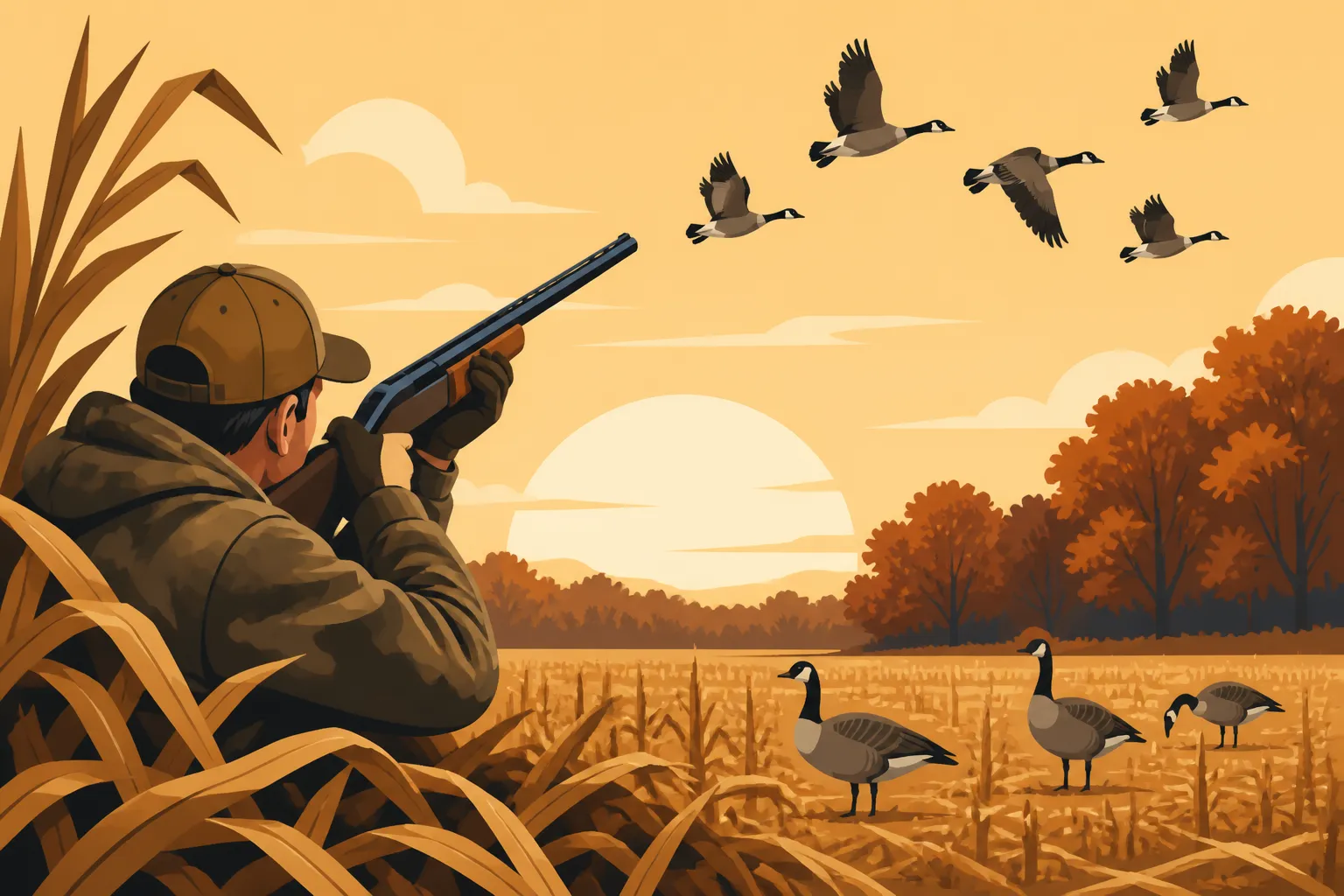
Geese have incredible eyesight, and if they spot you, the hunt is over. Effective concealment is non-negotiable. For field hunting, there are several popular blind options. Layout blinds are arguably the most effective. These low-profile blinds allow you to lie flat on your back in the field, virtually disappearing into the stubble. They are typically made with durable fabric and have stubble straps that allow you to brush them in with natural vegetation from the surrounding field. Good layout blinds, when properly brushed, are nearly invisible to overhead birds. They keep you warm, dry, and hidden, offering comfortable concealment for long sits.
Another option is a panel blind or A-frame blind. These are freestanding structures that you can set up quickly, offering more room to sit upright. While not as low-profile as layout blinds, they can be highly effective when brushed in heavily, especially along a fence line, in a ditch, or near a patch of standing corn. The key with any blind is meticulous brushing. You need to gather natural materials from the exact field you're hunting – cornstalks, soybean stubble, even clumps of grass – and weave them into the stubble straps or frame of your blind until it truly disappears. A poorly brushed blind is just an expensive flag waving at every passing goose. Take the extra 15-20 minutes to make your blind perfect; it will pay dividends.
Shotguns, Loads, and Calling Strategies
Your shotgun is your final tool in the field. A 12-gauge is the standard for goose hunting, offering the versatility to handle various loads. Many hunters opt for 3-inch or even 3.5-inch shells for geese, packed with heavier shot like BB, BBB, or T. Non-toxic shot is a must in Michigan; steel shot is the most common and affordable, but alternatives like bismuth or tungsten-super-shot (TSS) offer superior performance, especially at longer ranges, albeit at a higher cost. Pattern your shotgun with your chosen load before the season to understand its effective range and choke combination, making sure you know where your pellets are actually hitting.
Goose calling is an art form that takes practice, but even basic calls can be effective. A good short-reed goose call is essential. Learn the basic honk, cluck, and moan. The honk is a greeting call, used to get their attention. Clucks and moans simulate feeding birds, signaling to incoming geese that your spread is a safe place to land. Don't overcall; often, less is more, especially with pressured birds. Mimic the geese that are flying – if they're quiet, you be quiet. If they're gabbling, you can get a little more aggressive. Remember to use varying tones and rhythms to sound like multiple birds. Practice consistently, and you'll become more confident, turning those circling birds into committed finishers, much like effective rattling and grunting in Michigan can attract deer.
The Art of Concealment and Perfecting Your Field Set-Up
Even with the best decoys and calling skills, a poor setup can ruin a hunt. Geese are masters of observation, and they'll spot anything out of place or unnatural. Your goal is to blend seamlessly into the environment, making your spread look as authentic as possible. This involves strategic blind placement, thoughtful decoy configuration, and precise attention to wind and sun.
Maximizing Concealment in Open Fields
Open agricultural fields offer little natural cover, which makes concealment paramount. The golden rule is to brush in your blinds heavily. When you think it's enough, add more. Gather cornstalks, soybean stubble, dry weeds, or whatever natural vegetation is present in that specific field. Weave it into the stubble straps and frame of your layout blind or panel blind. The goal is to break up the outline of the blind completely, making it disappear into the texture of the field. From a distance, it should look like another small hump or shadow, not a foreign object.
Beyond brushing, consider your location. Placing blinds along subtle contours, like a slight rise in the field, a shallow ditch, or the edge of a standing crop or fence line, can help break up your silhouette even further. Avoid setting up in the dead center of a perfectly flat, barren field if you can help it; use any natural advantage the terrain offers. Another critical aspect is personal concealment. Wear camouflage clothing that matches the field colors – typically browns, tans, and faded greens for corn or soybean stubble. Keep your face covered with a face mask and wear gloves. Any exposed skin or shiny objects (like watch faces or cell phones) can reflect light and cause wary geese to flare out of range. When birds are working, remain absolutely still until the moment to shoot.
Effective Decoy Spreads for Southern Michigan Geese
Your decoy spread is the visual argument you make to geese. It needs to look natural and inviting. The basic "J" or "U" pattern is a popular and effective starting point. Picture the open end of the J or U facing into the wind, with the "hook" extending downwind. This creates a natural landing zone for geese, as they prefer to land into the wind. The decoys should be spread out, not clumped together, mimicking how real geese feed. Think about family groups; real geese don't typically stand shoulder-to-shoulder unless highly stressed.
Vary the poses of your decoys – some feeding, some looking around, some resting. Motion decoys, especially windsocks, are critical to bring the spread to life. Place them strategically within the spread, often on the upwind side, to give the illusion of active feeding. For pressured birds in southern Michigan, a "kill hole" or "landing zone" is essential. This is an open area within your spread, often right in front of your blinds, where you want the geese to commit and land. Keep this area clear of decoys. Some hunters will place a few "sentinel" or "sentry" decoys (upright, alert poses) on the outer edges of the spread, mimicking birds that are standing guard. The size of your spread matters too; larger spreads (100+ decoys) are often needed for migrating geese or in wide-open fields, while smaller, more realistic spreads (2-4 dozen high-quality full bodies) can work for resident birds. Remember, you can't have enough decoys when hunting geese; the sheer numbers often draw them in.
Adjusting to Wind and Sun Conditions
Wind and sun are your two most important environmental factors. Geese always land and take off into the wind. This is an unbreakable rule. Therefore, you must set up your blinds downwind of your decoy spread, facing into the expected flight path of the geese. The landing zone should be directly in front of your blinds, allowing the geese to finish their approach into the wind, right where you want them. If the wind shifts during the hunt, you might need to quickly adjust your blind position or even re-arrange part of your spread. Ignoring the wind is a surefire way to have birds land behind or beside you, out of range, or flare at the last second.
The sun's position is equally crucial, though often overlooked. Always try to set up with the sun at your back, shining into the eyes of approaching geese. This makes it harder for them to see your blinds and any subtle movement. It also illuminates the geese, making them easier targets as they cup their wings to land. If the sun is in your face, the geese will have a clear view of your setup, and you'll struggle with glare. On overcast days, the sun is less of a factor, but always assume it could peek through and plan accordingly. These tactical considerations are similar to careful scouting of Treestand Setups in Michigan Hardwoods where wind and sun are crucial.
Mastering the Call and Ethical Shot Placement
Bringing geese into range is only half the battle. Once they're committed, you need to execute effectively and ethically. This involves knowing when and how to call, understanding the right moment to rise, and making clean, humane shots.
Mastering Goose Calling Techniques
Goose calling is a dynamic conversation, not a monologue. You need to listen to the birds and respond appropriately. Start with basic attention calls (long, loud honks) to get their focus when they are far out. As they get closer, switch to more aggressive, excited calling with a mix of clucks and moans, mimicking a feeding flock. This tells them, "Hey, there's food here, and we're happy about it!" Once they commit and start to turn towards your spread, often the best strategy is to tone it down or even go silent. Let the visual appeal of your spread do the work. Overcalling at close range can actually spook wary birds.
Practice listening to real geese. Record yourself and compare it to actual goose sounds. Focus on cadence and realism. Many hunters use multiple calls or have one caller who specializes in long-range honks and another who focuses on close-in feeding chatter. There are countless instructional videos and even professional callers who offer clinics. While you don't need to be a world champion caller, being proficient enough to get their attention and make them feel comfortable can dramatically improve your success. Remember, calling is about confidence and realism, and a well-placed series of calls can make all the difference, drawing birds in like a magnet to your landing zone.
When to Call and When to Stay Silent
Knowing when to call and, perhaps more importantly, when to stop calling, is the true mark of a seasoned goose hunter. When geese are distant, often a series of loud, drawn-out honks, sometimes called "hail calls," will get their attention. If they turn and acknowledge your calls, you've succeeded in drawing them in. As they approach, soften your calls, shifting to a more conversational tone – clucks and murmurs that sound like contented feeding. This confirms to them that your spread is a safe and active feeding ground.
However, once the geese are inside 200 yards and clearly committed to your spread, often the best strategy is to go completely silent. Let the visual appeal of your meticulously set decoys do the rest of the work. Too much calling at close range, especially aggressive calling, can make wary birds suspicious and cause them to flare. This is especially true for late-season or highly pressured geese in southern Michigan. They've heard it all before. The silence tells them that the "birds" in your spread are too busy feeding to be squawking, and it reinforces the illusion of a peaceful, undisturbed feeding area. Wait until they are fully committed, wings cupped, feet down, settling into your landing zone before making any move.
Shot Placement and Follow-Up Shots
When the geese are finally decoying perfectly, the adrenaline will be pumping. The key to ethical hunting is to remain calm and make clean shots. Wait until the birds are within your effective range – generally 30-40 yards for steel shot, closer for smaller youth hunters using a Hunting the Liberty Hunt With a Youth license. When the call to "take 'em" comes, rise smoothly and quickly, mounting your gun to your shoulder. Aim for the head and neck, or the front half of the bird's body, where the vital organs are located. Do not shoot at the tail of a bird flying away from you, as the thick feathers and muscle can deflect pellets, resulting in a wounded bird.
Lead the bird if it's flying. For decoying birds that are hovering or just about to land, it might be more of a point-and-shoot scenario. If a bird is hit but still flying, focus immediately on a follow-up shot. Having a partner who can also track and shoot a wounded bird is crucial. Never assume a bird is dead just because it’s hit. A wounded goose can travel a long distance and suffer unnecessarily. Be prepared to shoot a second or even third time to ensure a swift, humane kill. After the shot, retrieve your bird quickly to ensure it doesn't run off or get lost in thick cover, especially in low light.
Adapting to Conditions and Sustaining Field Hunting Success
Field hunting geese in southern Michigan is never static. The birds change, the weather changes, and the pressure changes. To remain successful throughout the season, you need to be adaptable and persistent. Don't be afraid to change your tactics if what you're doing isn't working.
Dealing with Changing Weather and Pressure
Michigan weather is famously unpredictable, and its impact on goose hunting cannot be overstated. A sudden cold front can bring fresh migrators down, offering new opportunities but also presenting warier birds. Heavy snow can push geese into unexpected fields, sometimes those closer to roads or residential areas where food is more accessible. Conversely, warm spells can make geese lazy and less predictable. Always check the forecast and observe how the current weather is affecting bird movement. On windy days, geese often fly lower and are more committed to decoys. On calm days, they might circle higher and be harder to bring in.
Hunting pressure is another constant factor. As the season progresses, geese become "educated." Fields that were hot spots early on might be abandoned due to repeated hunting. This is where relentless scouting pays off. You'll need to find those unpressured pockets, perhaps smaller fields or less obvious locations that other hunters overlook. Be willing to move your spread, even if it means picking up hundreds of decoys. Sometimes, moving just a few hundred yards to a different corner of a field can make all the difference. Remember, the birds will always choose safety and food, and if your spot feels unsafe, they will move on.
Handling Educated Birds and Late-Season Tactics
Educated birds are the bane of every goose hunter's existence. After being shot at for weeks, geese become incredibly wary. They'll circle high, giving your spread the "eagle eye" from a safe distance, often outside of gun range. To combat this, you need to increase your realism and reduce anything that looks unnatural. This means flawless concealment – not a speck of exposed skin or a shimmering blind. Use premium, realistic full-body decoys, and consider adding more motion to your spread with flags or electronic flyers (where legal).
Late-season tactics often involve hunting smaller, more remote fields that have seen less pressure, or fields that offer a unique food source. Geese might also concentrate in larger numbers as the season wears on, forming massive super-flocks. While intimidating, these large flocks can sometimes be drawn in by truly massive decoy spreads (200-500+ decoys) that mimic their own numbers. Aggressive calling can sometimes work, but often, softer, more subtle "confidence calls" are better. Be patient, as these birds will often make multiple passes before committing. Sometimes, going completely silent and letting them work the spread on their own is the best approach for these wise old birds.
Legality, Permits, and Landowner Relations
Successful field hunting often hinges on access to prime private land in southern Michigan. Always, always, always get explicit permission from the landowner before stepping foot on their property. This isn't just common courtesy; it's the law. Many of the best goose fields are privately owned. A simple knock on the door, explaining your intentions, and offering to share some of the harvest can go a long way. Building a good relationship with landowners is paramount and can open doors for years of hunting opportunities. Some excellent resources like the Michigan DNR's Hunting Access Program (HAP) also provide access to private land.
Beyond land access, be aware of all Michigan hunting regulations. Ensure your Michigan Hunting Licences and What They Cost are up to date, including your federal duck stamp and HIP registration for migratory birds. Understand daily bag limits and possession limits. Always use non-toxic shot. Pay attention to safety zones around occupied dwellings or buildings. Knowing the rules and respecting landowners and fellow hunters ensures that this rewarding pursuit remains accessible for everyone.
Disclaimer
The information provided in this guide is for informational purposes only and is not a substitute for consulting official Michigan Department of Natural Resources regulations. Always verify current hunting seasons, bag limits, licensing requirements, and legal shooting hours with the Michigan DNR before hunting. Hunting is an inherently risky activity; prioritize safety and ethical practices above all else.