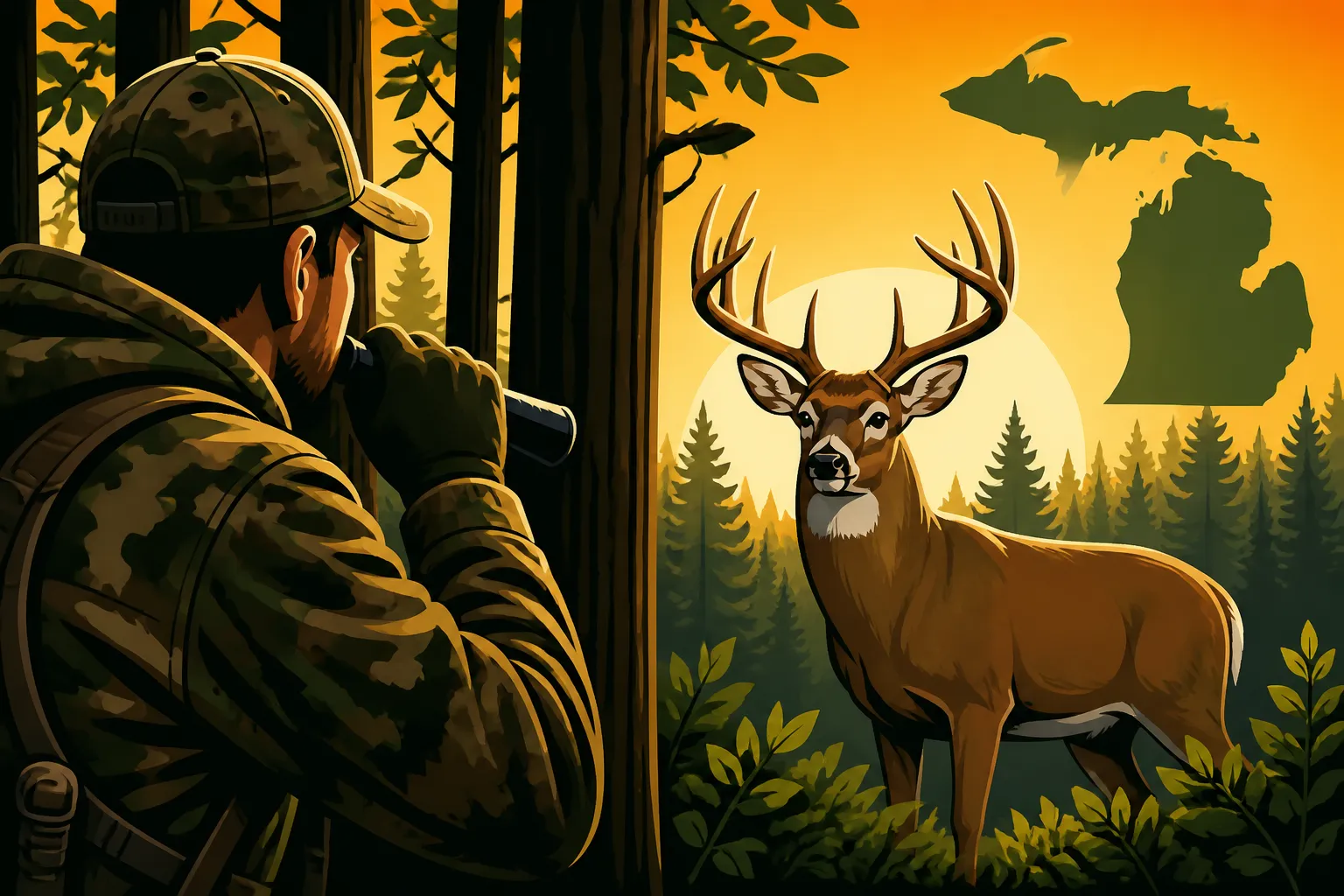
Grunt Calls in Mature Timber
There's nothing quite like the feeling of being deep in Michigan's mature timber, surrounded by towering oaks and maples, hoping to coax a wary whitetail into range. But let's be honest, trying to use a grunt call in such dense cover can feel like shouting into a pillow. The sound just doesn't carry, visibility is a nightmare, and those old timber bucks seem to know every trick in the book. This guide is here to unravel those frustrations, offering practical, realistic strategies for effectively using grunt calls to lure in those elusive whitetails that call the big woods home.
Understanding the Timber Challenge for Grunt Calling
Hunting mature timber in Michigan, especially the vast state forests of the Northern Lower Peninsula or the expansive woods of the Upper Peninsula, presents a unique set of challenges when it comes to vocalizations like grunt calls. It's not like hunting open agricultural fields where sound travels for hundreds of yards. The very nature of the forest works against you, demanding a more nuanced and strategic approach.
Sound Dynamics in Dense Woods
The biggest hurdle is how sound behaves in a thick forest environment. Every tree, every branch, every patch of undergrowth acts as a baffle, absorbing and distorting sound waves. You might blow a grunt call with what feels like full power, but that sound probably won't travel more than 75 to 100 yards effectively, and even then, it'll sound muffled. This is a crucial difference from more open habitats where a good grunt or rattle can carry for a quarter-mile or more. Imagine trying to talk to someone across a crowded, noisy room; the timber is that room, but filled with natural sound-dampeners. This means your effective calling range is dramatically reduced, requiring you to be much closer to where you anticipate a buck might be. The crisp, clear tones you hear in an instructional video might sound like a distant, distorted whisper to a deer even a short distance away in real timber.
Limited Visibility and Hunter Movement
Another significant frustration in mature timber is the limited visibility. You're often lucky to see more than 40-50 yards in any direction, especially if there's any understory present. This creates a double-edged sword: while it offers great cover for you, it also makes it incredibly difficult to spot an approaching buck, let alone assess his direction of travel or his response to your call. A buck could easily circle downwind of you without ever being seen, leaving you wondering why your call didn't work. The reduced visibility also impacts your own movement. Every step can snap a twig or rustle leaves, making it tough to reposition or draw your bow or raise your rifle without giving yourself away. You simply can't move as freely or as quickly as you might in a more open setting. This is where patience and meticulous pre-scouting, as described in guides like Scouting Michigan Public Land Before Season, become absolutely essential.
The Behavior of Mature Timber Bucks
The deer that live in these mature timber settings, particularly the older, larger bucks, are often far more wary and sensitive to unnatural sounds than their counterparts in farm country. They've survived multiple hunting seasons by being elusive, relying on their senses and the protective cover of the forest. They're not as likely to come charging in blindly to a call, especially if it sounds out of place or too aggressive. Instead, they'll often circle downwind, approach cautiously, or simply hang up just out of sight, trying to pinpoint the source of the sound without exposing themselves. Understanding this innate caution is paramount to successful calling. They've heard it all, or at least, they've learned to be extremely skeptical. You're not just calling a deer; you're trying to outwit a seasoned survivor who lives and breathes the nuances of the big woods.
Choosing the Right Grunt Call for Dense Cover
Selecting the appropriate grunt call for hunting in Michigan's mature timber isn't just about grabbing the first one you see on the shelf. The density of the cover and the behavior of the deer necessitate a more thoughtful choice. While there are countless options available, a few key features and considerations can make a real difference when trying to project sound through the thick woods.
Adjustable Versus Fixed-Tone Calls
Grunt calls generally come in two main categories: adjustable or fixed-tone. Fixed-tone calls, often tube-style, are straightforward; they produce a consistent grunt sound, which can be fine if that specific sound works for your area. However, adjustable calls offer far more versatility, and this is where they truly shine in dense timber. An adjustable call, like many popular models that allow you to slide an O-ring or make other adjustments, lets you change the pitch, duration, and even the "age" of the grunt. You can mimic a young buck, an older, deeper-sounding buck, or even the shorter, sharper grunts of a doe. This adaptability is invaluable when you need to experiment to see what a particular buck might respond to. In the timber, where sound doesn't travel far, being able to offer a variety of tones without changing calls can be a significant advantage, letting you gauge a buck's interest and adapt on the fly. Some hunters even prefer a simple reed-style call that they can manipulate with their mouth to achieve a wider range of sounds.
Tone and Volume Considerations
When hunting in thick timber, your primary focus should be on realism and subtlety, rather than sheer volume. A call that's too loud or too aggressive for the environment can easily spook a wary buck.
- Tone: Aim for a natural, slightly deeper tone. While bucks of all ages grunt, a deeper, throatier grunt can often imply a more dominant buck, which might pique the interest of an approaching deer, or challenge a competitor. However, don't overlook softer, shorter grunts that mimic a deer casually moving through the woods. The key is to match the tone to the situation. If you're deep in a cedar swamp, a location often favored by reclusive bucks as discussed in Reading a Michigan Cedar Swamp for Deer, you might opt for a more subtle tone.
- Volume: This is where the timber rules. Instead of trying to "blast" a call, focus on short, sharp bursts at a moderate volume. Remember, the trees will mute much of the sound. You want just enough volume to carry through the immediate cover without sounding like an alarm. Think about it more like an intimate conversation between deer rather than a shouting match. When using a brand like GoHunt for mapping or tracking, you're looking for precise locations; your calling should be equally precise in its delivery.
Realistic Sounds for Michigan Whitetails
The most effective grunt calls are those that perfectly mimic the actual vocalizations of Michigan whitetails. Before hitting the woods, spend time listening to recordings of real deer grunts. You'll notice they're not always perfectly smooth or consistent. They can be broken, guttural, or even slightly wheezy. Practice with your call to replicate these nuances. The goal is to sound like another deer, not a human blowing a plastic tube. Consider how different environmental factors might affect the sound as well – a grunt echoing slightly through a hollow or bouncing off a ridge. Many experienced hunters find that simpler calls, perhaps a basic tube-style call from manufacturers known for realistic deer sounds, can be more effective than overly complex ones. It’s not about the gadget; it’s about the authenticity of the sound you produce.
Here's a quick comparison of call types and their general application in timber:
| Call Type | Key Features | Best Use in Mature Timber | Pros | Cons |
|---|---|---|---|---|
| Fixed-Tone Tube | Simple, consistent pitch | Aggressive, consistent grunts; pre-rut challenging | Easy to use, often loud enough | Limited versatility |
| Adjustable Tube | O-ring or slider for pitch variation | Mimicking different buck ages, subtle curiosity grunts | Very versatile, wide range of sounds | Can be complex to master, inconsistent |
| Bellows Style | Squeeze bulb for air, often deeper sounds | Deep, guttural grunts; great for challenging older bucks | Realistic deep grunts, good volume control | Can be bulky, requires two hands |
| Reed-Style (Mouth) | Hunter manipulates reed with mouth/hands | Most versatile, allows for custom pitches and inflections | Most realistic, hands-free options | Requires significant practice and skill |
Mastering Grunt Call Strategies in Mature Timber
Okay, you've got your call, you understand the limitations of the timber. Now, how do you actually make it work? It's less about continuous, loud calling and more about strategic positioning, subtle sequences, and avoiding common pitfalls that can ruin your hunt. Success here relies on an intimate understanding of deer movement and a good dose of stealth.
Setup and Positioning for Success
Your setup is perhaps even more critical than the call itself. In mature timber, you're working with reduced sightlines and the ever-present risk of a buck circling downwind.
- Wind is King: Always, always, always play the wind. This cannot be stressed enough, especially when a buck might approach cautiously. Set up so that your scent cone is blowing away from any likely approach routes or bedding areas. If a buck tries to circle downwind to scent-check the "deer" he heard, he should hit your scent before he can pinpoint your position visually. This often means setting up slightly off the main trail or funnel, allowing for that downwind circle. Use a tool like the wind feature on the GoHunt app to constantly monitor conditions.
- Elevated Positions: A treestand or saddle setup, especially those detailed in Treestand Setups in Michigan Hardwoods, provides a significant advantage. It gets your scent above the ground for a bit and offers a better vantage point over the thick undergrowth. Even then, your shooting lanes might be limited, so clear a few key lanes before you call. If an elevated position isn't possible, a well-brushed ground blind can work, but you'll need to be even more vigilant about scent and movement.
- Natural Funnels and Pinch Points: Focus your calling efforts in areas where deer movement is naturally restricted or funneled. This could be a narrow strip of timber between two swamps, a saddle on a ridge, or a thicket bordering a logging road. These areas increase the chances that a buck will pass within your limited calling range and make it easier for you to predict his approach. Look for natural barriers that force deer to move in a predictable pattern.
- Concealment: Ensure you have excellent concealment. A deer might not respond immediately, but come in silently twenty minutes later. Being silhouetted or easily visible will blow your chances. Break up your outline against a tree, use natural cover, and remain absolutely motionless after calling.
The Art of the Calling Sequence
Forget those aggressive, all-out rattling and grunting sequences you see on TV, especially for the peak rut in Michigan's farmland. In mature timber, subtlety and patience are your best friends.
- Start Soft and Infrequent: Begin with one or two soft, inquisitive grunts. Wait 15-20 minutes. Listen intently. Scan your surroundings. Don't overdo it. The goal is to pique curiosity, not announce your presence with a megaphone. Think about the cadence: a series of 2-3 short grunts, followed by a longer pause, and then maybe another single grunt.
- Vary Intensity (Cautiously): If you get no response after a long wait, you can try a slightly louder, more drawn-out grunt, perhaps mimicking a mature buck on the move. However, still keep the volume moderate. This isn't about volume, but about realism. If you're hunting during the Hunting the Pre-Rut in Late October, a slightly more challenging grunt might be appropriate, but still err on the side of caution.
- Mimic Deer Sounds, Not Just Grunts: Beyond grunts, incorporate other subtle deer sounds. A light fawn bleat can sometimes attract a curious doe, which in turn might bring in a buck. A soft social grunt or a tending grunt can indicate a buck is with a doe, which can infuriate a rival.
- Listen, Listen, Listen: After every call, put your call down and listen for any response. Footsteps, a twig snap, a distant grunt, or even the subtle rustle of leaves. Mature timber bucks are notorious for silent approaches. Many times, you'll hear a deer before you see it. Your ears are your primary scouting tool after you call.
Common Mistakes to Avoid
Even experienced hunters can fall prey to these blunders when grunt calling in the big woods.
- Over-Calling: This is the most common mistake. Blowing your call every few minutes will make you sound unnatural and desperate. It also gives the buck too many chances to pinpoint your exact location or realize something is amiss. Patience is key. Let the woods "breathe" between sequences.
- Calling Too Loudly: As discussed, the timber devours sound. But overcompensating by grunting too loudly will just shock and spook deer, especially if they are close. Stick to moderate, realistic volumes.
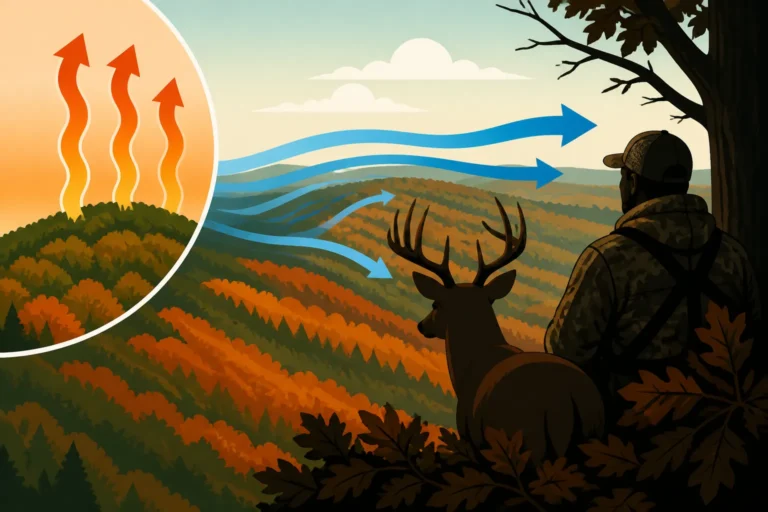
- Not Playing the Wind: Ignoring wind direction is a recipe for disaster. A buck will almost always try to get downwind, and if he catches your scent, your hunt is over. This is particularly important when considering Wind and Thermals on Michigan Ridges.
- Lack of Patience: You call, you wait five minutes, nothing happens, so you call again or pack up. Wrong. A timber buck might take 20, 30, or even 45 minutes to respond and approach. Stay vigilant for a long time after your last call.
- Calling Without Proper Setup: Calling from a spot with poor visibility, no shooting lanes, or where your silhouette is clearly visible is unproductive. Ensure your setup is solid before you even think about putting the call to your lips.
Interpreting Responses and Adapting Your Approach
One of the most exciting, yet nerve-wracking, parts of grunt calling in mature timber is when a buck actually responds. Knowing how to read his body language and adapt your strategy on the fly can be the difference between a successful shot and a missed opportunity. Remember, these bucks are often more cautious and demanding.
Reading Buck Body Language
A buck's response to your grunt call isn't always a full-throttle charge. In the thick woods, it's usually far more subtle. You need to be a keen observer.
- Head Up, Ears Swiveling: This is usually the first sign of interest. The buck heard something, and he's trying to pinpoint it. His head will come up, and his ears will rotate like radar dishes. This is your cue to remain absolutely motionless.
- Stiff-Legged Walk/Approaching Stealthily: If he's slowly walking in your direction, especially with a stiff-legged gait, he's curious or challenging. He'll likely stop frequently, dropping his head to feed briefly before looking up again. Pay attention to his tail; if it's twitching or slightly flared, he might be agitated or suspicious.
- Circling Downwind: This is the classic timber buck maneuver. He heard the call, but he's not stupid. He wants to get a nose-full of the "other deer" before committing. If you see him begin to veer off to your left or right, be ready; he's probably trying to get downwind of you. This is why your setup with the wind in mind is so critical.
- Hanging Up: Perhaps the most frustrating response. A buck approaches, stops just out of range or behind a thicket, and just stands there, staring. He's heard you, he's interested, but something isn't quite right. He might even turn and start walking away. This is where you need to decide whether to push harder or let him go.
When to Be Aggressive, When to Be Subtle
The art of knowing when to push the envelope with your calling or when to back off is refined through experience. There's no hard and fast rule, but here are some guidelines.
- Be Aggressive When:
- The Buck is Hanging Up Out of Sight: If you know a buck is there but won't commit, and you're close to the end of your hunt, a slightly more aggressive grunt (a "growl" or a tending grunt) might be just the push he needs to expose himself. This is a gamble, but sometimes it pays off.
- During the Peak Rut: If you're hunting
The Peak Rut Week in Michigan, bucks are often more susceptible to aggressive challenges. If a buck responds vocally with a grunt or a snort-wheeze, returning a slightly more aggressive call can draw him in, especially if he thinks a rival is with a hot doe. However, even during the rut, timber bucks remain cautious. - If He Starts to Leave: If a buck is clearly turning to walk away after showing initial interest, a quick, sharp grunt might stop him, giving you one last chance for a shot.
- Be Subtle When:
- Initial Calling: Always start subtle and inquisitive. You don't want to blow him out of the country before you even know he's there.
- The Buck is Approaching Slowly: If he's already coming in cautiously, don't overcall. Let him come. Only call again if he stops and seems to lose interest, and even then, make it a soft, reassuring grunt.
- He's Very Close: If a buck is within 50 yards and actively looking, do NOT call. Any sudden movement or sound could spook him. Let him walk into your shooting lane.
Patience and Persistence in the Woods
Ultimately, hunting big timber bucks with grunt calls in Michigan requires immense patience and persistence. These animals are masters of their environment, and you're stepping into their domain.
- Long Waiting Periods: Don't expect immediate results. A successful calling sequence might involve a call, a 30-minute wait, another call, and another 20-minute wait before a buck finally appears. Sometimes, they respond hours later, or even come in silently from a direction you least expect.
- Multiple Setups: Don't be afraid to move and try different calling locations throughout the day. Still-hunting, as outlined in Still-Hunting Michigan Cedar Swamps, combined with strategic calling, can be very effective. Work different funnels, edges of bedding areas, and food sources. Every new spot offers a fresh opportunity.
- Learn from Every Interaction: Whether a buck comes in or spooks, try to learn something. Was your call too loud? Was the wind wrong? Did he see you move? Analyzing these scenarios will make you a better caller and a more successful timber hunter in the long run. Remember, tools like GoHunt can help you mark these interactions on your map, allowing you to learn from your past experiences and refine your approach for next time.
Using grunt calls in Michigan's mature timber is challenging, but incredibly rewarding when it all comes together. With the right call, a solid setup, and a patient, strategic approach, you can turn those elusive timber ghosts into a tangible hunting memory.
Disclaimer
Hunting is an inherently dangerous activity. Always prioritize safety, understand and follow all Michigan Department of Natural Resources (DNR) regulations, and never take unnecessary risks. The information provided here is for educational purposes only and should not replace proper hunter education or professional guidance. Be aware of your surroundings and other hunters.