Scrape Lines Along a Two-Track
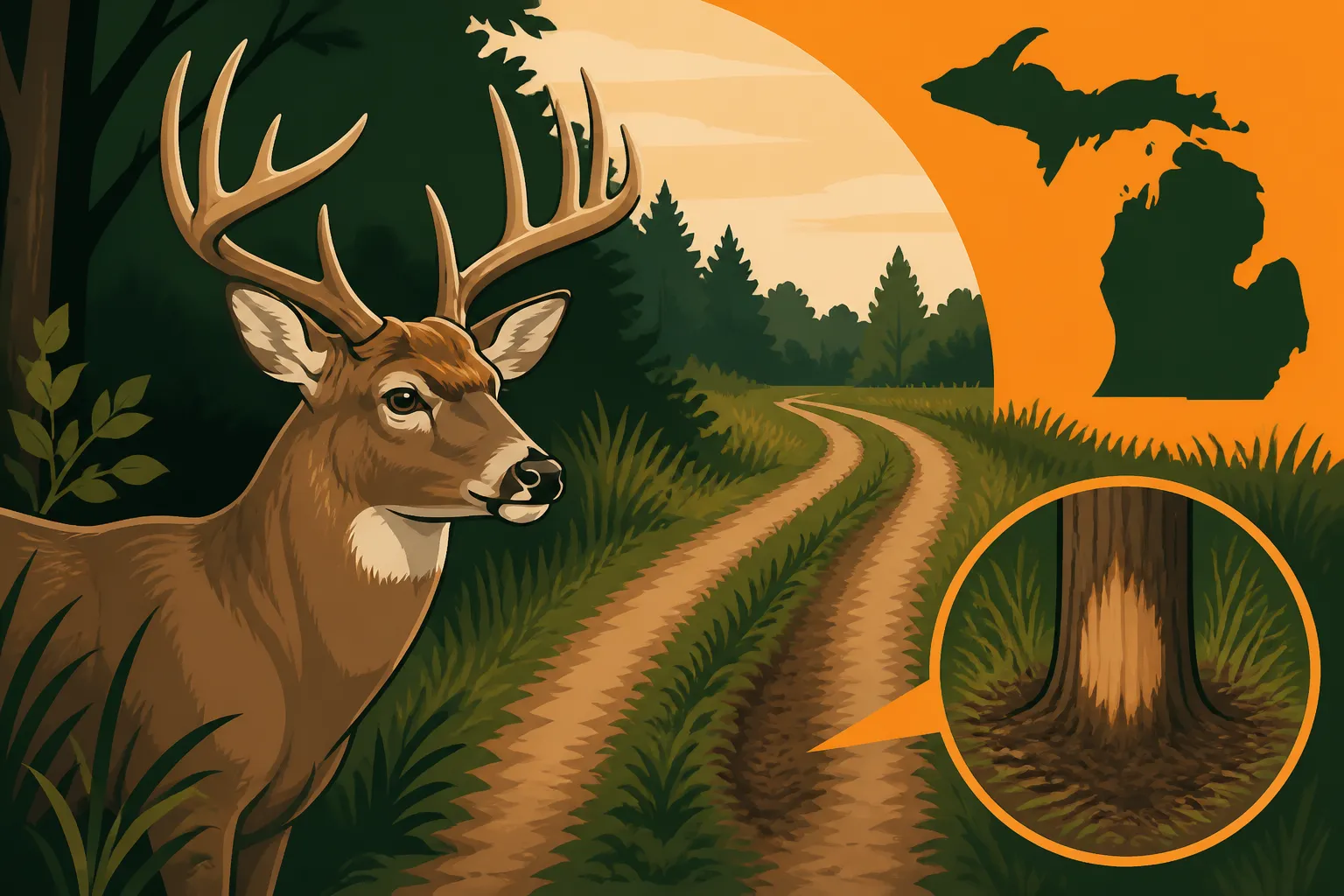
It’s a familiar frustration for many Michigan deer hunters: you’re walking a forgotten two-track on state land, admiring the autumn colors, and suddenly, there it is—a fresh scrape line stretching down the path. You know deer are using this area, but how do you actually turn that discovery into a successful hunt? This guide is designed to help you understand why these two-track scrape lines are so crucial to whitetail activity, how to properly identify and interpret them, and most importantly, how to hunt them effectively without spooking the very bucks you’re after.
Why Two-Tracks Attract Scrape Lines
When you're out scouting Michigan's vast public lands, be it state forests or game areas, two-tracks can feel like golden threads woven through the wilderness. These old logging roads, utility paths, or forgotten access routes aren't just convenient for humans; they're incredibly attractive to deer, especially when it comes to leaving their scent messages. It's not just about ease of travel; it's about the unique combination of factors these linear features offer, making them prime real estate for scrape lines.
Natural Funnels and Travel Corridors
Think about a two-track carving its way through a dense stand of pines or connecting a cedar swamp to a oak ridge. These paths naturally create openings in otherwise thick cover, forming clear travel lanes for deer. They're like the highways of the deer world. Bucks, especially mature ones, are always looking for efficient and relatively secure ways to move between bedding areas and food sources. A two-track often provides that perfect balance. It's open enough for relatively easy movement, but often bordered by enough cover to offer a sense of security. Deer don't want to slog through a tangle of briars any more than we do if there's an easier route.
Furthermore, two-tracks frequently run along edges – the meeting points of different habitat types. Maybe one side is a thick aspen cut, and the other is mature hardwood timber. These edge habitats are inherently attractive to deer, and a two-track running right along that seam essentially creates a super-highway of deer activity. When you're scouting, you can use tools like GoHunt's mapping features to identify these habitat transitions and pinpoint where old two-tracks intersect them. These intersections and edges are absolutely phenomenal spots for finding concentrated deer sign, including rub lines and, of course, scrape lines. They're natural funnels, directing deer movement into predictable patterns, which is exactly what we, as hunters, are looking for. Learning how deer move through these areas is key to success, whether you're still-hunting Michigan cedar swamps or waiting patiently in a stand.
Scent Dispersal and Communication Hubs
Scrapes are, at their core, communication tools. They’re essentially community bulletin boards for deer. Bucks create them by pawing away leaf litter to expose bare earth, then urinating on their tarsal glands into the scrape, and often chewing on a low-hanging "licking branch" above it, depositing saliva and forehead gland scent. When a two-track cuts through the landscape, it offers an ideal platform for this scent-marking behavior. The slightly more open nature of a two-track means that scents can disperse more effectively in the air, carrying messages further.
Imagine a buck cruising a two-track during the pre-rut, his nose to the ground, checking for estrous does. He's also constantly leaving his own calling card. The open ground of the two-track makes it easy to paw out a fresh scrape, and the occasional low-hanging branch overhanging the path is a perfect candidate for a licking branch. These scrapes then become magnets for other deer. Does will visit them, leaving their own scent, checking for potential mates. Younger bucks will also visit, scent-checking and sometimes even working the scrape themselves, learning the ropes. This constant interaction turns a string of scrapes along a two-track into a true communication hub, especially during the crucial weeks of the Michigan rut in November. If you can find a series of scrapes, often called a "scrape line," along a two-track, you've found a place where deer are actively communicating and regularly visiting.
Deciphering Active Scrapes Along Your Path
Finding a scrape is one thing; understanding if it's currently being used and how often is another entirely. Not all scrapes are created equal, and knowing how to read the signs can save you countless hours on a cold stand. An active scrape is a fresh scrape, one that a buck (or even a doe) has recently visited and worked.
Visual Cues of Freshness
When you stumble upon a scrape, your first order of business is to determine its age. A hot, fresh scrape is your best bet for encountering the deer that made it. Look for several key visual indicators:
- Torn Earth: The most obvious sign is the exposed bare earth. If it’s dark and moist, it’s fresh. If it's light-colored, dry, or crusty, it's older. You'll often see distinct hoof prints, typically from a buck, within the pawed-out area. Are these prints crisp and well-defined, or are they faded and partially filled with debris? Fresh prints mean recent activity.
- Leaf Litter Displacement: The leaves and debris around the scrape should look recently disturbed, as if something just kicked them out of the way. If the surrounding leaves are settled and undisturbed, the scrape has been dormant for a while.
- Overhead Licking Branch: This is often the most critical indicator. The branch above the scrape, typically 3-5 feet off the ground, will show signs of heavy chewing, frayed bark, and often, a glossy appearance from glandular secretions. If the branch looks untouched or has old, weathered breaks, the scrape is likely not active. A fresh scrape will have a broken or twisted branch directly overhead that looks "worked."
- Fresh Rubs Nearby: While not directly part of the scrape, if you see fresh rubs (trees with bark scraped off by antlers) within 10-20 yards of the scrape line, it’s a strong indication that a buck is actively marking his territory in the immediate vicinity. The combination of fresh rubs and fresh scrapes is a powerful signal.
The Importance of Overhead Licking Branches
The licking branch is the often-overlooked secret sauce of a truly active scrape. While the pawed-out ground attracts attention, the branch above is arguably more important for deer communication. Bucks will mouth, lick, and rub their forehead glands on these branches, depositing scent from their interdigital, preorbital, and forehead glands. Does will often do the same, particularly during the rut.
A key sign of a hot scrape is a broken or frayed licking branch. Bucks don't just gently brush these branches; they work them over aggressively, twisting them, sometimes even snapping small twigs off. If you find a scrape with a healthy, untouched branch overhead, it might be an opportunistic scrape or one that's simply not in regular use. But if that branch is heavily chewed, splintered, and dark from secretions, you've found a buck's primary communication post. It means he's committed to that spot, and likely other deer are too. When using a scouting app like GoHunt, make sure to mark these specific scrape locations, especially those with clearly worked licking branches, as high-priority spots. This detail is often what separates a lukewarm sign from a truly hot one, and it's a difference that can define your hunt.
Tactical Approaches to Hunting Two-Track Scrapes
Finding a promising scrape line along a two-track is exciting, but it's only the first step. The real challenge, and the real art, is in how you choose to hunt it. Remember, these are travel corridors, and deer are often on high alert. Your approach and setup are paramount to success.
Stealthy Entry and Exit Routes
This might be the single most overlooked aspect of hunting any deer sign, and it's particularly true for two-tracks. Because these paths are more open and often easier for humans to traverse, we tend to be less cautious. However, deer use these same paths and are acutely aware of disturbances. Your goal is to approach your stand or blind without alerting a single deer to your presence.
First and foremost, always consider the wind. Never hunt a scrape line if your scent is blowing directly into it or into the suspected bedding area that feeds it. Even if the scrape is smoking hot, a whiff of human odor will shut down activity for days. Use apps that show wind direction and thermals for your planned hunt time. Often, early morning thermals will draw your scent downhill into drainages or low spots, while evening thermals will rise. Plan your entry and exit to use terrain and wind to your advantage.
Secondly, use existing cover. Don't walk directly down the two-track to your spot. Instead, parallel it 20-30 yards off the side, utilizing thicker timber, brush, or natural depressions to conceal your movement. If possible, have an entry route that is completely separate from your exit route, especially if you plan to Still-Hunting Michigan Cedar Swamps or be very active. This minimizes the pressure on the core area. For instance, if the scrape is on the north side of a two-track, and the primary bedding area is to the north, try to approach from the south, crossing the two-track quickly and quietly, or even better, having an approach that keeps you entirely downwind of the bedding. Quiet footsteps, headlamps with red lights for minimal disturbance, and avoiding snapping twigs are all critical. Remember, you're trying to fool an animal that relies on its senses for survival.
Stand Placement and Wind Considerations
Once you've identified an active scrape line on a two-track, choosing your stand location is paramount. It's not just about being close; it's about being in the right spot to intercept a deer and get a shot, all while remaining undetected.
Treestand Placement: For archery hunters, a treestand is often ideal. Look for a tree that offers good cover from both approaching deer and the rising/setting sun. Position yourself 20-25 yards downwind of the most active scrapes, ideally looking slightly into the prevailing wind direction. This allows you to potentially see a buck scent-checking the scrape from further away, giving you more time to prepare. Consider where the deer will likely approach from—often paralleling the two-track from thicker cover. Your stand should provide a clear shooting lane to the scrape itself, but also to the travel corridors leading to and from it. Don't forget to account for how the deer will react once they hit the scrape; they might pause, circle, or continue moving. Having the ability to shoot in multiple directions is a huge plus. This is where a good setup, mirroring advice found in Treestand Setups in Michigan Hardwoods, can really pay off.
Ground Blind Placement: If suitable trees are scarce or you prefer more concealment, a ground blind can be highly effective. The key here is brushing it in naturally. A pop-up blind sticking out like a sore thumb will spook deer every time. Collect local brush, branches, and deadfall to integrate your blind seamlessly into the environment. Place it 20-30 yards from the scrape, again, downwind. Ground blinds can be fantastic for concealing movement, especially if you're hunting with a youth during the Hunting the Liberty Hunt With a Youth. Just like with treestands, ensure you have clear shooting lanes and that your entry and exit are silent. Remember that deer can see into a blind, so wear dark clothing and keep movement to a minimum. For more tips, check out this guide on Using a Ground Blind on Michigan State Land.
Wind & Thermals are Non-Negotiable: I cannot stress this enough. Hunting a scrape line without the wind in your favor is a fool's errand. Deer will approach these communication hubs from downwind to check for other deer before exposing themselves. If your scent is blowing into the scrape, they'll know you're there long before you see them. Use topographical maps and GoHunt's wind prediction features to pinpoint the best stand locations based on the expected wind for your hunt. If the wind isn't right, don't hunt that spot. Period. There's always another day or another scrape.
Calling and Decoying Strategies
While a natural scrape line on a two-track is a magnet on its own, you can sometimes enhance its attractiveness with strategic calling and decoying.
Calling: During the pre-rut and peak rut, a well-timed grunt call or rattle can bring a curious buck right into your shooting lane. When a buck is actively working a scrape, he's broadcasting his presence. Another buck might respond to a grunt, thinking it's a competitor, or to rattling, thinking it's a fight he wants to join or break up.
- Grunt Calls: A few soft grunts can work wonders. Often, less is more. Try to mimic the sounds of a buck cruising or asserting his presence. If a buck is approaching the scrape cautiously, a soft grunt might be all it takes to get him to commit. Refer to our guide on Grunt Calls in Mature Timber for more detailed strategies.
- Rattling: This simulates two bucks fighting. It's best used when you know bucks are in the area but not necessarily coming directly to the scrape. It can bring them in from further distances. Be ready, because when rattling works, it often happens fast!
- Scrape Sounds: You can even mimic the sounds of a deer pawing a scrape by kicking the ground lightly or dragging a stick. This can add another layer of realism.
Decoying: A single buck or doe decoy placed near the scrape can also be incredibly effective, especially if you're hunting in a relatively open area along the two-track.
- Buck Decoy: During the peak rut, a buck decoy can challenge an incoming buck, causing him to approach aggressively and offer a close-range shot. Place it facing away from you, as if it's working the scrape or just moving past, forcing the real buck to circle and present a broadside shot.
- Doe Decoy: A doe decoy, particularly a dominant or estrous one, can attract bucks looking for a receptive mate. Place it downwind of the scrape, where a buck would naturally approach to scent-check.
The key with decoys is realism and placement. Make sure they are scent-free and blend into the environment. The right calling strategy, combined with a strategically placed decoy, can turn a good scrape into an irresistible one for a cruising Michigan buck.
Avoiding Common Pitfalls When Hunting Two-Track Scrapes
While scrape lines on two-tracks offer incredible potential, there are common mistakes hunters make that can quickly spoil their chances. Being aware of these pitfalls and actively working to avoid them will drastically increase your success rate.
Overhunting and Spooking Deer
This is perhaps the cardinal sin of hunting productive deer sign. It’s incredibly tempting to keep checking that hot scrape every day, or to sit in your stand hour after hour, day after day. But deer, especially mature bucks, are incredibly sensitive to human pressure.
- Infrequent Visits: Think of a hot scrape as a delicate ecosystem. Every time you walk in, you leave scent and visual disturbance. Limit your visits to scout and set up. Once you're hunting it, only go in when conditions are perfect (wind, time of day).
- Know When to Back Off: If you hunt a scrape for a few days without success, or worse, if you spook deer, give it a break. Deer will eventually return, but only if they feel the pressure has subsided. Moving to another location, perhaps even a different two-track system you've scouted, can be a better use of your time. Our guide on Hunting Pressure on Michigan State Land stresses the importance of understanding and managing your impact. Remember, Michigan bucks can become extremely wary, especially in areas with consistent hunter traffic. If you use a tool like GoHunt to mark your movements, you can track how often you've been in an area and consider if it's time to let it cool down.
Ignoring Wind and Thermals
We touched on this earlier, but it's worth reiterating because it's a mistake made repeatedly. Hunters often get so excited about finding a hot scrape that they rationalize hunting it even when the wind isn't ideal. This is almost always a mistake.
- Deer Rely on Scent: Deer will always approach a scrape from downwind to scent-check for other deer (and predators). If your scent is blowing directly into the scrape, or into the primary travel route leading to it, any smart buck will bust you before you even know he's there.
- Thermals Are Critical: Understand that thermals change throughout the day. In the morning, cold air sinks, carrying your scent downhill. In the evening, warm air rises, carrying your scent uphill. Factor this into your stand placement and hunting times. A two-track often sits on a slight rise or fall, making thermal currents even more pronounced. Consulting a reliable weather source with real-time wind and thermal data is crucial before heading out. Sometimes, what seems like a great midday hunt could be ruined by shifting thermal currents that pull your scent into the exact area you're trying to hunt. This principle applies universally, whether you are hunting a scrape line or simply navigating Wind and Thermals on Michigan Ridges.
Misinterpreting Scrape Freshness
Another common pitfall is hunting "cold" scrapes. Just because a scrape exists doesn't mean it's currently active.
- Check for Freshness Every Time: Before you commit to hunting a specific scrape line, always verify its freshness. Look for the torn earth, crisp tracks, and especially that freshly worked licking branch. If the scrape looks old, dry, or undisturbed, don't waste your time. Deer sign changes quickly, and a scrape that was hot yesterday might be cold today if the buck has moved on.
- Focus on the "Best of the Best": If you find multiple scrapes along a two-track, focus your efforts on the absolute freshest, most heavily worked ones, especially those with strong licking branch activity. These are the ones being regularly visited and actively maintained. Hunting a lukewarm scrape is a low-odds game. Your time is valuable, and focusing it on high-percentage setups is key to success. This is where meticulous scouting, perhaps even Scouting Michigan Public Land Before Season to mark these potential hotspots, really pays off, allowing you to prioritize the freshest sign when the season opens.
By avoiding these common mistakes and focusing on careful planning, stealth, and understanding deer behavior, you'll be well on your way to capitalizing on those promising scrape lines along Michigan's forgotten two-tracks.
Scrape Freshness Indicators Table
| Indicator | Fresh Scrape | Old Scrape |
|---|---|---|
| Exposed Earth | Dark, moist, distinct paw marks | Light-colored, dry, crusty, faint marks |
| Licking Branch | Chewed, frayed, twisted, glossy from scent | Untouched, weathered breaks, no fresh chewing |
| Hoof Prints | Crisp, well-defined, recent mud/dirt | Faded, filled with debris, weathered |
| Surrounding Litter | Recently displaced, scattered leaves | Settled, undisturbed, often covered by new leaves |
| Scent | Strong musky odor, especially after rain | Faint or no discernible odor |
Disclaimer
Hunting is an inherently dangerous activity. Always prioritize safety, follow all Michigan Department of Natural Resources (MDNR) regulations, and ensure you have the appropriate licenses and safety training. Conditions in Michigan's outdoors can change rapidly; be prepared for all weather, and always let someone know where you are hunting and when you expect to return. This information is for educational purposes and does not replace official hunting regulations or professional safety instruction.