Hunting Deer Without Bait in Michigan
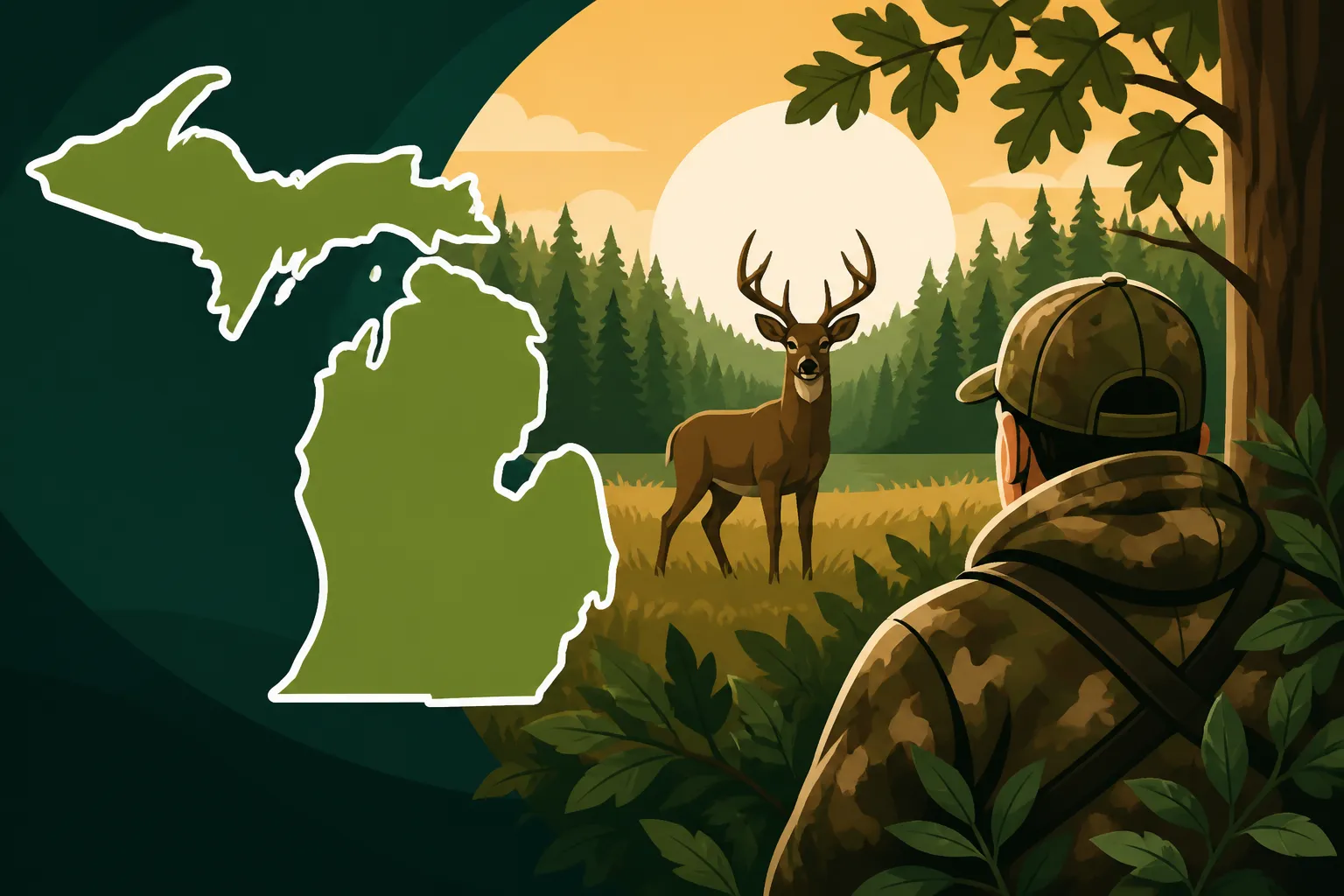
For many Michigan deer hunters, the sound of a deer crunching on corn from a bait pile used to be a common and exciting part of the fall. However, with the statewide baiting ban in effect for much of Michigan, that familiar tactic is no longer an option, leaving many feeling frustrated and wondering how to adapt. This comprehensive guide is here to help you navigate the nuances of hunting deer in Michigan's no-bait landscape, focusing on effective strategies to find and harvest deer ethically and successfully.
Understanding Michigan's Baiting Ban and Its Impact
The transition away from deer baiting has been a significant shift for many hunters in Michigan. It's a change that was met with strong opinions on both sides, but understanding why it happened is crucial to accepting and adapting to the new reality.
The Why Behind the Ban
Michigan's baiting ban, particularly across the Lower Peninsula and specific areas of the Upper Peninsula, was primarily implemented as a measure to slow the spread of Chronic Wasting Disease (CWD). CWD is a fatal neurological disease that affects cervids, including white-tailed deer, and can be transmitted through direct contact or indirectly through contaminated environments. The Michigan Department of Natural Resources (DNR) determined that concentrating deer at bait sites increased the likelihood of disease transmission. When deer gather in close proximity to feed, they exchange saliva, urine, and feces, creating a perfect environment for CWD prions to spread. While the ban has been contentious, it remains a critical tool in the state's efforts to manage this serious wildlife disease. It's a stark reminder that our hunting practices often need to evolve with the challenges facing our wildlife.
Adapting to the New Reality
For generations, throwing out a pile of apples or corn was a go-to tactic, especially for those hunting smaller parcels or trying to draw deer out of thick cover. Now, without that crutch, hunters are compelled to become more skilled in traditional tracking and woodsmanship. This means shifting focus from attracting deer to finding deer in their natural habitats. It forces us to think more deeply about deer behavior, their natural travel patterns, and their actual food sources throughout the season. The ban has, in a way, pushed many of us to become better, more observant hunters, forcing us to reconnect with the core principles of scouting and understanding the landscape. It also puts more emphasis on ethics and fair chase, as it truly is about outsmarting the deer on their terms. If you're looking for more details on the specific rules, check out our guide on Why Michigan Banned Baiting.
Key Strategies for Success Without Bait
Hunting without bait requires a significant shift in mindset and strategy. Instead of waiting for deer to come to a specific spot, you need to understand where they are and will be naturally. This involves extensive scouting, understanding deer biology, and adapting your tactics to the landscape.
Locating Natural Food Sources
Deer, much like us, are driven by their stomachs. Finding their preferred natural food sources is arguably the most critical element of success without bait. This isn't just about identifying food, but understanding how those food sources change throughout the season and where they are located relative to cover.
Michigan offers a diverse buffet for deer, and savvy hunters know what to look for. In the early archery season, deer are often still hitting lush, green vegetation like clover, alfalfa, and various forbs. As autumn progresses, soft mast becomes a huge draw – think apples, pears, and wild berries. Many old homesteads or abandoned orchards can be goldmines for early season deer. Then, the real magnet, especially as the rut approaches and through the firearm season, is hard mast. Acorns, particularly from red oaks and white oaks, are a primary energy source. White oak acorns are preferred because they have less tannin, making them sweeter, but red oak acorns will be hit heavily once the white oaks are gone. You'll want to spend time scouting for these oak ridges and bottomlands where acorns have dropped. Look for fresh droppings and disturbed leaves under oak trees – that’s your sign.
Beyond mast, agricultural fields are massive attractants, especially in Southern Michigan Farm Country Deer Hunting. Corn, soybeans, and winter wheat fields provide both food and cover. If you have access to private land or permission to hunt near these areas, focus on the edges where deer transition from thick cover to feed. Public lands might not have vast agricultural fields, but they will have clearcuts, aspen regeneration, and natural browse that deer rely on. Look for areas with young saplings, briars, and woody browse that deer have nibbled on. Websites like GoHunt and the Michigan DNR's Mi-HUNT map are invaluable for identifying different timber types and potential food sources on both public and private lands.
Identifying and Utilizing Cover and Travel Corridors
Deer, especially mature bucks, need secure cover to feel safe, bed down, and escape pressure. They also need efficient ways to travel between these bedding areas and food sources. Your job is to find these hidden highways and sanctuaries.
Bedding areas are often found in the thickest, nastiest cover you can imagine: dense cedar swamps, young clearcuts with heavy regeneration, large stands of pines, or even steep, brushy ravines. These are places deer can disappear into and feel secure. When scouting, don't be afraid to get into these areas (outside of hunting season, of course) and look for beds, heavy trails, and rub lines. Understanding the prevailing wind is critical when approaching or setting up near bedding areas. Deer will often bed with the wind at their back, allowing them to see and hear what's in front of them while smelling anything approaching from behind.
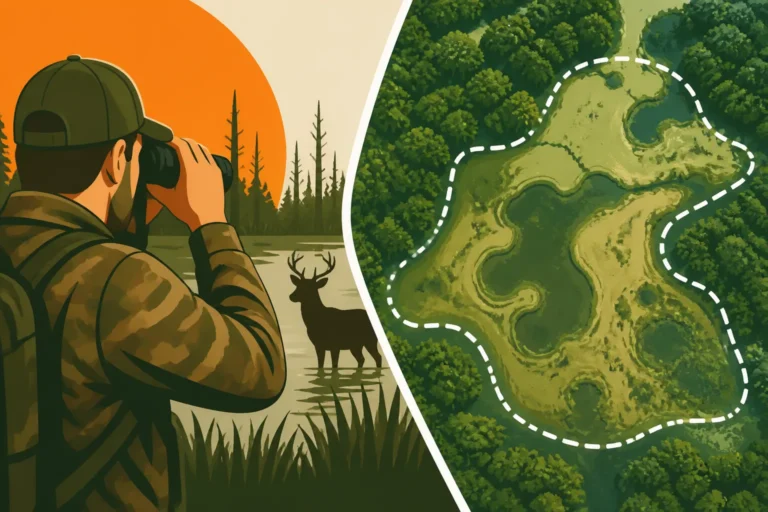
Travel corridors are the pathways deer use to move between food, water, and bedding. These can be obvious, like well-worn trails along a field edge or through a woodlot, or subtle, like a slight dip in terrain, a finger of woods extending into a field, or a narrow strip of cover between two open areas. Funnels – natural pinch points in the landscape – are particularly effective. These might be a narrow strip of timber connecting two larger woodlots, a ditch line, or the edge of a swamp that forces deer into a predictable path. Learning to read these topographical features and vegetation changes is essential. When you find a good travel corridor, look for fresh sign: tracks, droppings, rubs, and scrapes. These indicate active use and pinpoint ideal stand locations. Our guide on Hunting a Funnel Between Two Swamps offers some excellent insights into identifying these critical areas.
Mastering Scent Control and Stealth
Without bait, deer are relying on their incredible senses of smell, sight, and hearing even more. Any slip-up on your part can mean the difference between seeing a deer and having them bust you before you even know they're there.
Scent control is paramount. Deer can smell human scent incredibly well, and it lingers long after you've left an area. This isn't just about using scent-eliminating sprays; it's a multi-faceted approach. Start by washing your hunting clothes in scent-free detergent and storing them in airtight containers or bags. Shower with scent-free soap and shampoo before heading out. Avoid filling your vehicle with gas or stopping for coffee in your hunting clothes. Pay attention to your breath, too; a deer can often smell what you had for breakfast. Consider carrying a small bottle of scent-eliminating spray for a quick spritz on your boots or clothing if you brush up against something. Even with all these precautions, the wind is your ultimate scent control tool. Always hunt with the wind in your favor, carrying your scent away from where you expect deer to approach. No amount of spray will overcome a bad wind direction.
Stealth involves silent movement, minimizing visible presence, and blending into your surroundings. Wear quiet clothing that won't rustle or make noise as you move. Move slowly and deliberately, taking care where you place your feet to avoid snapping twigs or rustling leaves. Use terrain features, such as ditches, creek beds, or dense brush, to conceal your approach to your stand or still-hunting area. Once in your stand or blind, remain as motionless as possible. Even small movements can catch a deer's eye, especially in the low light of dawn and dusk. Practice drawing your bow or raising your rifle slowly and quietly at home, so you're not caught off guard by unexpected noise when a deer appears. Many hunters use mapping apps like GoHunt to plot quiet entry and exit routes that minimize disturbance to bedding and feeding areas, allowing them to slip in and out undetected.
Advanced Tactics for Pressured Deer
In Michigan, especially on public land, deer often experience significant hunting pressure. This makes them warier and more challenging to hunt. Employing advanced tactics can help you succeed where others might fail.
Leveraging Mock Scrapes and Decoys
While you can't use bait, you can use tactics that tap into a deer's natural curiosity and territorial instincts, especially during the pre-rut and rut phases.
Mock scrapes are an excellent way to simulate deer activity and challenge a buck's dominance. Find an existing low-hanging branch (a "licking branch") over a clear patch of ground, ideally along a travel corridor or near a known scrape line. Using a stick, scrape away the leaves and expose bare earth under the branch. Then, add some deer urine and glandular scents to both the ground and the licking branch. The key is to make it look and smell natural. Bucks, especially, are drawn to investigate and "work" these scrapes, leaving their own scent behind. Regularly refreshing mock scrapes can keep them active throughout the breeding season. This can often bring a buck within shooting range that might otherwise have just walked past. For more on this, check out our insights on Scrape Lines Along a Two-Track.
Decoys can also be highly effective, particularly for drawing in bucks during the rut. A buck decoy, especially a young buck or a doe, can challenge a dominant buck or attract an inquisitive one. Place your decoy in a visible location, ideally within shooting range of your stand, with the wind blowing your scent past the decoy and towards any approaching deer. Using a doe decoy with estrus scent can be particularly potent. Just be mindful of safety; always be sure of your target and what's beyond it, especially when using decoys on public land where other hunters might be present. Consider using a safety orange cap on your decoy during firearm season.
Still-Hunting and Drives in Heavy Cover
Sometimes, sitting and waiting isn't enough, especially if deer are holed up in thick cover or if you're hunting vast expanses of public land. This is where active hunting strategies like still-hunting and deer drives come into play.
Still-hunting is the art of moving incredibly slowly and deliberately through the woods, taking one or two steps, then stopping to observe and listen for several minutes. It's about hunting the deer rather than the stand. Focus on areas with good cover, varying topography, or dense bedding. Pay attention to every sound and movement. Use your binoculars constantly, scanning for horizontal lines that don't fit the vertical patterns of trees, or the flicker of an ear or tail. This method is incredibly effective in thick Michigan cedar swamps or dense pine plantations where deer can hide easily. The goal is not to spook deer, but to spot them before they spot you, allowing for a strategic shot opportunity. This is a skill that takes patience and practice but can be incredibly rewarding. Our guide on Still-Hunting Michigan Cedar Swamps provides deeper dives into this challenging but rewarding technique.
Deer drives, when executed safely and strategically, can be an excellent way to push deer out of heavy cover and provide shot opportunities for standers. This usually involves a small group of hunters: "pushers" who walk through thick cover, and "posters" who position themselves quietly along likely escape routes or funnels. Communication is key, as is a thorough understanding of the terrain and where deer are likely to run. Safety is paramount, especially on public land. Always know where every hunter in your party is located, and never take a shot unless you have a clear, safe background. Drives are particularly effective in larger blocks of public land, pushing deer out of known bedding areas towards more open timber or field edges where posters are waiting. For successful group hunts, consult Deer Drives With Three or Four Hunters.
Interpreting Deer Sign and Patterns
Becoming a proficient hunter without bait means becoming an expert at reading the subtle clues deer leave behind. Every broken twig, scuff mark, or disturbed patch of leaves tells a story.
Fresh tracks are perhaps the most obvious sign. Pay attention to their size, depth, and direction. Big, deep tracks often mean a bigger, heavier deer. Tracks with a splayed out look can indicate a running deer. Look for tracks that point directly towards your intended stand location, or that exit and enter dense cover at specific points. Droppings can tell you a lot about diet and freshness. Piles of fresh, soft droppings indicate recent activity. The shape and consistency can also give clues about what the deer has been eating – firm pellets for browse, more shapeless for soft mast.
Rubs and scrapes are advertisements of a buck's presence and dominance. Rubs are made when bucks rub their antlers against small trees and saplings, typically to remove velvet and later to mark their territory. Look for fresh rubs with shiny, exposed wood. Scrapes are bare patches of ground where bucks urinate and paw the earth, often under an overhanging "licking branch." Both rubs and scrapes become more frequent and active as the rut approaches. Following a line of rubs can sometimes lead you directly to a buck's core area. By diligently scouting these signs, you can piece together a picture of deer movement patterns, identify their preferred travel routes, and pinpoint prime locations for your stand. Using an app like GoHunt can help you mark and track these signs over time, building a comprehensive understanding of deer movement on your chosen hunting ground.
Comparative Table of Natural Deer Food Sources
| Food Source Type | Examples | Peak Season | Attractiveness | Common Locations | Notes |
|---|---|---|---|---|---|
| Hard Mast | White Oak Acorns | Early Fall | Very High | Upland ridges, mature timber | Preferred due to lower tannin, consumed first. |
| Red Oak Acorns | Mid-Late Fall | High | Mixed forests, river bottoms | Key late-season energy source after white oaks deplete. | |
| Soft Mast | Wild Apples, Crabapples | Early Fall | High | Abandoned homesteads, forest edges, clearings | Can be hit hard immediately after dropping. |
| Wild Grapes, Berries | Late Summer-Early Fall | Medium | Thickets, forest edges | Provide quick energy, often found near dense cover. | |
| Agricultural | Corn, Soybeans | Fall-Winter | Very High | Farm fields (Southern MI) | Provide both food and cover, especially standing corn. |
| Winter Wheat, Alfalfa | Fall/Spring | High | Farm fields, food plots | Green browse is attractive during lean times. | |
| Browse | Maple, Aspen, Dogwood, Briars | Year-round | Medium-High | Young clearcuts, forest regeneration, swamp edges | Critical for deer nutrition, especially in winter. |
| Forbs | Clover, Weeds, Grasses | Spring-Early Fall | Medium | Openings, food plots, disturbed ground | Easily digestible, provide essential nutrients. |
Disclaimer
Hunting is an inherently dangerous activity. Always prioritize safety, including knowing and following all Michigan hunting regulations, wearing appropriate safety gear, and being aware of your surroundings. The information provided in this guide is for informational purposes only and should not be considered a substitute for official DNR guidelines or professional instruction. Ensure you have the proper licenses and understand all rules related to hunting without bait in your specific Deer Management Unit (DMU).