Shot Placement on a Black Bear
There’s nothing quite like the thrill of pursuing a black bear in Michigan’s wild places. From the dense cedar swamps of the Upper Peninsula to the sprawling forests of the northern Lower, these magnificent animals test a hunter's skill and patience. But let's be honest, the excitement often comes with a healthy dose of anxiety, especially when it comes to making that critical shot. Bears are notoriously tough animals, built for survival, and placing a shot incorrectly can lead to a long, frustrating, and potentially unsuccessful tracking job, which is something none of us want. This guide is here to walk you through exactly where to aim, no matter the angle, to ensure you make the most ethical and effective shot possible when your moment arrives.
Understanding Black Bear Anatomy for Ethical Shots
When you're staring down a black bear, perhaps through the scope of your rifle or the peep sight of your bow, it's easy for the adrenaline to cloud your judgment. But taking a moment to truly understand their unique anatomy is paramount. Bears aren't built like deer; their bone structure and vital organ placement are different enough that applying deer-hunting shot placement rules can lead to poor outcomes. You’ve got to rethink where that "sweet spot" truly lies.
The Elusive "Sweet Spot" and Vital Organs
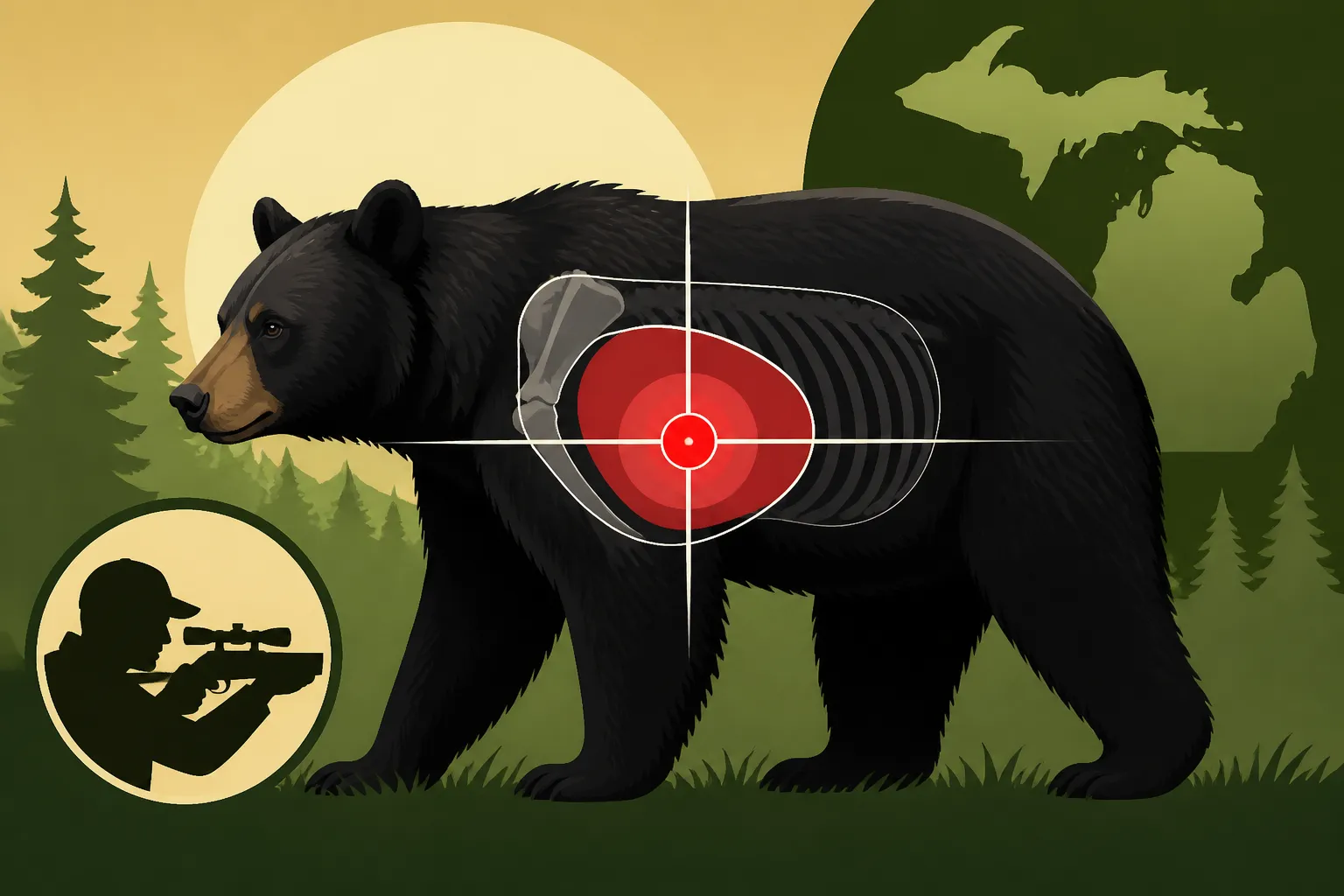
Unlike deer, where the lungs extend quite a bit forward, a bear’s vitals — the heart and lungs — are tucked a bit lower and more forward in their chest cavity, often protected by their heavy shoulder blade and dense muscle mass. What looks like a perfect deer shot might only clip the edge of a bear's lungs or hit the shoulder bone dead center. The actual heart is low in the chest, almost directly behind the forearm, and the lungs fill the cavity above and behind it. A shot placed too high or too far back, while potentially lethal on a deer, might only wound a bear, leading to a prolonged and difficult recovery.
To find that ideal placement, imagine a line running vertically up the bear's leg, just behind the shoulder. Then, picture a horizontal line about one-third of the way up from the bottom of the chest. Where these two lines intersect is generally your best aiming point for a broadside shot. This target area maximizes your chances of hitting both lungs and potentially the heart, ensuring a quick and humane harvest. It’s a smaller window than you might expect, emphasizing the need for precision.
Bone Structure and Shot Obstruction
A black bear’s shoulder is not just muscle; it's reinforced with heavy bone, including the scapula (shoulder blade) and humerus. These bones are incredibly dense and can deflect or stop even powerful bullets, let alone broadheads. If your shot hits this heavy bone directly, it dramatically reduces penetration to the vitals. This is why aiming behind the shoulder, rather than directly on it, is so crucial. You want to slip your projectile past the heavy bone and into the soft tissue of the lung cavity.
Think about the angle of the shoulder blade. When a bear is standing broadside, the shoulder blade often covers a good portion of the vital area from a direct frontal approach. Your goal is to shoot through the rib cage, not through the heavy shoulder. This requires a slight adjustment from what many deer hunters are accustomed to. For instance, with a high-quality mapping app like those offered by GoHunt, you can use the topography and vegetation to plan your approach, ensuring you get the best possible shot angle that avoids heavy bone and exposes the vitals.
Mastering Different Shot Angles in Michigan Bear Country
Once you understand the bear's anatomy, the next step is knowing how to apply that knowledge to various shot presentations. Bears are constantly moving, feeding, and shifting, so you rarely get a perfect, textbook broadside shot every time. Being prepared for different angles and knowing when to hold off is a mark of an ethical hunter. Many bears are harvested annually across Michigan’s bear management units, and understanding these angles is key to contributing to successful and ethical hunting.
The Broadside Shot: Your Best Bet
The broadside shot is the gold standard for black bear hunting. The bear is standing perpendicular to you, offering a clear view of its side. This is when the heart and lungs are most exposed, and the chance of a quick, clean kill is highest.
- Aiming Point: As discussed, visualize that vertical line just behind the leg, and the horizontal line one-third up from the bottom of the chest. This aims for the middle of the lung cavity, with a high probability of hitting the heart. Your projectile will enter behind the heavy shoulder bone, pass through both lungs, and ideally exit on the far side. This double lung shot almost guarantees a quick demise. If you’re utilizing a bait site, patience is paramount. Wait for the bear to turn perfectly broadside, ideally when it's relaxed and feeding, minimizing its movement and maximizing your shot opportunity. For those who prefer Hunting Bear Without Bait or Dogs, getting a clear broadside might require more meticulous stalking and setup.
Quartering Away: A Viable Option
A quartering-away shot means the bear is angled away from you, with its tail end slightly closer than its head. This can be a very effective shot, sometimes even better than a broadside, as it often allows for easier access to the vitals without hitting the heavy shoulder bone on the entry side.
- Aiming Point: For a quartering-away bear, your target shifts. You want your projectile to enter behind the last rib on the side closest to you, and angle forward towards the opposite shoulder. Imagine the exit point being in the opposite shoulder pocket. This path will typically travel through the liver, stomach, and both lungs, creating massive damage. It's a slightly longer penetration path, but it bypasses the thickest part of the shoulder on the entry side. This shot angle is often presented when a bear is slowly moving away or just turning, and is a great option if you can execute it precisely. However, it’s crucial to know your projectile’s capabilities. A bullet needs enough energy to travel that distance and exit, leaving a good blood trail. Utilizing resources like GoHunt, you can study topographical maps to predict bear movement patterns, which might help you anticipate and set up for these quartering-away opportunities.
| Shot Angle | Aiming Point | Primary Organs Hit | Ethical Rating | Notes |
|---|---|---|---|---|
| Broadside | Behind the front leg, one-third up from chest bottom | Heart, both Lungs | Excellent | Ideal shot; maximizes vital hit probability. |
| Quartering Away | Behind the last rib, aiming for opposite shoulder | Liver, stomach, both Lungs | Excellent | Bypasses near-side shoulder bone; critical for penetration. |
| Quartering To | Front of shoulder, aiming for opposite hindquarter | Single lung, shoulder bone | Poor | High risk of single lung hit, heavy bone deflection. Avoid. |
| Head-On | Center of chest, aiming for spine/neck | Brisket, spine, neck | Very Poor | Small target, high risk of wounding, extreme penetration needed. Avoid. |
Avoiding Risky Angles: Quartering To and Head-On
While broadside and quartering-away shots are generally considered ethical and effective, there are angles you absolutely want to avoid with black bears. These include quartering-to and head-on shots. The consequences of attempting these can be severe, leading to wounded animals and lost game, which is something no hunter wants.
-
Quartering To: This is when the bear is angled towards you, with its head and shoulder closer than its rear. While you might see a portion of the shoulder, the vital organs are heavily shielded. Your bullet or arrow would have to pass through a significant amount of bone, muscle, and potentially the gut before reaching the heart or lungs. Even if you hit a lung, it's often only one lung, and the chances of a quick kill are drastically reduced. This is a high-risk, low-reward shot. It's always better to wait for a better angle, even if it means letting the bear walk away. Ethical hunting means making the commitment to a clean harvest, and sometimes that commitment means holding your shot.
-
Head-On: A head-on shot is when the bear is facing directly towards you. This is arguably the riskiest shot angle. The target area for the vitals is incredibly small, and heavily protected by the brisket and skull. The likelihood of hitting a non-vital area and simply wounding the bear is astronomically high. While some might argue for a shot to the central nervous system (brain or spine) from this angle, the target is minuscule, and the chances of a clean kill are minimal. It’s simply not worth the risk. Wait for the bear to turn, or pass on the shot entirely. Your responsibility as a hunter is to make a clean, humane kill, and a head-on shot on a bear rarely accomplishes that goal.
Practical Considerations and Post-Shot Protocol
Beyond the aiming point, there's a lot to consider when hunting black bears. From the gear you choose to your actions immediately after the shot, every step contributes to a successful and ethical harvest. Michigan Black Bear Hunting can be incredibly rewarding, but it demands careful preparation.
The Importance of Patience and Confidence
Bear hunting often involves long hours of waiting, especially if you're hunting over bait or stalking in dense cover. Patience isn't just a virtue; it's a necessity. You might see a bear multiple times, but if the shot angle isn't right, or if the bear is fidgeting, you must hold your shot. A moment of impatience can ruin your hunt and lead to unnecessary suffering for the animal. Build your confidence by knowing your equipment inside and out. Practice shooting from various positions and at different distances so that when a bear finally presents itself, you're not second-guessing your ability to make the shot. This confidence will allow you to hold steady and make the precise placement required. Using mapping tools like GoHunt can aid in scouting areas where bears are likely to travel or feed, helping you set up in locations that might offer better, more predictable shot opportunities. Remember, understanding Michigan Bear Season Dates by Unit is crucial for planning your hunt and maximizing your time in the field.
Immediate Reaction and Tracking Strategies
What you do in the moments after the shot can be just as critical as the shot itself. Bears can cover ground quickly, and they can be incredibly resilient. Don't rush in immediately. Instead, observe the bear's reaction. Did it mule-kick, lurch, or just run off seemingly untouched? Pay close attention to the direction of travel and mark the exact spot where the bear was standing when you shot.
After a few minutes (longer for a bow shot, say 30 minutes to an hour), begin your tracking. Look for blood, hair, bone fragments, or any disturbance in the leaves or snow. Bear blood can be dark and thick, and sometimes not as profuse as deer blood, especially with a high lung shot where internal bleeding might be significant before it shows externally. Be thorough and slow. If the blood trail peters out, circle outward from the last known sign. Tracking a bear can be incredibly challenging in Michigan’s thick woods, especially in the Upper Peninsula where cover can be almost impenetrable. The same methodical approach you’d use for Tracking a Deer in Michigan Snow applies, but often with even greater intensity due to the bear's tenacity. If you lose the trail and darkness is setting in, it might be best to back out and return at first light with more trackers. This gives the bear time to expire and stiffen, making recovery safer and easier.
Gear and Preparation for Bear Recovery
Having the right gear is non-negotiable for bear hunting in Michigan. For firearms, a reputable cartridge like a .30-06, .308, .450 Bushmaster, or similar, loaded with a stout, controlled-expansion bullet, is ideal. These calibers offer the necessary penetration and energy to reach vitals through dense muscle and bone. Bowhunters should use heavy arrows with razor-sharp, well-constructed broadheads designed for deep penetration. Optics, whether a rifle scope or binoculars, need to be clear and perform well in low light, as bears are often most active during dawn and dusk. For example, when scouting for Spot-and-Stalk Bear in the Upper Peninsula, quality binoculars are indispensable for locating animals from a distance.
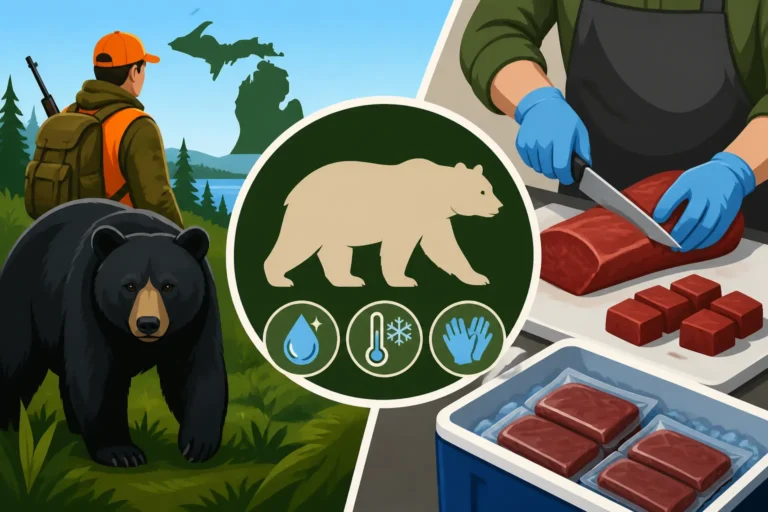
Beyond the weapon, bring a good flashlight or headlamp (with extra batteries!), flagging tape to mark the blood trail, and game bags or a sturdy sled for extraction. Bears are heavy, and getting one out of the woods can be a monumental task, especially if you’re deep in the forest. Think about how you'll manage the meat once the bear is down. If you're hunting in warmer weather, having coolers and ice ready is critical for Handling Bear Meat Safely. Preparing for Field Dressing a Deer in Cold Weather provides similar insights into proper field care. Knowing your unit and applying for the Michigan Bear Licence Drawing successfully are just the first steps; the real work begins after the shot.
Ethical Hunting and Respect for the Animal
The privilege of hunting comes with a profound responsibility: to pursue game ethically and treat every animal with respect. This means doing everything in our power to ensure a quick, humane harvest.
Making the Commitment to a Clean Harvest
A clean harvest isn't just about hitting the vitals; it’s about making the deliberate decision to only take high-percentage shots. It means resisting the urge to shoot at a running bear or one that’s partially obscured. It means knowing when to pass on a shot and waiting for another opportunity. This commitment reflects on all hunters and ensures the sustainability and respect for the resource. Every hunter should prioritize this commitment, understanding that it's a fundamental part of the hunting tradition. It’s also crucial to be familiar with Michigan’s regulations, which are designed to promote ethical hunting practices and game management, like those outlined in the Michigan Hunter Safety Requirement.
Knowing Your Limits and the Law
Every hunter has an effective range with their chosen weapon. Be honest with yourself about what that range is, and stick to it. Don't attempt a 200-yard shot with a bow if you've only practiced at 50, or a 300-yard shot with a rifle if you're only consistent at 150. Pushing your limits in the field is a recipe for disaster. Additionally, always be intimately familiar with Michigan's hunting regulations. This includes understanding Baiting Bears in the Upper Peninsula rules if you choose that method, or any other specific rules for your hunt. The Michigan Department of Natural Resources (DNR) publishes extensive guides each year, and it’s your responsibility to be up-to-date. Resources like GoHunt can also provide valuable information on regulations and unit specifics. Always confirm the latest information directly with the DNR. Responsible hunting is informed hunting, and a deep understanding of shot placement is just one facet of that broader commitment. Understanding the Michigan bear population estimate also helps hunters appreciate the importance of ethical practices for sustainable management.
Disclaimer
The information provided in this guide is for educational and informational purposes only and is not a substitute for official Michigan Department of Natural Resources (DNR) regulations. Hunters are responsible for knowing and adhering to all current state and federal hunting laws. Always consult the latest Michigan hunting digests and regulations before heading into the field. Hunting involves inherent risks; always practice firearm and archery safety.