Knocking on Doors in Michigan Farm Country
The dream of filling a Michigan deer tag on sprawling farm country often bumps up against a harsh reality: most of that prime habitat is private land. For many hunters, the frustration of driving past fields full of deer with no legal access is all too real. This guide is here to help you navigate the intimidating but rewarding process of respectfully asking landowners for permission to hunt in Michigan's agricultural regions.
Why Asking for Permission is Your Best Bet in Farm Country
Michigan's lower peninsula, particularly the southern half and the "Thumb" region, is a mosaic of agricultural fields, woodlots, and small pockets of state land. While there are certainly opportunities for Southern Michigan Farm Country Deer Hunting on public ground, the reality is that some of the best hunting, especially for mature deer less pressured by crowds, lies beyond the "No Trespassing" signs. Many hunters feel a deep sense of hesitation about approaching strangers, fearing rejection or feeling like they're bothering someone. However, landowners often appreciate the respect shown by a direct, polite request over a hunter simply assuming access or, worse, trespassing. This direct approach not only opens doors (literally) but can also lead to lasting relationships and incredible hunting experiences away from the usual public land bustle.
Understanding Landowner Perspectives
It's crucial to put yourself in a landowner's shoes. They've likely dealt with issues like litter, property damage, gates left open, or hunters disrespecting their land or livestock. Their default might be "no" because of past negative experiences or a general distrust. Therefore, your goal isn't just to ask for permission, but to build trust and demonstrate that you are a responsible, respectful individual. Many landowners appreciate having someone keep an eye on their property, especially during deer season when poaching can be an issue. Some might even welcome help with nuisance wildlife like coyotes or groundh. Understanding their concerns and offering solutions or reassurance can go a long way.
The Realities of Limited Public Access
While Michigan boasts millions of acres of public land, a significant portion of the most productive deer habitat in the southern Lower Peninsula is privately owned. Areas with rich agricultural resources provide abundant food sources, leading to healthier deer and often larger bucks. The public lands in these regions can be heavily pressured, especially during the firearm season. By securing private land access, you're not just getting permission to hunt; you're often gaining access to higher-quality hunting opportunities with less competition. This is particularly true if you're targeting specific game, like during Field Hunting Geese in Cut Corn or seeking out late-season deer feeding heavily on leftover crops.
Thorough Preparation Before You Leave Home
Before you even think about knocking on a door, a significant amount of homework is required. This isn't just about finding properties; it's about making a good first impression and showing you're serious and respectful. Winging it will likely lead to frustration and wasted time. The more prepared you are, the more confident you'll feel, and that confidence will translate into a more professional and trustworthy interaction with the landowner.
Scouting and Identifying Potential Properties
Start your search by poring over maps – physical topographical maps, plat books, and online mapping tools are your best friends. Look for areas that have good cover (woodlots, swamps, thickets) adjacent to agricultural fields. River bottoms are often overlooked but can be travel corridors. Tools like GoHunt are invaluable for this pre-scouting phase. With GoHunt, you can overlay different layers to identify property boundaries, landowner names, and potential access points, all from the comfort of your home. Focus on farms that aren't already leased or don't have obvious hunting pressure (like numerous treestands visible from the road). Don't just look for deer; consider the potential for other game like small game or even fall turkeys, which might increase your chances of securing permission. You might even find potential spots for Hunting Small Private Tracts in Michigan that others overlook.
Researching Landowner Information
Once you've identified a few promising properties using tools like GoHunt or plat books, try to gather some information about the landowner. Their name is critical. Knowing if they're a full-time farmer, a hobby farmer, or an absentee landowner can change your approach. Sometimes, a quick search of county records or even a conversation with a local shop owner can provide valuable insights. This isn't about being creepy; it's about being informed. For instance, if you know they raise livestock, you can proactively mention your awareness of their animals and your commitment to safety. You should also be aware of relevant laws like Michigan Trespass and Permission Law to ensure your requests are always above board.
Essential Items to Bring
When you head out to knock on doors, be prepared. First impressions matter.
| Item | Purpose |
|---|---|
| Clean, Presentable Clothes | Shows respect, not hunting gear. |
| Hunting License/ID | Proof you're a legal, licensed hunter. |
| Custom Map (aerial/topo) | To discuss specific areas of interest on their property. |
| Pen and Small Notebook | To take notes, write down contact info, or even sketch out boundaries. |
| Reference List | Names of individuals who can vouch for your character (optional, but powerful). |
| Small Token of Appreciation | A local product, a gift certificate to a local store (after permission is granted). |
| Written Permission Form | A simple form to make it official, outlining agreed-upon terms. |
Having a clear, detailed map, perhaps printed from GoHunt with property lines highlighted, shows professionalism and allows for a concrete discussion about where you'd like to hunt and where they'd prefer you not to go. You can easily highlight potential deer travel corridors or areas where you'd be setting up a stand, perhaps along a swamp edge, a topic covered in Reading Aerial Photos for Swamp Deer.
Mastering the Ask: Your Approach at the Door
This is the moment of truth. How you present yourself and what you say can make all the difference. Remember, you're not just asking for access; you're selling yourself as a responsible, trustworthy individual. Confidence, politeness, and clarity are your greatest assets. Avoid approaching doors during meal times, early mornings, or late evenings. Mid-morning or early afternoon on a weekday is often best.
The Initial Greeting and Introduction
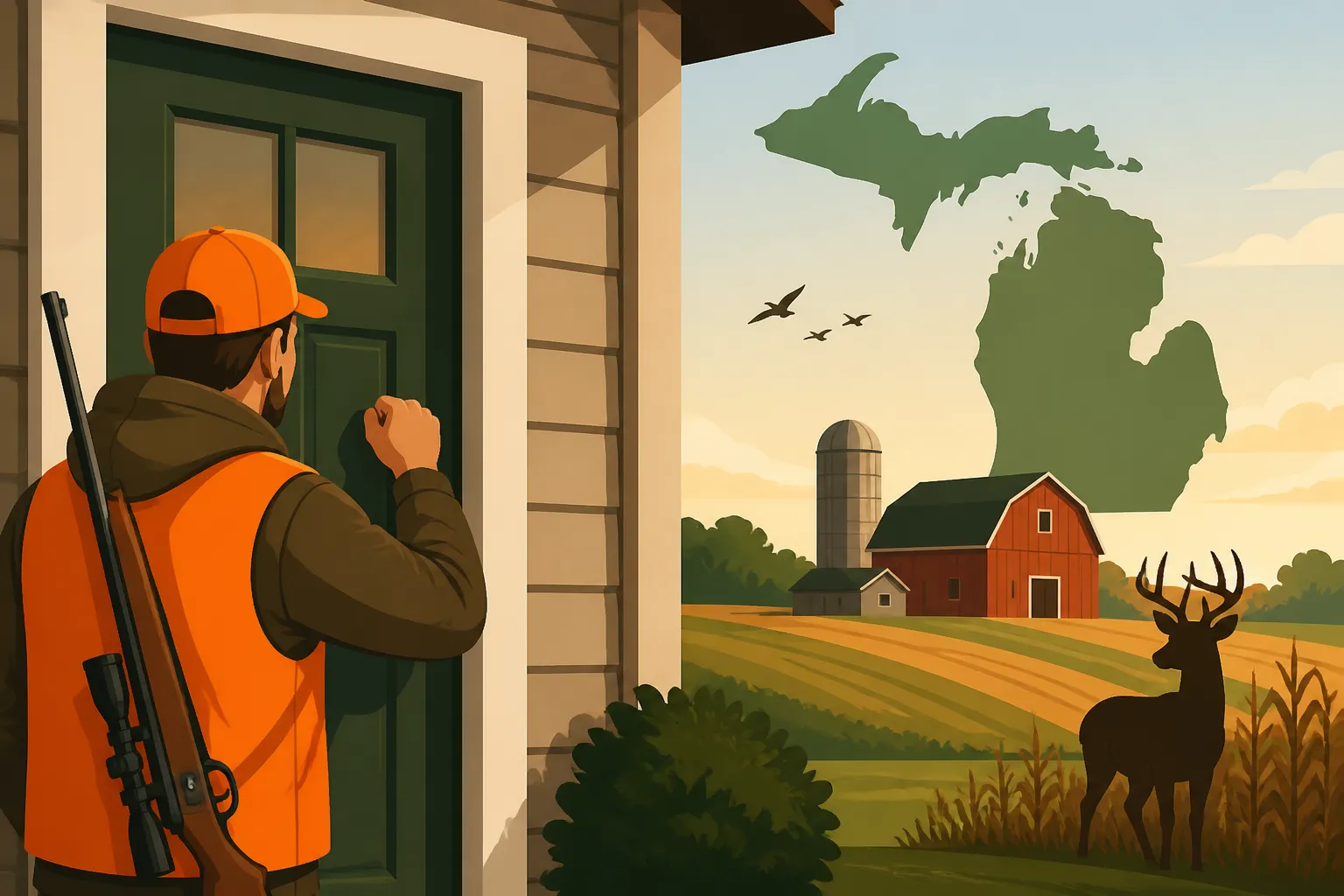
When someone answers the door, offer a friendly smile and introduce yourself immediately. "Hi, my name is [Your Name], and I live over in [Your Town/Area]. I apologize for bothering you, but I was wondering if I could speak with [Landowner's Name] for a moment?" If the person who answers is the landowner, even better. State your purpose clearly and concisely, but don't rush. "I'm an avid hunter, and I noticed your property has some beautiful habitat that looks ideal for deer. I was hoping to respectfully ask for permission to hunt on your land this upcoming season."
Always be ready for a "no." If they say no, thank them for their time, wish them a good day, and move on. Don't argue, don't pressure, and don't take it personally. A polite exit leaves the door open (no pun intended) for future requests, or at least ensures you haven't burned a bridge in the community.
What to Say and How to Present Yourself
Your appearance and demeanor are key. Dress cleanly and neatly, not in camouflage. You're trying to build rapport, not intimidate. Speak clearly and maintain eye contact.
Key points to convey:
- Safety: Emphasize your commitment to safety, both for yourself and for their family and livestock. Mention you're a licensed hunter and might even bring up your Michigan Hunter Safety Requirement certification.
- Respect for Property: Promise to leave gates as you found them, avoid driving off established trails, and pack out everything you pack in.
- Knowledge of Laws: Show you understand local regulations, like Where Michigan Restricts Rifles for Deer if applicable to their area, or specific antler point restrictions.
- Specifics of Your Hunt: Be clear about what you intend to hunt (e.g., "primarily deer," "turkeys," "ducks in the marsh") and during what seasons. If they have concerns about certain seasons, you can be flexible.
- Offering Help: Sometimes, landowners might appreciate an extra hand. Offer to help with chores like fixing a fence, clearing brush, or even just keeping an eye on things. This isn't a bribe, but a genuine offer of neighborly assistance.
- Flexibility: Be open to their conditions. They might only allow archery hunting, or prohibit hunting near their house or specific fields. Work with them.
If they seem hesitant, offer to let them call your references. This is a powerful demonstration of trustworthiness.
Addressing Common Landowner Concerns
Landowners often have valid concerns. Anticipate these and have reassuring answers ready:
- Safety around their home/livestock: Reassure them you will always know your backdrop, will shoot away from buildings, and will be mindful of any animals. Offer to use a ground blind or specific stand locations away from sensitive areas, such as detailed in Using a Ground Blind on Michigan State Land, which applies equally to private land.
- Property Damage: Promise to respect their property, not cut trees, damage crops, or litter.
- Poaching/Trespassing: Offer to report any suspicious activity you see on their land. You become an extra set of eyes.
- Crowds: Assure them it will only be you, or perhaps you and one other trusted individual, and you will coordinate visits.
- Ethics: If they mention baiting concerns, you can explain that you adhere to Hunting Deer Without Bait in Michigan rules and prefer ethical hunting methods.
Always remember to bring a written permission form. A simple document stating who has permission to hunt, on what property, for what species, and during which dates, signed by both parties, provides clarity and legal protection for everyone involved.
Building and Maintaining the Relationship Beyond the First Hunt
Securing permission is just the first step. The real success comes from maintaining a positive, long-term relationship with the landowner. This isn't a one-time transaction; it's an ongoing commitment to respect and communication. A good relationship means you might have a hunting spot for years, and they might even refer you to other landowners.
Communication is Key
Before each season, and even throughout the year, touch base with the landowner. A simple phone call or quick visit to say hello, check if they have any concerns, or ask about specific field work goes a long way. Always inform them before you plan to come out to hunt. Let them know when you'll be there and when you expect to leave. If you get a deer, tell them! Offer them some venison. If something unexpected happens, like a gate accidentally getting left open (and you close it), immediately inform them. This kind of proactive communication builds immense trust.
Demonstrating Continued Respect and Responsibility
Your actions speak louder than words. Consistently follow all rules and conditions they set. Leave the property cleaner than you found it. If you see trash, pick it up. If you notice a broken fence, offer to fix it or at least inform them. If you’re hunting on a farm that’s still harvesting, understand their schedule and stay out of their way. Being aware of Hunting a Standing Cornfield in the Thumb will mean understanding that combines and heavy equipment take precedence. After the season, consider a small thank-you gift – a gift basket, a gift card to a local restaurant, or a few hours of your labor. This gesture, whether it's dropping off a few smoked fish or helping with a chore, reinforces your appreciation for their generosity.
Offering to Help Beyond Hunting Season
True appreciation often extends beyond the hunting months. If you've been granted permission, consider offering assistance with non-hunting tasks. This could be helping to clear snow from a long driveway, lending a hand with minor repairs, or assisting with fieldwork during a busy planting or harvest season. For example, if you see them struggling with a fallen tree, offering to help with Getting a Deer Out of a Michigan Cedar Swamp isn't directly relevant, but your willingness to help with any difficult task demonstrates your value as a neighbor, not just a hunter. Such gestures cement your relationship and often ensure your hunting access for years to come.
Disclaimer
The information provided in this guide is for general informational purposes only and does not constitute legal advice. Hunters are responsible for understanding and adhering to all Michigan hunting regulations, local ordinances, and private property laws. Always obtain explicit permission before entering private land.