Michigan Spring Turkey Harvest Numbers
It's no secret that spring turkey hunting in Michigan is a passion for many of us, but trying to get a handle on how well hunters are actually doing, or how the turkey population is really faring, can feel like a real guessing game. You might hear stories around the campfire or see a few successful posts on social media, but what are the actual numbers telling us? This guide will dive deep into Michigan's spring turkey harvest data, explaining what it means, how it's collected, and how you can use this information to better understand our state's wild turkey populations and maybe even improve your own hunting strategy.
Understanding Michigan's Spring Turkey Harvest Data
When we talk about "harvest numbers," it's easy to jump to conclusions, but these figures are far more nuanced than a simple tally. For Michigan hunters, knowing these statistics provides a valuable snapshot, not just of recent success, but also of the overall health and distribution of the wild turkey population across our diverse landscapes. It’s a key piece of the puzzle that the Michigan Department of Natural Resources (DNR) uses to manage this incredible game bird, and it helps us, as hunters, appreciate the broader picture beyond our individual hunts.
What the Numbers Really Tell Us
First off, it's crucial to understand that spring turkey harvest numbers aren't a direct count of every bird in the woods. Instead, they represent the reported success of hunters who were fortunate enough to tag a gobbler during the spring season. These figures are a powerful indicator of population trends, hunter effort, and even environmental factors that might have played a role in a given year. A high harvest count usually suggests a healthy, robust turkey population and favorable conditions, while a dip might signal a challenging hatch year or a decline in hunter participation. It’s a bit like taking the pulse of the turkey woods – you're looking for consistent rhythms and understanding what might cause a temporary flutter or a longer-term change.
What these numbers don't always show directly is the total number of turkeys in Michigan. That's a much more complex calculation involving brood surveys, habitat assessments, and scientific modeling. However, consistent harvest data, particularly when broken down by specific hunting units, does offer insights into where turkeys are abundant and where they might be facing challenges. They also reflect the dedicated effort of thousands of Michigan hunters, all vying for that elusive spring gobbler.
How the DNR Collects Harvest Information
So, how does the DNR gather all this information? It's largely thanks to us, the hunters! Michigan operates a mandatory harvest reporting system for turkeys, which means every hunter who successfully takes a gobbler in the spring must report their kill within 72 hours. This isn't just a bureaucratic hoop to jump through; it's a vital contribution to wildlife management. Without accurate and timely reports, the DNR would be flying blind, making it much harder to make informed decisions about future seasons, quotas, and conservation efforts. You can imagine how difficult it would be to manage a resource if you didn't know how much of it was being used!
Hunters have a few convenient ways to report their harvest. The easiest and most common method is online, through the DNR's website. There's also the option to use The Michigan DNR Hunt Fish App on your smartphone, which is incredibly handy when you're out in the field. These systems prompt you for crucial details like the date of harvest, the county and hunt unit where the bird was taken, and whether it was an adult gobbler or a jake. This granular data allows the DNR to analyze success rates across different regions and timeframes within the season. For instance, understanding specific unit success rates helps inform decisions regarding Michigan Turkey Unit M Quota or other region-specific allocations. Every reported bird contributes to a larger dataset that paints a clearer picture for biologists and ultimately helps ensure sustainable hunting opportunities for generations to come.
Analyzing Recent Spring Turkey Harvest Trends
Understanding the methodology behind the harvest data is one thing, but actually diving into the trends can be eye-opening. Michigan's diverse landscapes, from the big timber of the Upper Peninsula to the agricultural fields of the Thumb, mean that turkey populations and hunting success can vary significantly. By looking at these trends, we can start to see patterns, understand the health of local populations, and get a better sense of what challenges or opportunities might lie ahead for turkey hunters.
Statewide Averages and Regional Variations
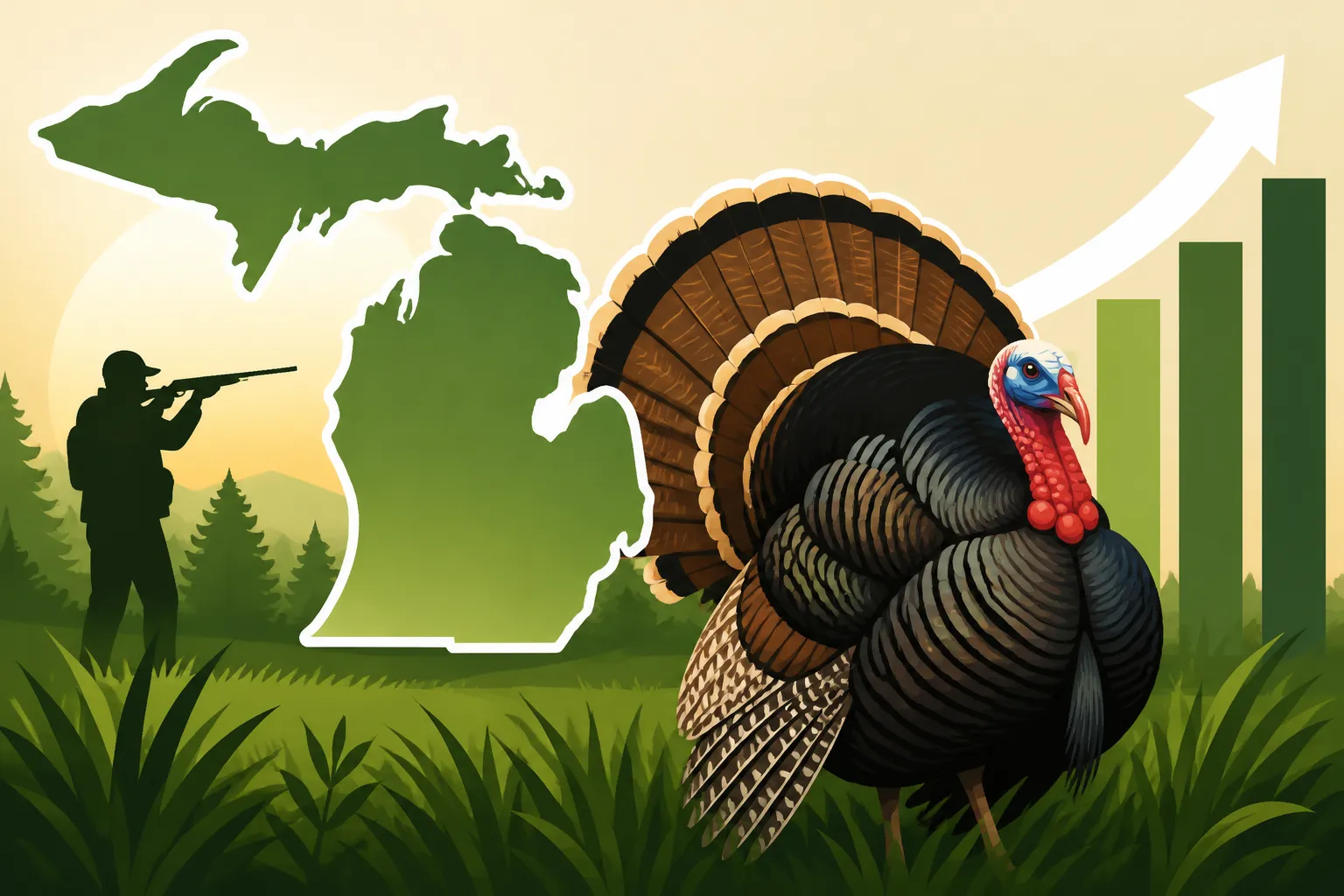
Overall, Michigan's spring turkey harvest numbers have remained relatively stable over the past few years, a testament to effective management and resilient turkey populations across much of the state. However, "stable" doesn't mean "uniform." When you break down the statewide averages, you quickly see how much variation exists between our major regions. The Northern Lower Peninsula, with its mix of hardwoods and clearcuts, often sees strong harvests, reflecting both robust bird numbers and significant hunter access. Southern Michigan, particularly the farm country, can also be a hotspot, especially early in the season before agriculture really takes off, offering unique Turkey Tactics for Southern Michigan Farms.
The Upper Peninsula, on the other hand, can be a different story. While it holds a solid turkey population, especially in certain areas, harvest numbers can be more susceptible to harsh winters and slower spring thaws. Hunters pursuing birds in the U.P.'s expansive timber might find success, but the overall harvest might be lower compared to the Lower Peninsula due to factors like less dense bird populations in some areas and often more challenging hunting conditions. Hunting Turkeys in Upper Peninsula Timber can be a truly rewarding experience, but it often requires different expectations and strategies. When looking at data for specific hunt units, you might notice certain areas consistently produce higher numbers, indicating strong local populations and good habitat. Conversely, areas showing declining numbers might signal habitat loss, increased predation, or other environmental stressors that warrant closer attention from wildlife managers.
Factors Influencing Year-to-Year Harvests
Numerous factors contribute to the ups and downs of Michigan's spring turkey harvest from one year to the next. Perhaps one of the most critical is the weather during the previous spring and summer. Wild turkeys are ground-nesting birds, and their poult (young turkey) survival is highly dependent on warm, dry conditions during the crucial nesting and brooding period. A cold, wet spring can significantly reduce the number of poults that survive to adulthood, directly impacting the number of jakes and two-year-old gobblers available for hunters in subsequent seasons. This is why you often hear hunters and biologists alike talking about "hatch success."
Another significant factor is hunter effort and participation. If fewer hunters head afield, or if hunters face exceptionally challenging weather conditions during the season itself (like constant rain or high winds), the harvest numbers might naturally be lower, even if the bird population is healthy. Conversely, a surge in hunter interest or a stretch of perfect hunting weather can lead to a banner year. Habitat changes, such as extensive logging that creates new clearings and young forest growth, or urban sprawl encroaching on traditional turkey habitat, also play a long-term role. Even disease outbreaks, though thankfully rare for turkeys, can impact localized populations. Understanding these influences helps us appreciate that harvest numbers are not just about "how many turkeys there are," but a complex interplay of biology, environment, and human activity.
Interpreting Harvest Numbers for Your Hunt
Okay, so we’ve delved into how the numbers are gathered and what influences them, but how can all this data actually help you as a hunter? It's true that no spreadsheet will guarantee you a gobbler, but using harvest numbers wisely can sharpen your focus, help you scout more effectively, and set more realistic expectations for your time afield. It's about combining broad trends with boots-on-the-ground knowledge to make informed decisions before and during your hunt.
How Harvest Data Can Inform Your Scouting
Thinking about where to focus your efforts for the upcoming spring? Harvest data can be a fantastic starting point. By reviewing past Michigan Turkey Harvest Numbers for various hunt units or even specific counties, you can identify historically strong areas. If a particular unit consistently produces high harvest numbers, it’s a good indication that the habitat within that unit is generally favorable for turkeys and supports a healthy population. This doesn't mean every square acre is teeming with birds, but it gives you a much better chance than simply picking a spot at random.
Once you’ve identified a promising unit, you can then drill down further. Combine this harvest information with modern mapping tools, like those offered by GoHunt, to analyze habitat types within that successful unit. Look for the features turkeys love: a mix of mature timber for roosting, open fields or clearings for strutting and feeding, and dense cover for nesting and escape. If you see an area with consistent harvest success that also boasts excellent habitat on a detailed map, you're starting to build a compelling case for where to spend your scouting time. Remember, high harvest numbers signal potential, but successful scouting and understanding the current conditions are what ultimately translate that potential into opportunity.
Setting Realistic Expectations and Adaptable Tactics
While harvest data can point you in the right direction, it's absolutely vital to approach it with a realistic mindset. Past success is never a guarantee of future results. A unit that had an incredible harvest two years ago might have experienced a poor hatch last spring, meaning fewer birds are available this season. Or, perhaps hunter pressure has shifted, pushing birds into more secluded areas. This is why combining historical data with current scouting and adaptability in the field is so crucial.
Knowing the trends helps you manage your expectations. If you're hunting in an area that typically sees lower harvest numbers, you might need to commit more time, cover more ground, or refine your calling strategies. Conversely, in historically high-producing areas, you might still face challenges from other hunters or highly pressured birds. The key is to be flexible. Don't be afraid to change your calling sequence, move locations if your initial setup isn't producing, or even alter your hunt plans based on what the birds are telling you on any given day. A good turkey hunter is always learning, always adapting, and using every piece of information available – from long-term harvest data to the subtle gobble in the distance – to increase their odds.
Beyond the Numbers: The Bigger Picture of Turkey Management
Looking at Michigan's spring turkey harvest numbers is about more than just personal hunting success; it's a window into the broader world of wildlife management and conservation. These figures are a critical component in ensuring that wild turkeys continue to thrive across our state, providing incredible hunting opportunities for generations to come. It’s a success story built on science, dedication, and the collective effort of hunters and conservationists.
Population Health and Sustainable Hunting
The DNR utilizes harvest data, along with other surveys and research, to assess the overall health and population stability of wild turkeys in Michigan. If harvest numbers show a consistent decline in specific areas, it signals to biologists that a closer look is needed. Are there habitat issues? Is there increased predation? Is a disease at play? This data directly informs management decisions, such as adjusting the number of available licenses, altering season dates, or even focusing habitat improvement projects in particular regions. Without this continuous monitoring, the state wouldn't be able to practice sustainable hunting, which is the cornerstone of modern wildlife conservation.
Michigan’s wild turkey population is actually a fantastic example of successful wildlife restoration. Turkeys were once extirpated from much of the state, but thanks to dedicated efforts to trap and transfer birds into suitable habitats, combined with wise hunting regulations, they have made an incredible comeback. This history, often highlighted when discussing How Turkeys Were Restored to Michigan, underscores the importance of ongoing data collection and adaptive management. It reminds us that our ability to hunt turkeys today is a direct result of these efforts, and our continued participation in harvest reporting ensures the legacy lives on.
The Hunter's Role in Data Collection
As hunters, we are not just consumers of a resource; we are active participants in its management. Every time you report your turkey harvest, you are providing invaluable data that helps the DNR track population trends, understand local fluctuations, and make informed decisions about future seasons. It's a simple, yet profoundly important, civic duty for any ethical hunter. Imagine if everyone decided not to report their harvest – the data would be incomplete, misleading, and the DNR's ability to effectively manage the resource would be severely hampered.
So, when you're successful this spring, take those few minutes to log onto the website or open your GoHunt app and report your bird. It’s a small effort that contributes to a much larger goal: ensuring healthy, huntable turkey populations for years to come. Your actions directly impact the future of turkey hunting in Michigan, helping shape everything from Michigan Spring Turkey Season Dates to specific bag limits. By taking responsibility for our harvests, we reinforce the vital link between hunting and conservation, ensuring that the thrill of a spring gobbler can be experienced by future generations of Michigan hunters.
Disclaimer
This article is for general informational purposes only and does not constitute professional advice. Laws, prices and regulations vary by location and change over time. Consult a qualified professional for guidance on your specific situation.