Michigan Grouse Enhanced Management Sites
One of the most rewarding challenges in Michigan hunting is pursuing ruffed grouse, those explosive thunderbirds of the northern woods. But finding consistent action can be tough, especially on vast tracts of public land. This guide will take a deep dive into Michigan's Grouse Enhanced Management Sites (GEMS), explaining what these special areas are, how to locate them, and the best strategies for hunting them, helping you unlock more successful days afield.
Understanding Michigan's Grouse Enhanced Management Sites (GEMS)
Michigan's commitment to robust wildlife populations means proactive management, and for ruffed grouse, that often comes down to one thing: aspen. GEMS are a prime example of how focused habitat work can create incredible hunting opportunities, providing hunters with concentrated areas where grouse thrive. If you've ever felt overwhelmed by the sheer scale of Michigan's state forests, GEMS offer a beacon, guiding you to some of the best cover available.
What are GEMS and Why Were They Created?
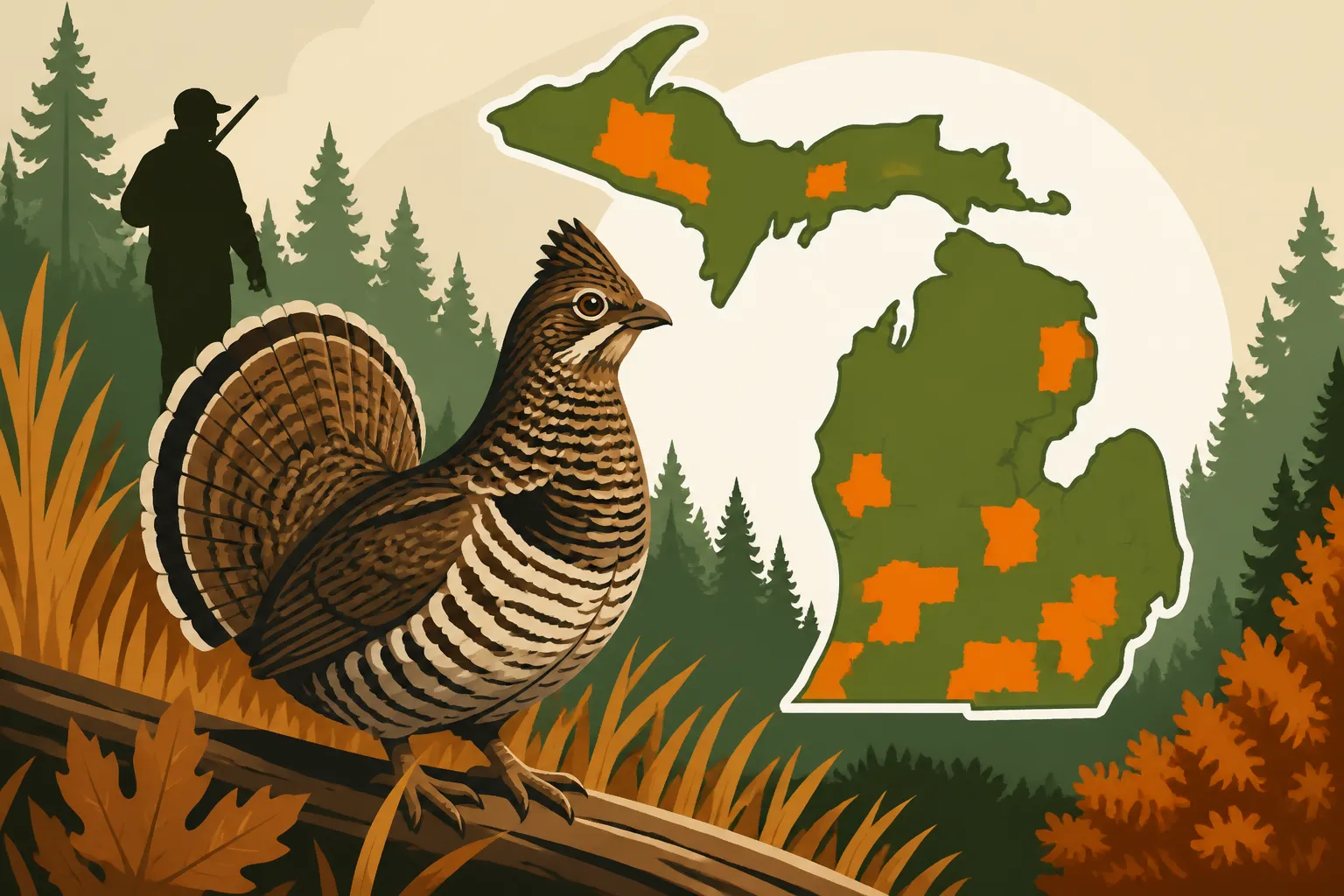
GEMS stands for Grouse Enhanced Management Sites. These aren't just random chunks of woods; they are specific, designated areas, often encompassing several thousand acres, that have been intensely managed by the Michigan Department of Natural Resources (DNR) with the primary goal of creating and maintaining prime ruffed grouse habitat. The idea behind GEMS was to concentrate habitat efforts, making it easier for hunters to find consistent action and for grouse populations to flourish in specific, high-quality zones. For years, hunters might spend countless hours scouting or simply driving around, hoping to stumble upon a good aspen cut. GEMS streamline this process, essentially telling hunters, "Here's where we've put in the work, come and enjoy the results!"
These sites were developed to address the cyclical nature of grouse populations and the general decline of quality young forest habitat across some parts of the state. Without active management, many forests mature into older, less diverse stands, which aren't ideal for grouse. By implementing targeted timber harvests and other practices within GEMS, the DNR ensures a continuous supply of the younger forest stages that grouse need for survival and reproduction. It's a testament to the fact that good hunting isn't always just about luck; often, it's about smart, dedicated habitat management.
The Importance of Aspen in Grouse Habitat
If you talk to any seasoned grouse hunter, the word "aspen" will come up almost immediately. Aspen trees are absolutely critical to ruffed grouse for several reasons, making them the cornerstone of any successful Grouse Hunting Michigan Aspen Cover strategy. Young aspen stands, typically those between 5 and 25 years old, provide dense overhead and lateral cover, which is essential for protecting grouse from avian predators like hawks and owls, and ground predators like coyotes and foxes. This thick, almost impenetrable cover makes it difficult for predators to spot and ambush grouse.
Beyond just cover, aspen offers a buffet of food sources for grouse throughout the year. In the spring, grouse feed on the catkins (buds) of aspen trees, which are a vital energy source after a long winter. During the summer, the leaves and insects found on aspen provide sustenance for broods of young grouse. Even in winter, when snow blankets the ground, grouse will "bud" on the terminal buds of aspen trees, which are a critical food supply when other options are scarce. This combination of robust cover and a reliable food source across all seasons makes aspen cuts, particularly young ones, the absolute best place to find ruffed grouse, and why understanding How Old a Cut Should Be for Grouse is so important.
How GEMS Benefit Ruffed Grouse Populations
The focused management within GEMS creates a mosaic of forest ages, which is ideal for grouse. Imagine a patchwork quilt where each square represents a different age of aspen or other tree species. This diversity ensures that all aspects of a grouse's life cycle are supported within a relatively small area. Young, dense aspen provides escape cover and brood-rearing habitat, while slightly older stands might offer drumming logs for males in the spring. Mature forest edges provide diversity and additional food sources.
By concentrating these efforts, GEMS essentially become ecological magnets for grouse. The increased availability of high-quality habitat means better survival rates for chicks, more successful nesting, and generally healthier and more numerous grouse populations within these managed zones. Hunters often report seeing more birds and having more flushes per hour in GEMS compared to unmanaged public lands. This isn't accidental; it's the direct result of thoughtful, long-term planning and hard work by the DNR and its partners to create optimal conditions for these iconic game birds, thereby contributing significantly to Michigan's overall Ruffed Grouse and Woodcock in Michigan populations.
Locating and Accessing Michigan GEMS
The first step to hunting GEMS is knowing where they are and how to navigate them. Gone are the days of relying solely on paper maps (though they still have their place!). Modern digital tools have revolutionized scouting and in-field navigation, making GEMS much more accessible for the average hunter. Understanding land ownership and access rules is crucial, as always, when heading into Michigan's vast public lands.
Utilizing Digital Tools for GEMS Navigation
Michigan's DNR provides maps and information about GEMS on their website, which is a great starting point. However, to truly maximize your time afield and pinpoint specific cover, you'll want to leverage powerful mapping applications. Tools like onX Hunt and GoHunt are invaluable for GEMS. These apps allow you to overlay various map layers, including public land boundaries, timber harvest data (which shows the age and type of forest cuts), and even topo lines or satellite imagery. This level of detail lets you virtually "walk" the property from your couch, identifying potential hot spots.
For example, with onX Hunt, you can zoom in on a GEMS area and see exactly where the recent clear-cuts are, or where older aspen stands meet younger growth. You can drop waypoints on promising looking cover, mark your parking spots, and track your movements in real-time while hunting. This prevents you from inadvertently trespassing or getting disoriented in the thick stuff. Think of it as your personal, digital scout that you carry right in your pocket. Knowing how to use these tools effectively is key to Scouting Michigan Public Land Before Season and making the most of your GEMS experience.
Identifying Key Features on GEMS Maps
When studying GEMS maps, whether digital or physical, you're looking for specific habitat features that scream "grouse." The most important is, of course, young aspen stands. On timber harvest maps, these are often marked with specific codes or colors indicating recent logging activity. Look for areas that were cut 5 to 15 years ago; these will be in their prime for dense cover. Older aspen, say 20-30 years, can still hold birds, especially if they are mixed with other species, but the younger stuff is typically hotter.
Beyond aspen, keep an eye out for diverse edges. Where an aspen cut meets a swamp, a pine plantation, or even a more mature hardwood stand, these transition zones often concentrate birds. Old two-tracks, forgotten logging roads, or small openings can also be productive, as grouse will use these for dusting or feeding. These features, often subtle on a map, become obvious once you're on the ground. Familiarizing yourself with these visual cues on a map will significantly increase your efficiency and allow you to cover ground more purposefully when hunting Grouse Hunting Michigan Aspen Cover.
General Access Rules and Considerations
GEMS are typically located on Michigan State Forest land, meaning they are open to public hunting. However, it's always wise to double-check specific regulations and be aware of any localized closures or rules, especially for any unique GEMS. Access to these areas generally follows standard Michigan public land rules. You'll often find parking areas or roadside pull-offs near the perimeter of GEMS, but don't expect perfectly paved roads. Many access points will be on gravel forest roads or two-tracks, which can become challenging to navigate after heavy rain or snow.
Always be mindful of any signage indicating private property adjacent to public land. While GEMS are public, they are rarely perfectly square and can border private parcels. Having your digital map with property boundaries clearly marked, like those found on onX Hunt or GoHunt, is essential to avoid any accidental trespassing. Remember to always display adequate hunter orange during firearm seasons, and review general regulations regarding vehicle use on forest roads. Many GEMS are remote, so inform someone of your hunting plans and expected return time for safety, especially if you plan on exploring deep within one of the larger sites.
Hunting Strategies for Michigan GEMS
Hunting GEMS isn't just about showing up; it's about understanding grouse behavior and how to effectively navigate the dense cover they call home. Whether you hunt with a dog or prefer to walk them up yourself, having a solid strategy will make your day more productive and enjoyable.
Reading the Cover: What to Look For
When you step into a GEMS site, the sheer amount of cover can be overwhelming. It all looks "grousey," right? But within that thick tangle, certain micro-habitats are more likely to hold birds. Focus on the densest patches of young aspen, especially those with an understory of briars, dogwood, or other shrubs. Grouse love this kind of multi-layered cover, as it offers maximum protection. Look for areas where the canopy is just starting to close in, creating that shaded, thick environment.
Don't ignore the edges. A transition zone where a young aspen cut meets an older forest, a wetland, or even an open field can be a dynamite spot. Grouse will often feed in the more open areas and quickly retreat to the thick stuff when disturbed. Also, pay attention to subtle elevation changes or small pockets of conifers (pines, spruce, or cedar) mixed within the deciduous forest. These can offer thermal cover during cold snaps or additional refuge. Being able to "read" these variations in the cover, even in seemingly uniform aspen, is a skill that comes with time and practice, and it’s critical for success in Grouse Hunting Michigan Aspen Cover.
Flushing Grouse Without a Dog
Hunting grouse without a dog, often called "still-hunting" or "foot-hunting," requires a different approach than hunting with a canine companion. You need to become the dog, meticulously working through cover and pushing birds. The key is to hunt slowly. Move at a snail's pace, stopping frequently for 30 seconds to a minute. Grouse are masters of camouflage and will often hold tight, relying on their natural blending abilities. When you stop, a nervous bird might think the danger has passed and flush, giving you a shot.
Zigzag through the cover, making sure to hit every promising thicket and edge. Don't be afraid to push into the nastiest stuff – that's often exactly where the birds are. Pay close attention to your footing; a stumble can lead to a missed shot or worse. When a bird flushes, your reaction time needs to be immediate. Shot opportunities are fleeting in the thick timber of a GEMS site, so ensure your gun is mounted smoothly and swiftly. For those who hunt without a canine, mastering Flushing Grouse Without a Dog is a point of pride and an effective tactic in these managed areas.
Working With a Bird Dog in Aspen Cuts
For many, hunting grouse is synonymous with hunting over a well-trained bird dog. A good pointing or flushing dog can exponentially increase your success rate and enhance the entire experience. When working a dog in GEMS, especially in the thick aspen, communication is key. Your dog needs to understand "whoa" or "heel" commands, as opportunities can develop rapidly in the dense cover. Bell training is also invaluable, as it helps you keep track of your dog when they're out of sight in the brush.
Let your dog work the cover, but try to guide them towards the best-looking patches of aspen and edges you've identified on your map. A pointing dog will lock up when they scent a bird, giving you time to move into position for a shot. A flushing dog will bust the bird out, requiring you to be ready to swing and shoot as soon as the bird takes flight. Be prepared for close-quarters shots and quick decisions. The thick cover will often force birds to fly through narrow lanes, demanding precise gun handling. Using a dog allows you to cover more ground efficiently and find those tightly holding birds that you might walk past on your own.
Optimal Timing and Conditions for GEMS Hunting
Grouse hunting success isn't just about where you go or how you hunt, but also when you go. The season progresses, and so do grouse behaviors and the conditions you'll encounter in the woods. Understanding these nuances can significantly improve your odds.
Early Season Opportunities and Challenges
Michigan's grouse season typically opens in mid-September, offering some fantastic early-season opportunities. During this time, the foliage is still dense, providing maximum cover for birds. This means flushes will often be incredibly close, and visibility will be limited, making for challenging but exciting shooting. Young birds are still relatively naive, but they're also scattered. As the summer broods break up, you might find small groups of birds, or singles, often feeding on berries, wild grapes, or clover along logging roads and field edges.
The challenge in the early season is the thick cover and potential for warm weather. Dressing in layers is crucial, as you'll be working hard in the dense woods. Mosquitoes and ticks can still be an issue, so take appropriate precautions. While the thick leaves can make shooting tough, they also allow you to move quieter and get closer to birds before they flush. Focus your efforts on the thickest, youngest aspen cuts, especially those near water sources or areas with abundant fall food.
Mid-Season Strategies and Patterns
As October rolls into November, Michigan's mid-season grouse hunting really shines. The leaves begin to drop, significantly improving visibility in the woods. This is often when hunters experience higher flush rates and slightly longer shot opportunities. Grouse activity tends to pick up as the weather cools and the "crazy season" (or the "fall shuffle") begins, where young birds disperse from their natal areas to find new territories. This movement can concentrate birds in certain areas, particularly those with prime food and cover.
Mid-season is an excellent time to target areas where varied cover types meet. Birds might move from dense aspen to feed on acorns in oak stands, or seek refuge in conifer thickets during cold snaps. Dogs are particularly effective in mid-season as their scenting ability is less hampered by dense ground cover. Pay attention to weather fronts; birds often become more active just before or after a cold front passes. The crisp autumn air and vibrant fall colors make this a truly enjoyable time to be in the GEMS, especially if you're prepared for Michigan's November Firearm Deer Season hunters who might also be in the woods.
Late Season Potential and Considerations
Late season, typically from December through January, offers a unique and often rewarding grouse hunting experience, though it's not for the faint of heart. By this time, nearly all the leaves are down, and snow often blankets the landscape. Visibility is at its best, and you can see a flushed bird for a much longer distance, potentially allowing for follow-up shots. Grouse, however, are now much warier and have learned to avoid danger. They will often hold incredibly tight, even "snow-roosting" by burrowing into soft snow for warmth and concealment.
Food sources shift to dormant buds, especially aspen catkins and birch buds. Look for birds in dense stands of conifers or the thickest aspen where they can find thermal cover and protection from harsh winter winds. Hunting in the late season requires warm, waterproof clothing and appropriate footwear for snow. While flush rates might be lower, the quality of the hunting can be high, and the chance to bag a beautiful, full-feathered grouse against a snowy backdrop is a memory to cherish. Remember that other seasons like Michigan Muzzleloader Season Tactics overlap, so be aware of other hunters and mandatory hunter orange rules.
Challenges and Considerations When Hunting GEMS
While GEMS offer fantastic opportunities, they are not without their challenges. Understanding and preparing for these can make the difference between a frustrating day and a successful outing. Michigan's public land can be demanding, and GEMS, by their very nature, often embody those demands.
Hunting Pressure and Finding Solitude
One of the paradoxes of GEMS is that while they are designed to concentrate grouse, they can also, at times, concentrate hunters. Especially on weekends and during peak hunting dates, you might encounter other grouse hunters, deer hunters, or even people enjoying other outdoor activities. This is simply a reality of hunting public land in popular areas. To find solitude and less pressured birds, you'll need to work a bit harder.
Consider hunting on weekdays if your schedule allows. If you must hunt on weekends, plan to arrive early, before dawn, and target areas that require a bit more effort to access. Look for GEMS or sections within GEMS that are further from main roads or require a longer walk. While others might stick to the easy-access strips, those willing to put in the miles often find birds that haven't been pushed around as much. Digital maps like onX Hunt are great for identifying those less accessible pockets. Remember that Opening Day Crowds on Michigan State Land are a real thing, even for grouse hunters, so plan accordingly.
Navigating Thick Cover and Terrain
By design, GEMS are thick. Very, very thick. This is fantastic for grouse, but it can be a workout for hunters. Expect to push through dense aspen saplings, tangled briars, and often uneven terrain. This isn't flat, open timber. Your gear choice is critical here. Durable brush pants are a must-have to protect your legs, and a lightweight, quick-handling shotgun is preferable to a heavy, long-barreled magnum. Shot sizes of 7.5 or 8 are ideal for the close-range shots typical in this cover.
Beyond the physical challenge, navigation can be tricky. Without clear sight lines, it's easy to get disoriented, especially on overcast days. A reliable GPS unit or a smartphone with a mapping app is not just a convenience; it's a safety essential. Mark your vehicle's location and track your path as you go. When heading deep into GEMS, always tell someone where you're going and when you expect to return. This level of preparedness is crucial, particularly if you're exploring Upper Peninsula Big Woods Counties where the cover can be even more extensive.
Weather Impacts on Grouse Behavior and Hunter Success
Michigan weather is notoriously unpredictable, and it plays a significant role in grouse hunting. Rain can dampen a dog's scenting ability and make for a miserable hunt, though grouse will still be out and about. Strong winds can make birds extremely jumpy and hard to pin down, often causing them to flush wildly before you're in range. It also makes it difficult for you to hear them flush, or for your dog to effectively work scent.
On the other hand, a light, fresh snow can be a grouse hunter's best friend. It quiets your footsteps, makes grouse stand out against the white background, and can sometimes concentrate birds into denser thermal cover. Overcast, calm days are often ideal, as birds are generally more active and less wary. Always check the forecast before heading out and be prepared for changing conditions, bringing extra layers, rain gear, and plenty of water. Understanding how weather affects Michigan Ruffed Grouse Cycles and daily behavior is a key part of becoming a consistent grouse hunter.
Michigan GEMS: A Hunter's Resource
Michigan's GEMS are a fantastic resource, a testament to the power of dedicated habitat management. They offer some of the best opportunities for pursuing ruffed grouse in the state, making the hunt more efficient and often more rewarding. By understanding how these sites are managed, how to navigate them with modern tools like onX Hunt, and by employing sound hunting strategies, you can significantly enhance your chances of success.
Here's a quick overview of what makes GEMS special:
| Feature | Description | Benefit to Hunters |
|---|---|---|
| Targeted Habitat | Intense management of young aspen and diverse cover. | Concentrates grouse, making them easier to find. |
| Public Access | Located on State Forest land, open to all licensed hunters. | Accessible to everyone, no private land permission needed. |
| Digital Mapping | Information readily available via DNR, onX Hunt, and other platforms. | Simplifies scouting, navigation, and in-field planning. |
| Season-Long Potential | Good hunting from early fall through late winter. | Extends hunting opportunities and offers varied experiences. |
| Biodiversity Hotspots | Benefits not just grouse, but many other wildlife species. | A rich outdoor experience beyond just grouse. |
Whether you're new to grouse hunting or a seasoned veteran, exploring GEMS is a great way to experience Michigan's upland traditions. From the heart-stopping flush of a thunder chicken to the beauty of a loyal bird dog on point, GEMS are designed to deliver memorable moments in the field. So grab your shotgun, load up your mapping app, and hit the woods—those Michigan grouse are waiting.
Disclaimer
This article is for general informational purposes only and does not constitute professional advice. Laws, prices and regulations vary by location and change over time. Consult a qualified professional for guidance on your specific situation.