Michigan Record Book Gobblers
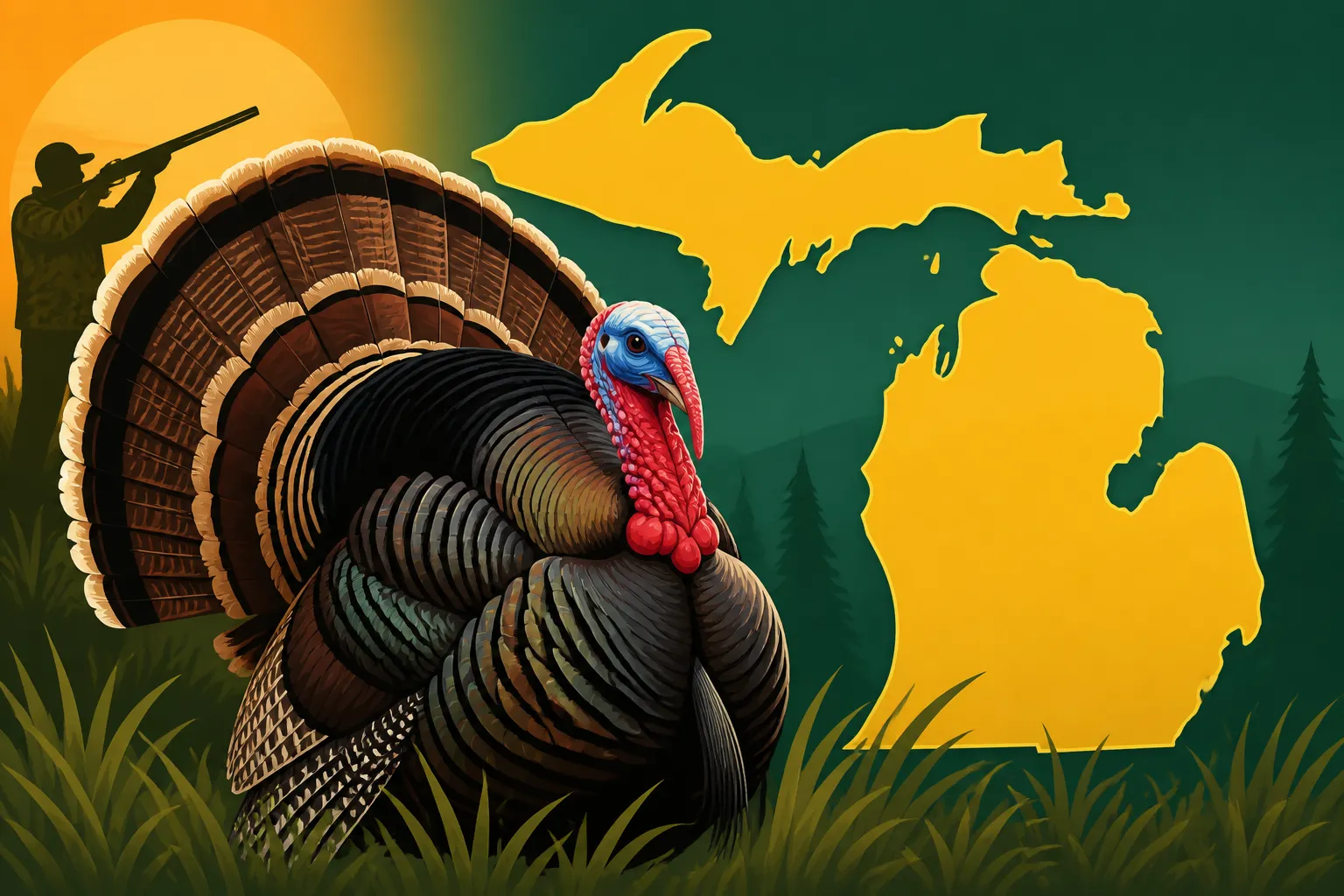
For many Michigan turkey hunters, the thrill isn't just in hearing that first booming gobble of spring; it's the dream of tagging a truly magnificent bird, one that stands out from the rest. We've all been there, admiring photos of a buddy's monster tom, wondering what it takes to find and harvest a record-book gobbler in our home state. This guide is here to walk you through what defines a Michigan record-book turkey, where to focus your efforts, and the tactics that can put a truly exceptional bird within your sights.
Understanding Michigan's Record Book Criteria for Turkeys
When we talk about a "record book" gobbler, we're not just talking about a big bird. There's a specific set of criteria established by organizations like the National Wild Turkey Federation (NWTF) that classify a turkey as worthy of official recognition. It's not just about weight, though that certainly helps; it's a combination of factors that, together, paint the picture of a truly mature, impressive specimen. Understanding these metrics is the first step in knowing what you're truly hunting for.
The NWTF Scoring System
The NWTF uses a standardized scoring system that accounts for three primary characteristics: live weight, beard length, and spur length. Each of these components contributes to a total score that determines a bird's ranking. For a gobbler to even be considered, it must be legally harvested and properly measured. The system is designed to provide a fair and consistent way to compare turkeys taken across different regions and seasons, celebrating those exceptional birds that represent the pinnacle of wild turkey hunting achievement. It's a testament to the bird's age, genetics, and the habitat it called home.
The formula itself is straightforward: (Live Weight in pounds x 10) + (Total Length of All Beards x 2) + (Total Length of Both Spurs x 10). Each measurement is critical. A slightly longer beard or an extra eighth of an inch on a spur can make all the difference in achieving that coveted score. This means that a lighter bird with exceptional spurs and a long beard could outscore a heavier bird with less impressive accessories. It's a holistic view of the turkey's trophy qualities.
Key Metrics for a Trophy Gobbler
Let's break down those key metrics that contribute to a high-scoring gobbler in Michigan. First, live weight. While a twenty-pound gobbler is a fantastic bird, record-book contenders often push the scales towards 23, 24, or even 25 pounds or more. These heavier birds are typically older, having survived multiple seasons, and have had access to abundant food sources. Think about those big toms you see strutting in fields; they carry a certain presence that comes with their bulk.
Next up are beards. A single, long, thick beard is impressive, but record-book birds sometimes have multiple beards, and each one contributes to the total length. A prime beard might measure 10 to 12 inches or more, often black, thick, and untangled. Finding a gobbler with multiple beards, especially long ones, significantly boosts its score. These are usually older birds, often four years old or more, that have somehow avoided the perils of predators and hunters long enough to develop such unique characteristics.
Finally, spurs. These sharp, bony protrusions on the back of a gobbler's legs are perhaps the most coveted trophy feature. They grow longer and sharper with age, indicating a truly dominant, mature bird. For a record-book gobbler, you're often looking at spurs that measure 1.25 inches or more, with some exceptional birds pushing well past 1.5 inches. These spurs are usually sharp, pointed, and often curved, reflecting years of wear and tear and dominance in the pecking order. The combination of these three factors, especially when they are all exceptional, is what elevates a bird from a great harvest to a Michigan record-book gobbler.
Where to Find Michigan's Biggest Gobblers
Hunting record-book turkeys isn't just about sharp shooting and calling; it's fundamentally about knowing where to look. Michigan is blessed with abundant wild turkey populations across both peninsulas, but certain habitats and regions are more likely to produce the kind of mature, heavy-spurred, long-bearded birds that make the record books. It’s about finding those places where turkeys can live longer, grow bigger, and reach their full potential, often away from constant pressure.
Mature Timber and Agricultural Interfaces
Michigan's big gobblers often thrive in areas that offer a rich mix of mature timber and nearby agricultural fields. The mature timber provides critical roosting sites – tall, sturdy trees where gobblers feel safe from ground predators at night. These deep woods also offer excellent cover, security, and a consistent food supply of acorns, beech nuts, and insects throughout the year. Think about those sprawling hardwood forests in areas like the northern Lower Peninsula or parts of the Upper Peninsula; these are prime areas. Finding a consistent roosting area in such timber, especially one that bucks heavy hunting pressure, can be key to patterning a big bird. The more secluded the roost, the less likely it is to be disturbed, allowing birds to age.
The proximity to agricultural fields, like corn, soybeans, or wheat, provides a consistent, high-calorie food source that helps birds put on weight, especially going into winter and coming out of it. These fields offer a buffet that supplements their natural foraging. A perfect scenario for a record-book gobbler is mature timber that borders large, private agricultural tracts. This combination gives them security, plenty of food, and often less hunting pressure than state land that might be surrounded by public access on all sides. When you find these interfaces, you're looking at a recipe for older, heavier birds. If you're utilizing tools like GoHunt or other mapping resources, look for these specific habitat types and property line configurations.
Lesser-Pressured Public Lands and Private Sanctuaries
While private land often offers the best chance for record-book birds due to limited pressure and managed habitat, don't count out Michigan's vast public lands. The trick is finding the lesser-pressured spots. This often means walking farther than most hunters are willing to go, venturing into roadless areas, or targeting less accessible corners of larger state forests or game areas. Turkeys, especially old gobblers, become incredibly wary with consistent pressure. Areas that see heavy hunting traffic often have younger, more vocal birds, but the truly old, wise gobblers learn to be silent and reclusive. Run-and-Gun Turkey Tactics on State Land can be highly effective here, covering a lot of ground until you locate an undisturbed bird.
Additionally, certain private sanctuaries, whether they are large hunting clubs, managed wildlife properties, or simply large tracts of land owned by non-hunters, can be goldmines. These areas allow birds to age without constant disturbance, leading to larger, more developed beards and spurs. Gaining access to such properties can be challenging, but it's often where the biggest birds reside. If you're struggling to locate mature birds, consider exploring less popular public land parcels, especially those with challenging terrain or limited road access. Utilizing mapping apps can reveal these hidden gems, showing you public land pockets that might require a long hike but offer solitude and unpressured birds.
Tactics for Tagging a Record-Class Gobbler
Harvesting a true record-class gobbler in Michigan isn't just about luck; it's often the culmination of dedicated scouting, precise calling, and unwavering patience. These older birds have earned their impressive features by being incredibly cautious and intelligent, surviving multiple hunting seasons. They've heard every call, seen every decoy, and evaded countless hunters. To fool one, you need to elevate your game beyond the basics.
Patience and Persistence
The biggest mistake many hunters make when pursuing a record-class gobbler is impatience. These birds aren't typically the first to charge in, nor are they always the loudest. They've learned caution. You might set up on a bird, call for an hour, and hear nothing, only for him to appear silently a half-hour later. Persistence means sitting longer, moving less, and being prepared for a protracted encounter. Sometimes, it's about setting up and letting the woods "settle" around you for an extended period, allowing a wary bird to feel comfortable enough to approach. Consider a tactic like Hunting Turkeys in Upper Peninsula Timber, where vast, quiet woods demand a slower, more deliberate approach.
This also means being persistent throughout the season. The early season can be great, but often the biggest, most wary birds become callable later in the spring once hens have started nesting and gobblers are feeling the urge to breed more acutely. Don't give up if the first few weeks are slow; some of the biggest Michigan gobblers are tagged in late May. Sometimes, it’s about putting in the hours, day after day, until you catch that specific bird on the right day, under the right conditions, when his natural urges finally override his ingrained caution.
Advanced Calling and Decoy Strategies
To consistently fool a record-class gobbler, you'll need more than just basic clucks and yelps. These birds are often call-shy or have heard it all. Developing a nuanced calling repertoire, including soft tree yelps, purrs, clucks, and even gobbler clucks, can be critical. Knowing when to call, and more importantly, when not to call, is paramount. Sometimes, a few soft purrs or clucks are enough to pull a bird in that's already heard louder, more aggressive calling. Learning to "read" the gobbler's mood through his responses, or lack thereof, allows you to adjust your calling strategy on the fly. Turkey Calls Worth Carrying in Michigan will provide insights into a diverse range of sounds.
Decoy strategies also need to be well thought out. For wary birds, sometimes less is more. A single hen decoy, or even just a jake decoy positioned aggressively, can be all it takes to trigger a response without overwhelming the gobbler with a full flock setup. Placement is key: position decoys where the gobbler has a clear, open approach, but also where you have a clear shot. Avoid placing them too close to your setup, forcing the bird to come too near and potentially spot you. Understanding Turkey Decoys That Work on Pressured Birds can make a huge difference, often favoring realistic, subtle setups. When Calling a Michigan Gobbler Off the Roost, for instance, a subtle decoy can draw him in once he hits the ground.
Scouting for Success
You can have the best calling skills and the most realistic decoys, but without proper scouting, your chances of a record-book bird diminish significantly. Scouting isn't just about finding turkeys; it's about finding patterns and specific birds. Before the season even opens, spend time listening for roosting gobblers, identifying strut zones, and locating feeding and travel corridors. This is where tools like GoHunt's mapping features can really shine, allowing you to mark key locations and understand terrain features that dictate turkey movement. Where Michigan Gobblers Roost is crucial knowledge that can only come from dedicated scouting.
Pay close attention to subtle clues: droppings, tracks, shed feathers, and strut marks. These indicate consistent turkey activity. If you find multiple gobblers in an area, one of them might just be that exceptional bird you're looking for. Scouting extends into the season as well. If your initial spots aren't producing, don't be afraid to move and scout new areas. Old gobblers often have specific routines, and finding that routine is paramount. Understanding where they feed, where they water, and their travel routes between roost and strut zones can allow you to intercept them. This detailed reconnaissance often separates those who consistently tag big birds from those who rely solely on luck.
Documenting Your Michigan Record Gobbler
The moment of truth arrives, and you've harvested a truly magnificent Michigan gobbler. The adrenaline is pumping, and you're filled with pride. But if you suspect your bird might be a record-book contender, there are crucial steps you need to take immediately to ensure its eligibility for official scoring. Rushing this process or making errors can unfortunately disqualify an otherwise incredible trophy.
Proper Measurement and Photos
First and foremost, do not trim or alter anything on the bird before initial measurements and photographs. This includes beards and spurs. Leave them exactly as they are. You'll need an accurate live weight immediately after harvest. If you're in the field, use a reliable scale. Beards should be measured from the skin where they emerge, to the tip of the longest strand. If there are multiple beards, each one is measured individually, and their lengths are summed. Spurs are measured along their outside curve, from the point where they emerge from the leg skin to the very tip. Accuracy is paramount here; even a fraction of an inch can impact the final score.
Take multiple clear, well-lit photographs of the bird from various angles, showcasing its full size, the length of its beard(s), and its spurs. Include photos that clearly show a ruler or tape measure alongside the beard and spurs to provide visual documentation of the measurements. These photos serve as initial evidence and are often required when submitting a bird for official scoring. Documenting Michigan Turkey Harvest Reporting Rules is a separate, mandatory step you'll need to complete within 72 hours of harvest, regardless of record book aspirations.
Official Scoring Process
Once you've taken your initial measurements and photos, the next step for official recognition through organizations like the NWTF is to find a certified scorer. These individuals are trained to take precise, consistent measurements to ensure fairness in the scoring process. You'll want to contact the NWTF or a local chapter to locate a scorer in your area. They will verify your initial measurements and calculate the official score.
The bird often needs to be dried for a certain period before final spur measurements, as bone can shrink slightly. The scorer will guide you through this process. It's a meticulous procedure, but it's essential for getting your gobbler properly recognized. While it may seem like a lot of extra work after an already exciting hunt, having your Michigan gobbler officially recorded is a fantastic way to honor the animal and preserve the memory of an exceptional hunting achievement for years to come.
| Characteristic | Typical Michigan Gobbler | Potential Record Book Gobbler |
|---|---|---|
| Live Weight | 18-22 lbs | 23 lbs + |
| Main Beard Length | 8-10 inches | 10-12 inches + (multiple beards common) |
| Spur Length | 0.75-1.1 inches | 1.25 inches + (sharp, curved) |
| Age | 2-3 years old | 4+ years old |
| Waryness | Moderate | Extremely high |
Disclaimer
This article is for general informational purposes only and does not constitute professional advice. Laws, prices and regulations vary by location and change over time. Consult a qualified professional for guidance on your specific situation.