Hunting the Huron Mountains Area
The Huron Mountains of Michigan’s Upper Peninsula are a vast, untamed wilderness, often intimidating to even the most seasoned hunter due to their rugged terrain and deep solitude. If you've ever dreamt of tackling a true backcountry hunt, but felt overwhelmed by the sheer scale and challenge of this remote region, this comprehensive guide is for you. We're going to break down everything you need to know to plan and execute a successful hunt in this incredible, wild corner of Michigan, from understanding the landscape to tactical approaches for its elusive game.
The Untamed Allure of the Huron Mountains
The Huron Mountains aren't just another patch of woods; they are a geological anomaly, an ancient mountain range rising abruptly from the shores of Lake Superior, creating a landscape unlike anywhere else in the Midwest. This area, largely public land, is characterized by towering granite peaks, deep valleys, pristine old-growth forests, and countless lakes and streams. It's a place where the signs of human presence are few and far between, and self-reliance isn't just a virtue—it's a necessity. This wildness, however, is precisely what draws hunters seeking a truly challenging and rewarding experience.
What Makes the Huron Mountains Unique for Hunters
Unlike the more accessible state forests or game areas, the Huron Mountains demand a higher level of preparation and physical fitness. The terrain is often steep and rocky, with thick timber and dense undergrowth that can make travel arduous. There are few roads, and those that exist are often unmaintained two-tracks that require a high-clearance 4×4, if they're even accessible. This means that a significant portion of your hunt will likely involve hiking deep into remote areas, carrying all your gear on your back.
The habitat diversity, from dense conifer swamps to hardwood ridges, offers a mosaic of cover and food sources for various game species. You'll find pockets of mature hardwoods on the higher elevations, dropping down into mixed forests and eventually cedar swamps near the numerous cold-water streams and wetlands. This variety, coupled with the low human pressure, can concentrate game, but finding those concentrations requires meticulous scouting and an intimate understanding of the landscape. For many, it's the ultimate test of their hunting skills and endurance, offering a sense of accomplishment that's hard to find in more developed areas.
Primary Game Species in the Huron Mountains
While most of Michigan is known for its whitetail deer, the Huron Mountains offer a broader spectrum of big game and furbearers, reflecting their wild nature. White-tailed deer are present, though their density can be lower than in agricultural areas, especially after severe winters. These deer are often larger-bodied and warier, having adapted to survive in a challenging environment with significant predator pressure.
Beyond deer, this region is a stronghold for Michigan's Black Bear Population, offering some of the state's most coveted bear hunting opportunities. The dense cover, abundant natural food sources like berries and acorns, and limited human disturbance create ideal conditions for bears to thrive. Coyote populations are healthy, and the area is also part of Where Michigan Wolves Live, which adds another layer to the ecosystem. For the small game enthusiast, snowshoe hares are plentiful in the conifer thickets, and ruffed grouse can be found in the aspen regeneration areas, though accessing these spots can be a challenge. Trapping for furbearers like bobcats, coyotes, and martens is also a possibility for those with the appropriate licenses and expertise.
Planning Your Backcountry Hunt
A successful hunt in the Huron Mountains begins long before you ever set foot in the woods. This is not a place for spontaneous trips; it requires meticulous planning, an understanding of your physical limits, and a commitment to self-sufficiency. Your safety and success hinge on thorough preparation, from scouting to gear selection.
Pre-Season Scouting and Map Study
Given the remoteness, physical scouting in the Huron Mountains can be difficult and time-consuming. This is where advanced mapping tools become invaluable. Start by thoroughly studying topographical maps and aerial imagery. Look for changes in elevation, pinch points, funnels between terrain features, and potential bedding areas. Identify old logging roads or two-tracks that might offer limited access, but be prepared for them to be overgrown or impassable.
Tools like onX Hunt are an absolute game-changer for this kind of terrain. You can digitally scout for hours, identifying public land boundaries, potential access points, and terrain features that might concentrate game. Layering different maps can reveal subtle changes in vegetation, indicating past clearcuts or mature timber stands, which can be critical for locating grouse or identifying deer movement patterns. Even without direct access to current satellite imagery, the detailed topo maps provide an incredible amount of information. Identify potential water sources, emergency egress routes, and areas where you might set up camp. Remember, once you're deep in the Huron Mountains, your cell service will likely be non-existent, so downloaded maps for offline use are not just recommended, they're essential.
Essential Gear and Supplies for Remote Hunting
Hunting in the Huron Mountains demands robust gear capable of withstanding harsh conditions and the rigors of backcountry travel. Think lightweight, durable, and reliable. Your pack will be your lifeline, so every item needs to justify its weight.
Navigation: Beyond your phone with downloaded onX Hunt maps, carry a physical compass and a waterproof map. Know how to use them without GPS. A reliable GPS unit (separate from your phone) is also highly recommended as a backup.
Shelter: A lightweight, waterproof tent or tarp system suitable for cold, wet weather is crucial. Even in early fall, nights can drop below freezing, and rain is always a possibility.
Water: A high-quality water filter or purification tablets are non-negotiable. You'll be carrying a lot of water weight otherwise, and streams are generally plentiful but untreated.
Food: Pack calorie-dense, non-perishable food that requires minimal preparation. Dehydrated meals are excellent for their weight-to-calorie ratio.
First Aid: A comprehensive first aid kit capable of handling trauma, cuts, blisters, and common ailments is critical. Consider a satellite communication device like a Garmin inReach for emergencies, as cell service is unreliable.
Clothing: Layering is key. Wool or synthetic base layers, insulating mid-layers, and a waterproof/windproof outer shell are essential. Don't forget extra socks! Clothing for a Michigan November provides a great overview of cold-weather strategies.
Hunting Specifics: Depending on your weapon, ensure you have sufficient ammunition, a sturdy pack frame capable of hauling out meat, game bags, and sharp knives. A headlamp with extra batteries is vital, as you'll likely be walking in and out in the dark.
This isn't an exhaustive list, but it highlights the unique demands of this environment. Always err on the side of caution and preparedness.
Tactics for Hunting the Big Woods
Hunting the Huron Mountains requires a different mindset and approach than hunting agricultural areas or smaller public parcels. Success often comes down to covering ground, understanding animal behavior in vast timber, and being patient. The deer, bear, and other game here are masters of evasion in their wild domain.
Still-Hunting and Scouting on the Go
Given the vastness and ruggedness, still-hunting is an incredibly effective technique in the Huron Mountains. This involves moving slowly, deliberately, and quietly through the woods, stopping frequently to glass and listen. It's an active form of hunting that allows you to cover a lot of ground while simultaneously looking for fresh sign—tracks, rubs, scrapes, and feeding areas. Pay close attention to subtle changes in topography, as deer and bear will often use these to their advantage, traveling along benches or through saddles to conserve energy.
When you find fresh sign, slow down even more. Follow faint game trails, checking for wind direction constantly. The wind in the Huron Mountains can be shifty and unpredictable, especially in the valleys and around the peaks, so using a wind checker frequently is crucial. This active scouting-on-the-go method means you are always learning the land and adapting your strategy. It’s also incredibly rewarding when you finally connect with an animal that you’ve outsmarted in such a wild setting. Consider how deer might move between different habitat types, for example, transitioning from a cedar swamp for bedding to a hardwood ridge for acorns. Still-Hunting Michigan Cedar Swamps might offer some relevant tips.
Identifying Key Habitat and Travel Corridors
The Huron Mountains offer a diverse ecosystem, and understanding how game utilizes different habitats is paramount. Deer will often gravitate towards areas with recent disturbance, such as old clearcuts or areas of natural blowdown, where new growth provides both browse and cover. Hardwood ridges with acorn crops can be magnets for deer and bear in the fall. During harsh winters, deer will concentrate in dense conifer swamps, known as "deer yards," for thermal cover.
Travel corridors are often dictated by the terrain. Look for saddles between peaks, benches along steep hillsides, and the edges of dense cover like cedar swamps. These natural funnels concentrate animal movement and are prime locations for ambush points if you choose to set up for a sit. Creeks and rivers, especially those with narrow crossing points or bottlenecks, can also serve as significant travel routes. Think about how a deer or bear would move through the landscape most efficiently and safely, trying to minimize exposure while maximizing access to food and cover. Utilize your onX Hunt app to mark these potential hotspots and corridors during your digital scouting and then verify them on the ground.
Setting Up Ambushes in Remote Terrain
While still-hunting is often the primary method, there are times when setting up an ambush can be effective, particularly near a fresh sign or a known travel corridor. This means identifying a specific location where you believe game will pass and then positioning yourself for a shot. In the Huron Mountains, this might involve a ground blind brushed into thick cover, or a lightweight treestand packed deep into the woods.
When choosing a stand or blind location, consider not just where the deer or bear will be, but also your entry and exit routes. Can you get to and from your spot undetected? How will the wind affect your scent cone? Always scout your approach and departure paths, ensuring they don't spook game from your target area. Remember, treestand placement on public land in Michigan has specific rules, so be sure to review them before hanging anything. Patience is a virtue here; you might sit for hours or even days without seeing a target animal, but the reward of connecting with a truly wild Michigan animal in this remote setting is unparalleled. For more on stand setups, check out Treestand Setups in Michigan Hardwoods.
Overcoming Challenges in the Huron Mountains
Hunting the Huron Mountains isn't without its significant challenges. The environment itself is unforgiving, and the remoteness means that any mistake can have serious consequences. Being aware of these hurdles and planning for them is crucial for a safe and successful trip.
Navigating Rugged Terrain and Remote Access
The terrain itself is one of the biggest challenges. Steep climbs, rocky outcroppings, dense brush, and stream crossings are all par for the course. Physical fitness is not just a recommendation; it's a requirement. Be prepared for slow travel, often covering only a mile or two per hour in certain areas. Carrying a heavy pack over this kind of ground is exhausting, so conditioning before your hunt is vital.
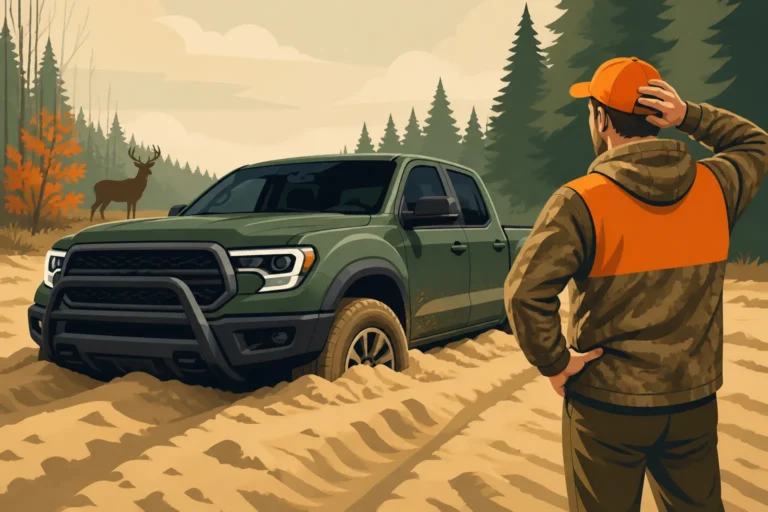
Access points are few and far between. Many "roads" are merely old two-tracks that might require chaining up or a winch to navigate, even in dry conditions. Some areas might be completely inaccessible by vehicle, necessitating long hikes just to reach your primary hunting grounds. Always have a backup plan for vehicle recovery and consider going with a hunting partner, or at the very least, letting someone know your detailed itinerary, including your exact entry and exit points and expected return time. The vastness of the area means getting turned around is a real possibility, even with modern GPS. This is where multiple navigation methods, including a compass and map, truly shine.
Weather Extremes and Safety Considerations
The weather in the Huron Mountains can change rapidly and dramatically, especially with its proximity to Lake Superior. Clear, crisp mornings can quickly give way to heavy rain, strong winds, or even early snowfall. Hypothermia is a serious risk if you're not adequately prepared with proper layering and waterproof gear. Always pack for conditions worse than what the forecast predicts.
Beyond weather, wildlife encounters can pose a risk. While most animals will avoid humans, knowing how to react to a bear encounter is important. Carrying bear spray is a good precaution in some areas. General wilderness first aid knowledge is critical, as emergency services can be hours away. A satellite messenger device, as mentioned before, is arguably the most important piece of safety gear for communication in this cell-service-free zone. Having a hunting partner is always advisable in such remote country, allowing for mutual support and assistance in case of injury or other emergencies.
Respecting Wildlife and the Environment
Hunting in a pristine wilderness like the Huron Mountains comes with a profound responsibility to respect the wildlife and the environment. Practice Leave No Trace principles rigorously. Pack out everything you pack in, including all trash and game waste. Minimize your impact on the delicate ecosystem.
When it comes to game, understand the challenges of retrieving an animal in such rugged terrain. Field dressing and meat care become even more critical due to the potential for long drags or multiple trips to pack out meat. Consider the gutless method for larger animals to reduce weight and expedite the packing process. Handling Bear Meat Safely and Field Dressing a Deer in Cold Weather are good resources to review. Remember, the privilege of hunting in such a wild place means being an ethical and responsible steward of the land and its creatures. The Huron Mountains are a treasure, and preserving their wild character is paramount for future generations of hunters and outdoor enthusiasts.
Table: Planning Checklist for a Huron Mountains Hunt
To help you get ready, here's a quick checklist of considerations for your Huron Mountains adventure:
| Category | Key Considerations | Why it Matters |
|---|---|---|
| Scouting | Detailed topographic map study | Essential for identifying terrain, access, and game sign. |
| onX Hunt/GPS with downloaded offline maps | Crucial for navigation without cell service. | |
| Identify potential bedding, feeding, travel corridors | Focuses your efforts in a vast landscape. | |
| Physical Prep | Cardio and strength training | Necessary for navigating steep, rugged terrain with gear. |
| Practice hiking with loaded pack | Simulates actual hunting conditions and builds endurance. | |
| Gear | Lightweight, durable tent/shelter | Protection from harsh, unpredictable weather. |
| Water filter/purifier | Ensures safe drinking water, reduces carry weight. | |
| Layered clothing (wool/synthetic) | Adaptability to rapidly changing temperatures and moisture. | |
| Comprehensive First Aid Kit | Self-reliance for injuries in remote areas. | |
| Satellite messenger (e.g., Garmin inReach) | Emergency communication lifeline beyond cell service. | |
| Quality headlamp with extra batteries | Safe travel in low light, especially packing out game. | |
| Pack frame and game bags | Efficient and clean meat transport. | |
| Safety | Detailed trip plan shared with someone reliable | Ensures help can be sent if you don't return. |
| Hunt with a partner | Added safety, assistance, and shared experience. | |
| Bear spray/knowledge of bear encounters | Prudent precaution in bear country. | |
| Multiple navigation methods (GPS, map, compass) | Redundancy is key in vast, remote areas. |
Disclaimer
This article is for general informational purposes only and does not constitute professional advice. Laws, prices and regulations vary by location and change over time. Consult a qualified professional for guidance on your specific situation.