Where Michigan Wolves Live
For many Michigan hunters, the thought of encountering a wolf in the wild is a mix of awe and a little bit of apprehension. These magnificent, elusive predators are undeniably a vital part of our state's wild heritage, but understanding their territory is crucial for anyone venturing into their domain, especially if you're trying to figure out where your deer, bear, or even smaller game might be. This guide will take a deep dive into exactly where Michigan's wolf population calls home, exploring their favored habitats and the subtle signs that indicate their presence.
The Geographic Heart of Michigan's Wolf Population
When we talk about wolves in Michigan, one region immediately springs to mind: the Upper Peninsula. This vast, rugged expanse is synonymous with wilderness, and it's here that the wolf population has firmly re-established itself. But beyond the general idea of "the U.P.," there are specific patterns and areas they favor, and even a few surprising places they might occasionally roam.
The Upper Peninsula: Uncontested Wolf Territory
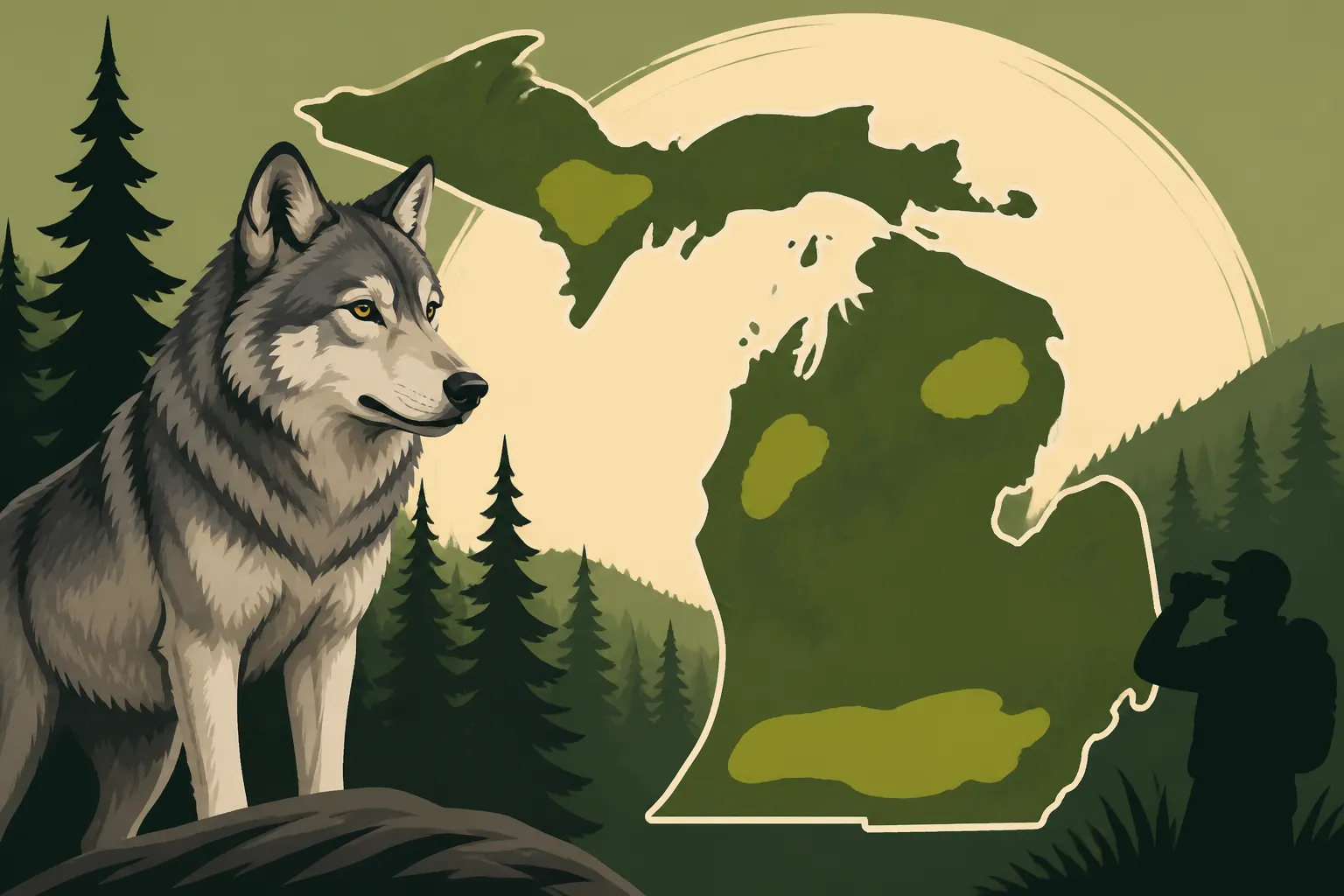
The Upper Peninsula truly is the stronghold for Michigan's wolves. From the dense cedar swamps of the eastern U.P. to the rugged, remote iron ranges of the west, wolves can be found in almost every county. They thrive in these expansive, continuous forest systems that offer both abundant prey and the isolation they need to avoid human disturbance. This isn't just a handful of individuals; we're talking about a thriving, breeding population that has made the U.P. its permanent home after successful recovery efforts.
Consider the vast tracts of public land here, like the Ottawa National Forest Hunting or Hiawatha National Forest Hunting. These areas, along with state forest lands, provide millions of acres of prime wolf habitat. The sheer scale of the wilderness means wolves have plenty of room to establish territories, raise pups, and hunt without constant human pressure. It's not uncommon for hunters venturing deep into these areas for deer or bear to find tracks, scat, or even hear distant howls, especially during the colder months when the snow makes their movements more visible.
Their presence is so pervasive that it's simply a fact of life for anyone hunting in the U.P. Understanding their territories can even help you plan your hunt. Wolves often follow the path of least resistance, utilizing old logging roads, two-tracks, and even frozen riverbeds, much like deer and other wildlife. So, if you're scouting for deer sign in a particular area, a fresh set of wolf tracks might tell you something about the local deer activity as well.
Rare Sightings in the Northern Lower Peninsula
While the Upper Peninsula holds the vast majority of Michigan's wolf population, the question of their presence in the Lower Peninsula often sparks considerable debate and intrigue. Officially, confirmed breeding populations are confined to the U.P. However, isolated sightings, tracks, and even occasional photographic evidence have surfaced over the years in the northern reaches of the Lower Peninsula. These instances are rare and often involve lone dispersing individuals rather than established packs.
Think of a young wolf, perhaps driven by the instinct to find new territory and a mate, making an incredible journey south. They might cross the Mackinac Bridge (or more likely, ice during a severe winter, though that's less common now) and venture into the extensive forests of the northern Lower Peninsula. Areas like the Pigeon River Country State Forest, known for its Elk in Michigan's Pigeon River Country herd and vast tracts of timber, or the northern parts of the Huron-Manistee National Forest Hunting, offer the most plausible habitat for such transient animals.
These aren't areas where you'd expect to consistently encounter wolves, or where they pose any significant threat to livestock or pets in the same way an established U.P. pack might. Instead, these are brief, fleeting visits from animals pushing the boundaries of their natural range. For hunters in the northern Lower, stumbling upon a wolf track would be a truly once-in-a-lifetime experience, a testament to the wildness that still exists even south of the bridge. It's a reminder that nature is always expanding and contracting, and while not a permanent residence, the possibility of a lone wanderer can never be entirely ruled out.
Understanding Wolf Habitat and Why It Matters
Wolves aren't just randomly distributed; they seek out specific conditions that allow them to thrive. Their choice of habitat is intrinsically linked to their survival, dictating everything from hunting success to pup rearing. For anyone hoping to understand Where Michigan Wolves Live, grasping these habitat preferences is key.
The Role of Dense Forests and Remote Wilderness
Michigan's wolves are creatures of the deep woods. They prefer large, contiguous blocks of forestland, particularly those with a mix of mature timber, regenerating clear-cuts, and the ever-present cedar swamps. This isn't just about cover; it's about complexity and interconnectedness. These varied landscapes provide a rich tapestry of resources, from dense cover for denning and resting to open areas for hunting. The deeper and more remote the woods, the happier a wolf pack tends to be.
Consider the massive expanses of state and national forests that dominate the Upper Peninsula. These areas are characterized by low human population density, minimal road networks in many sections, and a wealth of natural features like rocky outcrops, swamps, and lakes. Such terrain offers the seclusion wolves require to raise their young safely away from human disturbance. When you're scouting for deer, using tools like the Scouting Michigan Public Land Before Season with GoHunt maps can reveal these vast, untouched sections that are also prime wolf territory. Understanding where these remote zones are can tell you a lot about potential wolf activity in the area you're hunting.
Furthermore, these dense forest environments offer excellent thermal cover during harsh Michigan winters, protecting wolves from extreme cold and deep snow. They also provide visual concealment, allowing them to stalk prey more effectively and remain largely unseen by humans. It's this combination of remoteness, ample cover, and complex terrain that makes the U.P. an ideal home for these apex predators. They need space, and the U.P. has it in abundance.
Prey Availability: The Key to Wolf Distribution
You won't find wolves where there's no food. Their distribution is inextricably linked to the availability of their primary prey, and in Michigan, that overwhelmingly means white-tailed deer. While wolves are opportunistic predators and will take various animals – from beaver and snowshoe hare to moose calves in some regions – deer form the cornerstone of their diet, especially during the harsh winter months.
Therefore, the areas with healthy, robust deer populations are precisely where you'll find the densest wolf populations. The Upper Peninsula Deer Yarding and Winter Movement are critical periods, as deer congregate in cedar swamps and other protected areas, often making them more accessible to wolves. Wolves are highly intelligent and adaptable, and they will follow these seasonal patterns of their prey. A successful wolf pack needs a consistent food source, and Michigan's deer herd, despite challenges in some areas, generally provides that.
This relationship extends to other species as well. Where Michigan's Black Bear Population is present, wolves might scavenge kills or even occasionally predate on cubs. Areas rich in smaller game like rabbits, hares, and grouse can supplement their diet, especially for younger, less experienced hunters in the pack. Essentially, any ecosystem capable of supporting a diverse and abundant prey base is a potential wolf habitat. GoHunt's mapping features can also help identify areas of high deer density, which often correlates directly with prime wolf activity zones, allowing you to better understand the entire ecosystem you are exploring.
The Interplay Between Wolves and Deer in Michigan
The relationship between wolves and deer in Michigan is one of the most talked-about topics among hunters and wildlife enthusiasts. It's a complex, dynamic interaction that shapes the health of both populations and the ecosystem as a whole. Understanding this delicate balance is crucial for a complete picture of Where Michigan Wolves Live and what their presence means for the landscape.
Impact on Deer Herds in the Upper Peninsula
There's no denying that wolves have an impact on deer populations, particularly in the Upper Peninsula. Wolves are incredibly efficient predators, and they primarily target the most vulnerable individuals in a deer herd: the old, the sick, and the very young. This natural culling can, in some ways, lead to a healthier, more robust deer population overall by removing weaker animals. However, in areas where deer numbers are already stressed by severe winters, habitat loss, or other factors, wolf predation can be a significant limiting factor.
Hunters in the U.P. often share stories and observations about deer numbers declining in specific areas where wolf packs are known to operate. While it's easy to point a finger solely at wolves, it's important to remember that many factors influence deer populations. What Biologists Say Limits U.P. Deer often includes winter severity, habitat quality, and hunting pressure alongside predation. Wolves are a natural part of the U.P. ecosystem now, and the deer have evolved to live with them, but the dynamic is undeniable.
This doesn't mean the deer are disappearing. Michigan Deer Population Estimate still shows a healthy, albeit fluctuating, herd in the U.P. What it does mean is that deer behavior can change. They might become more nocturnal, utilize denser cover, or alter their movement patterns to avoid known wolf territories. For a hunter, this can make deer harder to find, requiring different tactics and a deeper understanding of how these predator-prey dynamics influence deer movement. When planning your hunt, consider the balance of predator and prey, a factor that can definitely shift your strategy.
Coexistence and Ecological Balance
While the impact on deer is often the most discussed aspect, the presence of wolves contributes to a broader ecological balance that benefits the entire ecosystem. As apex predators, wolves play a crucial role in regulating herbivore populations, which in turn can prevent overbrowsing of vegetation and promote forest regeneration. This ripple effect touches everything from plant diversity to the health of other wildlife species.
For example, by keeping deer numbers in check, especially in certain areas, wolves can indirectly benefit other ground-nesting birds or smaller mammals that rely on specific understory vegetation for food and cover. They also act as natural scavengers, cleaning up carcasses and preventing the spread of disease. It's a complex food web, and wolves are a vital strand in it.
The concept of Do Wolves Drive Michigan Deer Numbers? is multifaceted. While some studies suggest a direct correlation in specific years or locations, others highlight the resiliency of deer and the complex web of environmental factors. The goal from a wildlife management perspective is often to achieve a balance where both wolves and deer can thrive within the natural limits of the environment. This means managing wolf numbers when necessary, but also continuing efforts to improve deer habitat and overall herd health. It's a constant balancing act, and our understanding of it continues to evolve.
Encountering Wolves in the Wild and Coexistence
For many, the idea of seeing a wolf in Michigan is thrilling, a true highlight of venturing into the wild. While they are incredibly elusive and generally avoid humans, understanding how to react if you do encounter one, and simply being aware of their presence, is part of being a responsible and informed outdoors person in Michigan.
What Hunters Need to Know
As a hunter in Michigan's Upper Peninsula, you are entering wolf country. While direct encounters are rare, it's good to be prepared. Wolves are not inherently aggressive towards humans, but like any wild animal, they deserve respect and space. They typically view humans with caution and will retreat long before you ever know they were there. However, it's not unheard of for a curious wolf to observe a hunter from a distance.
One key thing to remember is that wolves are highly intelligent and often utilize the same travel corridors as deer and other game. You might find their tracks on your way to a Treestand Setups in Michigan Hardwoods or discover a fresh kill while still-hunting a cedar swamp. These signs are indicators of a healthy, wild ecosystem. Keep an eye out for their distinctive tracks, which are larger and more elongated than a coyote's, and listen for howls, especially at dusk or dawn. GoHunt's advanced mapping can help you identify remote areas where these encounters are more likely, allowing you to mentally prepare for the possibility.
If you do see a wolf, enjoy the moment. Do not approach it. Maintain a safe distance, make yourself known by talking in a normal voice, and if the wolf doesn't retreat, slowly back away. Never run from a wolf, as this can trigger a chase instinct. Keep dogs on a leash in known wolf areas, especially if you're hunting with them, as interactions between domestic dogs and wolves can sometimes be fatal for the dog. Understanding Michigan Wolf Delisting History also gives context to why they are protected and what that means for their interaction with humans and hunting.
Respecting Their Space
Coexisting with wolves means respecting their role in the ecosystem and their need for undisturbed space. This largely comes down to common sense and good outdoor ethics. When you're in wolf habitat, particularly during sensitive times like denning season (spring and early summer), try to minimize your impact. Stick to established trails, avoid disturbing areas that look like potential den sites, and pack out everything you pack in.
Leaving food scraps or trash, or intentionally feeding wildlife, can lead to animals becoming habituated to humans, which is detrimental to both wildlife and human safety. Wolves that associate humans with food can lose their natural fear, leading to problematic encounters. This applies to all wildlife, but especially to large predators.
Ultimately, having wolves in Michigan is a privilege. They represent a successful conservation story and remind us of the wildness that still defines much of our state. By understanding How Many Wolves Michigan Has and What Wolves Eat in the Upper Peninsula, and appreciating Michigan's Black Bear Population, we can better understand the full scope of our natural heritage. For hunters, trappers, and outdoor enthusiasts, recognizing Where Michigan Wolves Live is not just about geography; it's about acknowledging a vibrant, thriving ecosystem where these magnificent animals play a vital and irreplaceable role.
Disclaimer
This article is for general informational purposes only and does not constitute professional advice. Laws, prices and regulations vary by location and change over time. Consult a qualified professional for guidance on your specific situation.