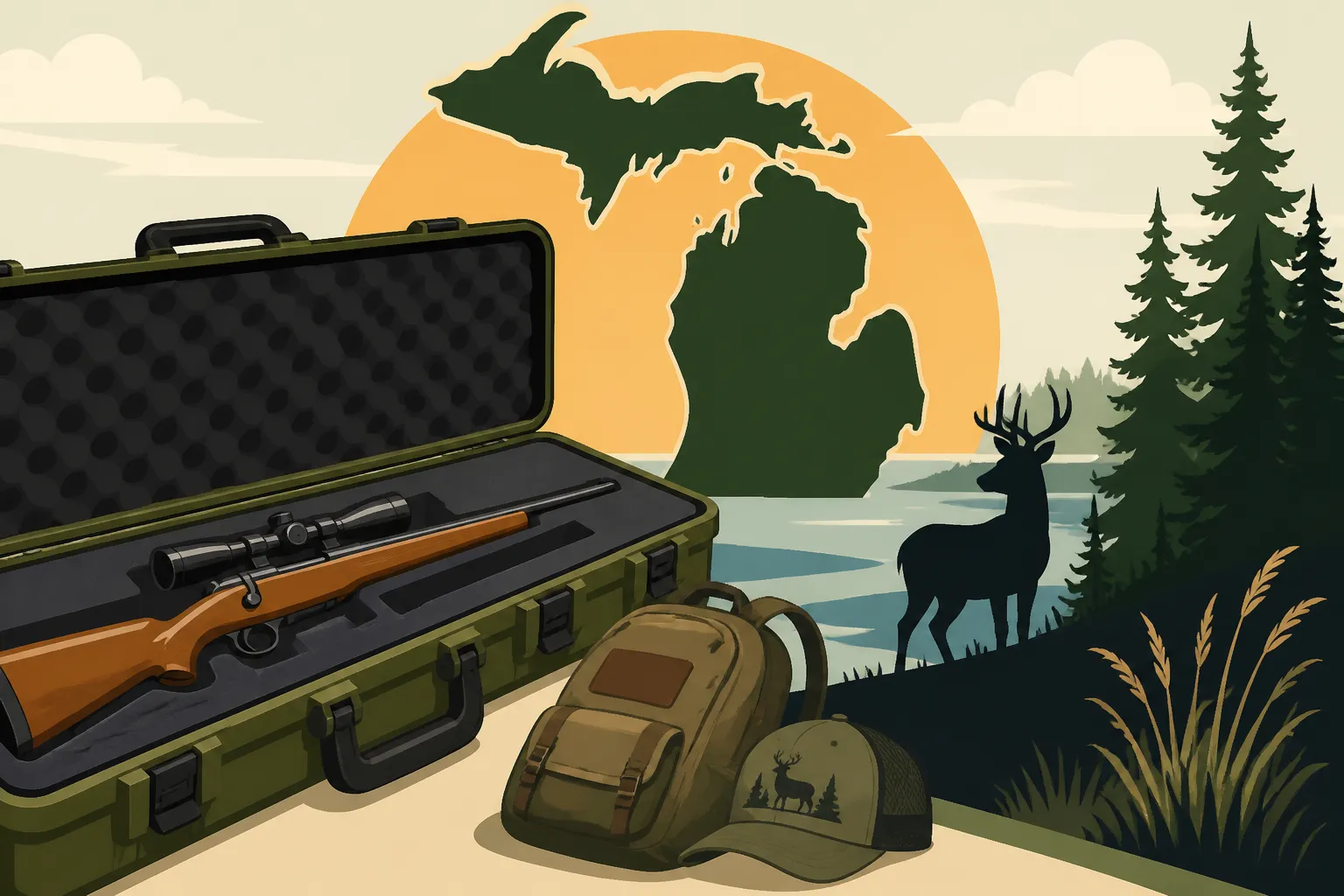
Rifle Cases for Travel to Michigan
Traveling to Michigan for a hunting adventure can be incredibly exciting, but the thought of safely and legally transporting your rifle often brings a knot to your stomach. Between navigating state laws, airline regulations, and just ensuring your valuable gear arrives intact, it's easy to feel overwhelmed. This guide is here to untangle the complexities of choosing the right rifle case and understanding the rules for stress-free travel to your Michigan hunting grounds.
Understanding Michigan's Requirements for Firearm Transport
Before you even think about packing your bags, it's absolutely crucial to understand the legal landscape for transporting firearms in Michigan. Missteps here can quickly turn a hunting trip into a nightmare, and nobody wants that. The rules are designed for public safety, and while they might seem complex, they boil down to a few key principles.
Legalities of Transporting a Cased Rifle in Michigan
When you're driving through Michigan, the general rule of thumb for long guns—which includes your hunting rifle—is that they must be unloaded and either enclosed in a case or in the trunk of your vehicle. If you don't have a trunk, like in an SUV or pickup with a cap, the firearm must be unloaded and securely cased. "Unloaded" means no round in the chamber and no loaded magazine inserted into the firearm. It's not enough to just remove the magazine; the chamber needs to be clear, too. This rule applies whether you're heading to your deer blind in the Michigan's November Firearm Deer Season or just practicing at the range. The idea is to prevent quick and easy access to a loaded firearm while in transit. Think of it as creating a clear separation between you and the ready-to-fire weapon. This might seem like common sense to seasoned hunters, but it's a legal requirement that's often overlooked by those unfamiliar with the specifics, leading to avoidable issues.
Avoiding Common Legal Pitfalls
One of the biggest areas where hunters get tripped up is the definition of "cased" and "inaccessible." While Michigan law allows an unloaded long gun to be uncased in a vehicle that does have a trunk, placing it in the back seat of an SUV, even if it's unloaded, might not be considered "inaccessible" enough by law enforcement without a proper case. For peace of mind, especially when traveling long distances or through populated areas, a case is always the safest bet. Furthermore, ammunition should generally be transported separately from the firearm itself. While it doesn't always need to be in a separate locked container when driving within Michigan, keeping it distinct from the cased rifle removes any ambiguity. Always check the Michigan Department of Natural Resources (DNR) regulations, as they can have additional specific rules related to hunting activities, public land access, or certain types of firearms. Ignorance of the law is never a valid defense, and understanding these nuances is part of being a responsible firearm owner. It’s also a good idea to refresh yourself on general safety, perhaps by reviewing resources related to Michigan Hunter Safety Requirement.
Choosing the Right Rifle Case for Travel
The market is flooded with rifle cases, and picking the right one can feel like a daunting task. However, for travel, especially if you're flying, your choice of case isn't just about protecting your rifle; it's a critical component of legal compliance and peace of mind.
Soft Cases Versus Hard Cases: Pros and Cons
When it comes to rifle cases, you generally have two main categories: soft cases and hard cases. Each has its place, but for travel, particularly anything beyond a short drive to the local range, a hard case is almost always the superior choice.
Soft Cases: These are typically made from nylon or other durable fabrics, often with some padding.
- Pros: They are lightweight, flexible, and usually more affordable. They can be easier to store when not in use, and for a quick trip from your home to a nearby hunting property, they offer basic scratch and ding protection. If you're just driving across your own private land to a deer blind, a soft case might be adequate for keeping dust off.
- Cons: Their biggest drawback is protection. They offer minimal impact resistance, which means a drop or heavy item placed on top could easily damage your rifle or optics. Crucially, most soft cases cannot be locked in a way that satisfies airline or federal transport regulations. You also risk the rifle shifting around inside, potentially knocking your scope out of zero. For any serious travel, especially flying, they simply don't cut it.
Hard Cases: Constructed from materials like high-density polyethylene (HDPE), polypropylene, or even aluminum, these cases are built for protection.
- Pros: They provide maximum impact protection, often being crush-proof and highly resistant to punctures. They are designed with multiple latch points and can be securely locked, which is essential for air travel and compliance with the Firearm Owners' Protection Act (FOPA) during interstate driving. Many hard cases are also waterproof and dustproof, protecting your rifle from the elements—a huge bonus when dealing with unpredictable Michigan weather, whether it's an early autumn rain or a late-season snow for Muzzleloader Deer Hunting in Michigan. The internal foam, often customizable, ensures your rifle stays put and zeroed.
- Cons: Hard cases are significantly heavier and bulkier than soft cases. This can make them cumbersome to carry, and they take up more space in your vehicle or luggage. They also come with a higher price tag, but consider it an investment in protecting your valuable firearm and ensuring legal compliance. Brands like Pelican, SKB, and GoHunt-recommended options are well-known for their robust designs.
For dedicated travel, particularly if you're flying, a hard case isn't just recommended—it's practically mandatory.
Features to Look For in a Quality Travel Case
When you've decided on a hard case, there are several features that differentiate a good case from a great one. These details can significantly impact both the protection of your firearm and the ease of your travel experience.
- Material and Construction: Look for durable materials like injection-molded polypropylene or HDPE. These materials resist impact, extreme temperatures, and chemicals. The construction should feel solid, with no flimsy parts. A continuous O-ring seal around the lid is crucial for waterproofing and dustproofing, often indicated by an IP (Ingress Protection) rating. This is particularly valuable if your hunting takes you into wet environments, perhaps targeting Great Lakes Waterfowl Hunting in Michigan or hunting swamp edges.
- Locking Mechanisms: This is paramount for security and compliance. Choose a case with multiple, robust latch points. Many quality cases feature steel-reinforced padlock holes. For air travel, you'll need TSA-approved locks or your own non-TSA locks, depending on airline policy (more on that later). Having more than one locking point ensures the case remains secure even if one latch fails.
- Interior Padding: High-density foam inserts, often pick-and-pluck or customizable, provide a snug fit for your rifle, preventing movement during transit. Some cases offer specialized foam that resists oil and solvents. Ensure there’s enough foam to cradle your rifle tightly, protecting the barrel, scope, and stock from impacts. This is key for keeping your Rifle Setups for Michigan Deer zeroed and ready to go.
- Wheels and Handles: Given the weight and bulk of hard cases, built-in wheels are a game-changer, especially for navigating airports or long walks from a distant parking lot. Look for sturdy, smooth-rolling wheels and multiple comfortable handles—one on top and one on the side—for easy lifting and maneuvering.
- Pressure Release Valve: If you're flying, a pressure equalization valve is a small but important feature. It allows the air pressure inside the case to equalize with the outside atmospheric pressure, preventing vacuum lock and making the case easier to open after a flight, without compromising the waterproof seal.
Investing in a high-quality case with these features will protect your rifle, ease your travel burden, and ensure you meet all necessary regulations.
Air Travel with Your Rifle to Michigan
Flying with a firearm can seem intimidating, but with proper preparation and adherence to regulations, it's a straightforward process. The key is to be proactive and informed.
TSA Regulations for Firearms and Ammunition
The Transportation Security Administration (TSA) has clear and non-negotiable rules for flying with firearms. These are federal regulations, meaning they apply uniformly across all U.S. airports.
- Unloaded and Locked: Your rifle must be completely unloaded. This means no ammunition in the chamber, magazine well, or attached magazines. It must be transported in a hard-sided container, which must be locked. Only you should retain the key or combination to the lock. TSA-approved locks are acceptable, but you can also use your own non-TSA locks. If using non-TSA locks, be prepared to open the case for inspection if requested by TSA.
- Declared at Check-in: When you arrive at the airline check-in counter, you must declare that you are traveling with a firearm. The airline will provide you with a declaration tag to sign and place inside your locked case. This is a crucial step that cannot be skipped or done discreetly. Be open and honest with the airline agents.
- Ammunition Transport: Ammunition must be transported in its original manufacturer's packaging or in a securely packed container designed for ammunition. It must be stored separately from the firearm in another checked bag, or, in some cases, can be in the same hard-sided, locked case as the firearm if it is securely contained in its original packaging or an approved container, and not loaded into a magazine that is inserted into the firearm. There are also weight limits, typically 11 pounds per passenger, though this can vary slightly by airline. Make sure you don't exceed these limits.
- No Ammunition in Carry-on: Under no circumstances is ammunition allowed in your carry-on luggage or on your person. This rule is absolute.
Airline-Specific Policies and What to Expect
While TSA sets the federal baseline, individual airlines can, and often do, have their own, more restrictive policies regarding firearm transport. This is a critical distinction that many travelers overlook.
- Research Your Airline: Before you even book your flight to Michigan, go to your specific airline's website and look up their firearm and ammunition policies. Do not rely on general information or what another airline does. Policies can differ on lock types (TSA vs. non-TSA), maximum ammunition weight, and whether ammunition can be in the same locked case as the firearm. Some airlines might have specific baggage fees for firearms or require them to be considered oversized luggage, even if they fit within standard dimensions.
- The Check-in Process: Arrive at the airport earlier than usual, as declaring a firearm takes extra time. Head directly to the airline's check-in counter (not curbside check-in). Inform the agent that you need to declare a firearm. They will guide you through their specific process, which usually involves signing a declaration card and possibly an inspection by a TSA agent if you used non-TSA locks. Be prepared to open your case.
- Patience and Politeness: The airline and TSA staff are there to ensure safety and compliance. Be polite, patient, and cooperative. They are following procedures, and a calm, prepared attitude on your part will make the process smoother for everyone. Remember, this isn't just about getting your rifle to your Hunting the Michigan Upper Peninsula for Deer trip; it's about adhering to a system designed to keep everyone safe.
Driving to Michigan with a Rifle
For many Michigan hunters, driving is the primary mode of transport. It offers more flexibility than flying, but it's still essential to understand the rules, especially when crossing state lines.
Interstate Travel Considerations (FOPA)
If you're driving to Michigan from another state, you need to be aware of the Firearm Owners' Protection Act (FOPA) of 1986. This federal law provides a safe harbor for individuals transporting firearms through states where the firearm might otherwise be illegal, provided certain conditions are met.
- FOPA's Protections: FOPA protects you if you are transporting a firearm from a place where you can legally possess it to another place where you can legally possess it. This means if you are coming from Indiana, where you legally own your hunting rifle, to Michigan, where you can legally hunt with it, FOPA generally allows you to pass through states with stricter gun laws (like Illinois, for instance) without fear of prosecution.
- Strict Conditions: However, FOPA's protections are contingent on strict compliance. The firearm must be unloaded, and it must be in a locked container. It must also be inaccessible from the passenger compartment of the vehicle. For vehicles without a separate trunk, such as SUVs, trucks with a cap, or vans, the firearm must be in a locked container and kept as far out of reach as possible. Ammunition should be stored separately, ideally in another locked container or at least not directly with the firearm. Deviation from these conditions could mean FOPA no longer applies, leaving you vulnerable to local laws. Always prioritize your legal protection by meticulously following these rules. For broader considerations, reviewing general Michigan Hunting Licences and What They Cost will ensure all your paperwork is in order for the trip.
Secure Storage in Your Vehicle
Even once you're safely within Michigan's borders, or if you're a resident simply moving your rifle around the state, secure storage in your vehicle remains paramount for both legal compliance and safety.
- Trunk Space is King: The ideal scenario for transporting a rifle by car is in the trunk. The trunk is generally considered inaccessible from the passenger compartment, satisfying the legal requirement for an unloaded, cased (or uncased, if you trust that interpretation) long gun. This provides maximum peace of mind.
- No Trunk? Use a Locked Case: If your vehicle doesn't have a separate trunk (like an SUV, minivan, or hatchback), your rifle must be unloaded and contained within a locked case. Place it as far out of reach as possible – perhaps in the very back of the cargo area, under a cover, or secured in a way that prevents it from being easily grabbed. The goal is to make it inaccessible and secure. Even if you're just driving a short distance for Southern Michigan Farm Country Deer Hunting, the same rules apply.
- Ammunition Separated: While Michigan law isn't as strict about ammunition being in a separate locked container when driving, it's always best practice to keep it distinct from your cased rifle. Store it in a separate bag or container, away from the firearm, to avoid any appearance of having a "ready" weapon.
- Out of Sight, Out of Mind: Beyond legal requirements, a practical tip is to keep your rifle case out of plain sight. A visible rifle case, even if legally transported, can attract unwanted attention or become a target for theft. Use covers, blankets, or simply place it strategically to avoid unnecessary scrutiny. This diligence helps ensure your hunting trip goes smoothly from start to finish, letting you focus on the hunt itself, whether you're interested in Hunting the Michigan Rut in November or chasing late-season deer.
| Case Type | Key Features | Pros | Cons | Best For |
|---|---|---|---|---|
| Soft Case | Padded fabric (nylon), zippers, shoulder strap | Lightweight, flexible, affordable, easy storage | Minimal protection, not lockable for airlines, less secure | Short drives, range trips, basic scratch protection |
| Hard Case | Injection-molded plastic/aluminum, multiple latches, padlock holes, foam interior, often wheels | Maximum protection (crush, water, dust), airline compliant, secure | Heavy, bulky, more expensive, takes up more space | Air travel, interstate driving, maximum firearm protection, long-term storage |
Disclaimer
This article is for general informational purposes only and does not constitute professional advice. Laws, prices and regulations vary by location and change over time. Consult a qualified professional for guidance on your specific situation.