Rifle Scope Magnification for Michigan Deer
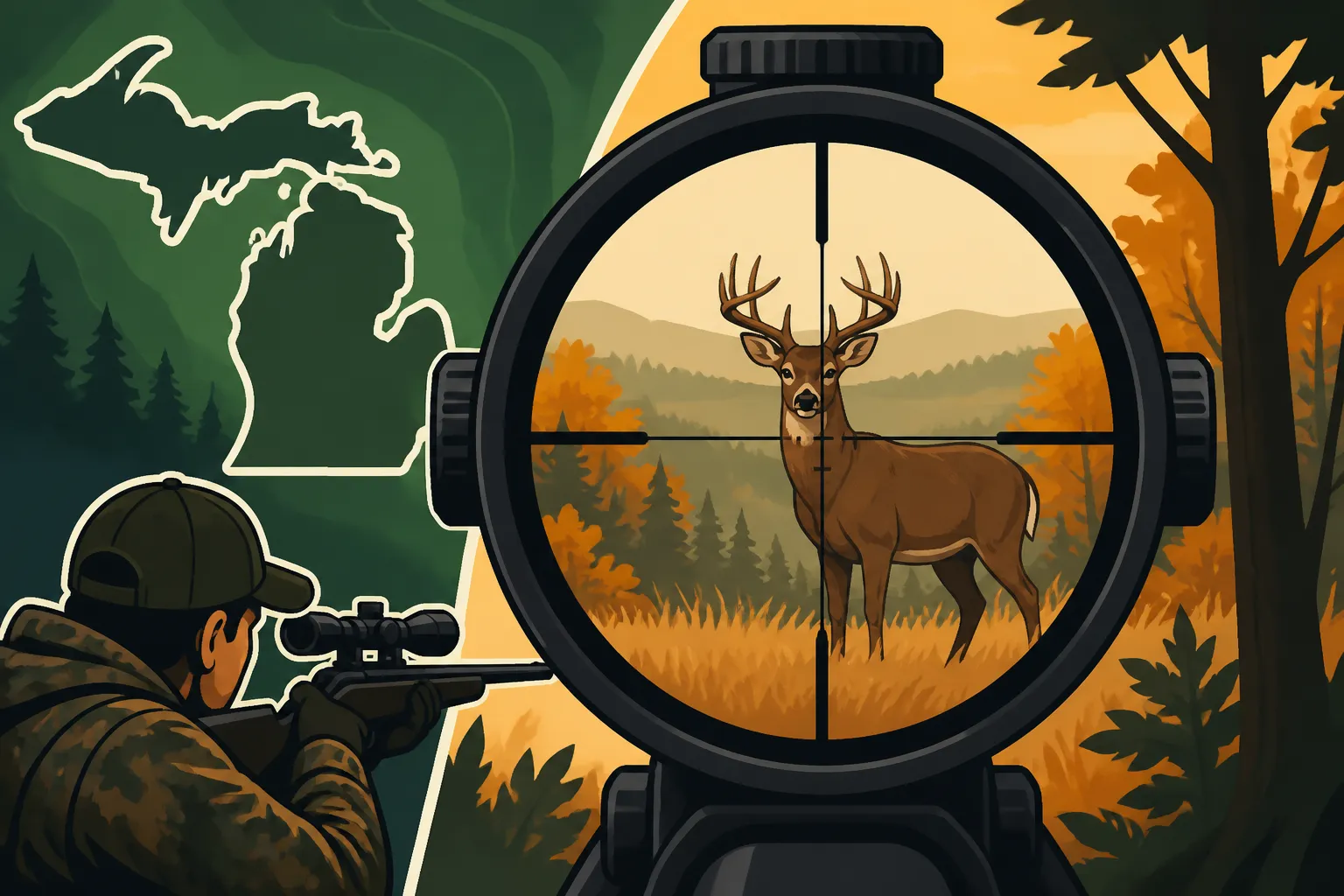
Choosing the right rifle scope for deer hunting in Michigan can feel like a real puzzle. Our diverse landscapes, from the thick cedar swamps of the Upper Peninsula to the sprawling farm fields of the southern Lower, demand versatility, and making the wrong choice can mean missing that fleeting opportunity at a whitetail. This guide will dive deep into rifle scope magnification, helping you understand what numbers truly matter for Michigan deer hunting and how to select the best optics for your personal hunting style and preferred terrain.
Understanding Michigan's Deer Hunting Environments
Michigan's deer hunting habitat is incredibly varied, and what works perfectly in one area might be a hindrance in another. This is why a "one-size-fits-all" approach to scope magnification often falls short. Thinking about where you spend most of your time hunting will be your first step in narrowing down the options.
Thick Timber and Dense Swamps
If you're like many of us who love to chase whitetails in the big woods, the words "thick timber" and "dense swamps" probably bring a shiver of excitement and frustration all at once. These are the places where Michigan bucks often grow old and wise, and where shots are almost always up close and personal. We're talking about ranges of 25 to 75 yards, maybe 100 on a good day if you find a logging trail or a natural opening. In these environments, speed and a wide field of view are paramount. You need to acquire your target quickly as it ghosts through the trees, often with minimal lead time. A high-magnification scope here can feel like looking through a straw, making it nearly impossible to find a deer that suddenly appears in your peripheral vision. This is where the lower end of your magnification range truly shines, giving you that broad picture to react to sudden movements. Whether you're Still-Hunting Michigan Cedar Swamps or navigating a dense conifer stand, clarity and a wide view at low power are crucial.
Imagine you're easing through a dense stand of pines, the kind where you can barely see 30 yards. Suddenly, a buck materializes out of the shadows, quartering away at 40 yards. If your scope is cranked up to 9x, you might only see a patch of brown fur, struggling to pick up the whole animal, let alone find a clean shot through the maze of branches. A 2x or 3x setting, however, would present a much wider field of view, allowing you to quickly center on the deer, assess the shot, and execute. The frustration of trying to find a deer in a high-powered scope in close cover is a common complaint among Michigan hunters, and it’s why many of us lean towards lower magnification in these areas.
Open Fields and Power Lines
On the other end of the spectrum, Michigan also offers plenty of opportunities in more open country. Think of the sprawling agricultural fields of the Lower Peninsula, long power line clearings cutting through state land, or even the vast logging cuts up north. In these scenarios, shot distances can easily stretch from 100 yards out to 250 yards, sometimes even further depending on your setup and comfort level. Here, the need for precise shot placement over longer distances becomes critical, and higher magnification can be your friend.
When that trophy buck steps out at the far end of a cornfield, meticulously picked clean by farmers, you need to be able to discern antler points (especially with Michigan's Michigan Antler Point Restrictions by DMU), ensure you have a clear shot path, and hold steady on a small vital area. A scope that allows you to zoom in and clarify your target without losing too much brightness or clarity will instill confidence in making that longer shot. Many hunters who set up over these types of openings will tell you they rely on their scope's ability to pull distant details into sharp focus, making those longer ethical shots possible. A good example is sitting on the edge of a standing cornfield, waiting for deer to emerge. You need enough power to evaluate the deer and place a shot carefully across that open expanse.
Mixed Hardwoods and Aspen Cuts
Most of Michigan falls somewhere in the middle, offering a mix of mature hardwoods, regenerating aspen cuts, and varied terrain. This is the classic "general purpose" hunting scenario, where you might have a 50-yard shot one minute and a 150-yard shot the next. This is where the true versatility of a variable power scope shines, allowing you to adapt on the fly. You might be still-hunting through a thick oak ridge and suddenly find yourself overlooking a small clear-cut. Your scope needs to be able to transition with you.
In these mixed environments, you're constantly evaluating the situation. Are you sneaking through dense cover, where a low power setting is best for quick target acquisition? Or are you overlooking a deer trail or a Hunting a Funnel Between Two Swamps where a slightly higher magnification might help confirm a legal antler point or precisely place a shot through a small opening? The ability to quickly and smoothly adjust your magnification is invaluable here. It's about finding that sweet spot that gives you enough field of view for close encounters, but enough zoom for those slightly longer, more deliberate shots you might encounter during the Michigan's November Firearm Deer Season in the woods.
The Magnification Debate: Low Power vs. High Power
Every hunter has their preference, and there's no single "best" magnification. It really boils down to balancing factors like field of view, light gathering, and target identification with the reality of your hunting situations.
Advantages of Lower Magnification (1-4x, 2-7x)
Scopes with a lower maximum magnification, say a 1-4x or 2-7x, often get overlooked in the race for "more power." But for much of Michigan's deer hunting, especially during the archery season or when still-hunting the dense woods, these scopes are absolute workhorses. Their primary advantage is a significantly wider field of view at their lowest settings. This means you see more of the surrounding environment through your optic, making it much easier to pick up a moving deer quickly, especially if it steps out unexpectedly from thick cover.
Consider the classic scenario of still-hunting a Michigan cedar swamp, where visibility is measured in dozens of yards, not hundreds. A deer can appear and disappear in mere seconds. With a scope set at 2x, you have a panoramic view compared to 7x or 9x, allowing your eye to quickly find and track the animal. This quick target acquisition is critical for reactive shooting. Furthermore, lower magnification scopes typically have a larger exit pupil (the size of the light beam coming out of the eyepiece) at comparable objective lens sizes, which can be a huge benefit in the low-light conditions common during Michigan's legal shooting hours, particularly at dawn and dusk. Many seasoned hunters will tell you that sacrificing a little top-end magnification for superior low-light performance and a wide field of view in thick cover is a trade worth making. Even for a Rifle Setups for Michigan Deer intended for relatively open ground, sometimes less is more.
When Higher Magnification Shines (3-9x, 4-12x)
While lower power has its place, there are definitely situations where more magnification provides a distinct advantage. Scopes with a top end of 9x, 12x, or even 14x become beneficial when you need to make precise shots at longer distances, or when target identification is absolutely critical. If you're hunting an open ag field in the Thumb, or staking out a long cut in the Upper Peninsula, a deer might be standing 200 yards away. At this distance, a 4x scope might show you "a deer," but a 9x or 12x scope will allow you to clearly discern antler points, confirm if it's a legal buck under local regulations, and pick a precise aiming point on the animal's vitals.
Beyond distance, higher magnification helps immensely with shot placement. When aiming at a deer in thick brush, being able to zoom in and thread a bullet through a small opening in the branches can be the difference between a clean kill and a frustrating miss. However, it's important to remember that higher magnification also amplifies wobble, so a steady rest is crucial. While hunting with a specific platform like GoHunt provides an advantage in finding suitable spots, your personal shooting skill and stability will dictate how much magnification you can effectively utilize. For stationary stand hunting over food plots or natural openings, where you have a solid rest and time to make the shot, the extra magnification can be a game-changer for confident, ethical shooting.
The Versatility of Variable Power Scopes
For most Michigan deer hunters, a variable power scope is the ideal solution, offering the best of both worlds. Instead of being locked into a single magnification, these scopes allow you to dial up or down to suit the specific hunting scenario you're in. Common ranges like 2-7x, 3-9x, or 4-12x are incredibly popular for a reason: they offer tremendous flexibility.
Imagine starting your morning hunt still-hunting through a dense regenerating clearcut (you might be Hunting Michigan Clearcuts and Aspen Cuts), keeping your scope at 3x for maximum field of view. As the sun climbs higher and you settle into a stand overlooking a 150-yard-long logging road, you can dial up to 7x or 9x to better observe deer movement down the lane. This adaptability is paramount in Michigan, where terrain and cover can change dramatically within a few hundred yards. The ability to adjust on the fly means you're never under-gunned for a long shot or over-gunned for a close encounter. It's about having the right tool for every moment, ensuring you're prepared whether a deer steps out at 30 yards or 130.
Practical Considerations for Michigan Hunters
Beyond the numbers on the scope tube, several other factors play a crucial role in how effective a scope's magnification truly is in the real world of Michigan deer hunting.
Low-Light Performance and Exit Pupil
Michigan hunting often means being out in the woods during the magical low-light hours of dawn and dusk. This is when deer are most active, and it's also when visibility is at its lowest. A scope might have incredible magnification, but if you can't see anything through it in dim light, it's practically useless. This is where low-light performance comes into play, a critical factor for any Michigan hunter.
The "exit pupil" of a scope is a key component of low-light performance. It's the small circle of light you see when you hold the scope at arm's length. Generally, the larger the exit pupil, the brighter the image appears in low light, up to a point. Your eye's pupil dilates in dim light, typically to about 5-7mm. If your scope's exit pupil is smaller than your eye's dilated pupil, you're not getting all the available light to your eye. The exit pupil is calculated by dividing the objective lens diameter (the front lens, in mm) by the magnification. For example, a 3-9×40 scope at 3x magnification has an exit pupil of 40/3 = 13.3mm, which is excellent. At 9x, it's 40/9 = 4.4mm, which is less ideal for deep dusk. This is why a scope with good Rifle Scopes for Low-Light Swamps is so highly prized in Michigan. For chasing deer in dense cover where shooting windows are often brief and dim, prioritizing a good exit pupil at your lower, most-used magnifications can make all the difference between seeing a deer clearly or just making out a blurry shape.
Field of View vs. Target Acquisition
We've touched on this already, but it bears repeating: field of view (FOV) and target acquisition are inextricably linked, and both are vital for Michigan hunting. FOV is the width of the area you can see through your scope at a given distance (usually measured in feet at 100 yards). As magnification increases, FOV decreases. This is the trade-off.
When you're trying to quickly find a deer that's moving through thick brush, or if you're participating in Deer Drives With Three or Four Hunters where things can happen fast, a wide FOV is your best friend. It allows you to scan the area, pick up movement, and then quickly bring the crosshairs onto the target without having to search for the animal within the scope's narrow view. On the flip side, a very narrow FOV at high magnification can lead to "tunnel vision," making it incredibly difficult to find and track a deer, especially if it's moving quickly. For example, a 3-9×40 scope might offer 40 feet of FOV at 100 yards on 3x, but only 13 feet at 9x. Understanding this relationship and knowing when to dial down your magnification for a broader view is a skill every successful Michigan hunter hones.
Eye Relief and Recoil Management
Eye relief is the distance your eye needs to be from the eyepiece of the scope to see a full, clear image. This is a critical safety and comfort factor, especially when dealing with the recoil of popular Michigan deer cartridges like the .450 Bushmaster or a 12-gauge slug. Insufficient eye relief can lead to "scope bite"—a nasty cut above your eye from the scope recoiling back into your face. No one wants that, especially on opening day of Michigan's November Firearm Deer Season!
Most modern rifle scopes offer ample eye relief, typically in the 3.5 to 4.5-inch range. However, it's important to check this spec, especially if you're buying a scope for a heavier-recoiling rifle or if you wear glasses. A longer, more consistent eye relief across the magnification range is always a good thing, as it provides more flexibility in head position and ensures you can quickly get a clear sight picture without having to search for it. This becomes even more critical when you're bundled up in heavy winter clothing for a Cold Weather Sitting Strategy, which can affect your natural cheek weld. Always make sure your scope's eye relief is appropriate for your rifle and your shooting style to avoid discomfort and potential injury.
Choosing the Right Scope for Your Style
Ultimately, the best rifle scope magnification for you comes down to your individual hunting style and the specific Michigan environments you frequent. There's no single "perfect" answer, but by understanding your needs, you can make an informed decision.
Still-Hunting and Drives
If your heart beats for the thrill of still-hunting through thick cover, slowly sneaking through the woods, or participating in organized deer drives, then your scope needs to prioritize quick target acquisition and a wide field of view. For these methods, a scope with a low bottom-end magnification is paramount. Think a 1-4×20, 1.5-5×20, or a 2-7×32/33.
These scopes excel in situations where shots are typically 100 yards or less, and often much closer. The wide field of view at 1x or 2x means you can find a deer almost instantly as it breaks cover, making quick, instinctive shots far more manageable. Trying to navigate dense timber with a scope locked at 6x or higher is an exercise in frustration; you'll spend more time looking over the scope than through it. For this style of hunting, the ability to dial down to a true 1x or 2x makes the scope almost act like a red dot sight, giving you both eyes open capability and incredible situational awareness. It’s all about speed and peripheral vision when a buck bolts across your path in the hardwoods.
Stand Hunting Over Openings
For hunters who prefer to sit patiently in a treestand or ground blind overlooking a larger opening, such as a food plot, a power line, or a sprawling field edge, a slightly higher magnification range can be very beneficial. Here, shot distances can easily exceed 100 yards, and you often have more time to assess your target and prepare for the shot.
A 3-9×40 or 4-12×40 scope is often considered the sweet spot for these scenarios. At 3x or 4x, you still have a decent field of view for anything that might slip out close, but you can dial up to 9x or 12x to accurately place a shot on a deer at 150-200 yards. The increased magnification helps with discerning antler details for Counting Antler Points Under Michigan APRs, ensuring a clean shot, and just giving you more confidence over longer distances. Many dedicated stand hunters find that having that extra zoom capability, especially when Hunting Without Bait in the Lower Peninsula and relying on natural food sources at distance, is invaluable for maximizing their opportunities. Consider the clarity and precision offered by brands like GoHunt, which can enhance your confidence when a long shot presents itself. The extra optical quality that allows for crisp viewing at high magnification really pays off when you're trying to pick a precise spot on a deer far across a field.
Adapting to Different Seasons
Michigan's deer seasons offer diverse opportunities, and your scope choice can even vary based on the season you're hunting.
During the early archery season in October, when foliage is still thick and deer movement can be subtle, lower magnification or a highly versatile variable scope is often preferred. The close-quarter nature of bowhunting, even if you’re carrying a rifle as a backup (check local regs!), often means shots are well within 50 yards, making wide FOV and quick target acquisition key.
As Hunting the Michigan Rut in November rolls around and leaves begin to fall, visibility generally improves, and deer are often on the move. This period offers a mix of close encounters and longer shots across more open woods. A 2-7x or 3-9x variable scope allows you to adapt from a buck cruising through dense timber to one standing at the far end of an aspen cut.
Finally, during the late firearm or muzzleloader seasons in December, when snow might be on the ground and trees are bare, longer shots can become more common as deer move through sparse cover. However, the cold, often dim conditions also emphasize the need for excellent low-light performance. A scope that holds up in these conditions, even at higher magnifications, becomes crucial. The ability to distinguish a deer from a tree stump in fading light can be the difference between filling your tag and going home empty-handed.
| Magnification Range | Best For | Typical Shot Distances | Key Advantages | Potential Disadvantages |
|---|---|---|---|---|
| 1-4x / 1.5-5x | Thick Timber, Still-hunting, Drives, Archery | 0-75 yards | Very wide field of view, fast target acquisition, excellent low-light at low power, compact size | Limited range for precise long shots |
| 2-7x | Versatile All-Around, Mixed Cover, Stand Hunting | 0-125 yards | Good balance of FOV and magnification, adaptable for varied Michigan terrain, decent low-light | May not be enough power for very long shots |
| 3-9x | General Purpose, Stand Hunting, Open Woods | 25-200 yards | Most common and versatile, good for target ID at moderate distances, adequate FOV at low power | Can feel narrow in extremely thick cover at high magnification |
| 4-12x / 4-16x | Open Fields, Long Clear-cuts, Stand Hunting | 50-250+ yards | Excellent for precise long-range shots, detailed target identification, good for scouting distant deer | Narrow field of view at high power, can be challenging in thick cover, amplifies movement |
In conclusion, there's no magic bullet for scope magnification. It's a calculated decision based on where and how you hunt in Michigan. By thoughtfully considering your typical hunting scenarios, understanding the trade-offs between magnification and other optical properties, and choosing a scope that complements your rifle setup, you'll be well on your way to a more successful season.
Disclaimer
This article is for general informational purposes only and does not constitute professional advice. Laws, prices and regulations vary by location and change over time. Consult a qualified professional for guidance on your specific situation.