Fogged Optics in Michigan Cold
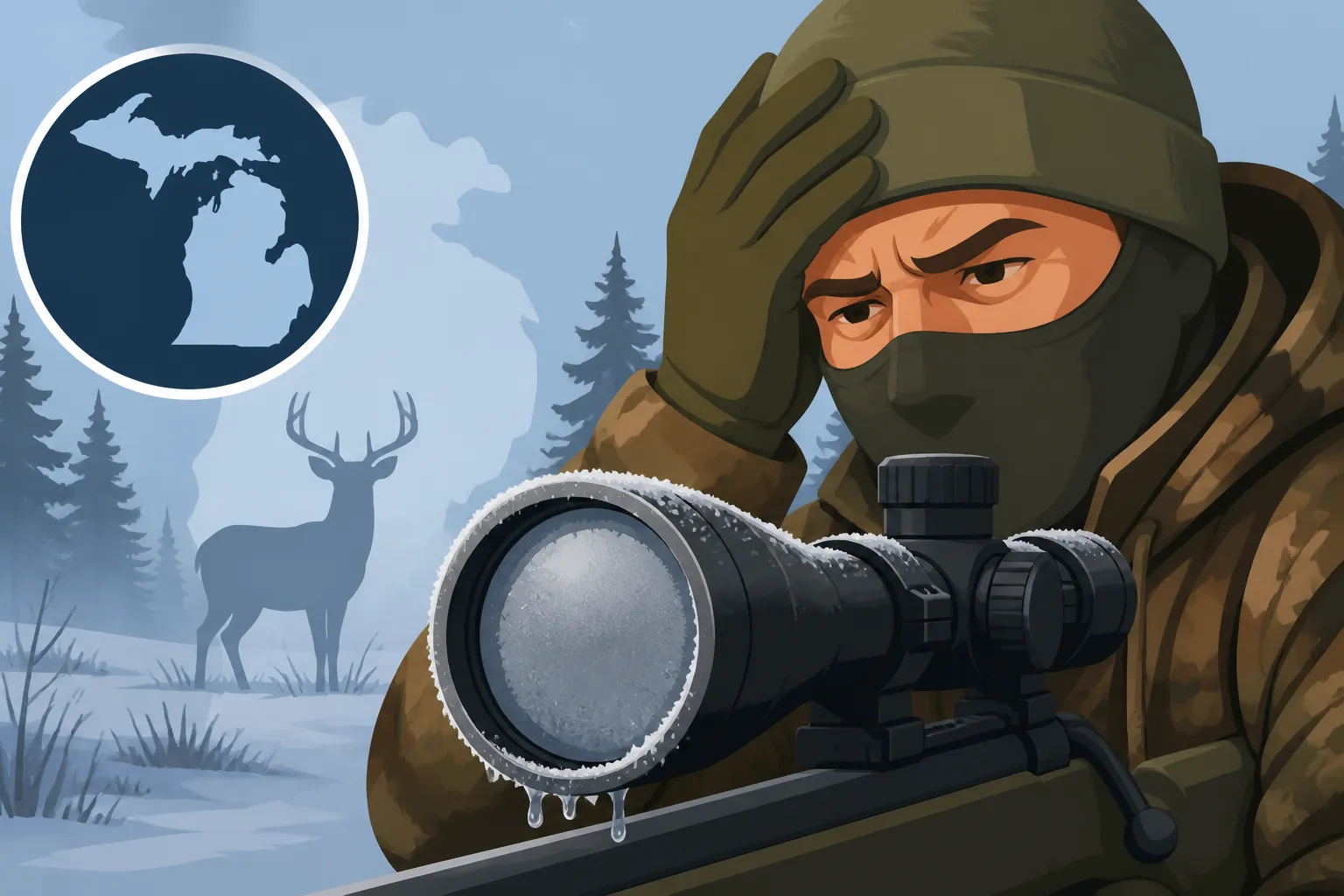
There's nothing quite like the crushing disappointment of finally spotting that elusive Michigan buck or gobbler, only to raise your binoculars or rifle scope and find your view completely obscured by a milky white haze. That sudden, vision-stealing fog can transform a thrilling moment into pure frustration, often costing you the shot you've waited all season for. This guide is dedicated to tackling that exact problem, helping you understand why your optics fog up in Michigan's often unpredictable cold and wet conditions, and, more importantly, how you can prevent it and manage it when it inevitably happens, so you're always ready when opportunity knocks.
The Frustration of Fog: Why It Happens in Michigan
Michigan's hunting seasons throw a real curveball at our gear. From the crisp, cool mornings of early archery to the biting cold and dampness of late firearm or muzzleloader season, the environment is constantly conspiring to fog up our precious optics. It's not just annoying; it can genuinely impact your success and even your safety if you can't clearly identify your target.
The Science of Condensation and Temperature Swings
At its heart, fogging is just condensation, the same phenomenon that makes your car windows dewy on a cold morning. Air always contains some amount of water vapor. Warm air can hold a lot more moisture than cold air. When that warm, moisture-laden air comes into contact with a colder surface, the air near that surface cools rapidly. As it cools, it can no longer hold all that water vapor, and the excess moisture condenses into tiny liquid droplets – what we see as fog.
In Michigan, we experience dramatic temperature swings. You might have a 40-degree morning quickly giving way to a 20-degree afternoon, or you could be going from a heated blind to a freezing stand in minutes. This creates the perfect conditions for optics to fog, both internally and externally. The glass on your scope or binoculars acts as that cold surface, and any humid air, whether from inside the optic or outside, will condense on it. It’s a battle against physics every time the mercury drops and the humidity rises.
Common Scenarios Ruining Your Hunt
Think about a typical Michigan deer hunt. You wake up in a cozy, warm cabin, maybe even drive to your hunting spot in a heated truck, your optics nice and toasty. Then, you step out into the frosty pre-dawn air. Instantly, the cold hits your gear. The warm, humid air trapped inside your scope or binocular, or even just the warm air around it from your breath or body heat, meets that super-cold glass. Poof – fog. This external fogging is common and can clear quickly, but what about the internal fogging?
Internal fogging is often far more insidious. This usually happens when the seals on your optics aren aren't perfect, allowing moist air to enter and then condense on internal lens surfaces when cold. Imagine trudging through a wet, snowy cedar swamp during Muzzleloader Tactics in December Cold. Your body is working hard, generating heat, and your breath is warm. Even a tiny pinhole leak in your scope can pull in that moist air, and then when you slow down and cool off, the internal glass fogs, often refusing to clear for hours. It's truly infuriating when you're glassing for deer in thick cover and your binoculars suddenly become useless.
Proactive Steps to Keep Your Lenses Clear
The best defense against fogging is a good offense. By taking some smart, proactive steps before you even head out the door, you can drastically reduce the chances of your optics clouding up when you least expect it. It’s all about minimizing those sharp temperature differentials and protecting your gear.
Acclimatization: The Golden Rule
This is probably the most crucial step, and it's deceptively simple: get your optics used to the cold before you need them. If your rifle and scope have been sitting in a warm house or truck, take them outside 30 minutes to an hour before you reach your stand. Let them sit in the ambient air. Place them in your unheated garage or on your porch overnight if it's safe. This allows the internal and external glass surfaces to slowly equalize with the outside temperature. When the glass is already cold, warm, humid air won't condense on it as readily.
I’ve made the mistake more times than I care to admit of jumping out of a toasty truck and immediately climbing into a stand, only to have my scope fog up with my first breath. Now, I often put my rifle in the bed of the truck, wrapped carefully, during the drive to my spot. If I’m sitting in a ground blind, I’ll open the windows or door for a bit to let the inside air cool down before I set up. This simple act of giving your optics time to cool down can be the difference between a clear view and a missed opportunity. It’s a fundamental part of any Cold Weather Sitting Strategy.
Anti-Fog Treatments and Coatings
While not a magic bullet, various anti-fog treatments and coatings can certainly help with external fogging. These usually come in the form of wipes, sprays, or gels that create a thin film on the lens surface, reducing surface tension and preventing water droplets from forming into larger, vision-obscuring beads. Many manufacturers also apply permanent hydrophobic or anti-fog coatings to their lenses.
When using external treatments, always follow the product instructions carefully. Some can be abrasive or leave a residue if not applied correctly, potentially damaging delicate lens coatings. For permanent factory coatings, these are generally excellent but can wear down over time with harsh cleaning or excessive rubbing. While these coatings can't prevent internal fogging in a poorly sealed optic, they offer a good line of defense against breath, light rain, or humidity condensing on the outer lens surfaces. When researching new optics, checking reviews on resources like GoHunt can help you understand which models offer durable, high-performing anti-fog properties.
Protecting Lenses from External Moisture
Beyond temperature and coatings, simply shielding your lenses from direct moisture is key. Use lens caps whenever your optics aren't in active use. Many binoculars come with objective lens covers and an ocular rain guard that can be flipped up or down in an instant. This protects the glass from falling snow, rain, and even your own breath or perspiration.
When you're out in the field, get into the habit of keeping your optics tucked away or protected. If you're walking through thick brush or in a light drizzle, keep your binoculars under your jacket or in a pack. When you're sitting on stand, position your rifle so the scope lenses aren't directly exposed to falling precipitation or your exhaled breath. A simple brim on your hat can even help deflect some moisture. And always carry a clean, soft microfiber cloth specifically for optics – never wipe with your sleeve or a rough rag, as this can scratch delicate coatings. Proper care, like detailed in Cleaning a Rifle After a Wet Sit, extends to your optics too.
Choosing Optics Built for Michigan's Elements
When it comes to battling Michigan's fickle weather, some optics are simply better equipped for the fight than others. Investing in quality gear designed to withstand harsh conditions can save you endless frustration in the field. This is where understanding construction and features truly pays off.
Sealed and Purged: The Internal Defense
The absolute best way to prevent internal fogging is to choose optics that are "sealed and purged." This means the manufacturer has filled the internal air space of the optic with an inert gas, typically nitrogen or argon, and then sealed it with O-rings. Why is this important? Because nitrogen and argon are dry gases and don't contain water vapor. By flushing out the humid air, there's no moisture inside to condense on the lenses when temperatures drop.
This feature is standard on most higher-quality binoculars and rifle scopes today, but it's worth double-checking if you're looking at budget options. It's a non-negotiable feature for hunting in Michigan, especially if you spend time in wet environments like marsh edges or Hunting Michigan Swamp Edges for Deer. Without proper sealing and purging, even a tiny amount of humidity can get trapped inside, leading to persistent internal fogging that can only be resolved by professional servicing. Don't compromise on this; it's the bedrock of fog-proof performance.
Lens Quality and Design
Beyond sealing, the overall quality of the lenses and their coatings plays a significant role. Higher-quality glass with advanced multi-coatings tends to resist condensation better and often clears more quickly if external fogging does occur. These coatings are designed not just for light transmission but also for durability and moisture resistance. Better optics also have tighter manufacturing tolerances, meaning fewer gaps for moisture to seep into in the first place.
While budget optics might seem appealing, they often cut corners on sealing and coating processes, leaving you vulnerable to fog. When you're trying to pick out a deer's antler points under Michigan's Antler Point Restrictions by DMU, or looking for a turkey's head in deep shadow during a Roost Hunting Michigan Gobblers setup, you need every bit of clarity your optics can offer. Researching different brands and models on platforms like GoHunt can help you identify optics that are known for their robust construction and superior lens performance in challenging conditions.
Binocular and Scope Features to Prioritize
When you're shopping for new binoculars or a rifle scope for Michigan hunting, keep these features in mind:
- Fog-proof/Waterproof Rating: Look for explicit declarations of "nitrogen purged," "argon purged," and "waterproof." Don't settle for "water resistant" for serious hunting in our state.
- External Lens Coatings: Beyond internal anti-fog, look for hydrophobic (water-shedding) coatings on the exterior lenses. These cause water droplets to bead up and roll off, making it easier to see in rain or snow.
- Robust Construction: A durable, armor-coated housing (rubberized often) will not only protect the optics from bumps and drops but also contribute to maintaining a tight seal over time.
- Eyecups and Lens Caps: Good quality, snugly fitting eyecups can help keep your breath from directly hitting the ocular lens. Integrated, flip-up lens caps offer quick protection against moisture and debris.
For example, when selecting Rifle Scopes for Low-Light Swamps, you're already prioritizing light gathering, but ensure that scope is also fully fog-proof. The combination of clear, bright optics and fog-proof reliability is what you need when that deer steps out at dawn or dusk in dense Michigan cover.
Handling Fog When It Strikes Mid-Hunt
Despite your best efforts, sometimes fogging still happens. Maybe a sudden temperature swing caught you off guard, or you just exhaled a little too vigorously onto your ocular lens. Knowing what to do in the moment can salvage your hunt.
Field Expedients and Quick Fixes
If your optics fog up externally, the first instinct is to wipe it. But hold on! Unless you're absolutely sure the lens is free of grit, wiping can scratch it. Often, a gentle breath across the lens (from a distance, not directly onto it), followed by letting the optic air dry for a few moments, can do the trick for light external condensation. You can also try carefully wiping with a clean, dry microfiber cloth. However, be incredibly gentle.
Sometimes, simply waiting it out is the best course of action. If your binoculars fog from your breath, pull them away from your face for 30 seconds to a minute; your body heat will slowly warm the lens, and the fog often dissipates. If you're in a stand and your scope fogs, try tucking the rifle under your armpit or inside your jacket for a few minutes, allowing some body heat to transfer to the optic. This is especially useful during Hunting the Michigan Rut in November when temperatures can swing wildly throughout the day. The key is patience and not rushing to abrade your lenses.
Emergency Drying and Care After the Hunt
If your optics become thoroughly soaked or internally fogged in the field, immediate attention upon returning to camp is crucial to prevent long-term damage. For externally wet optics, remove all lens caps, open any covers, and allow them to air dry slowly at room temperature. Avoid blasting them with a heater or direct sunlight, as rapid temperature changes can cause internal components to expand and contract, potentially compromising seals or coatings.
For internal fogging, if it's persistent and doesn't clear on its own, it's a sign that moisture has penetrated the seals. This usually requires professional service. Don't try to disassemble the optic yourself; you'll likely void the warranty and cause more damage. Pack the optic in a dry, padded case and contact the manufacturer for repair or replacement options. Taking good care of your gear, including proper storage and handling, ensures it will be ready for Michigan's varied conditions, whether you're chasing deer in Southern Michigan Farm Country Deer Hunting or heading north for Hunting the Michigan Upper Peninsula for Deer.
| Fogging Type | Cause | Prevention | Mid-Hunt Fix | Post-Hunt Care |
|---|---|---|---|---|
| External Fog | Warm, humid air meets cold lens surface. | Acclimatize gear, use anti-fog coatings, lens caps. | Gentle breath, quick air dry, soft microfiber wipe. | Air dry at room temp. |
| Internal Fog | Moist air trapped inside due to compromised seals. | Sealed/purged optics (nitrogen/argon), quality construction. | Often none in the field; may clear with body heat. | Professional service required; avoid DIY disassembly. |
Disclaimer
This article is for general informational purposes only and does not constitute professional advice. Laws, prices and regulations vary by location and change over time. Consult a qualified professional for guidance on your specific situation.