Bow Cases for Travel to Michigan
There’s nothing quite like the excitement of packing up your gear for a Michigan hunting adventure, but that anticipation can quickly turn to anxiety when you start thinking about how to safely transport your prized bow. Whether you're flying across the country or just driving a few hours, protecting your archery equipment from bumps, drops, and prying eyes is paramount. This guide will walk you through everything you need to know about choosing and preparing bow cases for travel to Michigan, ensuring your gear arrives in prime condition, ready for the hunt.
The Importance of a Quality Bow Case for Travel
Your bow is more than just a piece of equipment; it's an investment, a tool for your passion, and an extension of your hard-earned skills. Throwing it in the back of a truck or checking it as standard luggage without proper protection is a recipe for disaster. Dings, bent cams, twisted limbs, or even a cracked riser can ruin a trip before it even begins. A good bow case acts as a fortress, shielding your gear from physical impact, moisture, dust, and even theft. Think of it as insurance for your hunt.
The Michigan wilderness, from the dense hardwoods of the Lower Peninsula to the rugged expanses of the Upper Peninsula, demands gear that performs flawlessly. If your bow arrives with a hairline crack you didn't notice, or a peep sight that's subtly twisted, your accuracy will suffer, and your confidence will plummet. It's not just about getting the bow there; it's about getting it there ready to shoot. Investing in a quality case and knowing how to pack it correctly saves you headaches, potential repair costs, and most importantly, preserves your precious hunting time.
Types of Bow Cases and Their Travel Suitability
When it comes to bow cases, you generally have two main categories: soft cases and hard cases. Each has its place, but for travel, especially over longer distances or with airline involvement, their suitability varies dramatically.
Soft Bow Cases: Local Convenience, Limited Protection
Soft cases are typically made from durable fabric like Cordura or canvas, often with some internal padding. They're lightweight, easy to store, and generally less expensive than their hard-shell counterparts.
- Pros:
- Lightweight and Flexible: Easier to carry short distances and can often fit into tighter spaces in a vehicle.
- More Affordable: A lower upfront cost for basic protection.
- Quick Access: Zippers make it easy to get your bow in and out for quick range sessions or local hunts.
- Extra Pockets: Many soft cases have external pockets for accessories like arrows, releases, and rangefinders.
- Cons:
- Minimal Impact Protection: While padding helps, a soft case won't prevent damage from heavy impacts, crushing forces, or items being stacked on top of it.
- Vulnerable to Elements: Most soft cases offer limited water resistance and are not truly dust-proof. A sudden downpour or a dusty two-track can be problematic.
- Less Secure: While some have lockable zippers, they're far easier to cut into than a hard case, making them a higher theft risk.
- Not Airline Compliant: Airlines almost universally require bows to be in hard-sided, lockable cases for checked baggage.
- Best Use Cases for Travel: Soft cases are fantastic for short drives to a local archery range, heading out for an afternoon of Squirrel Hunting Michigan Hardwoods, or a quick trip to a nearby friend's property. They offer enough protection for minor bumps and scratches when handled carefully and kept within your direct control. However, for any journey involving commercial transportation, rough roads, or prolonged exposure, they fall short.
Hard Bow Cases: The Ultimate Travel Protection
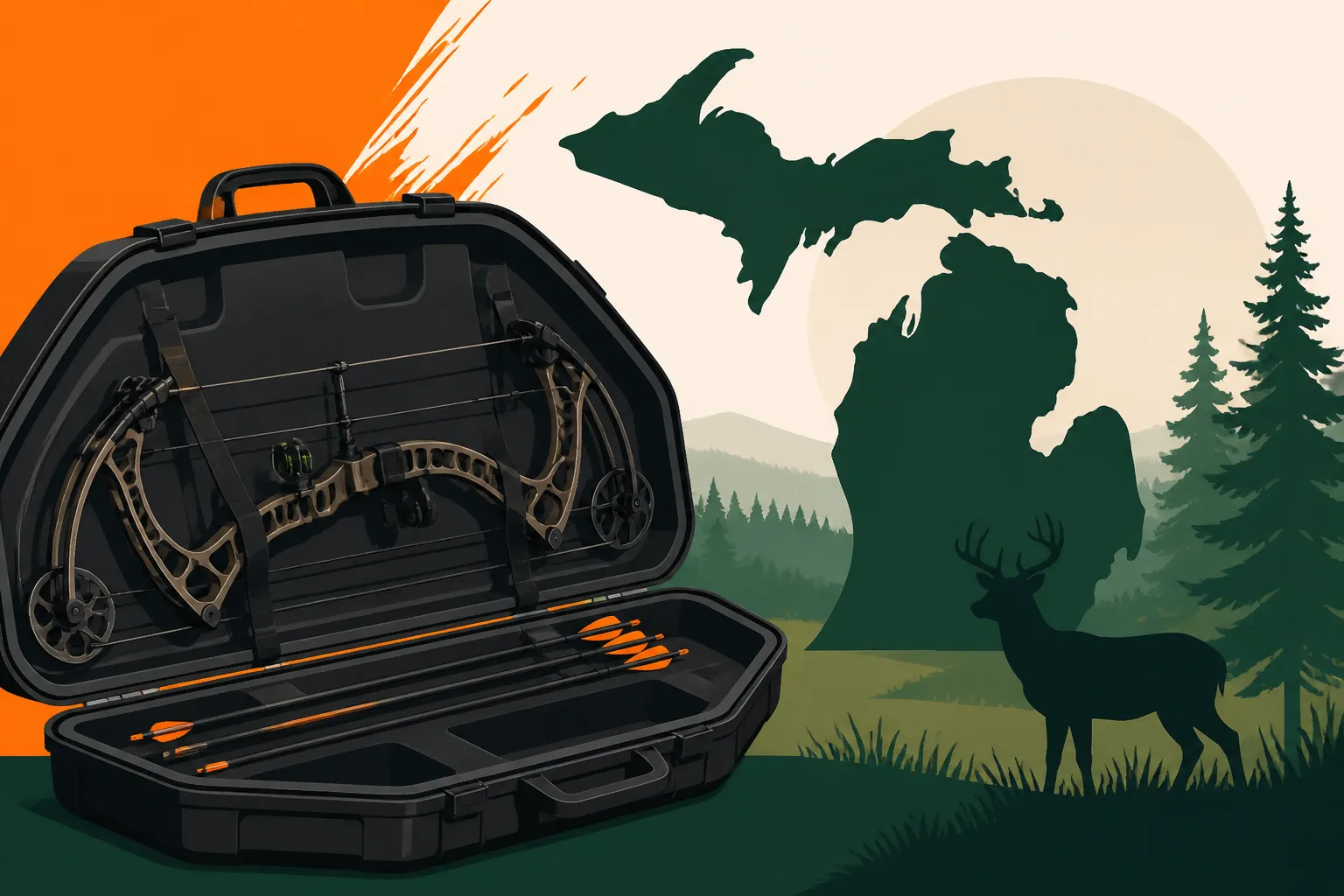
Hard cases, typically constructed from rigid plastics like polypropylene or even aluminum, are designed for maximum protection. They offer a robust shell that can withstand significant impact, crushing, and environmental exposure.
- Pros:
- Superior Impact Resistance: The rigid shell provides excellent protection against drops, impacts, and the rough handling that checked baggage can endure.
- Crush-Proof: Designed to withstand heavy items being placed on top, protecting your bow's cams and limbs from bending or breaking.
- Weather and Dust Proof: Many quality hard cases feature O-ring seals, making them highly resistant to water, dust, and other environmental hazards. This is crucial if your case ends up in a rainy truck bed or on a dusty trail.
- Enhanced Security: Multiple latch points and reinforced padlock holes allow for strong locking mechanisms, deterring theft and meeting airline security requirements.
- Internal Customization: Most come with dense foam inserts that can be customized to precisely fit your bow, arrows, and accessories, preventing internal movement.
- Airline Compliant: Essential for flying with your bow, as they meet TSA and airline requirements for firearms/archery equipment.
- Cons:
- Heavier and Bulkier: Can be cumbersome to carry and take up more space in a vehicle.
- Higher Cost: Generally a more significant investment, but one that pays for itself in peace of mind and gear protection.
- Potential for Overweight Fees: If flying, the weight of the case plus your gear can sometimes push you over airline baggage limits, incurring extra fees.
- Best Use Cases for Travel: A hard case is absolutely non-negotiable for airline travel. If you're flying into Detroit, Grand Rapids, or Traverse City for Michigan's November Firearm Deer Season and bringing your bow, a hard case is your only option. They are also highly recommended for long road trips, especially if your gear will be in a truck bed, trailer, or anywhere it might shift, get wet, or be subject to heavy impacts. For hunting trips deep into Michigan's public lands, where gear might take a beating, a hard case protects your critical equipment.
Key Features to Look for in a Travel Bow Case
When selecting a hard case for travel to Michigan, or any distant hunting grounds, certain features are non-negotiable for optimal protection and convenience.
Durability and Construction Materials
The material and construction quality of your hard case are paramount. Look for cases made from high-density polyethylene (HDPE) or injected molded polypropylene. These materials offer excellent impact resistance and can withstand extreme temperatures without becoming brittle. Some premium cases are also made from aircraft-grade aluminum, offering superb strength, albeit at a higher price point.
- Reinforced Corners: Corners are often the first point of impact in a drop. Cases with reinforced corners provide extra protection where it's needed most.
- Continuous Hinge Pins: Look for metal hinge pins that run the entire length of the hinge, not just small individual pins. This prevents hinges from breaking under stress.
- Heavy-Duty Latches: Reliable latches that cinch down tightly are crucial. Recessed latches are a plus, as they are less likely to snag or break off during transit.
Internal Padding and Secure Tie-Downs
A strong exterior means little if your bow is rattling around inside. The interior of the case needs to cradle your bow securely.
- Dense Foam Inserts: Most quality hard cases come with pick-and-pluck foam or layered foam that allows you to create a custom cutout for your bow, arrows, and accessories. This snug fit prevents movement and absorbs shock.
- Velcro Straps or Tie-Downs: Even with custom foam, internal straps provide an extra layer of security, especially for heavier bows or when the case might be jostled vigorously. They ensure cams, limbs, and risers stay put.
- Accessory Compartments: Dedicated spaces for broadheads, releases, rangefinders, and other small items keep them organized and prevent them from damaging the bow itself. Consider a case that keeps your Broadheads for Timber Shots separate and protected.
Security Features: Locks and Tamper Resistance
Security is a major concern, whether you're traveling by air or leaving your case in a vehicle.
- TSA-Approved Padlock Holes: For airline travel, your case must be lockable, and the locks must be TSA-approved. Look for robust, reinforced padlock holes that can accommodate sturdy, shackle-protected locks.
- Multiple Locking Points: A case with several latch points and corresponding padlock holes across its length offers superior tamper resistance compared to one with only a single central lock.
- Non-Pryable Edges: The seams and edges of the case should fit together tightly, ideally with an interlocking design, to prevent unauthorized prying.
Portability: Wheels and Handles
Don't underestimate the physical effort of hauling a heavy bow case, especially through airports or across large parking lots.
- Integrated Wheels: Wheels are a game-changer. Look for cases with sturdy, recessed wheels that can handle various terrains without breaking. They save your back and make navigating crowded terminals or long walks on public land much easier.
- Ergonomic Handles: Multiple handles (on the top and side) that are comfortable to grip and durably attached are essential. Some cases even offer spring-loaded handles that retract flush, preventing snagging.
Size and Weight Considerations
Before you buy, especially if flying, consider the dimensions and weight of the empty case.
- Airline Size Limits: Most airlines have specific maximum dimensions for checked baggage before classifying it as oversized, which incurs extra fees. Research the policies of your chosen airline.
- Weight Limits: Similarly, there are weight limits. A heavier case, plus your bow and all accessories, can quickly exceed the standard 50 lbs (or similar) limit. Look for cases that strike a balance between protection and reasonable weight. Some hunters prefer to ship heavy gear ahead of time rather than deal with airline weight restrictions.
| Feature | Soft Case (for Travel) | Hard Case (for Travel) |
|---|---|---|
| Protection Level | Low (scratches, minor bumps) | High (impact, crush, weather, dust) |
| Airline Compliant | No | Yes (required for bows/firearms) |
| Security | Minimal (zipper locks, easy to cut) | Excellent (multiple padlock points, rugged shell) |
| Weight | Lightweight | Heavier |
| Bulk/Size | Flexible, less bulky | Rigid, often bulky |
| Weather Resistance | Low | High (many are sealed, waterproof) |
| Internal Organization | Pockets, some padding | Custom foam, tie-downs, accessory compartments |
| Portability (Wheels) | Rarely | Often features integrated wheels |
| Cost | Lower | Higher |
| Best For | Local range trips, car seat transport | Airline travel, long road trips, rough handling, storage |
Navigating Airline Travel with Your Bow to Michigan
Flying with a bow to Michigan, while a bit more involved than checking a regular suitcase, is a routine process for many hunters. The key is understanding and adhering to Transportation Security Administration (TSA) regulations and individual airline policies.
TSA Regulations for Archery Equipment
The TSA classifies bows and arrows as "firearms," meaning they must be declared as such and follow specific guidelines:
- Hard-Sided, Locked Container: Your bow must be transported in a hard-sided case that is locked. The case must be able to withstand normal baggage handling without being easily opened.
- Locks: Only you should have the key or combination to the locks. TSA-approved locks are highly recommended, as they can be opened by TSA personnel without damaging your case if an inspection is needed.
- Declaration: You must declare your bow at the airline check-in counter. They will provide you with a declaration tag to place inside or on your case.
- Arrows: Arrows must also be in a hard-sided case, often within the bow case itself. Ensure broadheads are protected to prevent them from cutting through the case or injuring baggage handlers.
- Ammunition: Broadheads are considered "ammunition" by some airlines and the TSA. While typically not an issue when packed securely within the bow case, it's always wise to confirm if there are specific packing requirements, like placing them in a separate, small container inside the main case.
- No Loaded Bows: Similar to firearms, your bow should not be "loaded" – meaning no arrow nocked or broadhead attached to an arrow that is nocked.
Airline-Specific Policies
While TSA sets the baseline, each airline can have slightly different rules regarding dimensions, weight limits, and specific procedures.
- Check Before You Fly: Always visit your airline's website or call their customer service well in advance of your trip. Look for their "special luggage," "sporting equipment," or "firearms" policies.
- Oversized and Overweight Fees: Be prepared for potential fees. A bow case, especially a large hard case, can sometimes exceed standard baggage dimensions or weight limits. Knowing these costs beforehand helps you budget and avoid surprises at the airport.
- Check-In Early: Allow ample time at the airport for check-in. The declaration process for a bow takes longer than for regular luggage. Arriving early reduces stress and ensures you have enough time if any issues arise.
- Documentation: Keep your hunting license and other relevant documentation (like a copy of Michigan's hunting regulations, which you might research on a platform like GoHunt) easily accessible, though you typically won't need to present it to the airline or TSA. For information on Michigan Hunting Licences and What They Cost, be sure to check current regulations.
Road Tripping with Your Bow Case to Michigan
Driving to your Michigan hunting destination offers more flexibility than flying, but proper bow case preparation is still crucial to protect your gear from the rigors of the road.
Securing Your Bow in a Vehicle
Whether you're driving a sedan, SUV, or a pickup truck, preventing your bow case from shifting, sliding, or being damaged is key.
- Trunks and Back Seats: In a car trunk or SUV cargo area, lay the case flat if possible, and use blankets, duffel bags, or cargo nets to keep it from sliding around during turns or sudden stops. If placing on a back seat, secure it with seatbelts.
- Truck Beds: This is where hard cases truly shine. If your bow case is in a truck bed, it needs to be securely tied down with ratchet straps or bungee cords to prevent it from bouncing out or shifting violently. Even a short drive on a Michigan two-track can be rough. A tonneau cover or truck cap offers excellent protection from the elements and prying eyes, significantly enhancing security.
- Trailers: If transporting in an enclosed trailer, ensure the case is secured to tie-down points to prevent movement. For open trailers, a waterproof tarp over the secured case is essential.
Protecting Against the Elements and Theft
Michigan weather can be unpredictable, especially during hunting season. Road trips also come with security considerations.
- Weatherproofing: A good hard case should already be highly weather-resistant. However, if using a soft case for a local trip, consider placing it inside a larger waterproof bag or duffel, especially if there's any chance of rain, snow, or road spray. For a more comprehensive look at preparing for diverse conditions, read about Clothing for a Michigan November.
- Dust and Dirt: Michigan's gravel roads and dirt two-tracks can kick up a lot of dust. A sealed hard case will protect your bow; a soft case will likely let dust in.
- Theft Deterrence: A hard case with strong locks makes your bow a less appealing target for opportunistic thieves. When parking your vehicle, especially overnight or in public areas, always hide your bow case from plain view. A blanket or even a tarp can make it less obvious what valuable gear is inside. Never leave your bow unattended and unsecured, especially if it's visible.
Packing Your Bow Case Smartly
Once you have the right case, packing it correctly is the final step to ensuring your bow arrives ready to hunt.
Bow and Arrow Placement
The goal is a snug fit with no movement.
- Bow First: Place your bow in the designated cutouts or custom-fit foam. Ensure cams are protected and not pressing against the case walls. Some cases have recessed areas specifically for cams.
- Tie-Downs: Use any internal straps to firmly secure the bow.
- Arrow Storage: Most quality hard cases have built-in arrow holders or an area where a separate arrow tube can be secured. Ensure broadheads are covered or in a separate, protective case within the bow case to prevent damage to the foam or other items.
Accessories and Tools
Think about what you'll need immediately upon arrival.
- Essentials Only: Pack only essential archery accessories within the bow case. This might include your release aid, rangefinder, a small multi-tool for adjustments, and perhaps a spare peep sight.
- Small, Secure Containers: Use small, rigid containers or zippered pouches for tiny items like spare screws, nocks, or string wax to prevent them from getting lost or damaging other gear.
- Broadhead Box: Absolutely use a dedicated, hard-sided broadhead box for your Fixed Versus Mechanical Broadheads. This protects both the broadheads and everything else in your case.
Avoiding Common Packing Mistakes
A few simple precautions can prevent big headaches.
- Don't Overpack: Forcing too many items into the case can create pressure points that damage your bow or prevent the case from closing securely.
- Distribute Weight Evenly: Try to balance the weight within the case, especially if it has wheels, to make it easier to handle.
- Double-Check All Latches and Locks: Before you hand over your case or hit the road, ensure every latch is closed and every lock is secured. You'd be surprised how often a forgotten latch leads to a case opening unexpectedly.
- Pre-Trip Tune-Up: Before packing, give your bow a thorough inspection and tune-up. Small issues can become big problems during travel or on the hunt. Bow Setups for Michigan Whitetails is a great resource for getting your gear dialed in.
Conclusion: Peace of Mind on Your Michigan Hunting Trip
Traveling with your bow to Michigan doesn't have to be a source of stress. By investing in a high-quality hard case, understanding travel regulations, and packing your gear thoughtfully, you can ensure your bow arrives safely and is ready to perform. Whether you're heading to the vast public lands for Hunting the Michigan Upper Peninsula for Deer or setting up in Southern Michigan Farm Country Deer Hunting, the peace of mind that comes from knowing your equipment is protected is invaluable. Do your research, plan ahead, and focus on the thrill of the hunt, knowing your gear is secure.
Disclaimer
This article is for general informational purposes only and does not constitute professional advice. Laws, prices and regulations vary by location and change over time. Consult a qualified professional for guidance on your specific situation.