Sabot Versus Conical for Deer
For many Michigan muzzleloader hunters, the December season offers a unique challenge and a chance to extend their time in the deer woods. But once you've committed to a muzzleloader, a common frustration arises: what projectile should you load? The choice between a sabot and a conical bullet can feel overwhelming, with passionate arguments on both sides. This guide will cut through the noise, helping you understand the pros and cons of each, and how to pick the best option for your Michigan deer hunting success.
Understanding Muzzleloader Projectiles
Muzzleloaders, while offering a historical connection to our hunting past, have evolved significantly. The projectiles we load into them today are a testament to that evolution, ranging from traditional designs to highly modern, ballistic marvels. Knowing the fundamental differences between these options is the first step in making an informed choice for your Michigan hunt.
The Classic Conical Bullet
Think of the conical bullet as the original workhorse of the muzzleloader world, a direct descendant of the round balls that loaded early black powder rifles. These are solid lead projectiles, often with some form of lubrication, that load directly into the bore of your muzzleloader without a plastic sleeve. They are typically heavier than their saboted counterparts for a given caliber and rely on their mass and broad meplat (flat nose) to deliver energy.
Many traditional muzzleloader enthusiasts swear by conicals for their simplicity and the historical accuracy they bring to the hunt. They're often favored in older, traditional-style muzzleloaders or those with slower twist rates designed for stabilizing heavier, slower projectiles. When you ram a conical down the barrel, it engages directly with the rifling, creating a tight seal. This direct contact means that the bullet itself is doing all the work to spin and stabilize, and it's also responsible for creating the pressure seal that propels it. The aesthetic of a big, heavy lead bullet hitting a deer hard resonates with many hunters, especially those who appreciate the robust, old-school thump. However, this direct contact with the rifling also means that bore fouling can become a more immediate concern, impacting subsequent shots if you're not meticulous with cleaning, which isn't always practical when Muzzleloader Tactics in December Cold become necessary.
The Modern Saboted Bullet
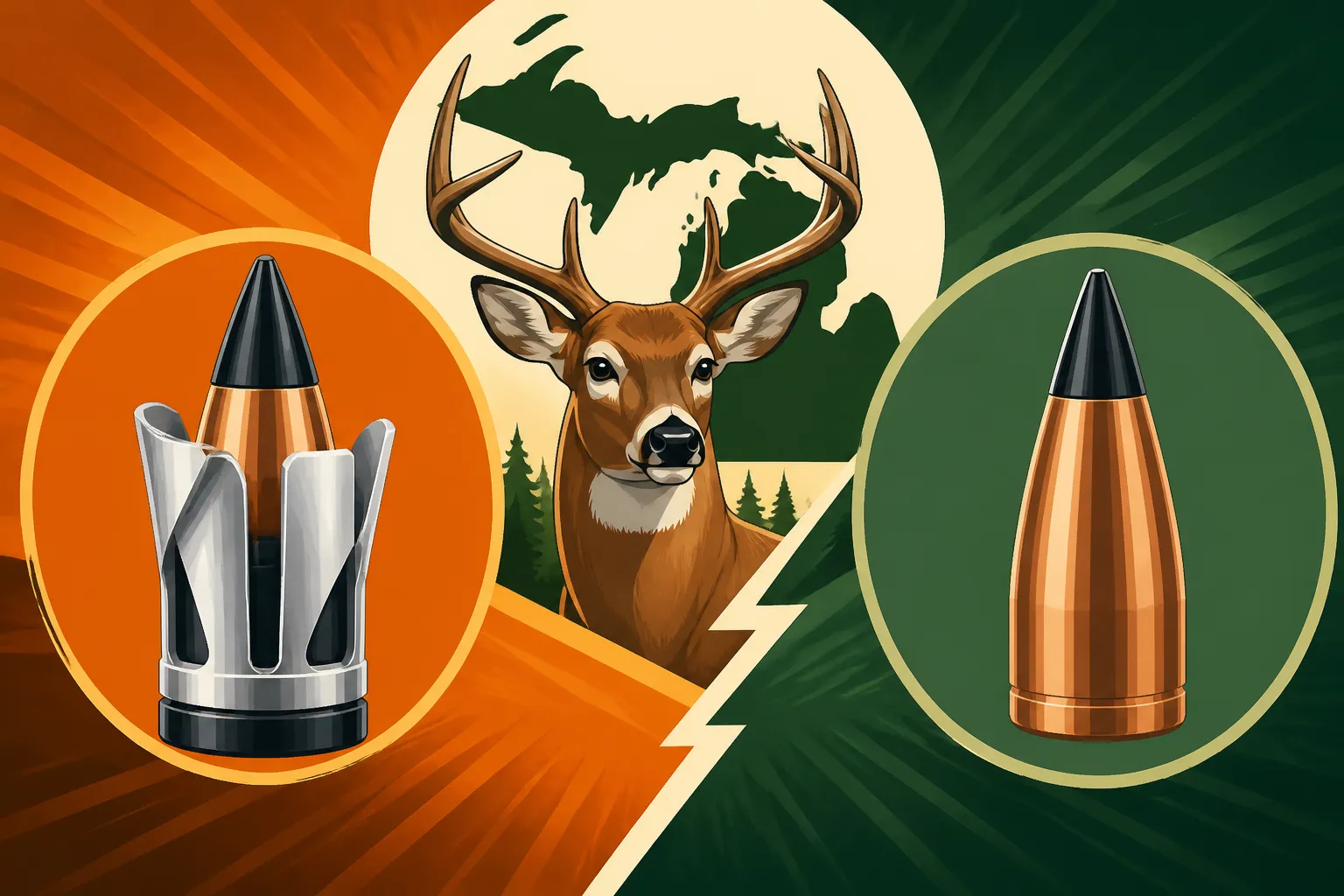
Saboted bullets, on the other hand, represent a significant leap in muzzleloader technology, bridging the gap between traditional black powder firearms and modern centerfire rifle performance. A sabot is essentially a plastic sleeve or cup that encases a smaller, typically jacketed, bullet—often a projectile originally designed for a centerfire rifle. This plastic sleeve has grooves or lands that engage the rifling of your muzzleloader's barrel, imparting spin to the projectile inside. Once the bullet leaves the barrel, the sabot peels away, allowing the bullet to continue its flight.
The primary advantage of saboted bullets is that they allow muzzleloaders to shoot lighter, more aerodynamic, and often higher-performing bullets at faster velocities. Because the bullet itself doesn't directly contact the rifling, it can be made of materials like copper or lead with a copper jacket, which might otherwise be too hard to load easily or would cause excessive fouling in a lead-fouling prone barrel. This design often leads to flatter trajectories and better accuracy at extended ranges compared to most conicals, making them very popular in Michigan's wider open areas or when setting up on a field edge. For hunters who want to squeeze every bit of modern performance out of their muzzleloader, especially in areas where rifles might be restricted or during the Michigan muzzleloader season structure, sabots are often the go-to choice. They can also be a bit easier to load, as the plastic sabot often slides down the barrel more smoothly than a bare lead conical.
Performance Factors in the Michigan Woods
When you're out there in the Michigan timber or on the edge of a frozen field, the theoretical differences between sabots and conicals quickly become very real. Your choice of projectile directly impacts how your muzzleloader performs when that whitetail steps out. Understanding these performance factors can mean the difference between a successful hunt and a missed opportunity, especially during the often-brutal conditions of December's muzzleloader season.
Accuracy at Different Ranges
This is often the biggest deciding factor for hunters. Generally speaking, saboted bullets tend to offer superior accuracy at longer ranges due to their more aerodynamic profiles and higher velocities. Since they use projectiles designed for modern centerfire rifles, they often have better ballistic coefficients, meaning they cut through the air more efficiently and maintain their energy and trajectory over distance. For hunters glassing across a clear-cut or hunting larger fields in southern Michigan, a sabot can provide that extra confidence out to 150 yards or even more, assuming your particular rifle and load combo are up to the task.
Conical bullets, while capable of excellent accuracy, typically shine at shorter to moderate ranges—think 100 yards and under. Their heavier weight and often less aerodynamic shapes mean they shed velocity and drop faster. However, within their effective range, a well-matched conical in a properly twisted barrel can be incredibly precise. The key for both is extensive range time. You need to know exactly how your chosen projectile performs from your muzzleloader. Don't assume. Many hunters find that the dense Michigan woods, especially in the Upper Peninsula, mean shots are often under 75 yards anyway, making the extreme long-range accuracy of a sabot less critical. However, if you're hunting more open terrain or food plots, a sabot might give you a comfortable edge. It's really about matching your gear to your typical hunting situation. You can use resources like GoHunt to scout public land areas and determine typical shot distances, helping you choose.
Energy and Terminal Performance
Once the bullet hits, its job is to humanely dispatch the animal. Both sabots and conicals can be incredibly effective, but they achieve their results through slightly different means.
Conical bullets, with their heavier mass and often softer lead construction, tend to create a larger initial wound channel through hydrostatic shock and blunt force. They dump a tremendous amount of energy into the animal, often expanding significantly or flattening out, sometimes even mushrooming like a traditional soft-point rifle bullet. This can be devastating, especially at closer ranges, and often leads to quick, clean kills and prominent blood trails, which are critical when Blood Trailing After Dark in Michigan becomes a possibility. The sheer momentum of a heavy conical can also be an advantage if it encounters bone, often pushing through rather than deflecting.
Saboted bullets, particularly those with jacketed designs (like Nosler Ballistic Tips or Hornady SSTs), are engineered for controlled expansion. They typically penetrate well and then expand reliably, creating a lethal wound channel that is often narrower but deeper than a conical. The smaller, faster bullet can sometimes pass through with less dramatic expansion if it doesn't hit significant resistance, but modern bullet technology ensures consistent performance. For hunters in Michigan, where deer can sometimes be tough, the reliable expansion of a good sabot can be very reassuring. It’s less about brute force and more about precise, controlled damage. Either way, shot placement is paramount. A perfectly placed sabot or conical will anchor a deer, while a poorly placed shot, regardless of projectile, will lead to a long tracking job.
Bore Condition and Loading
This is a practical consideration that can really impact your hunt, especially if you anticipate needing a follow-up shot or if you're trying to quickly reload after a miss.
Conical bullets, being solid lead, engage directly with the rifling. While this creates a good seal, it also means lead fouling can build up in the bore. After one or two shots, you might find loading subsequent conicals becomes much tighter and more difficult. This resistance means you're putting more effort into ramming the bullet, which can be noisy and tiresome, especially if you're on a deer drive or if you need to reload quickly. Some conicals are designed with grease grooves or come pre-lubed, which helps, but fouling is a constant battle. Carrying a small bore brush and patches to swab between shots (a "spit patch" or similar) is often a good idea if you shoot conicals, but this adds time and complexity to a field reload.
Saboted bullets, with their plastic sleeves, tend to be much gentler on the bore. The plastic takes the brunt of the rifling engagement, and because the jacketed bullet inside doesn't directly touch the barrel, fouling is generally less of an issue. This means that successive shots are often easier to load, maintaining a consistent loading pressure. This consistency can also contribute to better accuracy over multiple shots. If you're someone who might want to practice multiple shots at the range without constantly swabbing, or if the thought of struggling with a stuck bullet in the field sends shivers down your spine, sabots might offer a more forgiving experience. When you're trying to maintain a quiet presence while Still-Hunting Michigan Cedar Swamps, easy loading is a definite bonus.
| Feature | Conical Bullet | Saboted Bullet |
|---|---|---|
| Material | Typically solid lead, sometimes with lube | Jacketed bullet (copper, lead core) inside plastic sabot |
| Bore Contact | Direct contact with rifling | Plastic sabot contacts rifling, bullet floats inside |
| Accuracy (Range) | Best at short to moderate (under 100 yds) | Generally better at moderate to long (100+ yds) |
| Velocity | Slower, relies on mass | Faster, often flatter trajectory |
| Energy Transfer | High blunt force, often expands/flattens heavily | Controlled expansion, deep penetration |
| Loading Ease | Can be tighter, prone to fouling after shots | Generally smoother, consistent, less fouling |
| Twist Rate | Often prefers slower twist rates (1:48, 1:60) | Favors faster twist rates (1:28, 1:24) |
| Recoil | Can be heavier due to greater mass | Can be sharper due to higher velocity |
Choosing the Right Projectile for Your Hunt
The "best" projectile isn't universal; it's the one that performs best in your specific muzzleloader for your specific hunting style and conditions here in Michigan. It's a personal journey of matching equipment to expectations, and it's something you should figure out well before the Michigan Muzzleloader Season Dates arrive.
Your Muzzleloader's Design and Twist Rate
The internal design of your muzzleloader, particularly its twist rate, is perhaps the most critical factor in determining which projectile will shoot best. Twist rate refers to how quickly the rifling inside your barrel makes one complete revolution. It's expressed as a ratio, like 1:28" (one twist every 28 inches) or 1:48" (one twist every 48 inches).
Modern inline muzzleloaders, especially those with faster twist rates (e.g., 1:28" or 1:24"), are typically designed to stabilize shorter, lighter, and faster saboted projectiles. The quick twist imparts enough spin to keep these bullets flying true. Trying to shoot a heavy conical through a fast-twist barrel might lead to over-stabilization, which can actually degrade accuracy, or it simply might not perform as well as a sabot. On the other hand, traditional-style muzzleloaders or older inline models often have slower twist rates (e.g., 1:48" or even 1:60" for round balls). These barrels are better suited for stabilizing longer, heavier, and slower conical bullets. They need more time for the rifling to get a hold of the projectile and spin it up. Trying to shoot a light, fast sabot through a slow-twist barrel might result in insufficient spin, leading to keyholing (where the bullet tumbles) and terrible accuracy. Always check your muzzleloader's manual or the manufacturer's website for its specific twist rate. Understanding this fundamental aspect of your firearm will quickly narrow down your options. You can also research forums or use online tools like GoHunt to see what other hunters with similar muzzleloaders are having success with.
Hunting Scenarios in Michigan
Michigan offers a diverse range of hunting environments, from the vast, dense forests of the Upper Peninsula to the rolling agricultural lands of the Lower. Your typical hunting scenarios should absolutely influence your projectile choice.
Are you primarily still-hunting through thick cedar swamps or aspen cuts in northern Michigan, where shots are likely to be up close and personal, often under 70 yards? In such cases, the hard-hitting impact of a heavy conical might be perfectly suited. Its devastating power at close range, even with a slightly arched trajectory, is often more than enough. When you're Hunting Michigan Swamp Edges for Deer, long shots are generally out of the question anyway.
Or are you hunting over a food plot, an open field in the Thumb, or a powerline cut in the northern Lower Peninsula, where a shot out to 150 yards isn't uncommon? Here, the flatter trajectory and enhanced accuracy of a saboted bullet become a significant advantage. The reduced bullet drop at those distances can greatly simplify aiming and increase your chances of a clean kill. Similarly, if you're hoping for an opportunity at a bear during the Michigan Black Bear Hunting season, the deeper penetration and controlled expansion of many sabot designs could be a benefit. Consider the longest shot you realistically expect to take, not just the absolute maximum range of your firearm. If most of your shots are within 75 yards, don't feel pressured to use a sabot if a conical groups better in your gun.
Practice and Confidence
Ultimately, the most important factor isn't what's theoretically "best," but what you can shoot accurately and confidently. There's no substitute for range time. Start by cleaning your muzzleloader thoroughly. Then, try both conical and saboted projectiles, if your rifle's twist rate is versatile enough to handle both. Experiment with different powder charges (always staying within manufacturer recommendations) and different brands of each type of projectile.
When you go to the range, don't just shoot from a bench. Practice from kneeling, standing, and with shooting sticks, mimicking real-world hunting positions. Load your muzzleloader as you would in the field, including your loading accessories, and practice quick reloads. Pay attention to how easy or difficult each projectile is to seat. Do you feel confident in your ability to get a tight, consistent load every time? Do you know your bullet drop at 50, 100, and 150 yards?
The confidence you gain from extensive practice with a particular projectile is invaluable. Knowing exactly where your bullet will hit, under various conditions, empowers you to make ethical shot decisions in the field. If you're more confident with a conical at 75 yards than a sabot at 100 yards, stick with the conical and adjust your hunting strategy to keep shots within that comfortable range. After all, a shot you make confidently with a lesser-performing bullet is always better than a shot you miss or wound with a theoretically superior one.
Tips for Muzzleloader Success in Michigan
Muzzleloader hunting in Michigan, especially during the colder, sometimes wetter late seasons, presents its own unique set of challenges. Beyond the projectile choice, a few key practices can drastically improve your chances of success and ensure a safe, ethical hunt.
Keeping Your Powder Dry and Primer Secure
This might sound like a no-brainer, but it's astonishing how many muzzleloader failures can be traced back to moisture. Black powder and its substitutes are extremely susceptible to water. Even high humidity can cause issues. Before you head into the Michigan woods, make sure your powder is stored in airtight containers. When loading in the field, use speedloaders or powder vials that protect your pre-measured charges. After loading, ensure your primer is sealed. Many modern inline muzzleloaders have excellent systems for this, but if your rifle doesn't, consider using electrical tape over the primer cap or a dedicated primer cover.
If you're out in the rain or heavy snow, and this is a common occurrence during the late seasons, keep your muzzleloader pointed down to prevent water from entering the bore. A piece of electrical tape over the muzzle or a dedicated muzzle cover can offer extra protection without impeding your shot. When the weather turns truly nasty, like during a late-season snowstorm, consider how you might be Keeping a Muzzleloader Dry in Wet Snow. A wet charge or a damp primer will lead to a hang fire or a misfire, and nothing's more frustrating than having the deer of a lifetime in your sights and hearing a click instead of a bang.
Practice, Practice, Practice
We touched on this earlier, but it cannot be overstated. Muzzleloaders are not set-it-and-forget-it firearms. Consistency is key, and consistency comes from repetition. Spend time at the range with your exact hunting load and projectile. Don't just zero your rifle from a bench; practice shooting from field positions. Sit on a bucket, use shooting sticks, or practice leaning against a tree. The Michigan woods rarely offer bench-rest opportunities.
Pay close attention to your loading procedure. Ensure your bullet is seated firmly and consistently against the powder charge. Any gap can be dangerous and will severely impact accuracy. Also, practice your follow-through after the shot. Muzzleloaders have a distinct recoil and often a slight delay, so maintaining sight picture through the shot is crucial. The more familiar you are with your firearm, its quirks, and its capabilities, the more confident and successful you'll be when the moment of truth arrives. Understanding your firearm like an extension of yourself is paramount when hunting Southern Michigan Farm Country Deer Hunting or even deep in the U.P.
Field Care and Cleaning
While a deep clean is essential after every hunting trip or extensive range session, knowing how to perform basic field care can save your hunt. If you take a shot and need to reload, or if you've been out in wet weather for several days, a quick swab of the bore can make a big difference, especially with conicals. Carry a small container of bore solvent and some patches. Running a wet patch down the bore, followed by a dry one, can remove enough fouling to make the next load much easier and more consistent.
Always inspect your muzzleloader for any signs of rust or corrosion, particularly after hunting in damp conditions. A thin layer of gun oil on external metal surfaces can prevent rust. When you get home, don't put off the full cleaning. Black powder and its substitutes are corrosive, and leaving residue in your barrel will lead to pitting and damage. A thorough cleaning, including the breach plug, is vital for the longevity and continued accuracy of your muzzleloader. This attention to detail is just part of the routine for anyone serious about Muzzleloader Deer Hunting in Michigan.
Disclaimer
This article is for general informational purposes only and does not constitute professional advice. Laws, prices and regulations vary by location and change over time. Consult a qualified professional for guidance on your specific situation.