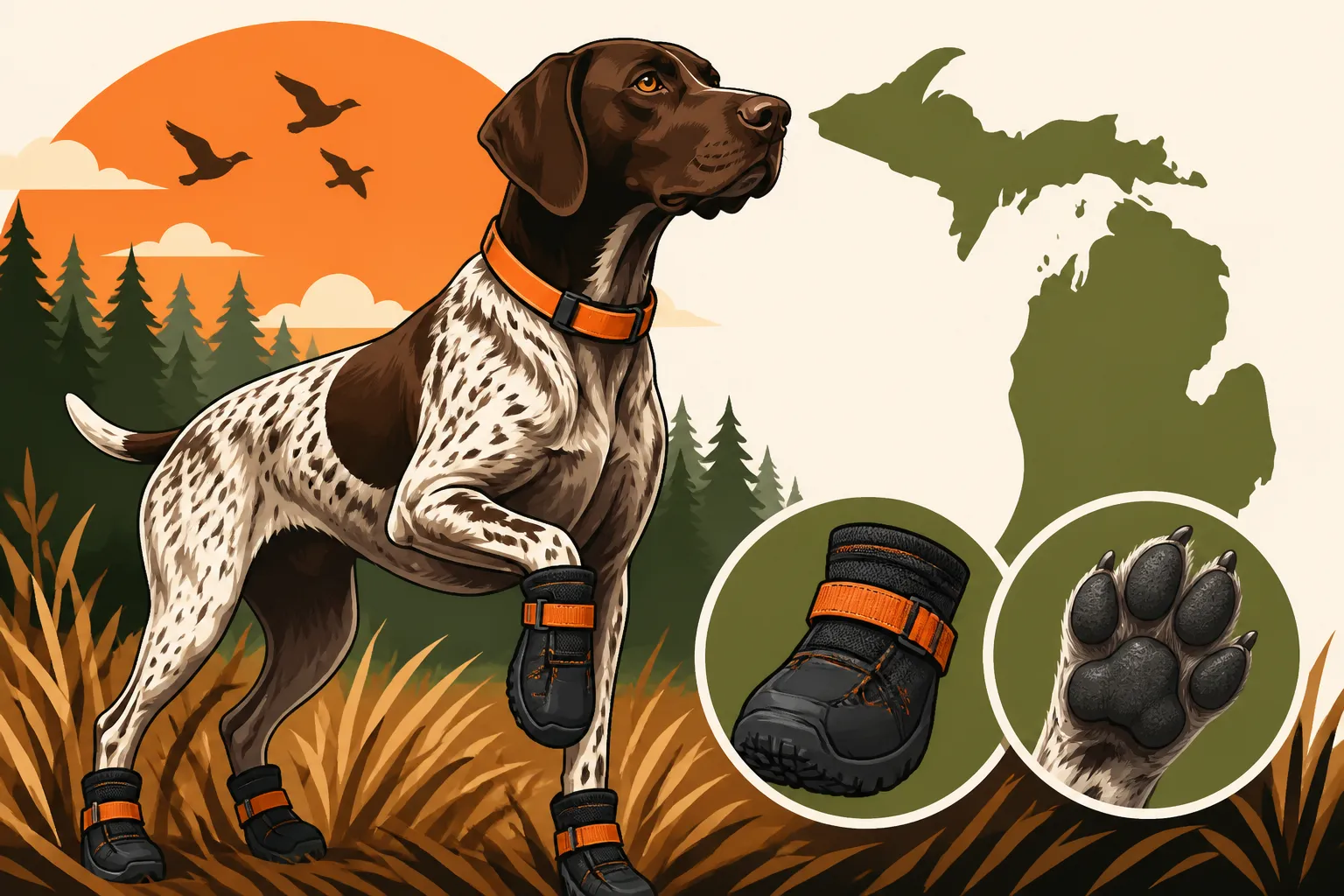
Bird Dog Boots and Cut Pads
For any dedicated bird hunter in Michigan, there's a unique bond with their dog, and keeping that four-legged partner healthy and eager to hunt is paramount. One of the most common, yet frustrating, setbacks we face in the field is a paw pad injury, turning a promising hunt into an emergency trek back to the truck. This comprehensive guide will walk you through why protecting your bird dog's paws is so critical in Michigan's diverse hunting landscapes, how to choose and properly use dog boots, and what steps to take for both preventing and treating those inevitable cuts and abrasions.
Why Paw Protection is Crucial in Michigan's Hunting Environment
Michigan offers some fantastic hunting opportunities for species like grouse, woodcock, pheasants, and even rabbits and hares. Our state's varied terrain, from dense aspen thickets to sprawling cattail marshes and frozen agricultural fields, provides incredible cover for game. However, this beautiful, diverse landscape is also full of potential hazards for our dogs' unprotected paw pads. It’s not just about comfort; it's about preventing debilitating injuries that can sideline your best hunting buddy for weeks or even months.
The Varied Michigan Landscape
Think about a typical day grouse hunting in Michigan's northern Lower Peninsula. One minute your dog is busting through a dense patch of shoulder-high ferns, the next it's navigating a rocky, old two-track, then plunging into a shallow, gravel-bottomed creek. Each of these environments presents a different challenge to their paws. Sharp rocks, abrasive gravel, hidden stumps, discarded bits of old farm equipment, even broken glass from long-gone logging camps – these are all realities of Michigan's public lands. While a dog's pads are naturally tough, they aren't impervious to every potential hazard. A jagged edge of ice or a shard of flint can slice through a pad in an instant, leading to pain, bleeding, and a quick end to the day's hunt.
Even seemingly innocuous ground can be dangerous. Dry, brittle stubble in a cut cornfield, after the fall harvest, can be like walking on a bed of tiny daggers, creating micro-abrasions that lead to soreness and cracking over time. Overgrown logging roads might hide sharp pieces of metal or broken branches that are hard to spot until your dog lets out a yelp. Serious hunters, much like those who meticulously plan big game hunts using tools like GoHunt to scout terrain, also apply that same rigorous preparation to their bird dogs' well-being, understanding that every inch of ground holds potential risks.
Seasonal Challenges
Michigan's seasons amplify these risks significantly. Early fall hunts for woodcock often mean wet, muddy alder runs. While the soft ground might seem forgiving, constant moisture can soften paw pads, making them more susceptible to cuts and tears when the dog does hit a patch of firmer, rockier ground. The mud itself can cake between toes, causing irritation and infection if not cleaned properly.
As we move into late fall and early winter, conditions become even more challenging. Frozen ground becomes as hard as concrete, and any embedded stones or icy patches can cause severe bruising or deep lacerations. Imagine running full tilt across a frozen field only to hit a hidden chunk of ice or a rock sticking out of the frozen earth. Ouch! Snow, too, can be a mixed blessing. While fresh, soft snow might offer a cushion, it can also hide sharp debris. More dangerously, wet snow combined with freezing temperatures can lead to ice balls forming between a dog's toes, which are incredibly painful and can cause skin irritation or even frostbite if not regularly cleared. These seasonal shifts demand a proactive approach to paw care, often making dog boots a necessity rather than a luxury.
Choosing the Right Bird Dog Boots: Features and Considerations
So, you've realized that Michigan's varied terrain and volatile weather mean your dog needs more than just naturally tough pads. Now comes the task of choosing the right boots. This isn't a one-size-fits-all situation. The best boot for your dog will depend on the type of hunting you do, the specific conditions, and your dog's individual paw shape and gait. A poorly fitting boot is almost as bad as no boot at all, leading to chafing, discomfort, and potentially causing your dog to throw a boot in the thick cover, leaving a paw exposed.
Types of Dog Boots for Hunting
When you start looking, you'll find a few main categories of dog boots, each with its own strengths.
- Durable, All-Terrain Boots: These are typically made from rugged nylon, synthetic leather, or a blend of durable fabrics with a reinforced, often rubberized, sole. Brands like Ruffwear (their Grip Trex or Summit Trex models are popular) or Neopaws make excellent versions. They offer good protection against sharp objects, abrasion, and often have decent traction. Many are designed to be somewhat water-resistant, though truly waterproof is a high bar for any flexible dog boot. These are great for general upland hunting, mixed terrain, and warmer weather when breathability is still a factor. If you're Hunting the Michigan Upper Peninsula for Deer with a dog for tracking or retrieving, these rugged boots would be ideal for the varied terrain.
- Insulated/Waterproof Boots: When temperatures drop and snow becomes a factor, or if you're frequently in very wet environments like late-season marsh edges, you might want something more substantial. These often feature neoprene or similar waterproof materials, sometimes with additional insulation. They aim to keep paws dry and warm. However, "waterproof" can be tricky with boots that need to flex and accommodate movement. Look for designs that minimize seams and have good closure systems to prevent water ingress. These are often heavier and less breathable, so they're best reserved for specific cold, wet conditions.
- Disposable/Lightweight Boots: Some hunters carry lightweight, sometimes disposable, options like "Pawz" rubber boots. These are essentially balloon-like rubber covers that offer basic protection against mud, ice balls, or minor abrasions. They are very flexible, allow for good paw feel, and are easy to pack. However, their durability is limited, especially in truly rough cover, and they can be tricky to get on and off. They're excellent as a backup or for short stints in specific conditions, but not usually a primary solution for a full day of serious hunting.
Ensuring Proper Fit and Comfort
This is arguably the most critical aspect. A boot that's too loose will spin on the paw, collect debris, and eventually fall off. One that's too tight can restrict blood flow, cause chafing, and be incredibly uncomfortable.
- Measure Accurately: Most manufacturers provide sizing charts. You'll usually need to measure the widest part of your dog's paw when they are standing and bearing weight. Do both front and back paws, as they can differ.
- Trial and Error: Don't expect your dog to love boots immediately. Introduce them gradually indoors. Put one boot on, offer a treat, then take it off. Build up to all four, then short walks in the yard. Your dog will likely do the "high-stepping" dance at first; this is normal. Patience and positive reinforcement are key.
- Check for Rubbing: After a short wear, remove the boots and check for any red spots or rubbed areas, especially around the dewclaws (if present) or the top of the paw. This indicates a poor fit or improper application. Some dogs benefit from an inner sock, especially for longer wear times, to prevent chafing and add a layer of comfort.
- Retention System: Look for boots with secure, adjustable strap systems, usually Velcro, that keep the boot firmly in place without being overly tight. Some boots have two straps for extra security. Good retention is crucial when your dog is crashing through thick cover or jumping over downed logs. No one wants to stop every five minutes to retrieve a thrown boot in the middle of a Grouse Hunting Michigan Aspen Cover session.
Top Features to Look For
Beyond the basic type and fit, consider these features that can make a big difference:
- Traction: A good sole with grippy tread will prevent slips on wet leaves, icy patches, or slick rocks, helping to prevent other injuries like sprains.
- Breathability: Especially important for longer hunts in milder weather. While full waterproofing often conflicts with breathability, some boots use materials that allow some air circulation to prevent paws from becoming too sweaty, which can lead to skin irritation.
- Durability: Hunting boots take a beating. Reinforced seams, tough fabrics, and a resilient sole are crucial. You want boots that will last more than a few hunts. While some hunters will replace them yearly, a good pair should hold up for a full season.
- Ease of Cleaning: Paws get muddy. Boots should be relatively easy to clean and dry out, preventing bacterial growth and foul odors.
- Visibility: Some boots come in bright colors, which can make them easier to spot if they do come off in the field. This is a small but helpful detail.
Preventing and Treating Cut Pads: Field First Aid and Long-Term Care
Even with the best boots, accidents can happen. Or perhaps you're in a situation where boots aren't practical. That's why a comprehensive approach to paw care includes both prevention strategies and knowing exactly what to do when an injury occurs. Being prepared can mean the difference between a minor setback and a serious, long-lasting problem for your dog. Much like carrying a First Aid Kits for Remote Upper Peninsula Ground for yourself, you need one specifically tailored for your canine companion.
Pre-Season Conditioning and Paw Toughening
The best defense is often a good offense. Starting well before hunting season, gradually condition your dog's paws to the rigors of the field.
- Gradual Exposure: Don't take a dog from a soft backyard directly into a week of hard hunting in rocky terrain. Start with increasing duration and intensity of walks on varied surfaces like gravel, pavement, and grassy fields. This helps naturally thicken and toughen their pads.
- Paw Balms and Waxes: Products like Musher's Secret or Bag Balm can be incredibly beneficial. Applied regularly, they moisturize and create a protective barrier, helping to prevent cracking, especially in dry, cold, or icy conditions. They can also help repel snow and prevent ice ball formation between toes. Incorporate this into your dog's routine weeks before the season kicks off.
- Nail Trimming: Keep your dog's nails trimmed short. Overly long nails can splay the toes, change their gait, and make them more prone to cracking or tearing, and can also interfere with boot fit. Don't forget the dewclaws, as these can easily snag on brush and cause painful tears.
- Regular Inspection: Even if you're not seeing any limping, make it a habit to check your dog's paws regularly, especially after a training session or a day in the woods. Look for small cuts, abrasions, embedded burrs, or signs of irritation between the toes. Catching a problem early can prevent it from escalating. This is a practice that seasoned hunters, whether they use the Michigan DNR Hunt Fish App to scout or rely on paper maps, apply to all aspects of their outdoor preparation.
Field First Aid for Minor Cuts and Abrasions
When a paw injury happens, you need to be ready to act quickly. Always carry a small, dedicated first aid kit for your dog.
- Stop the Hunt: The moment you suspect a paw injury (limping, licking, yelping), stop. Don't push your dog to continue.
- Assess the Injury: Carefully examine the paw. Is there bleeding? How deep is the cut? Are there any foreign objects (thorns, glass, burrs) embedded?
- Clean the Wound: If possible, flush the wound with clean water (from your water bottle) or a saline solution to remove dirt and debris. Antiseptic wipes or a diluted povidone-iodine solution can then be used to clean the area.
- Control Bleeding: For minor cuts, direct pressure with a clean gauze pad or cloth should suffice. For heavier bleeding, apply firmer pressure and elevate the paw.
- Bandage the Paw: This is where a little practice helps.
- Start with a non-stick gauze pad over the wound.
- Wrap with a soft, conforming bandage (like rolled cotton or soft gauze) to provide padding.
- Secure with self-adhering veterinary wrap (VetWrap is excellent for this). Wrap from the toes up the leg, overlapping by about 50%, making sure it's snug but not too tight (you should be able to slip two fingers under the top edge). Leave the very tips of the two middle toenails exposed if possible, so you can check for swelling or circulation issues.
- For extra protection, you can put a dog boot over the bandaged paw.
- Transport: Once bandaged, if the dog is still limping or the cut seems significant, it's time to head back to the vehicle. Don't ask your dog to continue walking on an injured paw. Carry them if they are small enough, or consider a deer sled for larger dogs if you're deep in the woods.
When to Seek Veterinary Care
Not all paw injuries are created equal. Knowing when to call in the professionals is vital for your dog's long-term health.
- Deep or Gaping Wounds: Any cut that goes beyond the superficial layer of the skin, exposes underlying tissue, or has edges that gape open will likely require sutures to heal properly and prevent infection.
- Persistent Bleeding: If you can't stop the bleeding with sustained pressure after 10-15 minutes, or if it starts bleeding heavily again shortly after bandaging, veterinary attention is needed.
- Limping and Pain: If your dog continues to show significant pain, refuses to put weight on the paw, or is still limping heavily even after resting and basic first aid, there might be a deeper injury, such as a fractured toe, ligament damage, or a deeply embedded foreign object.
- Infection Signs: Watch for signs of infection in the days following an injury, even a minor one. These include redness, swelling, warmth to the touch, pus discharge, or a foul odor from the wound. Your dog might also become lethargic or develop a fever.
- Puncture Wounds: These can be insidious, looking small on the surface but potentially deep and carrying bacteria. Puncture wounds are notorious for abscess formation.
- Pad Tears or Avulsions: If a significant portion of the paw pad is torn or completely detached, this is a serious injury that needs immediate veterinary attention. These types of injuries heal slowly and can be very painful.
Being proactive with paw protection, like using durable boots when Hunting Michigan Swamp Edges for Deer or during the brutal cold of late-season pheasant hunts, combined with a solid understanding of field first aid, will ensure your bird dog stays healthy, happy, and ready for many more seasons in the Michigan wild. Remember, your dog isn't just a tool; they're a partner, and their well-being is your responsibility.
| Paw Protection Strategy | Description | Best For | Key Considerations |
|---|---|---|---|
| Durable Hunting Boots | Rugged synthetic or rubberized boots with good traction and secure straps. | All-terrain, rocky areas, abrasive surfaces, general upland hunting. | Proper fit is critical; requires break-in; check for rubbing. |
| Insulated/Waterproof Boots | Neoprene or waterproof material boots, sometimes with added insulation. | Snow, ice, extreme cold, very wet marshy conditions. | Heavier, less breathable; check for true waterproofing and drying time. |
| Lightweight/Disposable Boots | Flexible rubber "balloon" style boots or similar thin covers. | Quick protection from ice balls, mud, minor irritants; backup option. | Limited durability; can be hard to apply; less puncture resistance. |
| Paw Balms/Waxes | Topical application to moisturize, toughen, and protect pads from cracking and ice. | Prevention, dry conditions, cold weather, general paw health. | Apply regularly for best results; not a substitute for boots on rough terrain. |
| Regular Paw Inspection | Daily check of paws for cuts, burrs, irritation, and nail length. | Ongoing prevention and early detection of issues. | Make it a routine; don't forget between toes and dewclaws. |
Disclaimer
This article is for general informational purposes only and does not constitute professional advice. Laws, prices and regulations vary by location and change over time. Consult a qualified professional for guidance on your specific situation.